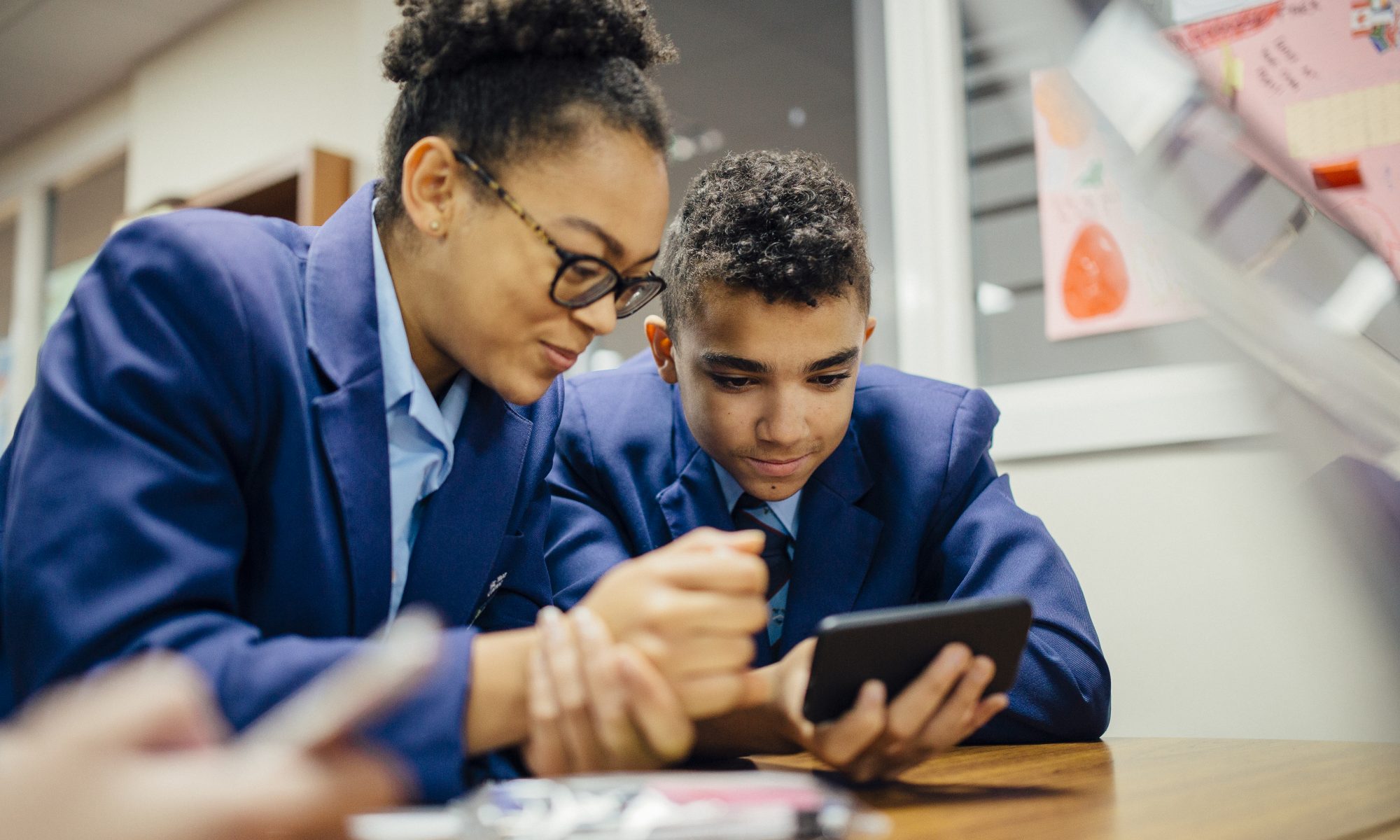
Hilary Wilce discovers that, in certain situations, we should be working with our mobile phones, not necessarily against them.
Mobile phones are a really big headache for schools. Now that nine out of ten teenagers own a smartphone, schools have to have clear and coherent policies on what students do with them during the hours they’re in school.
Obviously, a phone vibrating away with texts and alerts is going to distract anyone from learning. And at break times, they draw children away from real-life conversations and activities, and potentially into cyber bullying and other dubious online occupations. One head described his “light bulb” mobile phone moment when he went outside at lunchtime and saw no one playing football, laughing, chatting, or practising their dance moves. Only groups of students clumped together silently staring at shared screens. There are an awful lot of downsides to having phones in schools. On the other hand, phones are now intimately woven into daily life and can be brilliant classroom aids. Why should a student spent precious time copying out instructions or homework assignments, when they can whip out their phones and take a quick picture? Phones are great for checking something fast, or for looking up an unknown word, or taking some quick notes. Pupils can access brilliant physics diagrams, famous Renaissance paintings, or stunning photographs of geographical features at the press of a button. We don’t make students write on parchment with quill pens any more, so why keep them held back in the pre-digital world of pen, paper and textbooks? So schools have to steer whatever course they can through this push-pull minefield of mobile phone use. Some ban phones from schools altogether. Others demand that they be locked-up during the school day. Still others allow them in school just as long as they are kept in bags, and neither seen or heard, while more lenient schools allow them to be used at breaks or playtimes. In fact there are quite a few schools which have developed escalator policies – allowing students increased access as they grow older and move on into the higher years of school. This, these schools hope, will encourage a sensible, self-moderated phone habit – although given how terrible all we adults are at unhooking ourselves from the magic screen, this seems unlikely. However, out of this patchwork of policies, a new consensus is slowly emerging, which is that phones can be good servants but they are truly terrible masters. Evidence is mounting that they are seriously detrimental to learning, and that even a switched-off phone in a bag or a pocket can cause a fall-off in concentration. Meanwhile, a London School of Economics research project that looked at schools in four English cities found that after banning phones there was a six per cent rise in test scores across the board. Last summer, the then culture secretary Matt Hancock called on schools to ban them, and a group of Conservative MPs said they would like all phones to be confiscated at the school gates. Outright bans on phones in school time are now definitely on the increase, not only in the classroom but also at playtimes and lunch hours, as it becomes clearer and clearer that children minus their phones are brighter, more active and more alert. Against that, though, schools have to recognise some realities. Phones are how parents and children keep in touch, so young people need them before and after school. And there are times when phones can be truly helpful and supportive of classroom learning. If a school feels completely confident that its teachers can handle contained phone use, it may decide that students can keep them in school for occasional use.
You may also like

Meet the Head
We enjoyed learning about the SEND education provided by West Heath School, from School Principal, Photini Bohacek Tell us about West Heath School and what makes it unique among SEND schools?West Heath School supports young people with a range of...

The News
Read all about it! Here’s the latest in education from across the area Keep Up Claremont International Football Academy relaunches this September. This is one of the most established football academies in the UK, where young footballers aged 7-18 receive...

Meet the Head
Allow us to introduce Mr Henry Warner, the new Headmaster of St George’s College Weybridge You’re beginning your first term as Headmaster this September after working at St. George’s for a number of years. Describe your role and experiences of...