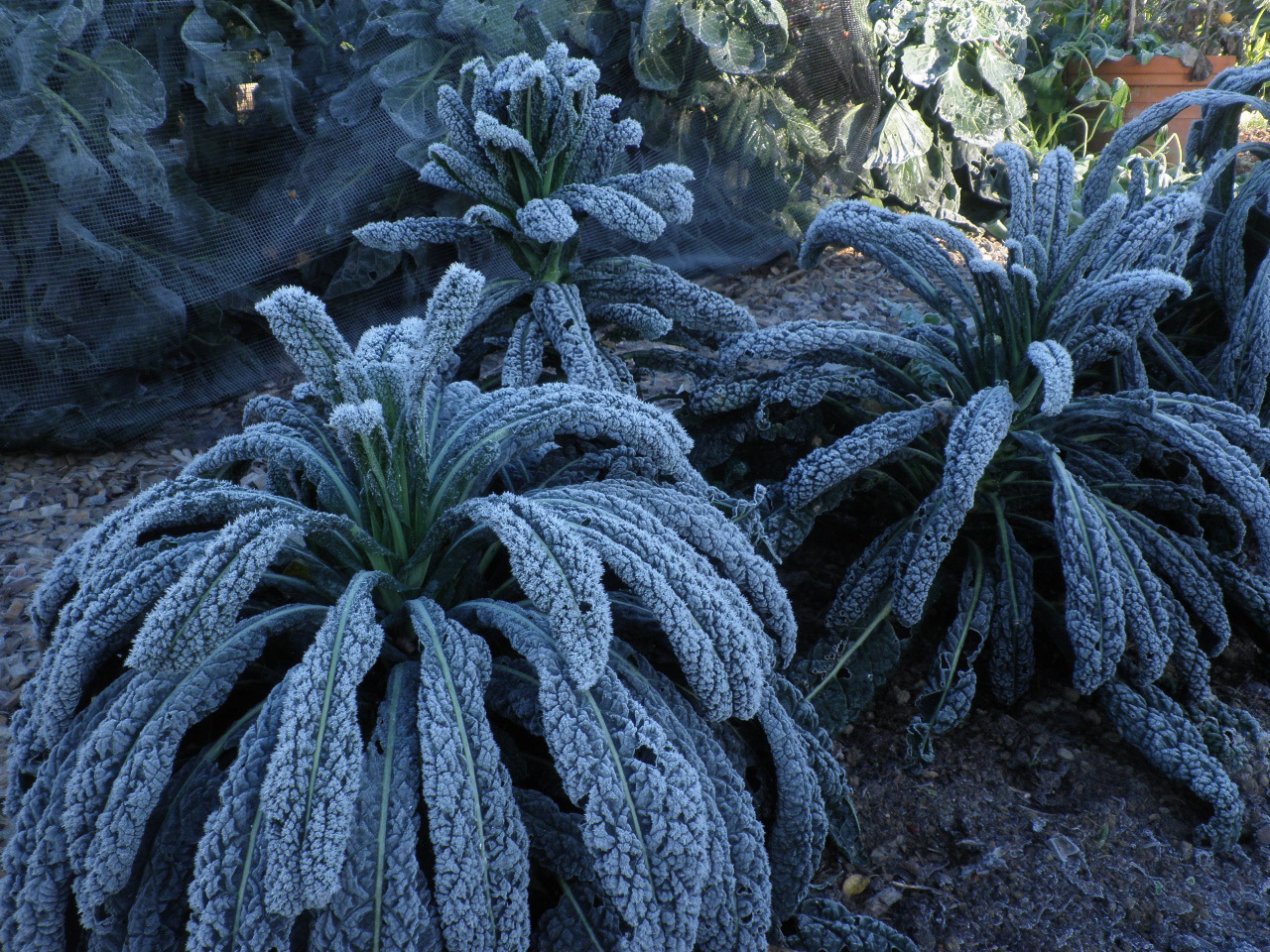
I love kale – the look of it, the taste of it (not tough and bitter, despite its looks, I promise). For a member of the fussy and temperamental brassica family, it’s also incredibly easy to grow. I’m sure it would prefer the rich, firm soil that other cruciferous vegetables need, but it will put up with less comfortable conditions and seems to grow well in my light sandy soil. The pests that make a beeline for similar crops leave the kale alone, although some of it can be prone to whitefly. This is easily dealt with by just dipping the leaves under boiling water and rinsing them off prior to cooking.
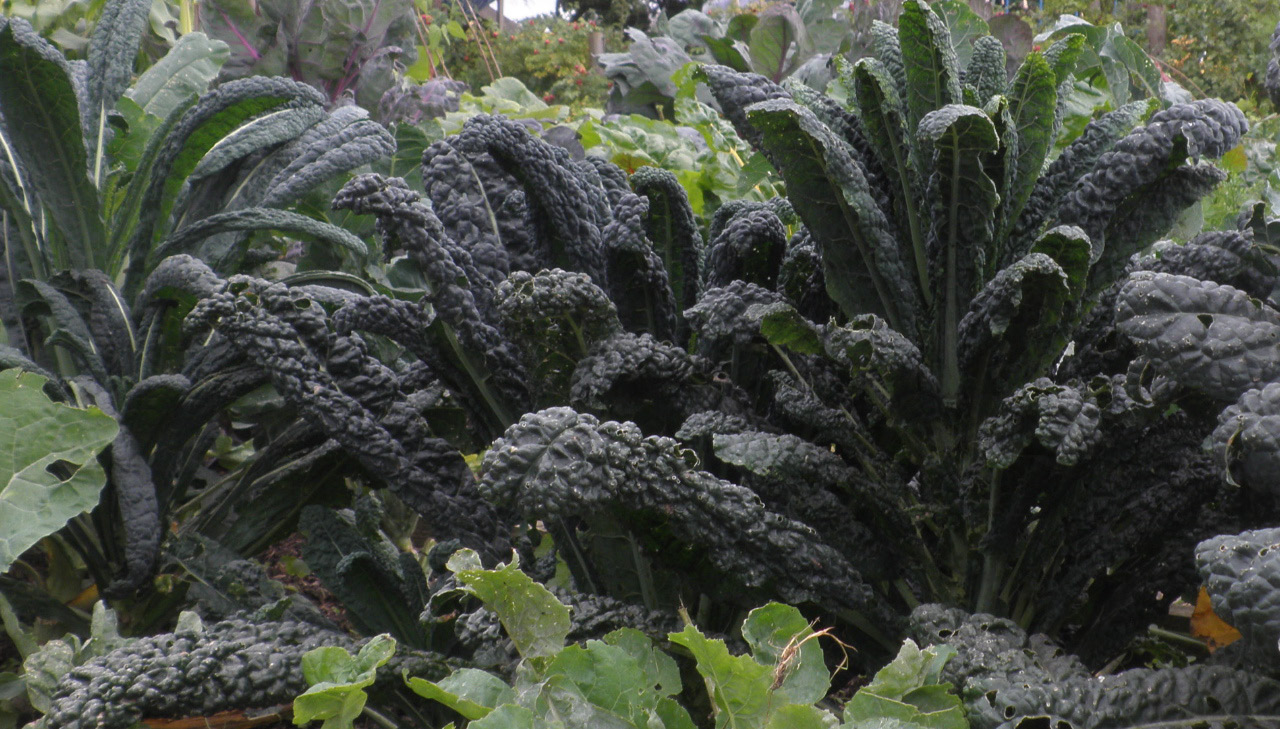
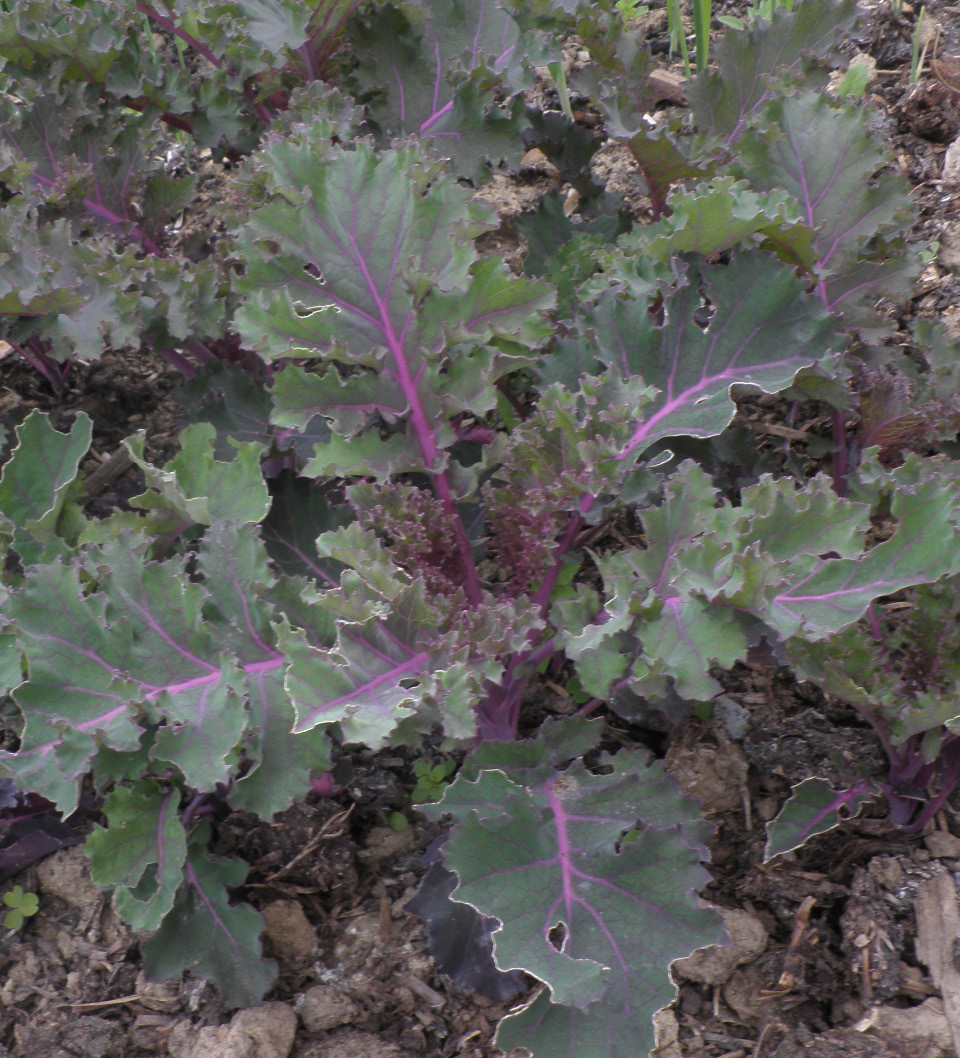
Kale can be sown any time from early spring until late summer. I tend to sow most of the crop in early summer for use during autumn and over the winter. There are quite a few worthy varieties to try and most have wonderfully romantic names– try Red or White Russian, Redbor, Winterbor, dwarf Curly kale or my favourite, Cavolo Nero (also known as Nero di Toscana or Lacinato) which looks so magnificent that you could grow it in the flower border. Add to that the fact that it will withstand the coldest of winters, not bolt in the very dry days and it seems near to being the perfect vegetable.
The downside is that not many in my family will eat it. This is because it’s highly nutritious; like anything with dark green (or purple) leaves it’s rich in folates, phytonutrients and antioxidants and therefore avoided by those in the household who don’t care what’s good for them. I am on a kale crusade at the moment, though, and will try my best to convert them – I’m going to have to, as most of the veg patch has been given over to it this winter.
I often use it in cooking in place of cabbage and chop it into stir-fries and soups. The pasta recipe below involves Stilton cheese (if you’re left with a lump of old Stilton from Christmas, it’s a good way of using it up), but I also make what I call Kale Carbonara, which is a good emergency dish using a pot of ready-made supermarket Carbonara sauce. Of course you can make your own gorgeous Carbonara base using fresh egg yolks and cream, but I find that some supermarket tubs (not the ones that look and taste like magnolia emulsion) are great to keep on stand-by in the freezer. Then when I need to throw a quick pasta dish on the table, I defrost it, and stagger out to the veg patch for some cabbage or kale. From a standing start this can be made in less time than it takes to cook the pasta. So – fry some pancetta (if you have it), chop the kale into ribbons and add to the bacon (or just gently sauté plain kale in a little oil, if you haven’t got any bacon), stir round for a bit, then add the defrosted Carbonara sauce and tadaaa! Kale Carbonara. Sprinkle on some cheese if you feel like gilding the lily (or if you used the ‘magnolia paint’ as your sauce).
- words: Jo Arnell
You may also like
Meet the Garden Designer
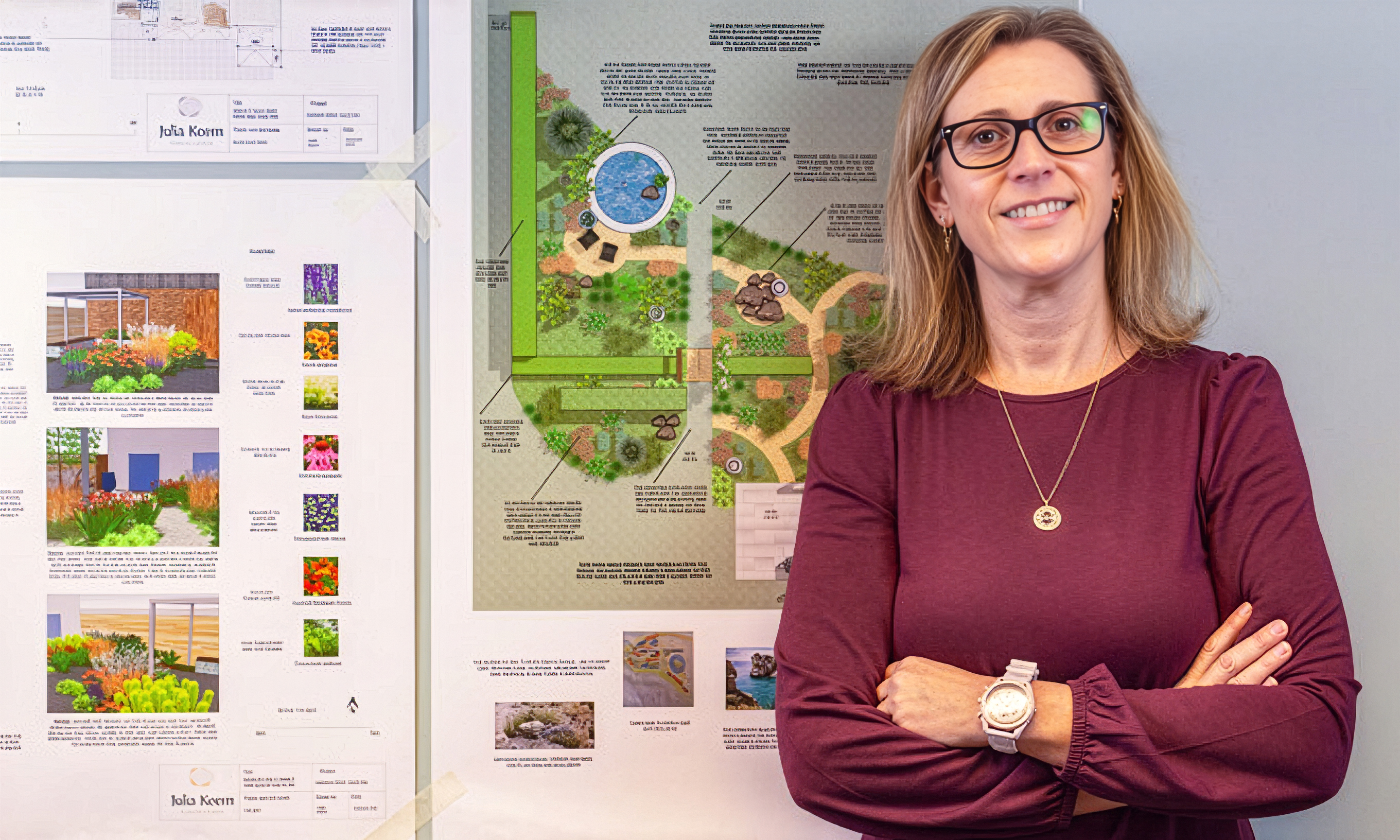
Introducing Julia Keem, a local Garden Designer who has built and planted gorgeous gardens across Kent, Sussex and South East London How did you know you wanted to be a garden designer? Feeling underwhelmed with my office job in 2008...
Greener Gardening
Jo Arnell is taking a leaf out of a new book – Thames Ditton and Weston Green Nature and Climate Festival’s Live Life Better, to be exact – to bring us a crop of exellent advice for environmentally friendly gardening...
6 Ways to Add Value Through Your Garden
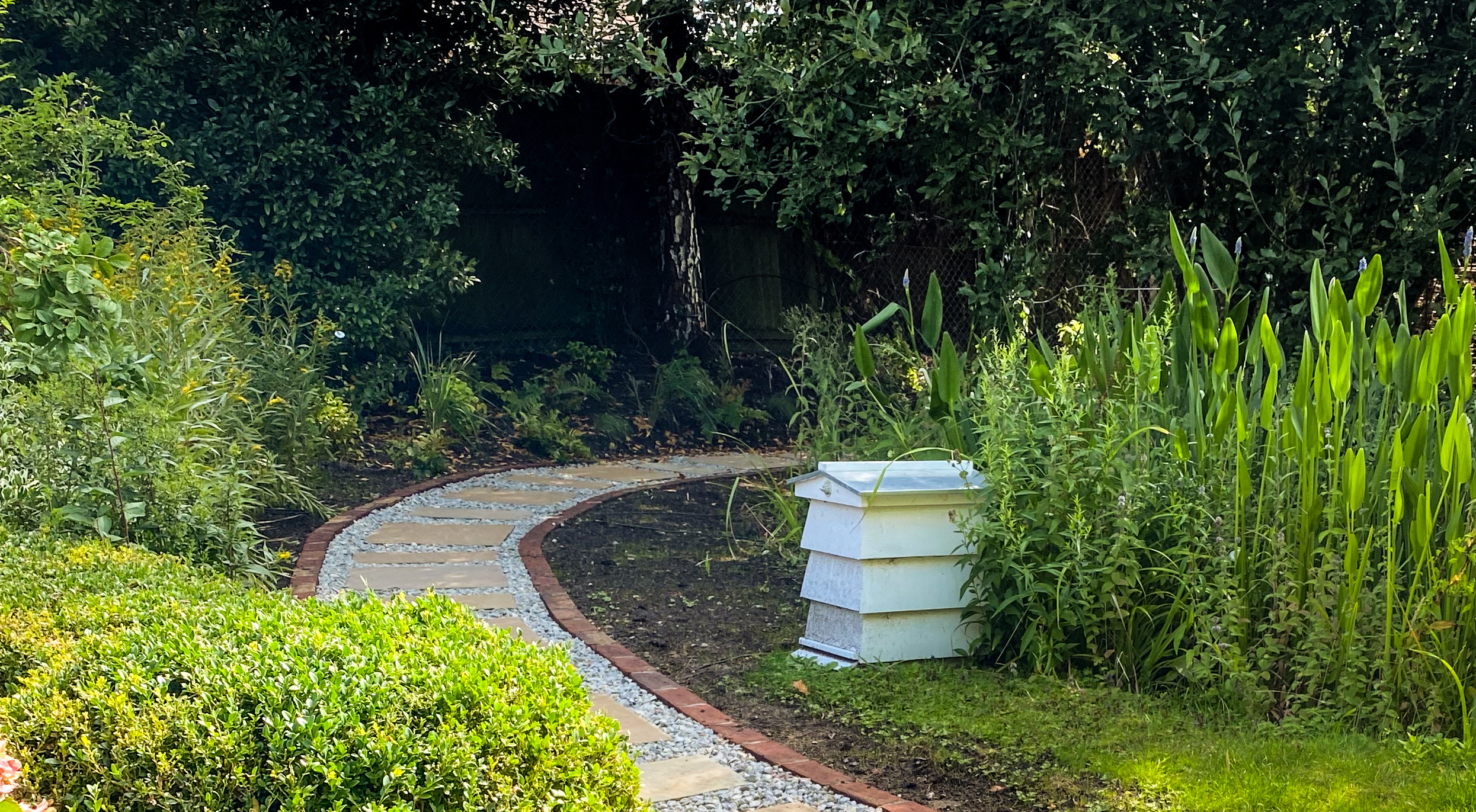
When adding value to a home, the best method may be waiting outside 1 The Art of the Journey Ink to Barrow believe a garden’s true potential is unlocked through its structure. A thoughtfully designed path does more than provide a...