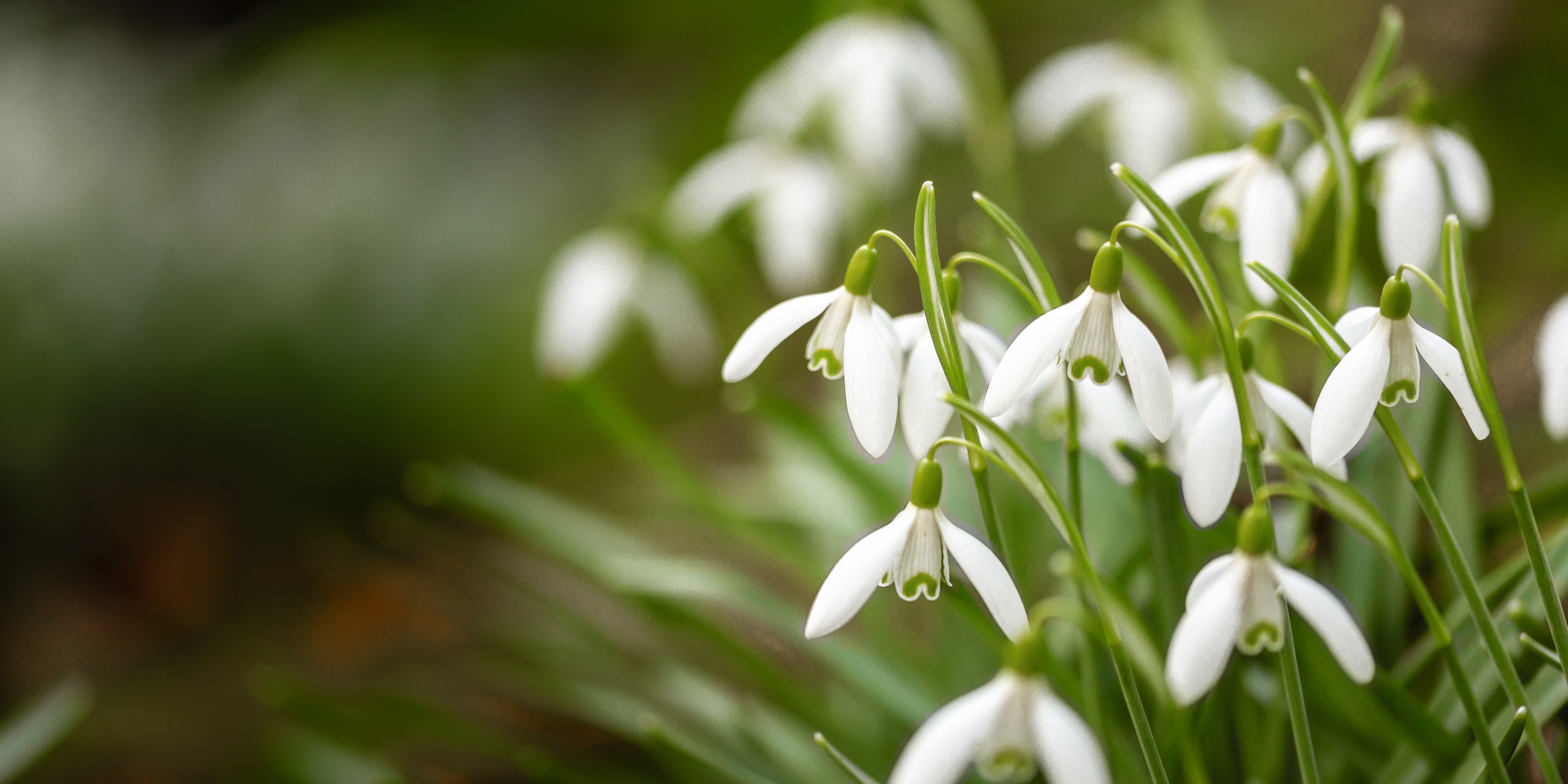
Banish the winter blues – cheer up pots and borders with some welcome early flowers with expert advice from Jo Arnell
February is a short, sharp month – some years shorter (and sharper) than others – but the light is coming back and, when the sun shines, it does feel spring-like. Let’s not be fooled: the earth is still tilted away from the sun here in the UK and losing more heat than it gains. Frosts are never far away, but there are uplifting signs that nature is getting ready for the season of growth, there’s a rustle in the wings and some brave little buds are bursting into bloom.
Winter carpets
The earliest of the hardy bulbs, tubers and rhizomatous perennials are tiny, but resilient, naturalising and spreading easily, even across difficult terrain. These little treasures are best seen in massed throngs beneath the trees, where they make the most of the light in winter and early spring, before the dense canopy of leaves closes over them, or, in the case of sun lovers, before the ground dries too much.
Snowdrops – These tough little plants will push up through frozen ground, spreading in snowy carpets among the trees. They adapt and naturalise more easily when planted ‘in the green’ – which means planting them once flowering is over, but before they dry out. Snowdrops prefer slightly shaded, humus rich soil. They are woodlanders, blooming early to make the most of the light before the leaves appear and block out their light. We romanticise these tiny flowers – some Galanthophiles (official term for lovers of snowdrops) admire and covet particular cultivars to the point of obsession, paying hundreds of pounds for a single plant. Is it because they flower so miraculously early and give us hope? Or that they are so delicate, each one a minute work of art? They seem to symbolise resilience and strength, the continuation of life despite the hardest of conditions. I admire their devotion, but am just as happy with the ordinary Galanthus nivalis.
Cyclamen coum – Not to be mistaken for Cyclamen hederifolium, which is the autumn version. You’d be forgiven though because C. coum is very similar – the obvious difference is that it flowers in late winter/early spring, it is also less vigorous and will be swamped by its enthusiastic autumn cousin, so plant them away from one another. They are among the bravest though, spreading quietly into the dry shade under the trees, daring to grow among the roots and in dusty corners.
Winter Aconite – another diminutive woodland spreader, its bright egg-yolk yellow flowers cheerfully shining out in the winter gloom beneath trees and hedges.
Dwarf Iris (Iris reticulata) – these look delicate, a miniature version of bigger Iris varieties, but the bulbous Iris reticulata start flowering in February – much earlier than their sun-loving rhizomatous relations. Grow at the front of borders, in rockeries or, perhaps, best of all, in pots where you can see them up close. The flowers are usually in shades of mauve and blue, with splashes of yellow and white. I saw a variety the other day called ‘Frozen Planet’, it was the palest blue and white, like something Elsa and Anna would grow.
Narcissus ‘February Gold’ is one of the earliest daffodils, there is another even earlier – flowering in December called Narcissus ‘Rijnveld’s Early Sensation’. Daffodils do seem to be flowering earlier these days, but the thronging rush will always be in March. They are a welcome sight, however early – a true sign that spring is on the way.
Heroic hellebores
Hellebores are good and hardy, often flowering where not much else will and are a great asset in the garden at this time of the year. Helleborus niger (the Christmas Rose) flowers in midwinter, These are usually white, but Helleborus orientalis – and hybridus cultivars – bloom later, most often in pink shades, from pale to the darkest burgundy. Newer cultivars can be speckled, double petalled and upward facing, although I like the ones that shyly hang their heads and hide their beauty, so that you have to lie on the ground to see them properly – or, more decorously, cut and display them floating about in a bowl of water. Keep Hellebores looking good by cutting off last year’s tatty leaves before the new shoots start to show.
Steely shrubs
Many of the early flowering shrubs are scented, their pale blossom appearing along bare stems or under the shelter of evergreen leaves. The scent can be powerful too, pumping out a strong message to the few brave beetles, bugs and early bumblebees that appear on sunny winter days – a fragrant signal to guide them towards much needed nectar.
Sarcococca – There are several varieties of this low growing evergreen available, but they all look fairly similar, with small
leathery leaves – it is often called ‘Christmas box’ because it looks like a more unruly version of a box bush. Often overlooked and grown at the base of showier shrubs and trees, Sarcococca has an almost overpowering perfume – on a still and cold winter’s day the scent is uplifting (or off-putting, depending on your sensitivities).
Hamamelis (Witch Hazel) – Spidery blossom creeps along the bare stems of Witch Hazels, long before the leaves appear. They are from North America and not related to our native hazels, the leaves are similar, but that’s about all. They’re not related to witches either, although the astringent properties have been used for thousands of years as a natural medicine. They make good specimen shrubs – as well as early blooms, they have good autumn colour – topping and tailing the year with a warm glow. Underplant with carpets of late winter bulbs and flowers like those mentioned above.
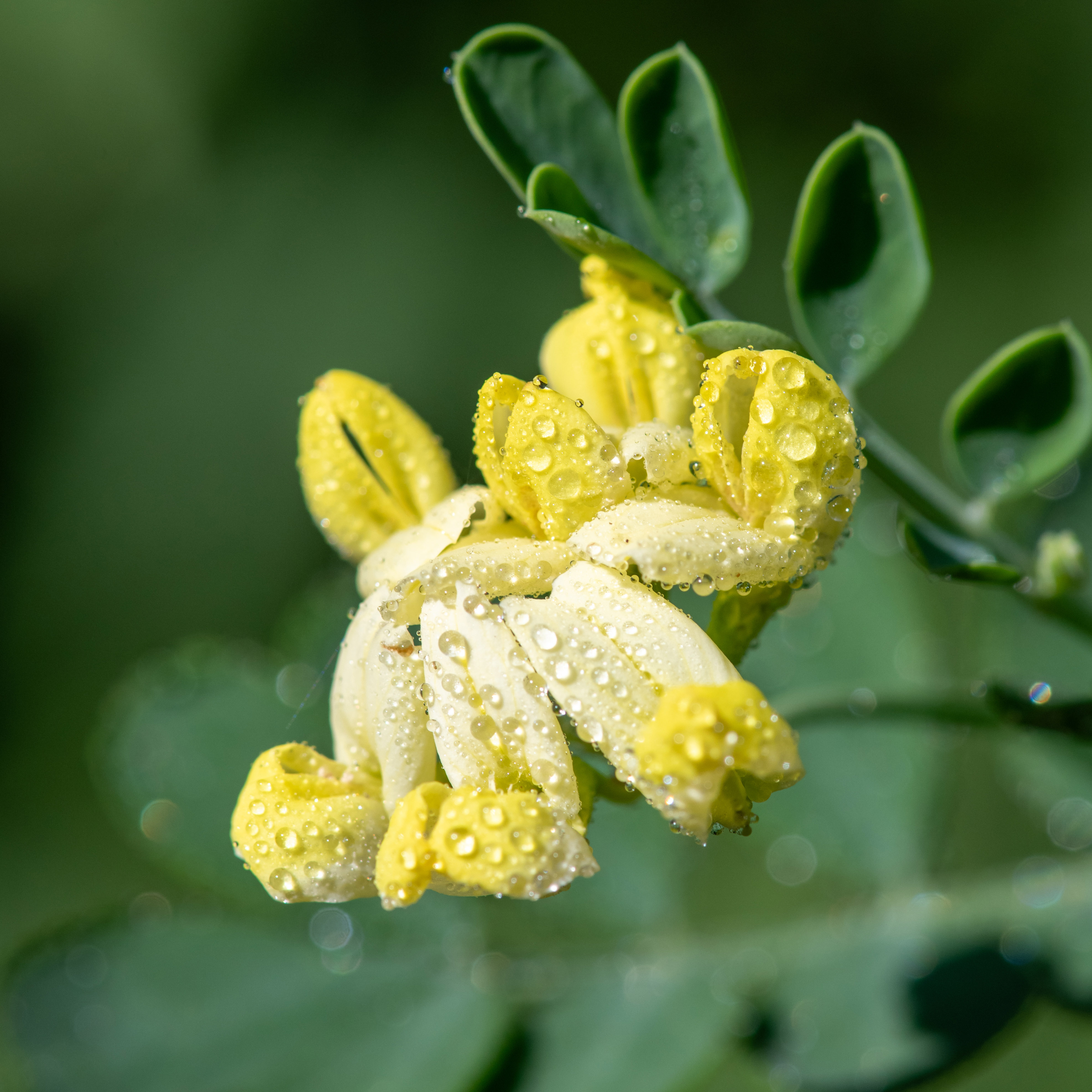
Coronilla valentina subsp. glauca ‘Citrina’ – (or call it by its common name – less of a mouthful, but rather disturbing – bastard Senna ‘Citrina’). Anyway, this lax little evergreen – I want to call it a climber, but it doesn’t quite climb, more just hopefully leans up against things – should be better known, especially because it flowers so early in the year. Coronilla ‘Citrina’ has pretty grey-green leaves and pale yellow, pea-blossom flowers that emit a citrus scent.
It looks delicate, but once established is very hardy, although it would probably prefer a sheltered wall in order to flower well.
Camellia – If you don’t have acidic soil a Camellia is best grown in a large pot with ericaceous compost to stop the leaves becoming chloritic and turning a sickly yellow. Position away from frosty early morning sunlight, which can burn and brown the petals. Grown well they are a glorious sight, with glossy evergreen leaves and impressive flowers.
Viburnum – There are many useful shrubs in this family, the earliest flowering are the Viburnum x bodnatense varieties – these are deciduous, with the highly scented flowers appearing on bare stems throughout the winter. The best known are probably Viburnum bodnatense ‘Dawn’, with pink blossom, or ‘Charles Lamont’, similar, but a bit more vigorous.
Plant scented shrubs near to paths and doorways so that you don’t miss their best days, or cut a few stems and bring a vase of them inside to enjoy. Even a single snowdrop in an egg cup can do the trick. While we are waiting for the weather to warm up it is a positive act to plant a winter or early spring flowering shrub – it gets us outside for one thing – and somehow brings the spring closer too. These first few brave blooms are a hopeful sign that winter is finally losing its icy grip.
Jo’s new gardening courses are now booking. For information, call 07923 969634 and see hornbrookmanor.co.uk.
You may also like
At the heart of the garden
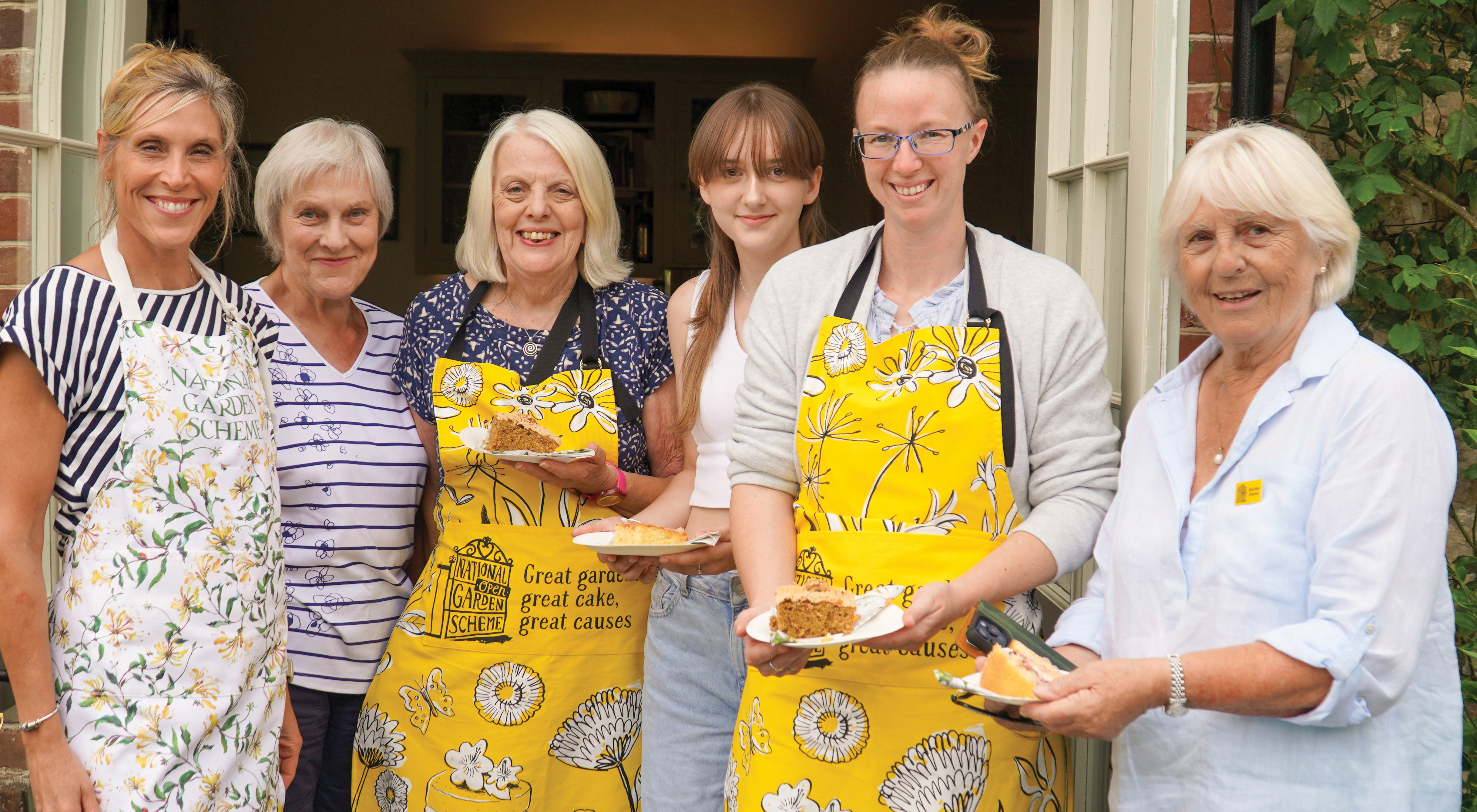
Jo Arnell speaks to Vicky Flynn at National Garden Scheme about the horticultural gems open in aid of nursing, health and gardening charities across the South East For almost 100 years the National Garden Scheme has been opening gorgeous gardens...
Just one pruning thing
Jo Arnell tackles the complexities of this often dreaded garden task Pruning can seem daunting – and sometimes like one of the dark arts – every plant seems to need a different approach at some other time of the year....

In the bleak midwinter
Jo Arnell explains how to brave the dark and chilly winter blues with a little help from your garden Winter can be hard for some of us and Seasonal Affective Disorder (SAD) is a real thing, linked to the lack...