Antonia Deeson takes a leisurely tour of Crafted at Powdermills – the much-anticipated new lifestyle hotel and members’ club in Battle – where life, work and nature combine with super stylish effect
There has been a lot of chatter about the newly opened hotel and members club, Crafted at Powdermills, since its pre-Christmas launch and whether the town of Battle – somewhat left behind by the recent renaissance of Hastings and St Leonards as the hub of all things cool – could be about to find itself firmly on the cultural destination map.
Set within 78 acres of woodland, meadows and a seven-acre private lake, Crafted at Powdermills is the first opening from Chris King, co-founder of the original award-winning Birch hotel, part of a planned Crafted collection of clubs and hotels. The debut launch represents a reimagining of the traditional country house hotel but with a lot less formality and big dose of personality.
At its heart is a belief that modern, urban lives crave reconnection with nature, with creativity and with one another – and that a hotel and members club can be both fun, restorative and quietly energising.
For Managing Director Joel Williams, the appeal of Powdermills was immediate. The site was discovered for sale by King early in 2024 and the potential was unmistakable.
The scale of the estate offered an opportunity to create something that felt, in Williams’s words, “expansive yet grounded”. Crucially, it also allowed for a hotel and members club that would serve both visitors from London and the local community. From the outset, the ambition was not to create a sealed-off destination, but a place that felt woven into its surroundings.
That balance between escape and community runs through every aspect of Crafted at Powdermills. The Pub, which is rapidly becoming a local favourite, is central to this idea. Warm, relaxed and intentionally unfussy, it offers an all-day welcome, with children allowed and visitors welcomed to explore the estate. Evenings tilt towards a more grown-up vibe. This is a hotel designed around atmosphere, where consistency matters more than spectacle.
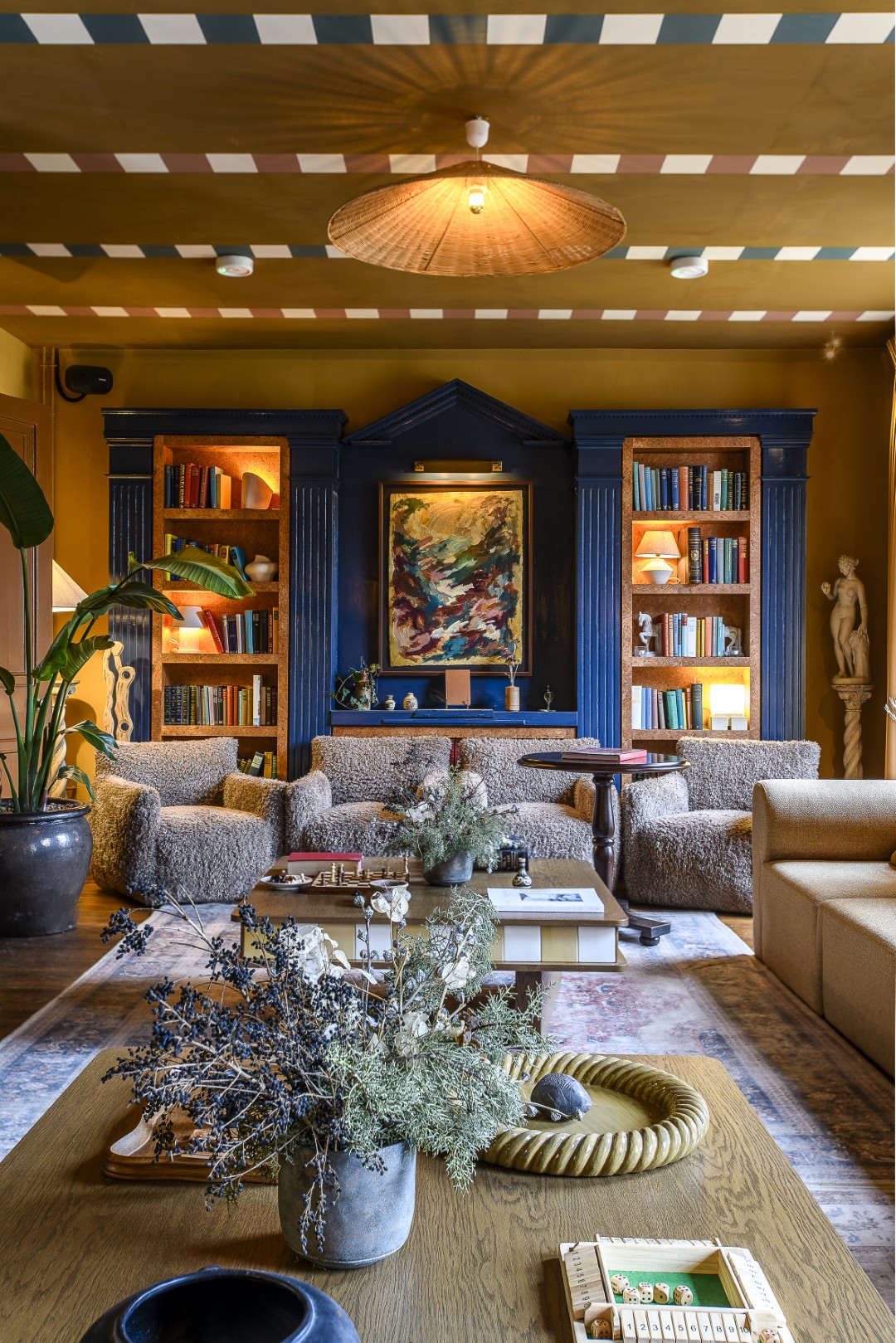
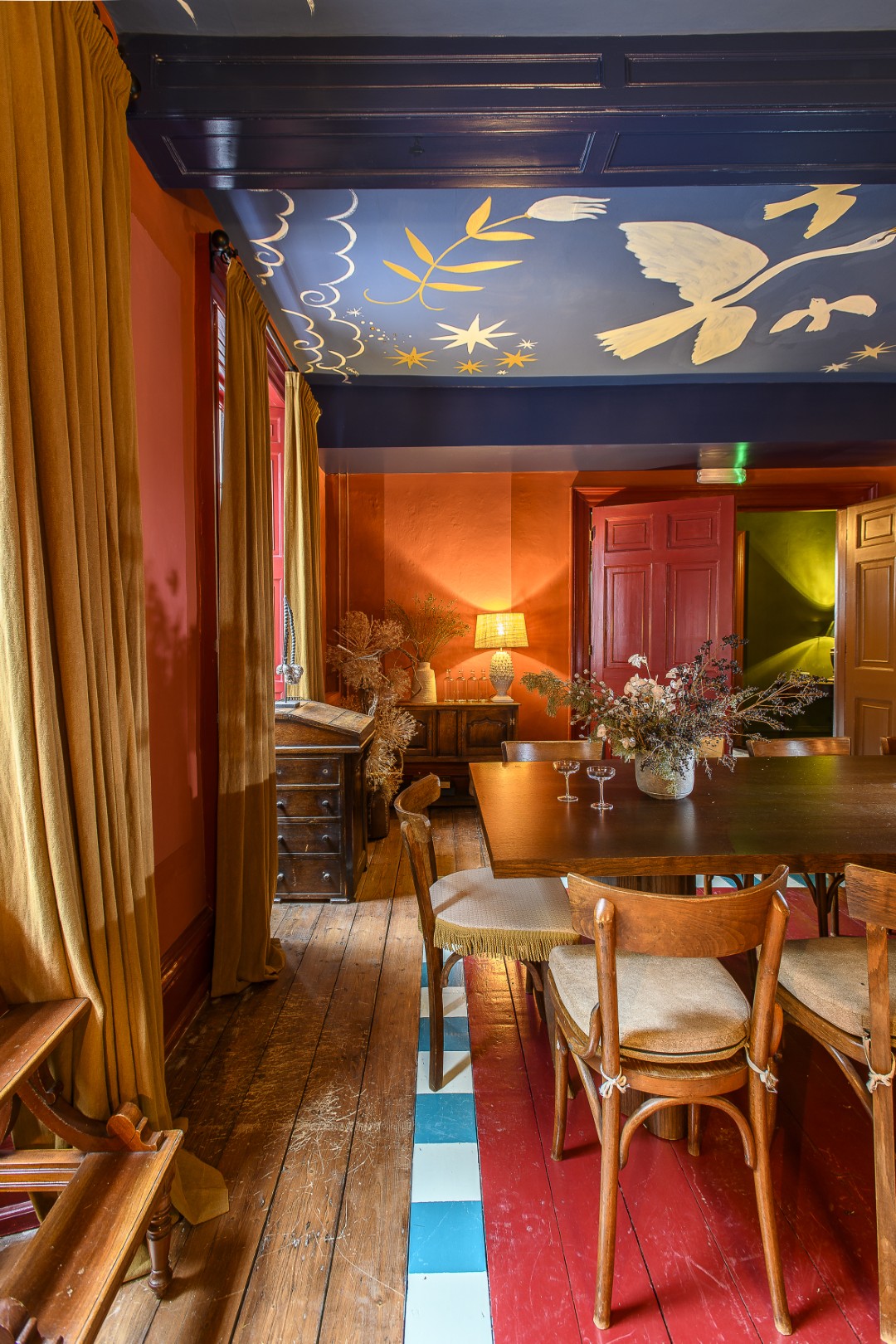
Behind the scenes, the transformation of the Grade II-listed Georgian house was extensive. Much of the work was invisible (and expensive) including new infrastructure, heating systems and a suite of tech – all essential elements to creating a contemporary hotel that functions effortlessly. Interior designer Andreas Christodoulou, founder of multidisciplinary design studio House of Dré, was brought in to create the interior and explained how
respect for the building’s listed status was paired with a pragmatic understanding of the history of the architecture and the landscape. Christodoulou’s view was that Powdermills was very much a working country property, with an industrial past (as a gunpowder mill) rather than some grand minor stately home. It is that realistic approach to the brief and the project as a whole that is a key part of the studio’s design approach.
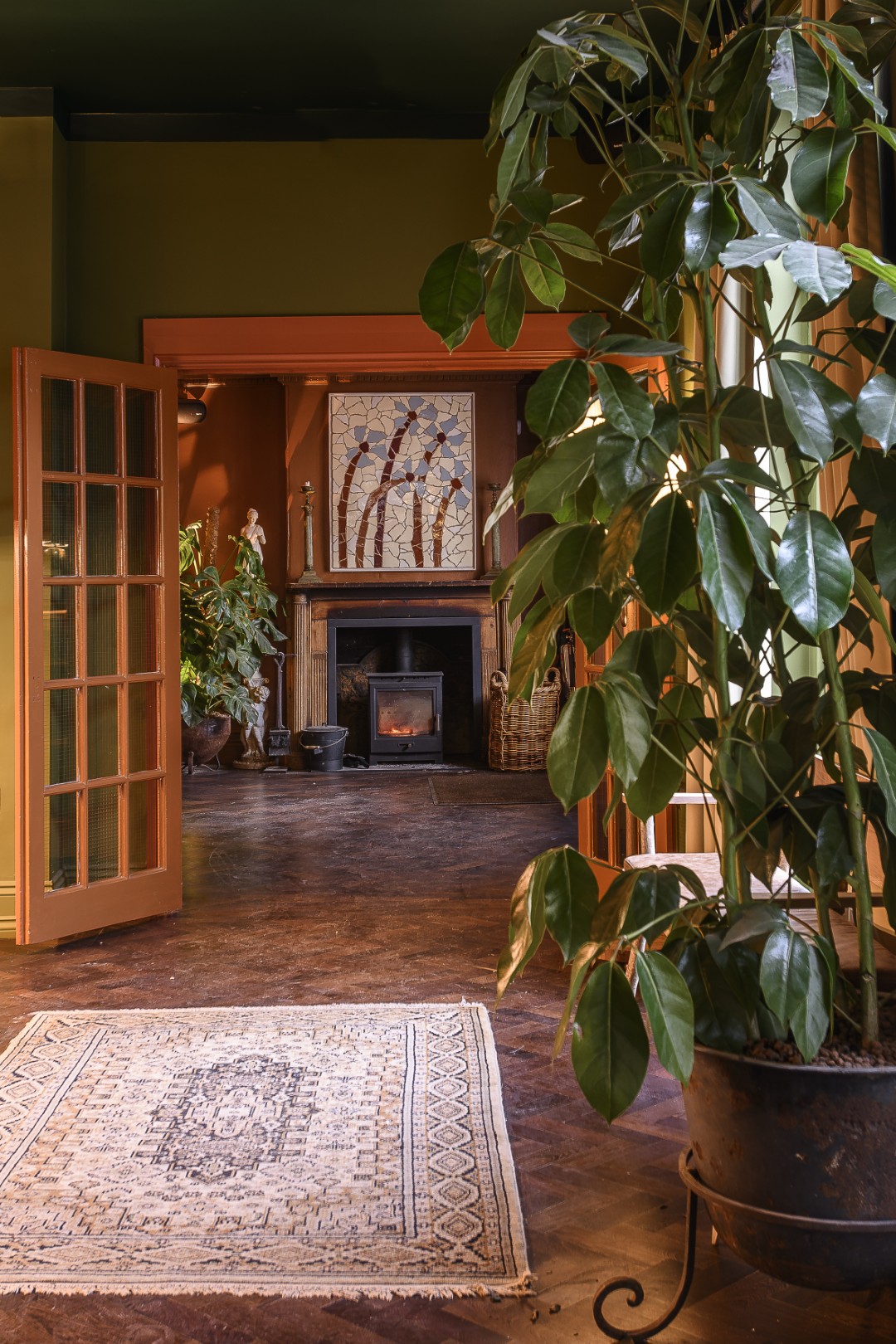
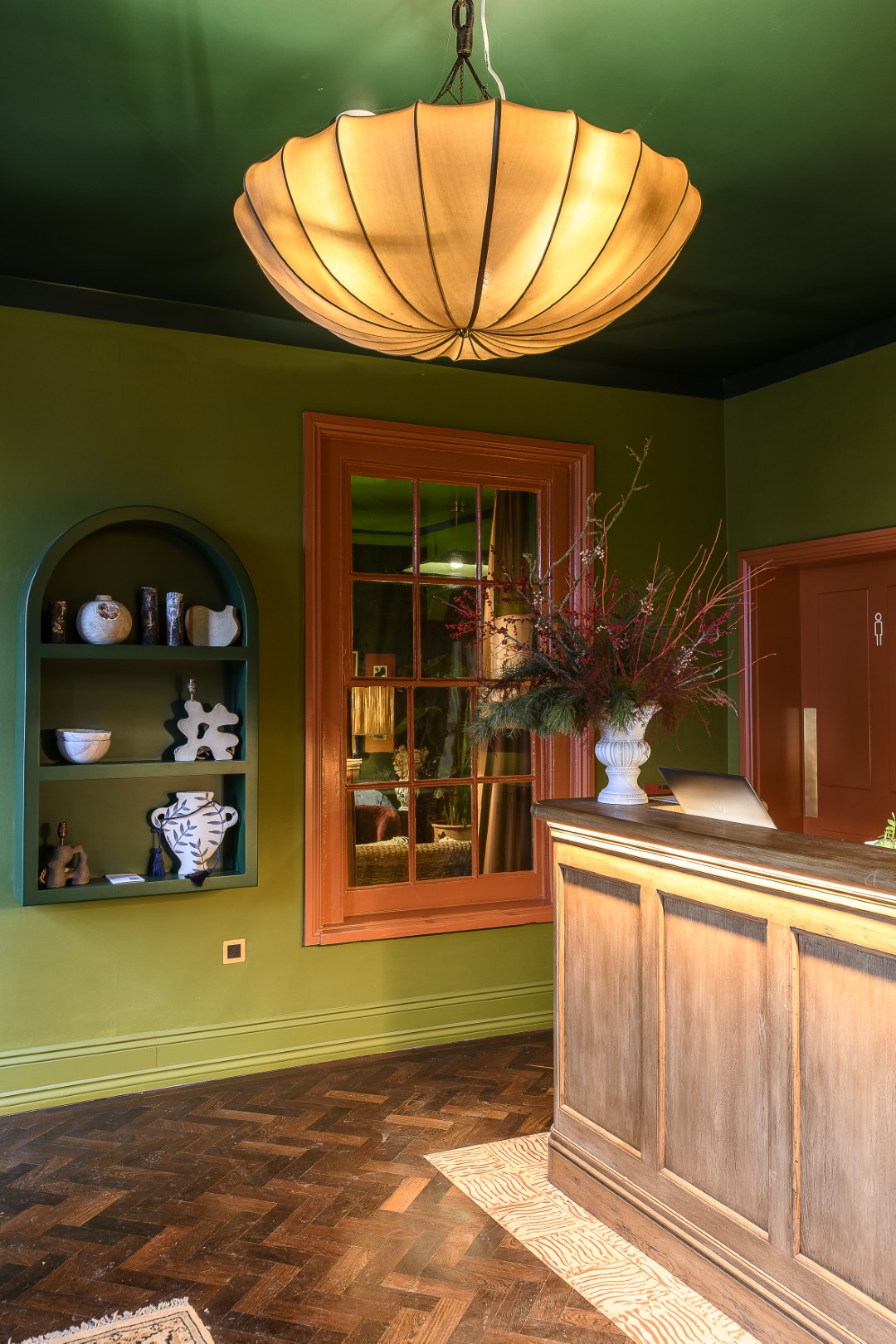
Having previously collaborated with Chris King at Birch, and working to an incredibly tight deadline, Christodoulou was entrusted with defining the look and feel of the brand’s first property. The brief was open but clear: create spaces that felt welcoming, characterful and confident, without leaning into pastiche or nostalgia. For the team at House of Dré, the layout of the building set the tone for the design. Rather than being a series of large symmetrical rooms, Powdermills is a patchwork of spaces with varying ceiling heights, light levels and proportions.
Instead of forcing cohesion, the hotel’s public spaces and members’ areas embrace this journey-like quality, allowing each room to develop its own identity. Moving through the hotel becomes an experience of discovery, with colour and mood shifting subtly from space to space as it unfolds. Unlike many homogenised luxury hotels, it is the variety of each space that will undoubtedly push both the hotel and the pub to becoming a regular destination for guests from closer to home as well as further afield.
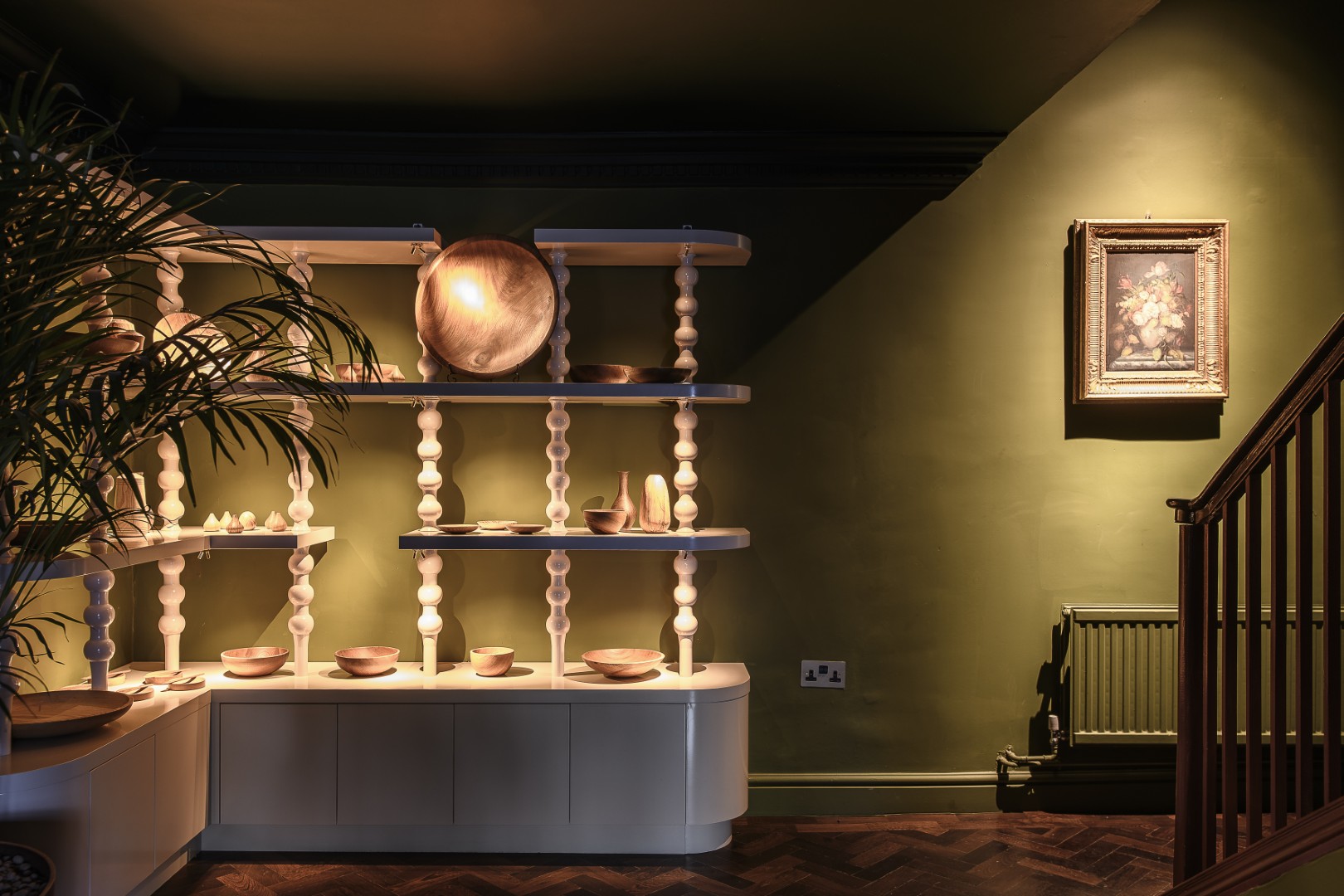
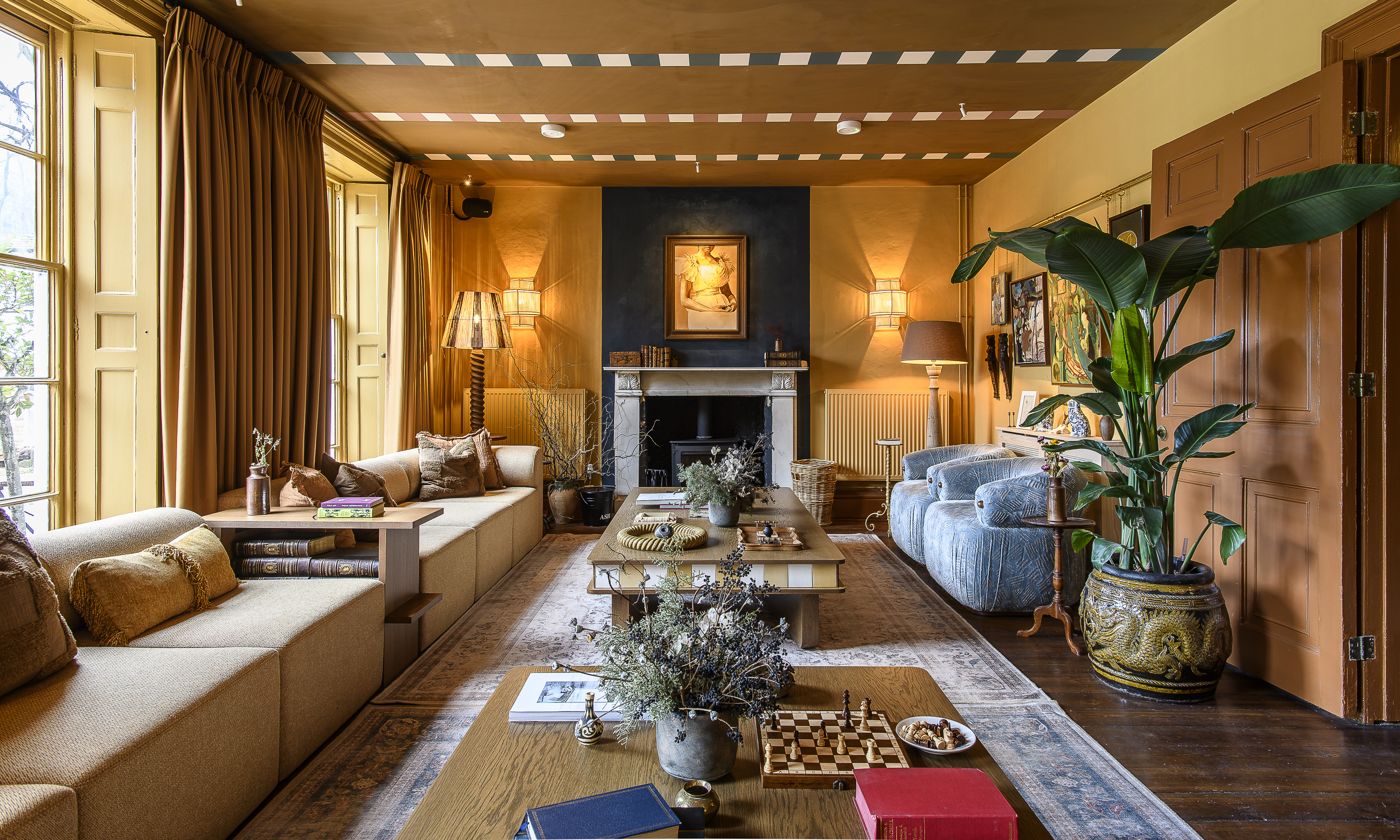
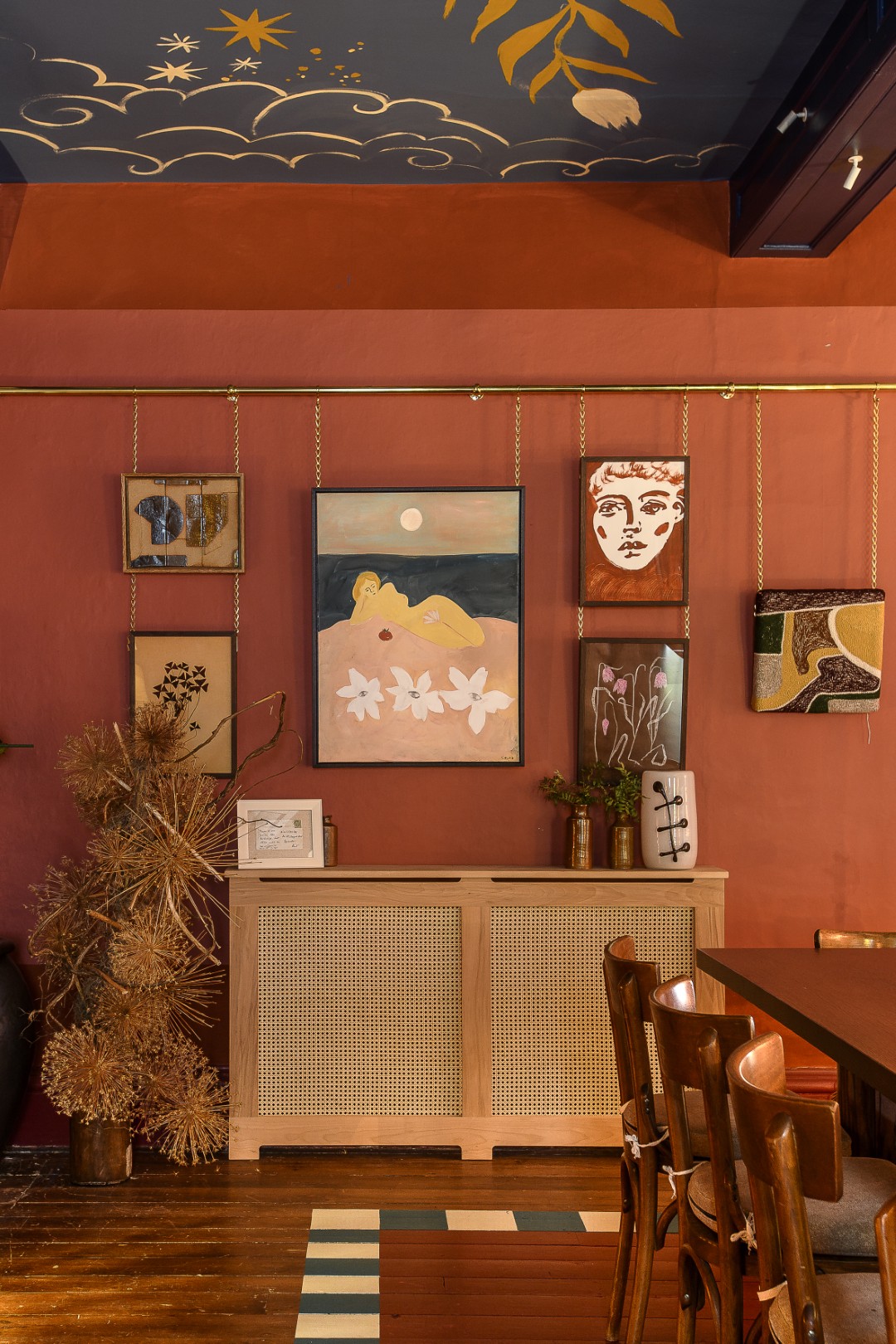
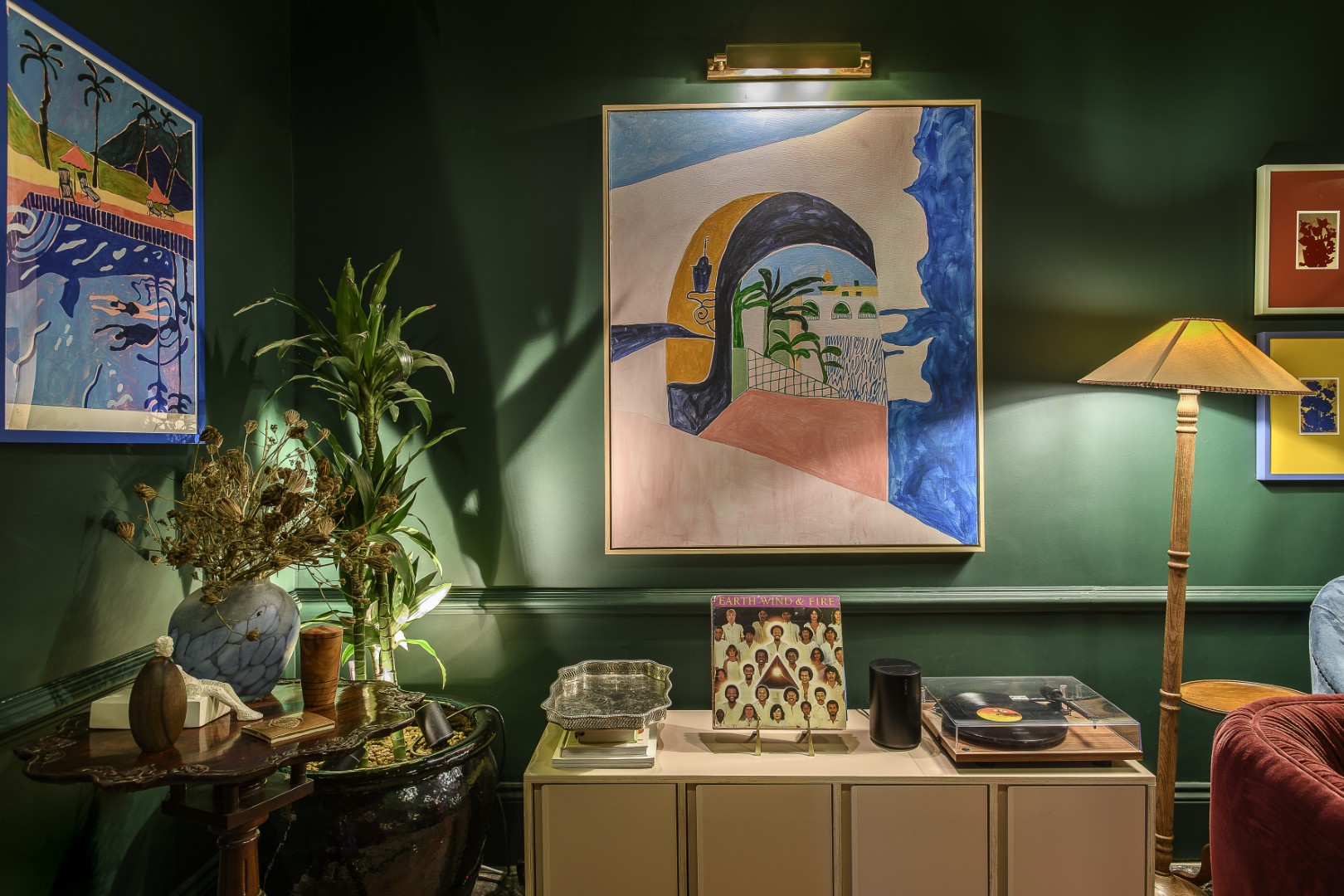
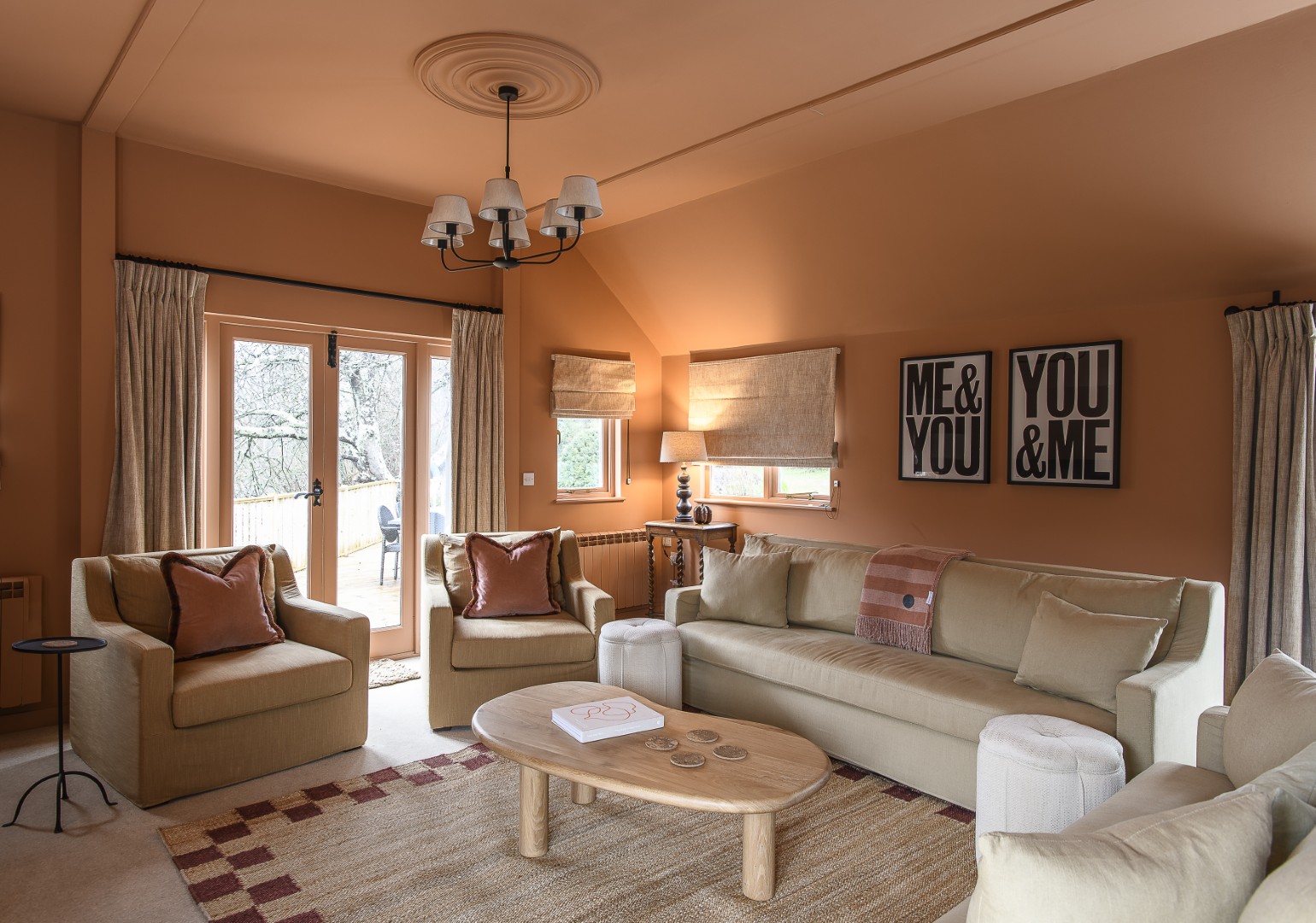
As soon as you enter the hotel, it is the bold colour choices that have swiftly become one of the defining features of the space. Deep greens, earthy ochres and terracotta reds, soft chalky neutrals and inky blues are layered throughout the public and members’ spaces, often enveloping walls and ceilings in a single tone.
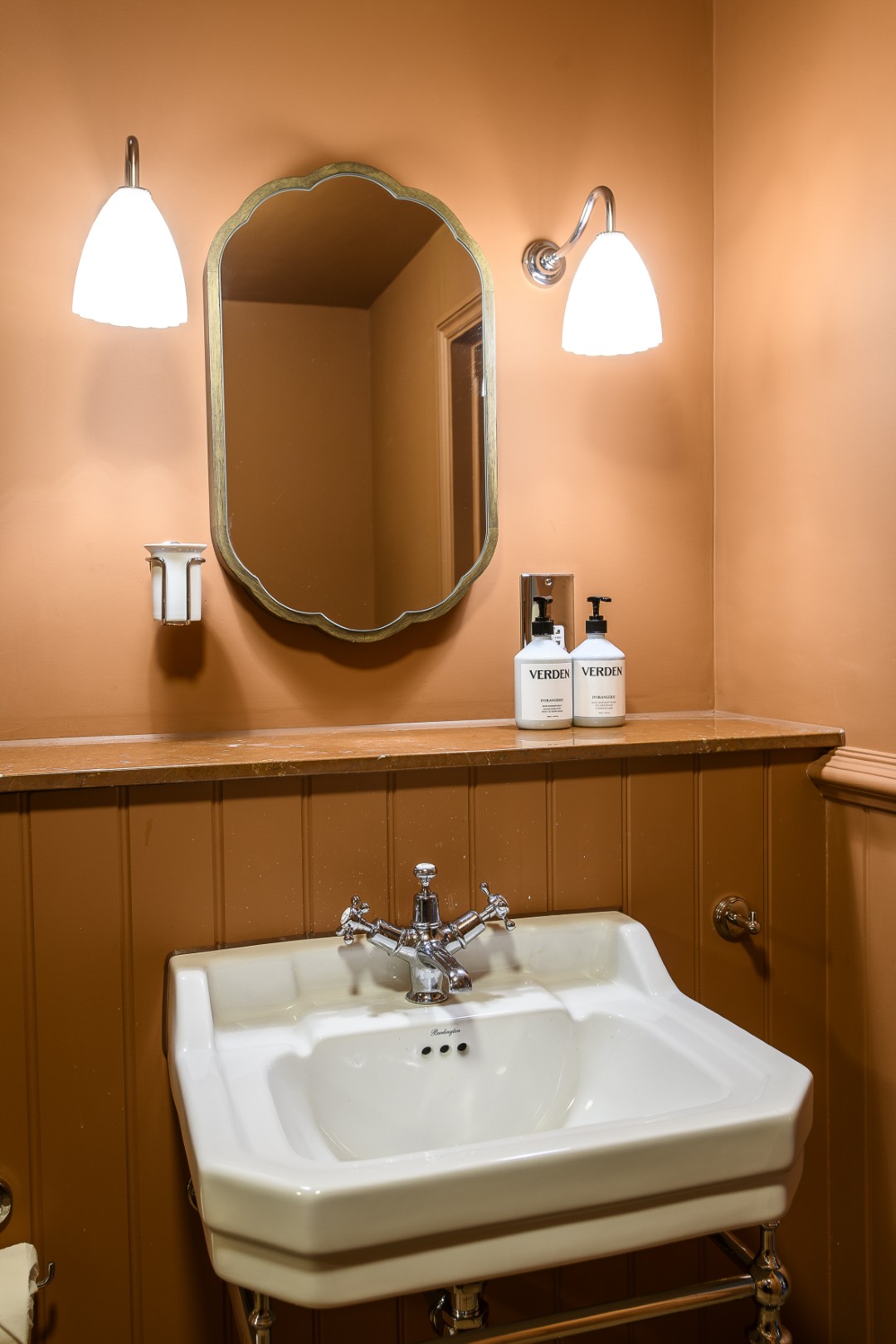
Christodoulou explains how the ‘double drenching’ technique, where walls, ceilings and woodwork are kept to the same palette but subtly shifting in tones and reflective qualities, allows architectural quirks to recede, drawing attention instead to furniture, artwork and texture.
It is a bold and confident use of colour – playful without being overwhelming – and one that many hotel brands would shy away from. Here, it feels entirely natural and now a core part of the handwriting of the Crafted brand. The Pub is a good example of this bold restraint. Rather than attempting to recreate a traditional olde England boozer, the space has been designed to gently evolve. A zinc-topped bar will age gracefully, timber floors will slowly wear down, leather seating will take a patina with use… all the elements create a sense of familiarity and cosiness.
Subtle contemporary details, like the handmade ceramic tiles by Emma Louise Payne, divert it firmly away from nostalgia and are very much rooted in the present. There is a softness to the lighting in many of the rooms, gained through use of wall lights, lamps and materials such as rattan, and an ease to the layout that encourages lingering, particularly in winter months when roaring fires glow, with the faint and comforting smell of wood smoke. The chaos of the outside world feels very distant.
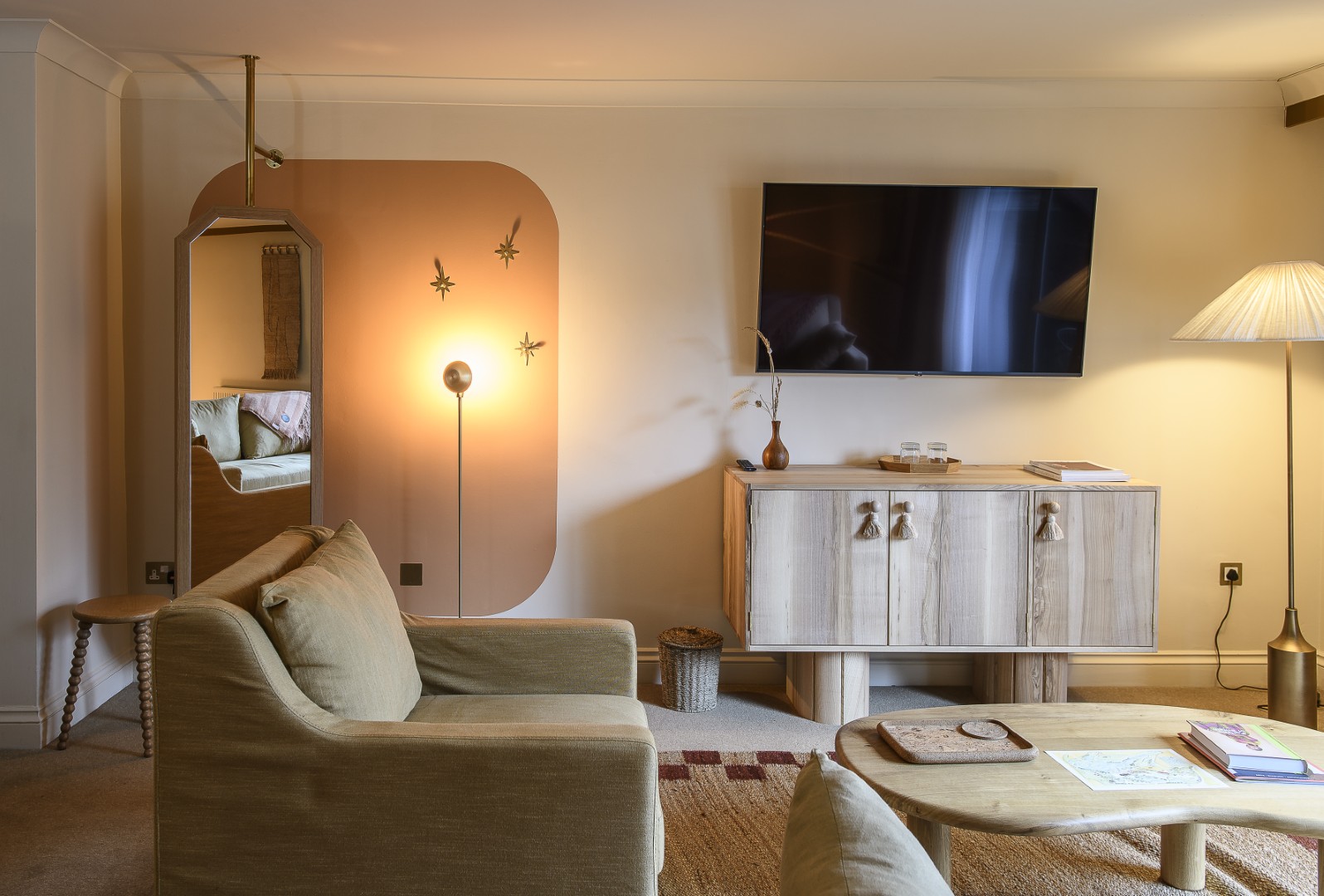
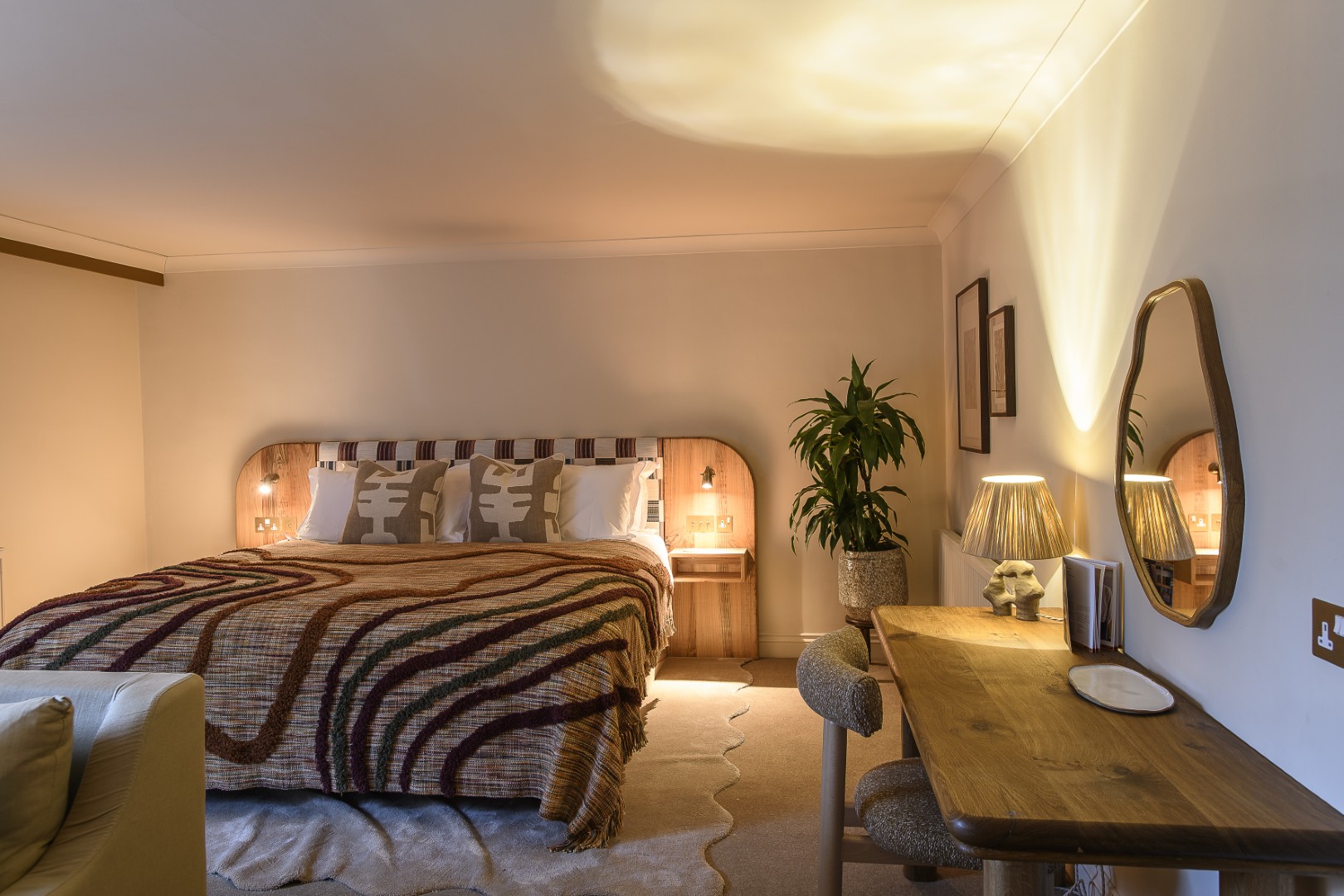
The guest bedrooms offer a quieter counterpoint to the public areas. Here, the palette softens, drawing inspiration from the surrounding woodland and lake. Bespoke furniture, such as the desks and bed surrounds have been made by furniture maker Seb Cox and anchor each room, nothing has been imported and knocked together, it has all been sourced and carefully crafted from Sussex timber
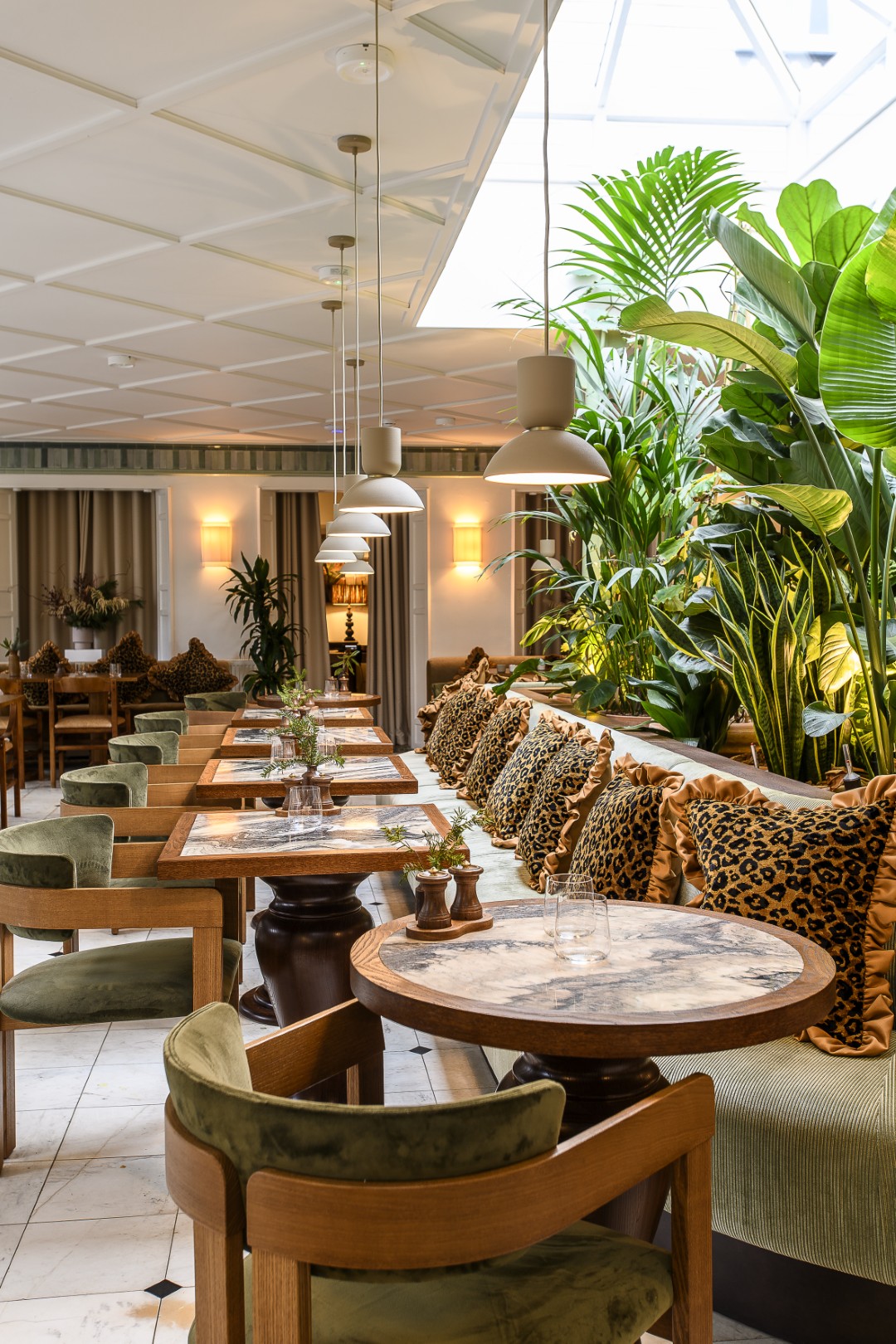
In contrast to The Pub, the main restaurant and linking conservatory dining area are both much lighter and more open, the palettes for both grown from the existing architecture and details. The main restaurant, which in its former life was a celebration of 1980s monochromatic decor, has retained the black and white Carrara marble tiled floor but the pale and chalky walls, upholstery and detailing in
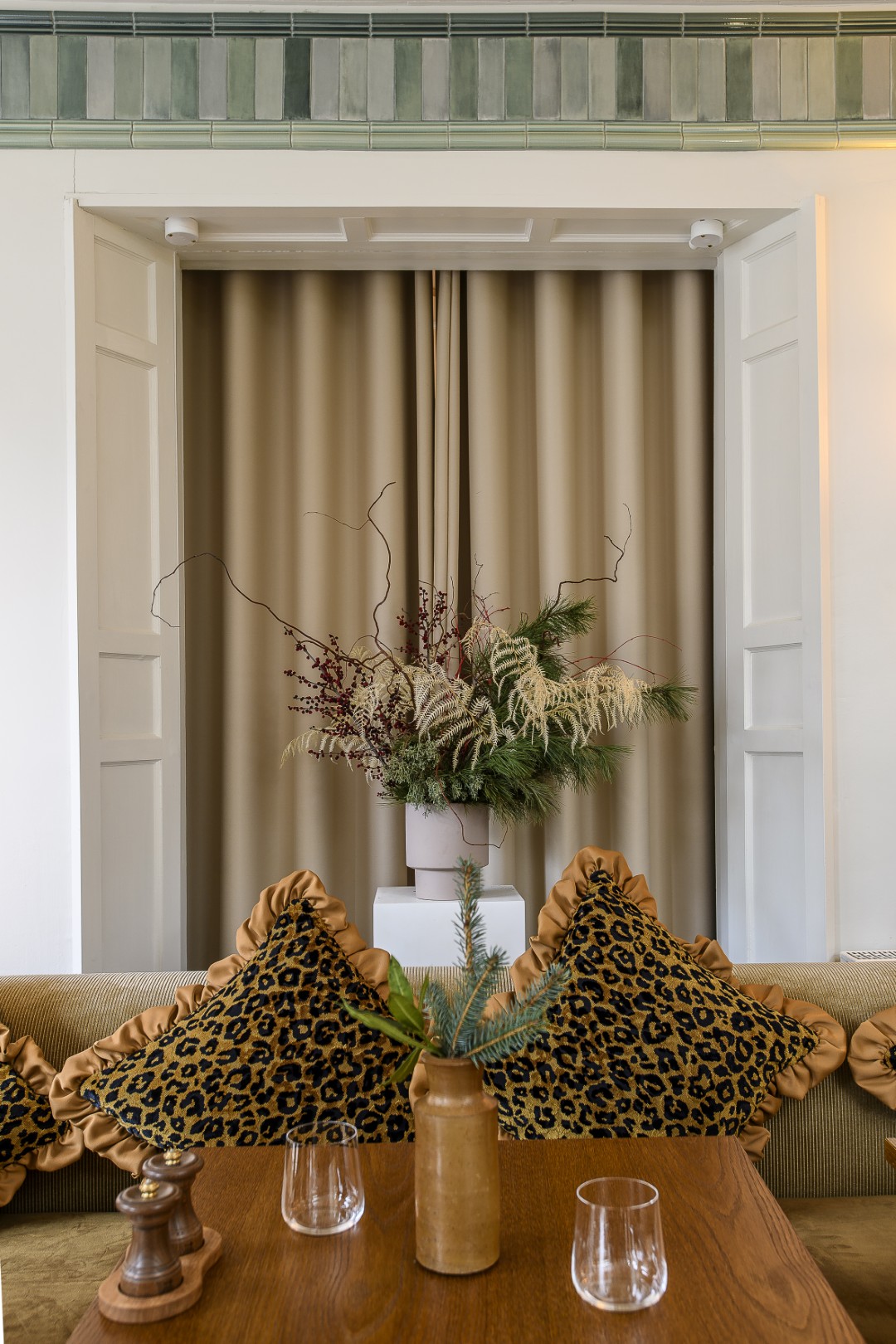
soft green, and the focus on bold tropical planting, quality bespoke leather and woven rattan furniture, all make the space feel fresh and elegant. Bold pops of leopard print in the flouncy cushions that sit on the central wrap-around banquette, add an injection of elegant fun. Throughout the hotel, the approach is consistent: let materials and craftsmanship speak, let colour and artwork sing and avoid over-designing.
The guest bedrooms offer a quieter counterpoint to the public areas. Here, the palette softens, drawing inspiration from the surrounding woodland and lake. Bespoke furniture, such as the desks and bed surrounds have been made by furniture maker Seb Cox and anchor each room, nothing has been imported and knocked together, it has all been sourced and carefully crafted from Sussex timber. The decision to work with local wood – often using what was available rather than specifying uniform species – reflects the hotel’s wider ethos of sustainability and authenticity.
Craft is not just a decorative after-thought here or for designer Christodoulou; it is central to the entire experience and ethos. Local makers and artists have been involved throughout the project, their work integrated into the fabric of the building. Woven bed covers by Warp trace the waterways that once powered the historic mills and bring individuality to the rooms. Wall textiles have been made by House of Quinn from Brighton and the art, which really does sing across each room, has been chosen with care by curator Despina Wotton, favouring connection over uniformity.
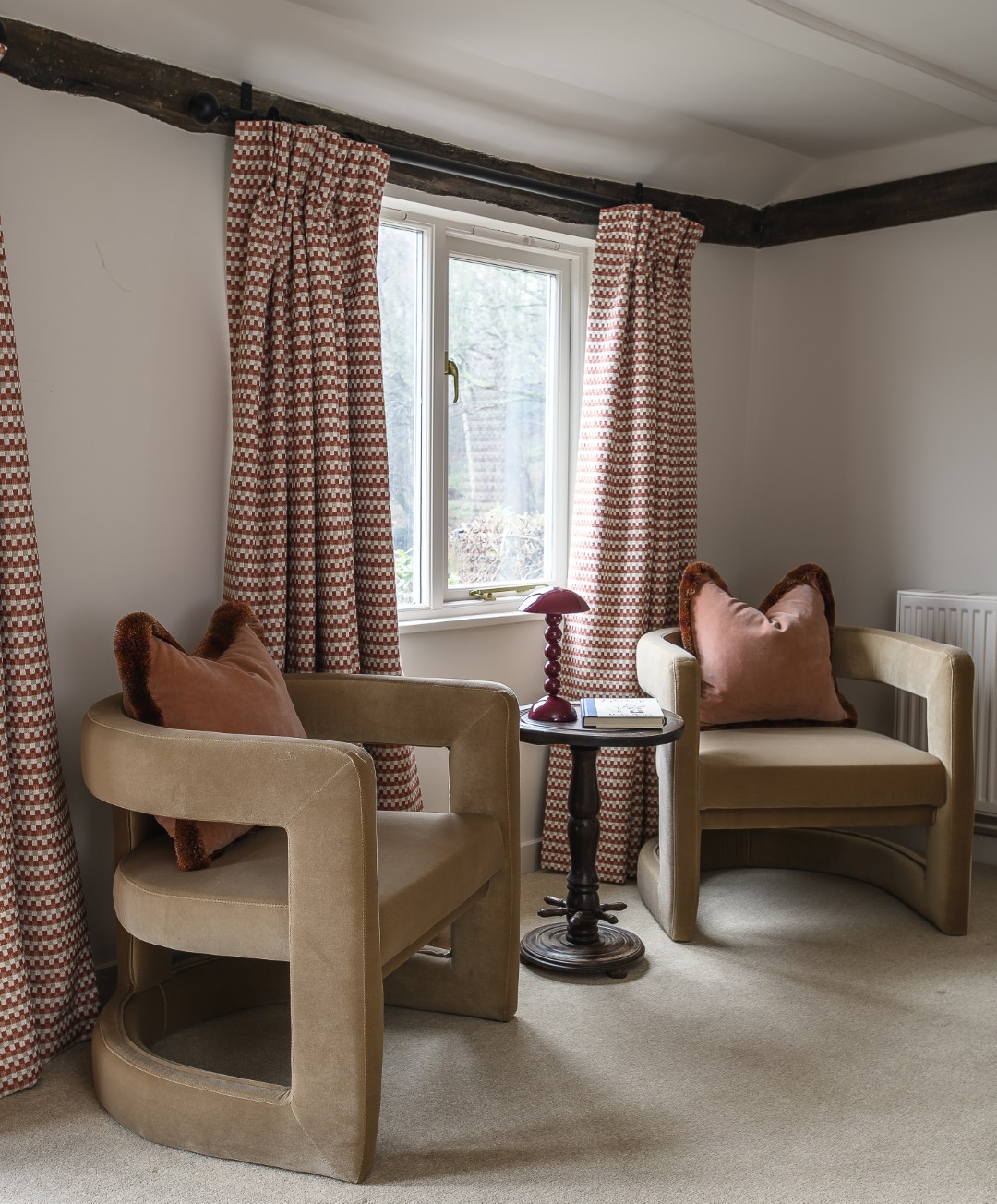
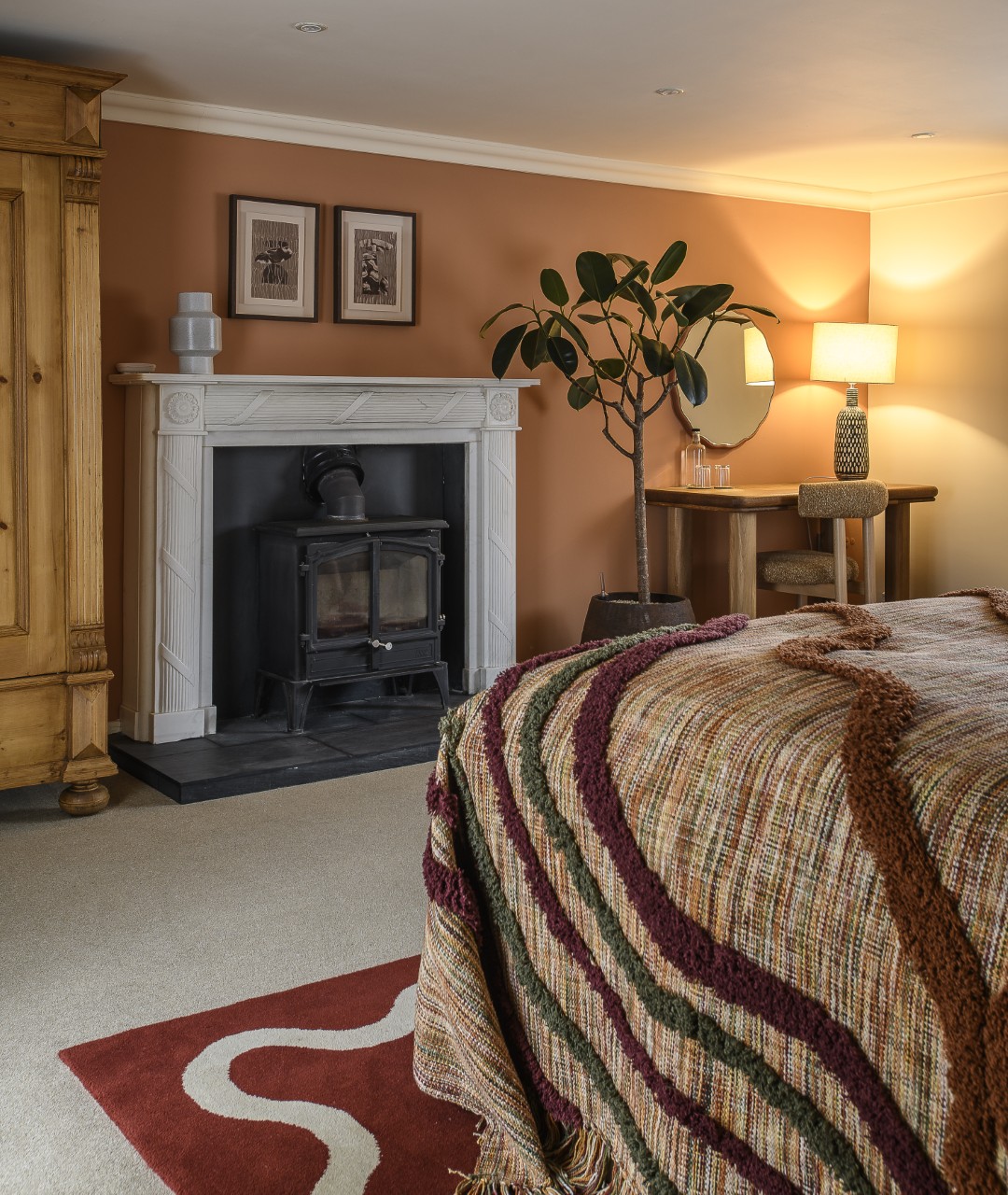
Local ceramicist Holly Dawes has created the lamps in all the bedrooms and now runs her studio from one of the barns (which is open to guests and members) and local artists, such as the hugely talented Chiara Perano, have also added their unique touch in murals that appear on walls and ceilings. This network of local creatives not only adds depth to the interiors but also ensures that Crafted at Powdermills remains very much rooted in its place. Many of the artists have also become members, ensuring the guest list at the hotel remains both diverse and creative.
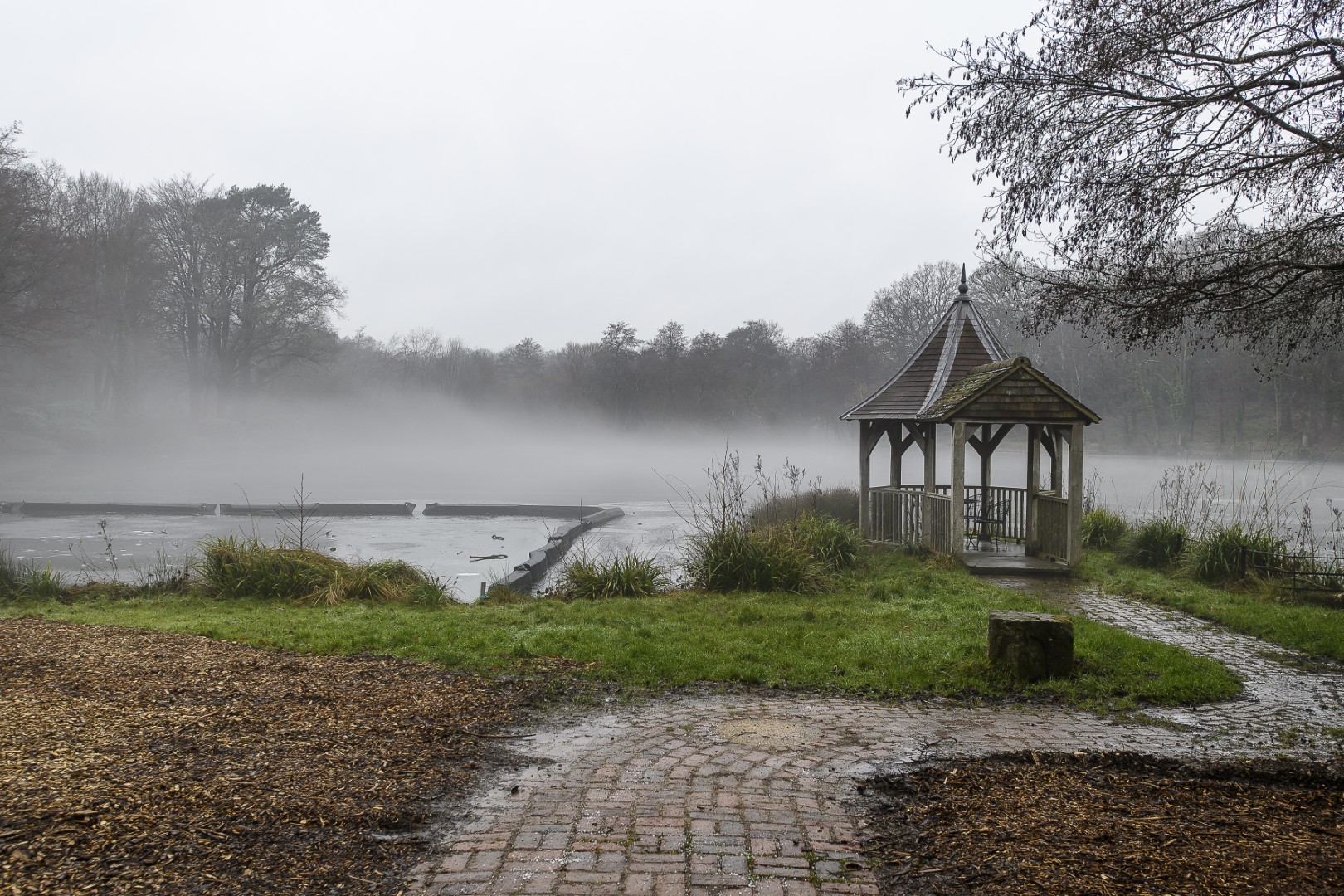
Beyond the house itself, the estate offers space to slow down and engage with the landscape. Cold-water swimming, paddleboarding and kayaking take place on the lake, while woodland walks and outdoor wellness experiences encourage guests to spend time outside. The craft barn and an art studio provide opportunities to make and learn, from ceramics to printmaking, reinforcing the idea that creativity is as restorative as rest. Wellness, here, is not presented as a rigid programme, but as a series of choices. A morning swim might be followed by yoga in the woods or simply a long breakfast by the fire.
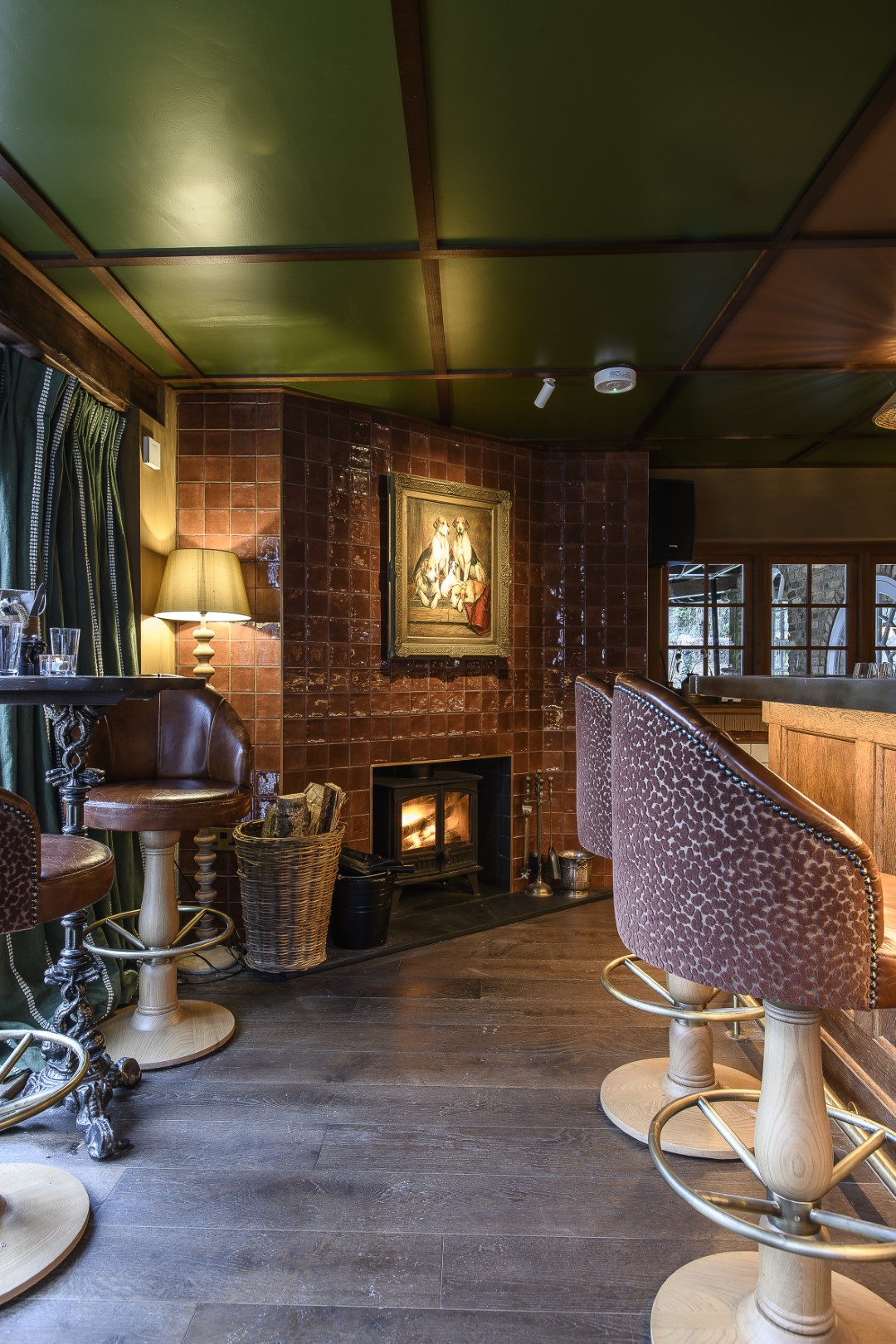
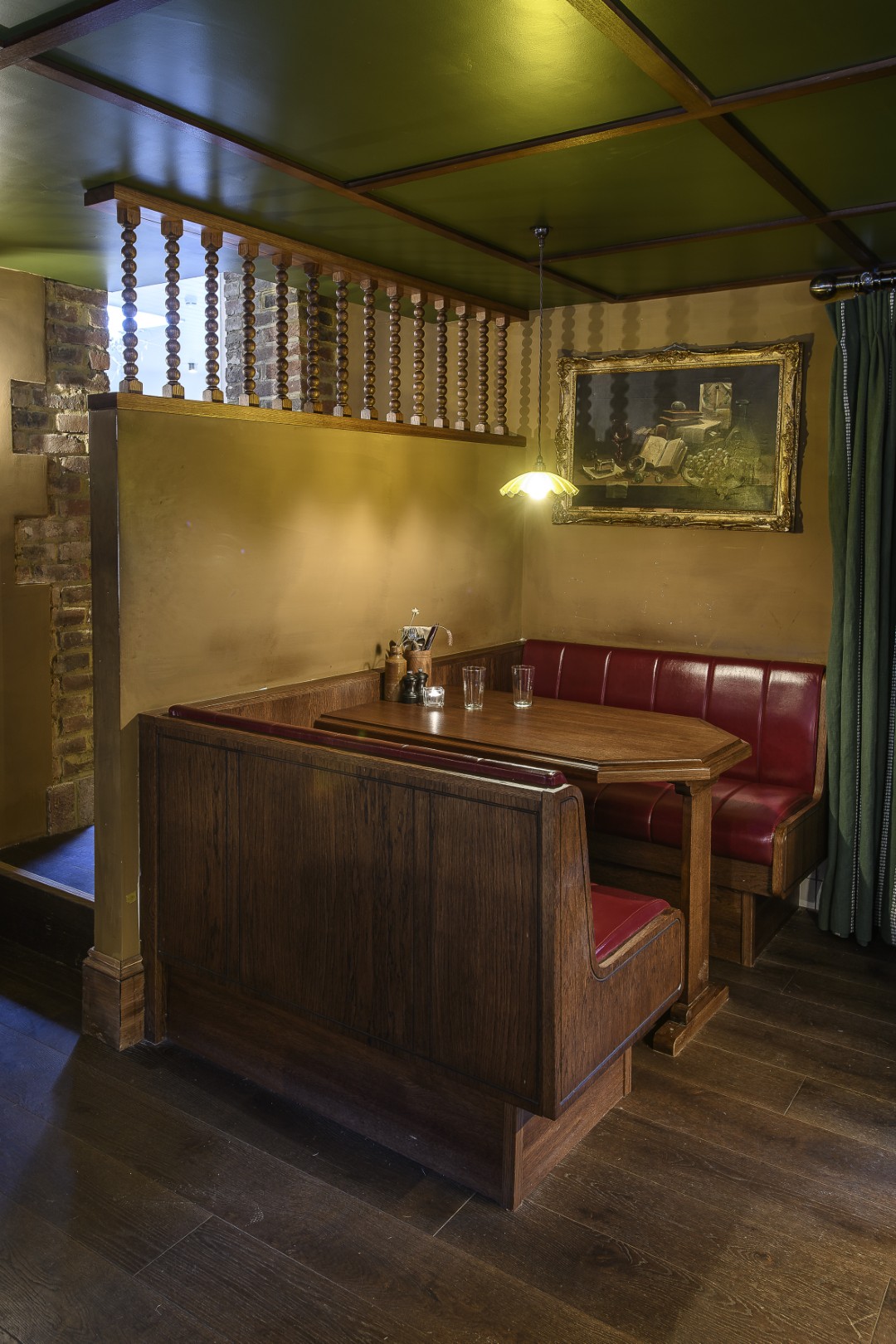
That balance between escape and community runs through every aspect of Crafted at Powdermills. The Pub, which is rapidly becoming a local favourite, is central to this idea. Warm, relaxed and intentionally unfussy, it offers an all-day welcome
Joel Williams describes it as catering to both parts of the brain; indulgence balanced with intention. This flexibility is key to the hotel’s appeal, particularly for guests escaping the bustle of the city.
For now, families are being welcomed in what Williams calls a ‘considered’ way, conscious that the estate has a large amount of open water. There are several cottages, which can be hired by larger groups, as well as the 51 bedrooms and suites. While the pub and cottages offer relaxed spaces for all ages, the hotel is clear about protecting its adult atmosphere in certain areas, and a decision to not host weddings has been equally intentional, with Willliams believing that it is essential to protect the rhythm and feel of the place for members and guests.
Both Williams and King feel that it is this clarity that will allow the space to function as both a local hub and a retreat, without compromising either. For locals it is going to be a case of watch-this-space when it comes to the possibility of school holiday events in the woods or on the lake. For now, guests and members can enjoy a parlour, a co-working space, the decadent Green Room bar, a stunning private dining room and well stocked gym. A gallery space is opening this spring, and a programme of
events including live DJ sets (my decks are at the ready!) will be accompanied with talks, from foraging to fermenting.
As spring and summer burst into life, the estate will continue to evolve. There is an outdoor pool, an Olympic-sized dredged swimming area in the lake, an outdoor sauna, Padel courts and lake-side yoga platforms. Nomadic dining, craft festivals and a deeper engagement with the landscape are all being planned, with care rather than haste. There is a sense that the team at Crafted at Powdermills understands the importance of pacing and of allowing a place to grow into itself. Ultimately, what sets the hotel and club apart is the refusal to conform to a single category and to become something more fluid: a place shaped by its setting, animated by creativity and grounded in the community. It offers us a reminder that luxury, at its most meaningful, is about how a place makes you feel and how it encourages you to live life a little differently.
Address Book:
Memberships at Crafted at Powdermills are £180 per month with a £250 joining fee. For more details visit staycrafted.com and see Instagram @staycrafted_
- words: Antonia Deeson
- pictures: David Merewether
- location: Battle
You may also like
Shop in Colour
Tucked away in a peaceful street, Matt Setchell’s beautifully colourful apartment is testament to the motivation to open his shop – to spread more joy We are in Hastings – the town that welcomes day trippers and here-to-stay creatives in...
Welcome Home
When Richard and Jo returned to the UK in search of a home in the area where Richard grew up, they found just the place they’d been looking for, the perfect blank canvas to transform for family gatherings during Christmas...
Perfect Pitch
A home on the south coast strikes just the right balance of old and new decor thanks to its owners’ passions and careers, all deeply rooted in design You get a sense that there is something special hiding behind the...