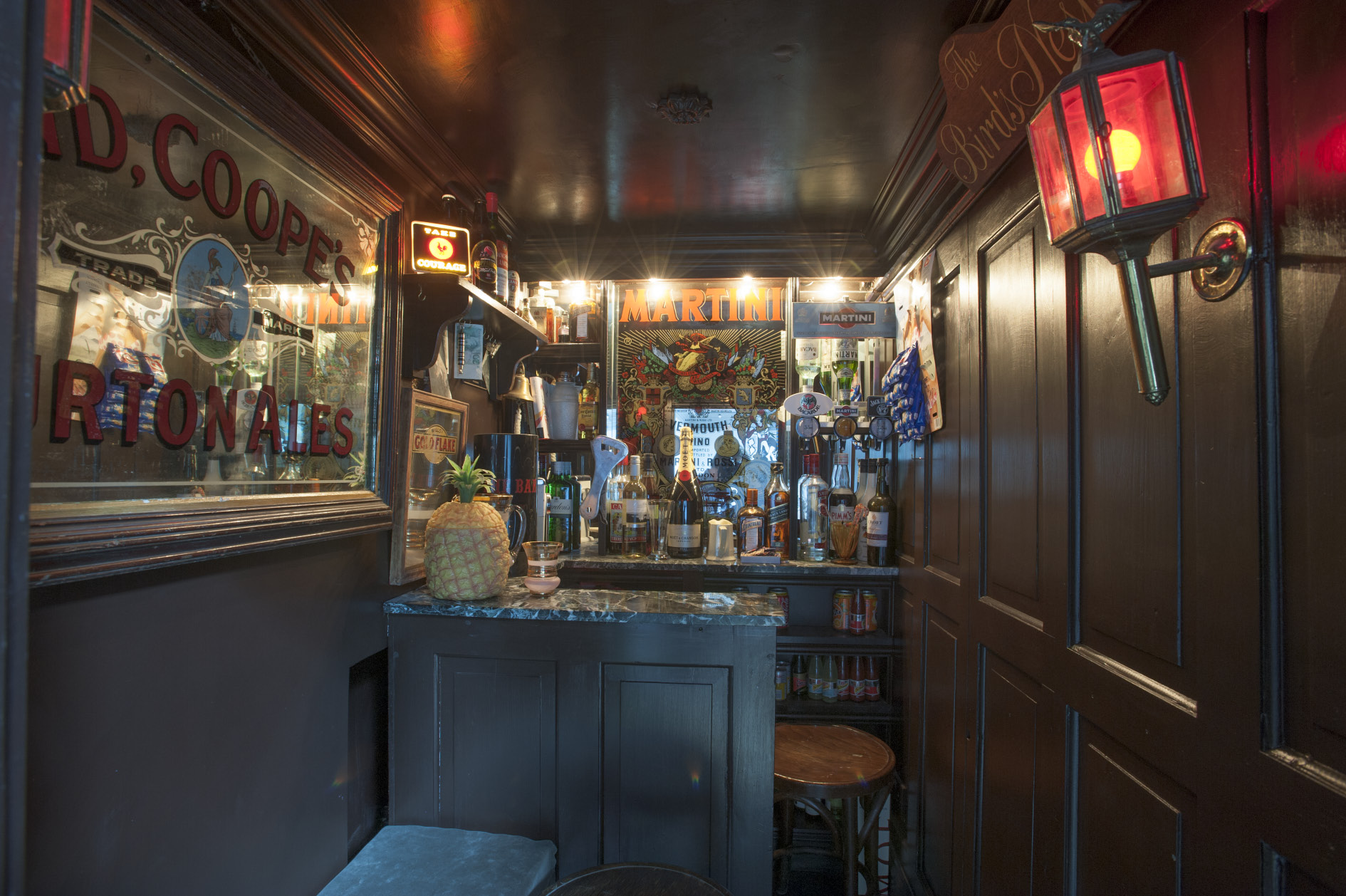
The old Admiral Benbow in St Leonards used to be one of the roughest pubs on the south coast, regulars exiting the windows as often as the doors. Even today, no longer a pub, it is still perhaps just a little forbidding – battleship grey and all but one window shuttered. That one window, however, gives you the vital clue to what you’re likely to find inside – for in that window is a large electric sign that announces, intriguingly, ‘FUN’. As soon as you step inside, however, this hint becomes a hoot – suddenly you find yourself transported to a fabulous Fifties fairground fantasy land. One of the pub’s huge former bar areas has been converted into a showroom for owner Philip Oakley’s lighting business, Philip Oakley Illuminations, and everywhere period electrical signs and Philip’s own designs jostle for space and attention with escapees from funfairs – carousel horses, roundabout tanks and boats, magic pumpkins – in every corner there is something that dazzles and fascinates. A former interior designer specialising in smart boutiques, Philip and fiancée Olivia decided to make the London break and headed initially for Hastings Old Town. However, while they were looking at a promising property there, they heard of the sale of the Admiral Benbow, saw it and realised its extraordinary potential. “Space was a major attraction because it allowed me to live and work from the same location which hadn’t been possible in London,” he said. “The pub was perfect because it was already divided into commercial and domestic space and that meant the minimum of planning problems.” The couple bought the property about three-and-a half years ago and the first six months was devoted to tearing out the existing furnishings and pub equipment. Decorating then took another year. The ground floor became a showroom, workshop and storage space. The latter was particularly important because Philip is, by his own admission, something of a collector. ‘Something of a collector’, however, doesn’t quite cover his commitment – this is a man who owns, for instance, 1,000 sets of Christmas fairy lights. Upstairs, though, is where the fun really begins. At some time in its history, the pub owners had converted a vast space above the bars into a snooker hall and this has now become Philip and Olivia’s main reception room, or perhaps playroom might be a better description. When the WT team walked in, the reaction from each, in turn, was identical: ‘Wow!’ Everywhere are spectacular lighting features, some sourced from seaside promenades, others designed by Philip specifically for this room, others part of his own lighting range. The room falls into two sections – a seating area with chrome-framed, tapestry-upholstered sofa and chairs gathered round Persian and Indian rugs, an open fireplace and woodburner, and a dining space. Above the fireplace is a large electric sign in the form of an ampersand that has yet to have its lights installed while on the right is a circus drum and the left a large tulip light, originally part of a street display in Broadstairs. A bookcase in an alcove to the right of the sitting area isn’t – it’s a door perfectly camouflaged by trompe–l’oeil Deborah Bowness wallpaper. And neither is the almost full-length picture of the elegant society lady to the left of the fireplace what it seems. This swings back and down comes a little staircase that leads up to a secret pub bar complete with stools and miniature banquette – a tribute to the building’s origins. On the wall dividing the two areas is a neon sign designed and made by Philip in the shape of a cross bearing the illuminated quotation from Edgar Allan Poe’s short story ‘The Masque of the Red Death’: Each man creates his own God for himself – His own Heaven, his own Hell. “I think neon is a beautiful medium and each letter has to be hand blown,” he says. “But it’s fast disappearing, a dying art pushed out by LED – I like to use it whenever I can to help keep the craft alive.” What catches the eye first in the dining area is the dining table itself – its glass top supported by a surgical operating table that Philip bought at a Ministry of Defence auction in Germany. “Actually, I bought three,” admits his inner-collector. Above the table, in pride of place – and justly so – is a beautiful neon tribute to his mother: Lots of love, Mum in his mother’s handwriting taken from a letter she wrote him from Venice. In a corner of the room is a 30-year-old, seven-foot high, 150-lamp road feature from Blackpool Illuminations. A former director of the Blackpool Festival, Philip has never lost his love of Britain’s most famous illuminations. Other Philip-finds here include a 40-year-old horse from a fairground Kiddie Ride and two sets of cinema seats that complement the cornicing and ‘EXIT’ signs, over the doors, that also came from a cinema. The ceiling is a triumph. Above is a soaring arched skylight and below it two levels of wonderful red and white fairground lights. In the centre hangs a blue neon hangman’s noose. The floor throughout the room is of reclaimed herringbone parquet that took two weeks just to clean before it was laid. Off this dramatic main room, through the cinema doors, is a dark cinema-like passage, lit by a ceiling covered with pieces from Blackpool and fitted with blue and red golf ball LEDs. At the end is the couple’s sitting room, scene of one of the few – but expensive – run-ins Philip had with the local planners. Originally, one of the windows faced the lane to one side of the building and he wanted to move it to the corner and so give the room a view of the sea. At first the planners said ‘no’ but he appealed and won by proving that the window had originally been exactly where he wanted to move it to. The first thing one notices about the room is the Moroccan tiling that covers one wall – except that it isn’t tiling but Deborah Bowness again. Seating includes leopard-skin fabric day bed and sofa. The shelving is Vitsoe by Dieter Rams. “They’ve made it since the sixties,” says Philip. “Hideously expensive but very versatile and always available if you want to add to it.” The window shutters, like all the property’s shutters, are made from old doors. “It’s a great trick and works equally well for panelling.” In the master bedroom, even the intimate, period French bed’s headboard, framed by sets of antlers, is upstaged by the superb, bow-fronted 1970s Fornasetti chest of drawers. Above it is a large period gilt mirror which folds back to reveal the bedroom television. On another wall is a Van Gogh print still bearing its original Old Town price tag: Was £20 million. Reduced to £25. In the first guest bedroom, Philip’s passion for Blackpool Illuminations is again given full reign in the shape of three spectacular flying ducks, the birds echoed in more Deborah Bowness wallpaper. There are also two wonderful 1950s British Rail holiday posters alerting customers to the delights of St. Leonards. Philip and a friend reproduced the posters under licence to raise money towards saving Hastings Pier, raising over £20,000 in profit in the first year. In the second spare bedroom, Philip has again pressed old doors into service, this time to make cupboards. The light over the bedhead is a wooden carving of the stern of the Victory, but, again, nothing is quite as it seems – the carving swings out from the wall to reveal a secret cupboard. The bathroom is timber-clad from floor to ceiling with wood from reclaimed pallets and the old full length, glass-fronted-and-sided surgical cabinet vies for pride of place with the old French basin – another Old Town find. Old penny-in-the-slot scales stand beside the loo, the flush handle for which is a chrome wheel valve-opener from a fire engine. This is truly a home that needs to be seen to be fully appreciated. It’s worth checking out Hastings and St Leonards arts festival, Coastal Currents as the house is sometimes opened as part of the exciting programme of events.
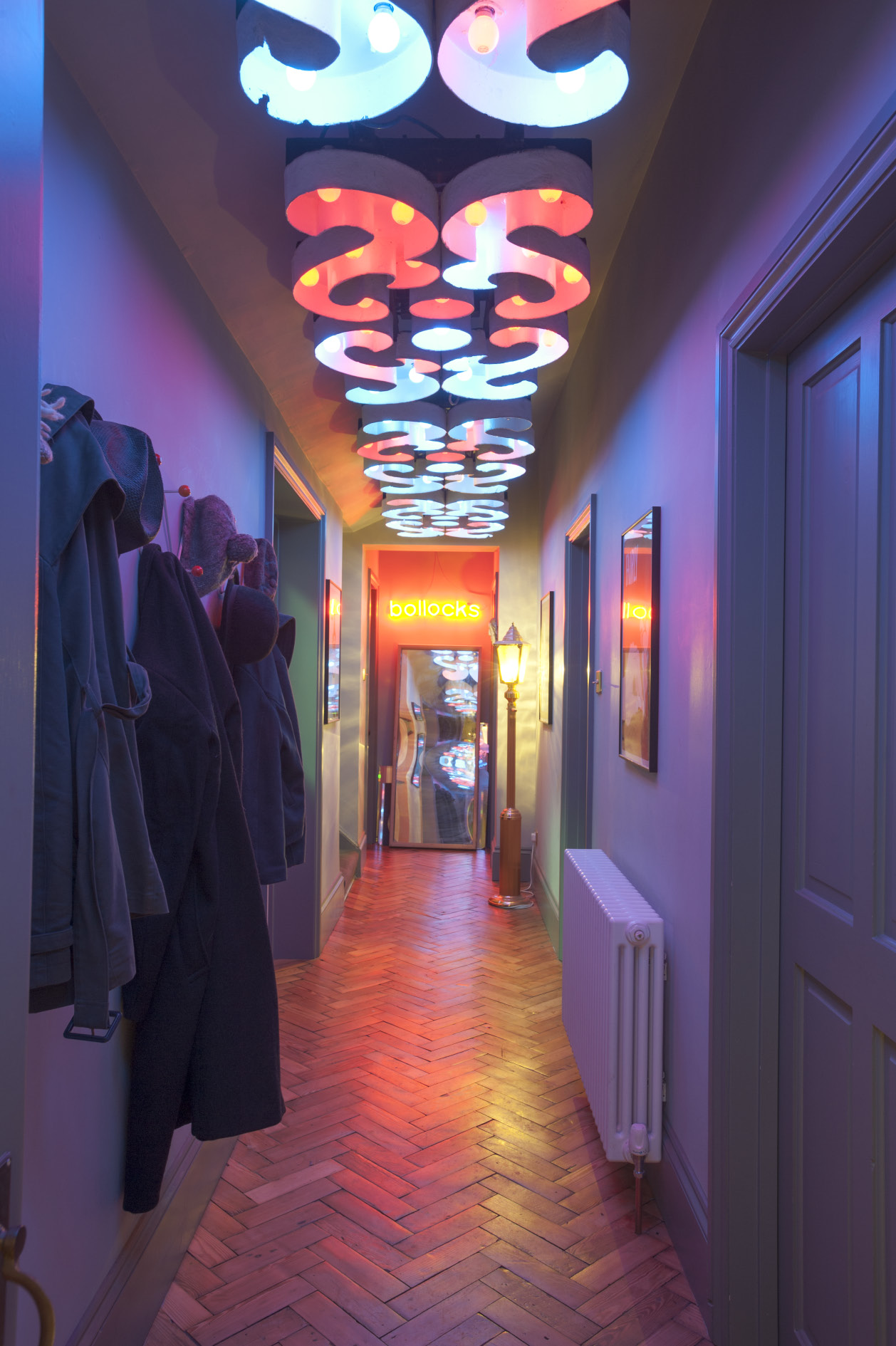
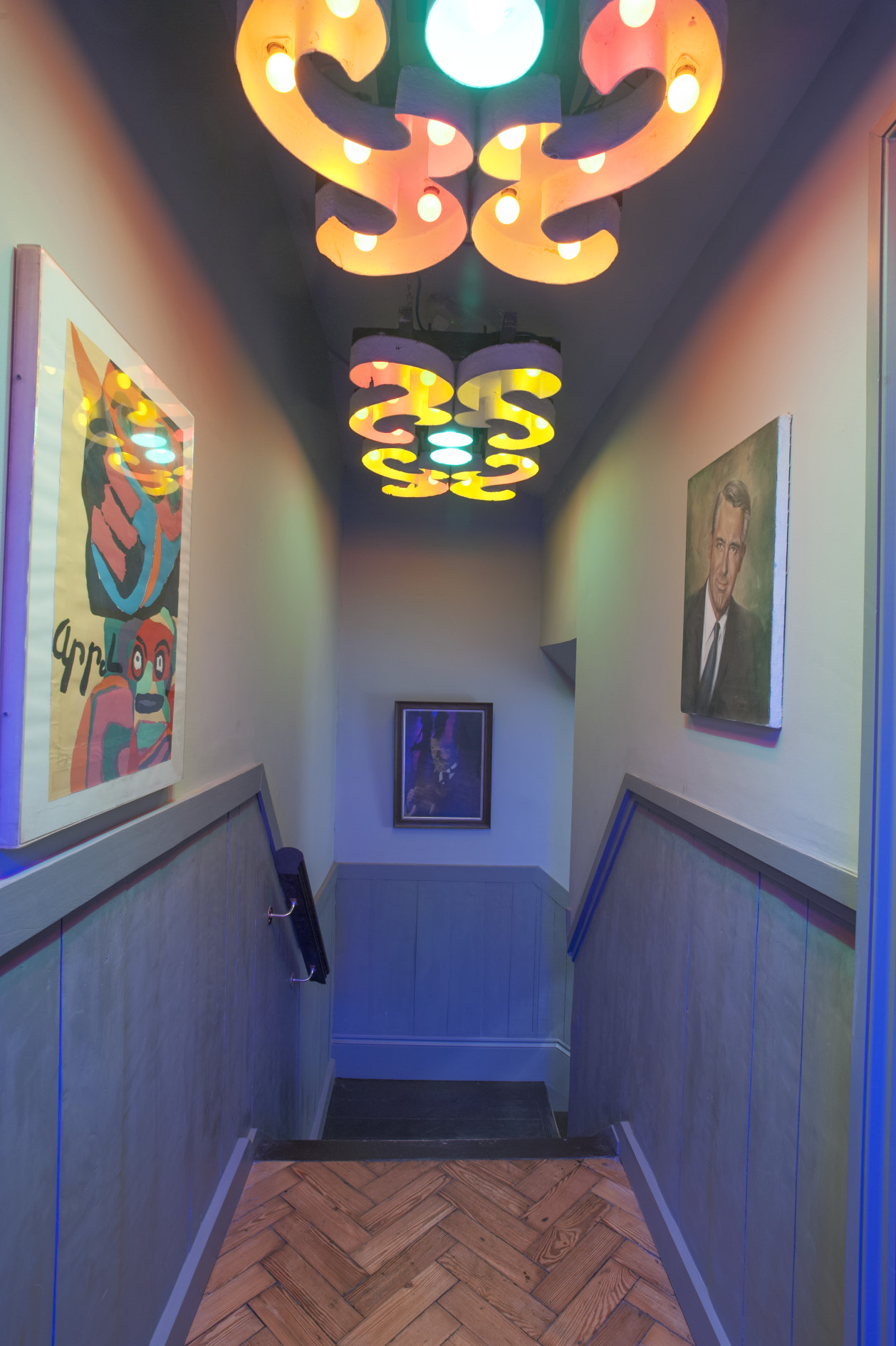
The long hallway, which greets visitors who enter the living accommodation, is lit by a ceiling covered with pieces from Blackpool and fitted with blue and red golf ball LEDs
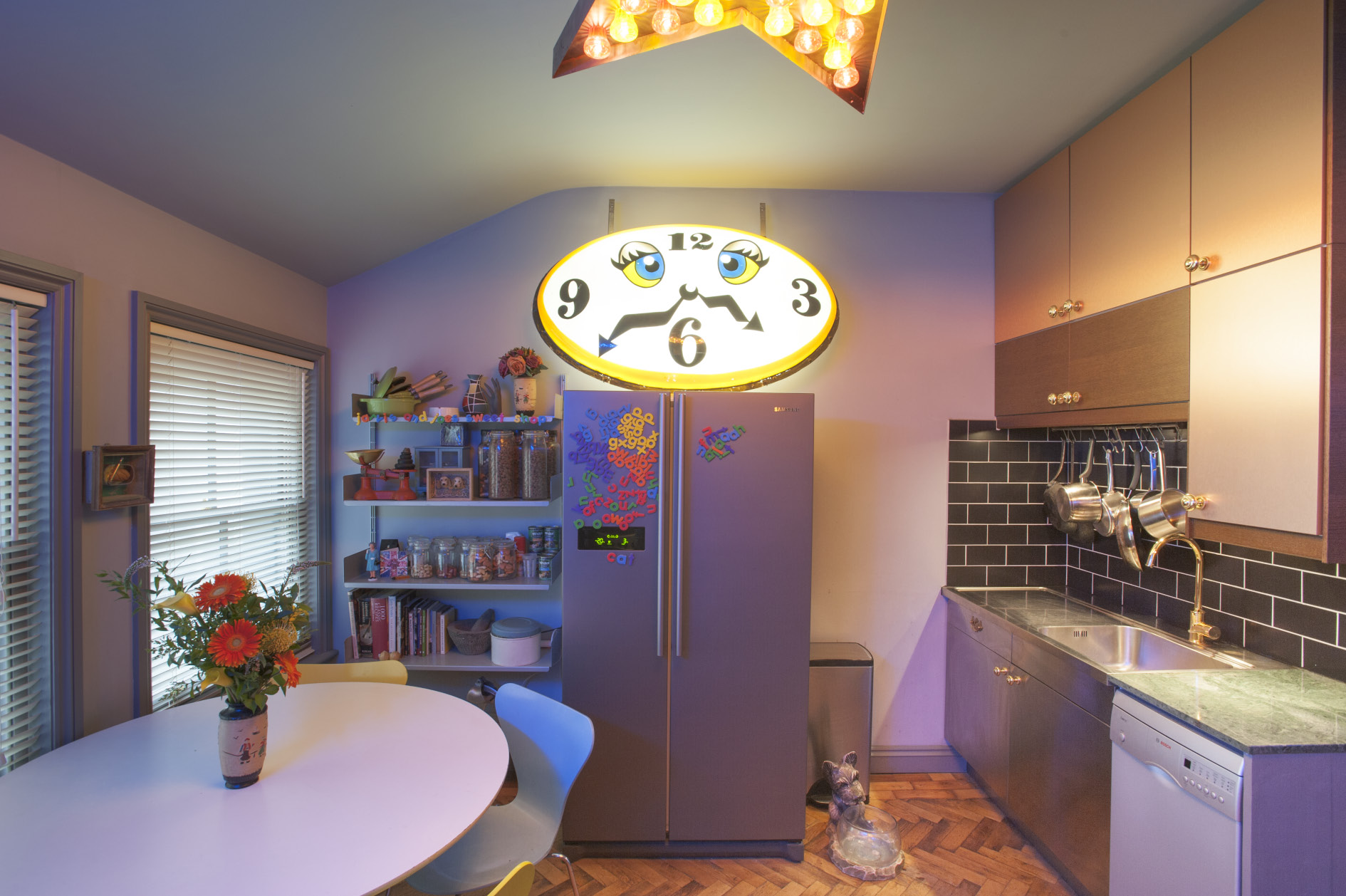

Centrepiece of the kitchen is a giant ceiling-mounted star. The copper-fronted units that Philip and Olivia found in IKEA reflect the light into every corner of the room
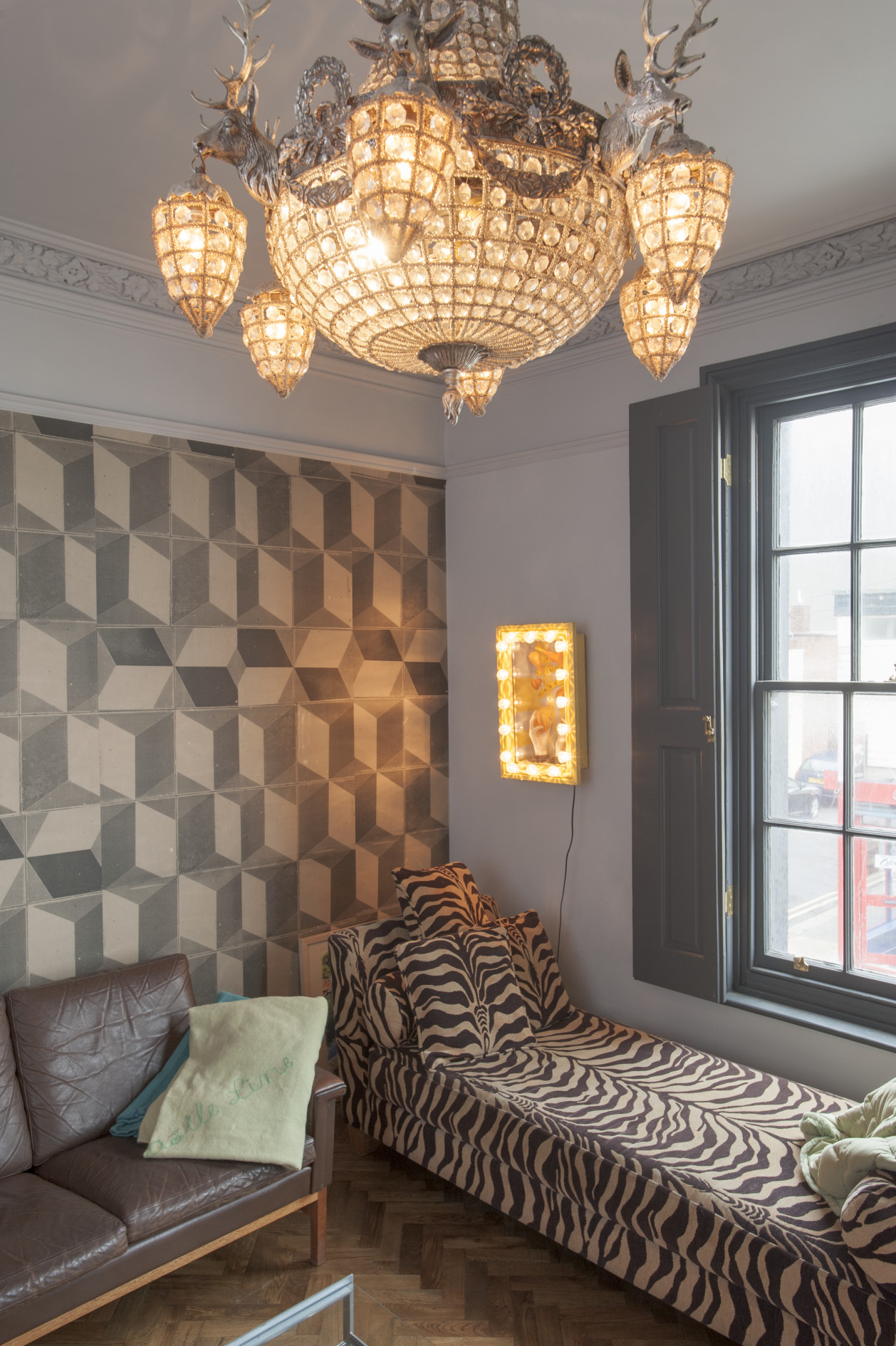
Geometric grey wallpaper lines the rear wall of the cosy ‘snug’ sitting room, whilst a zebra-print chaise longue is positioned next to the shuttered window

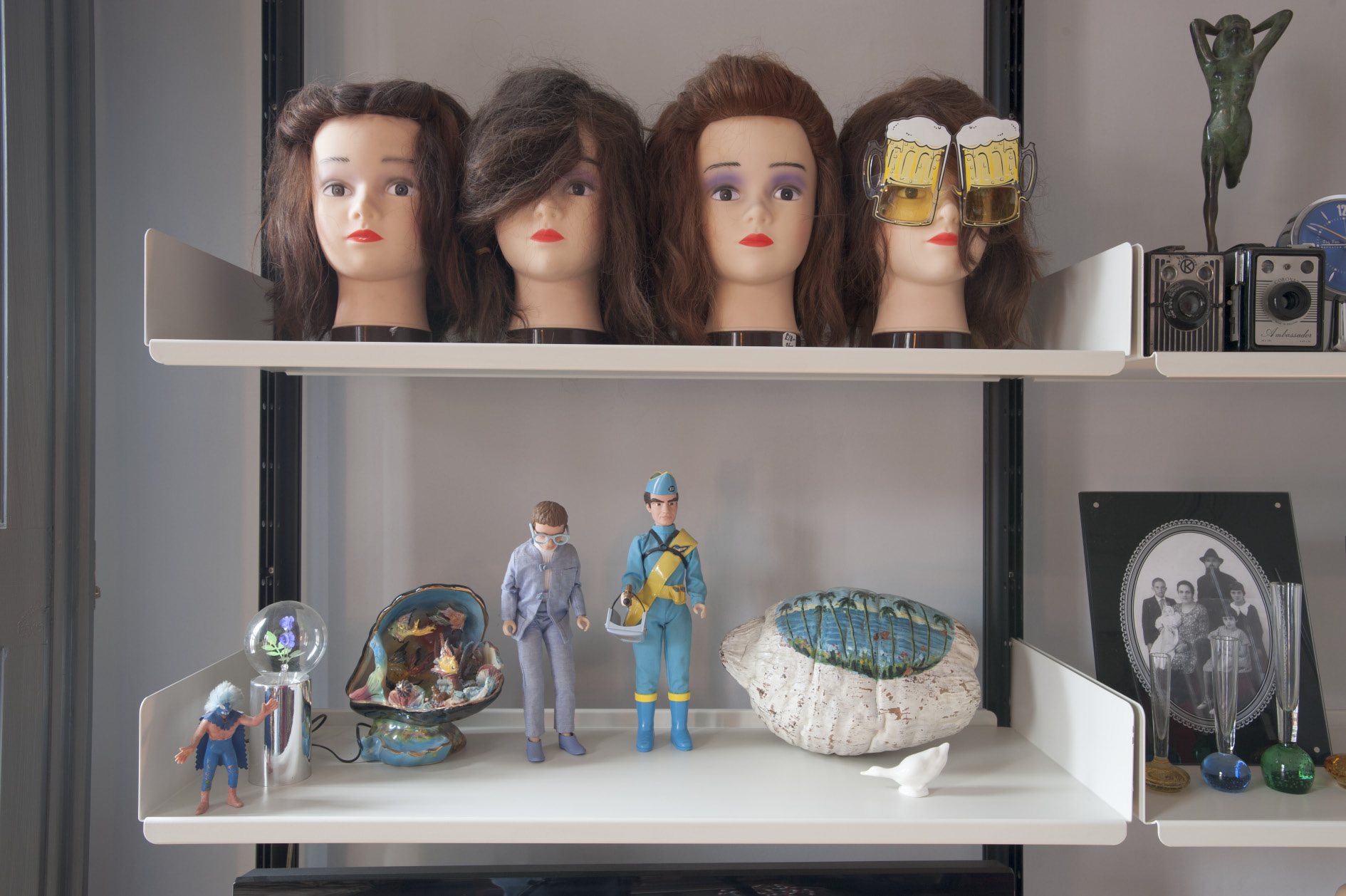
Hairdressing training heads line one shelf in the sitting room
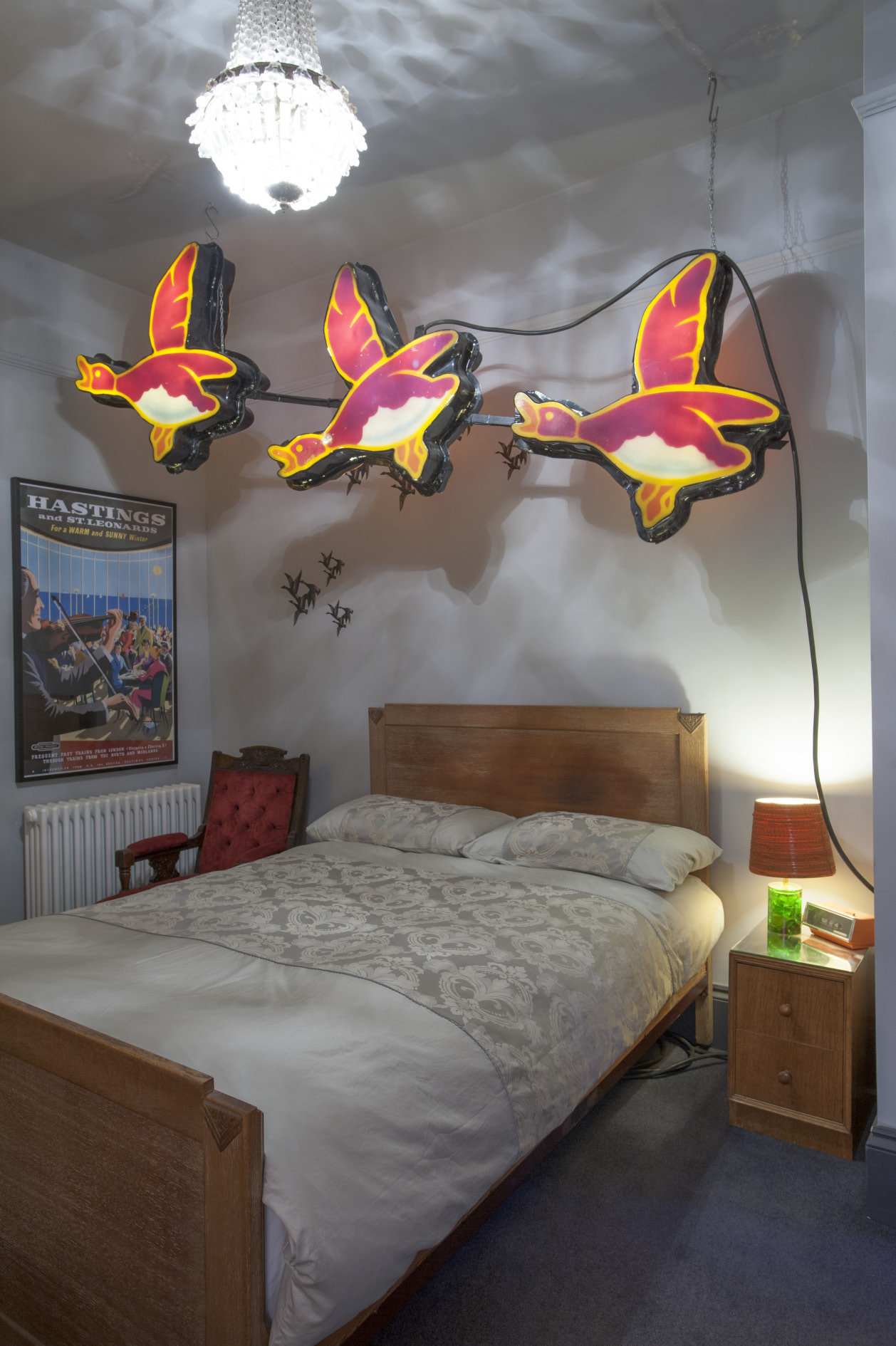
Next to the sitting room, in the first of two guest bedrooms, Philip’s passion for Blackpool Illuminations is again given full reign in the shape of three spectacular flying ducks
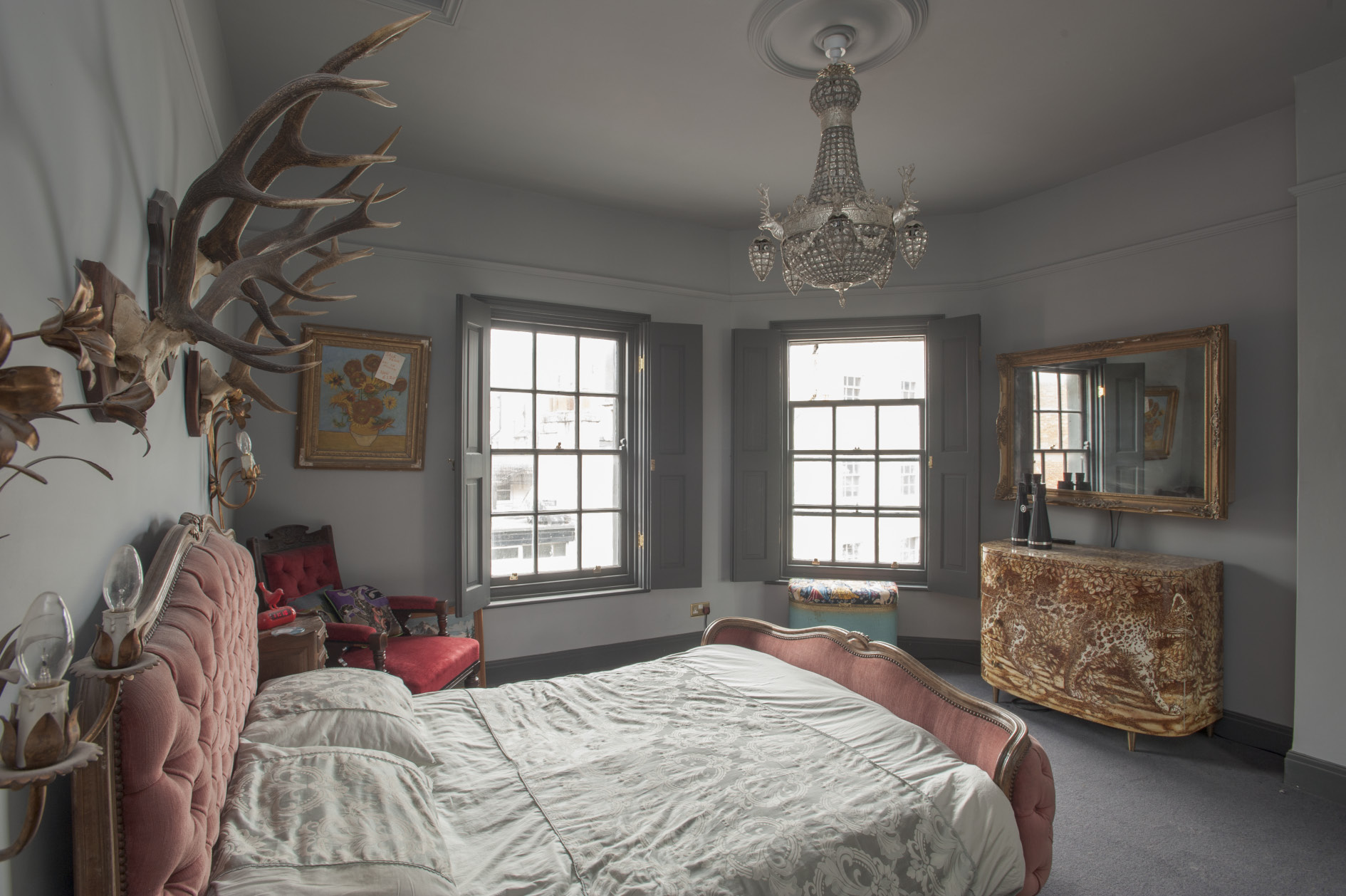
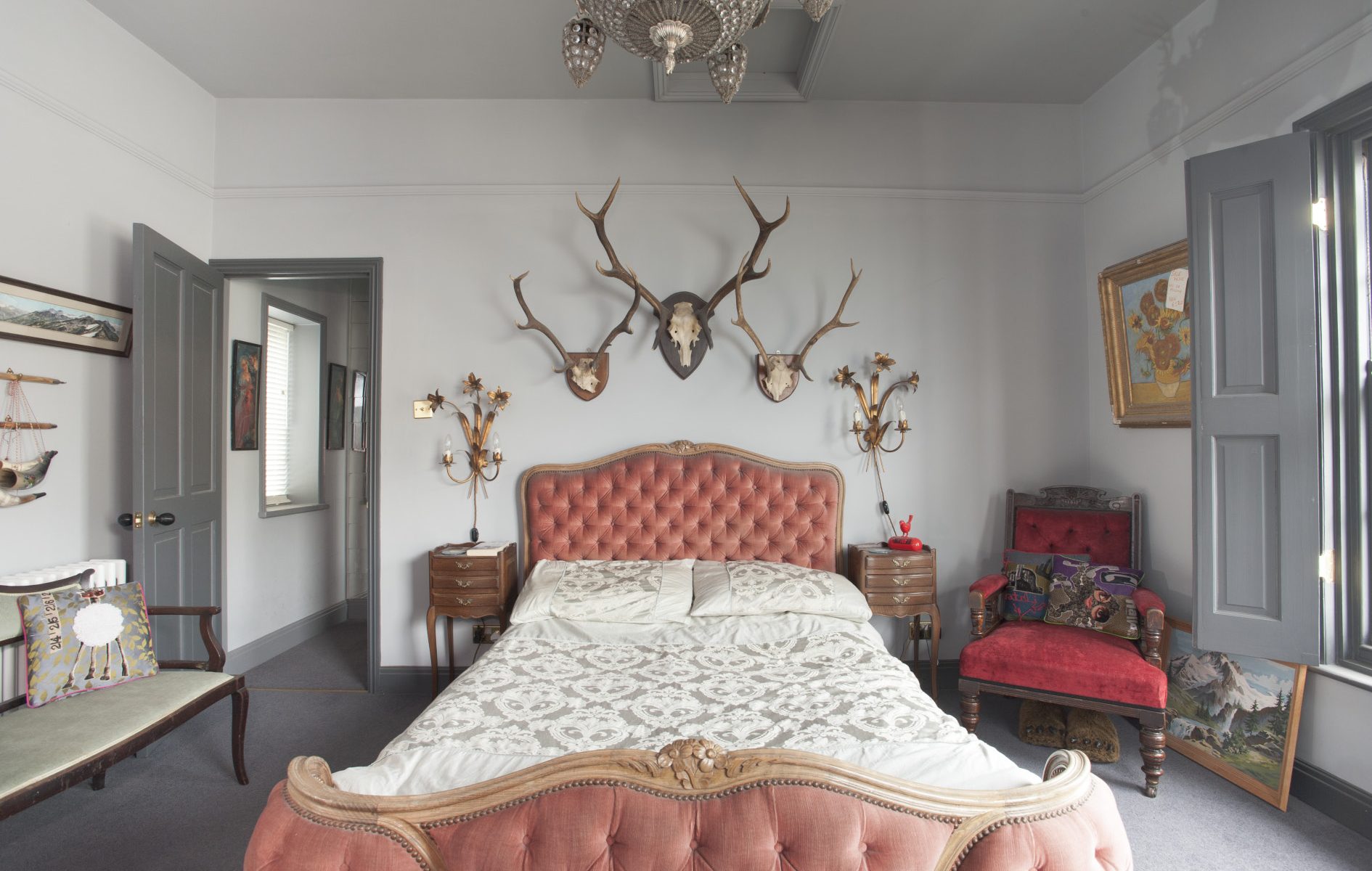
In the master bedroom the period French bed, framed by sets of antlers is upstaged by the superb, bow-fronted 1970s Fornasetti chest of drawers
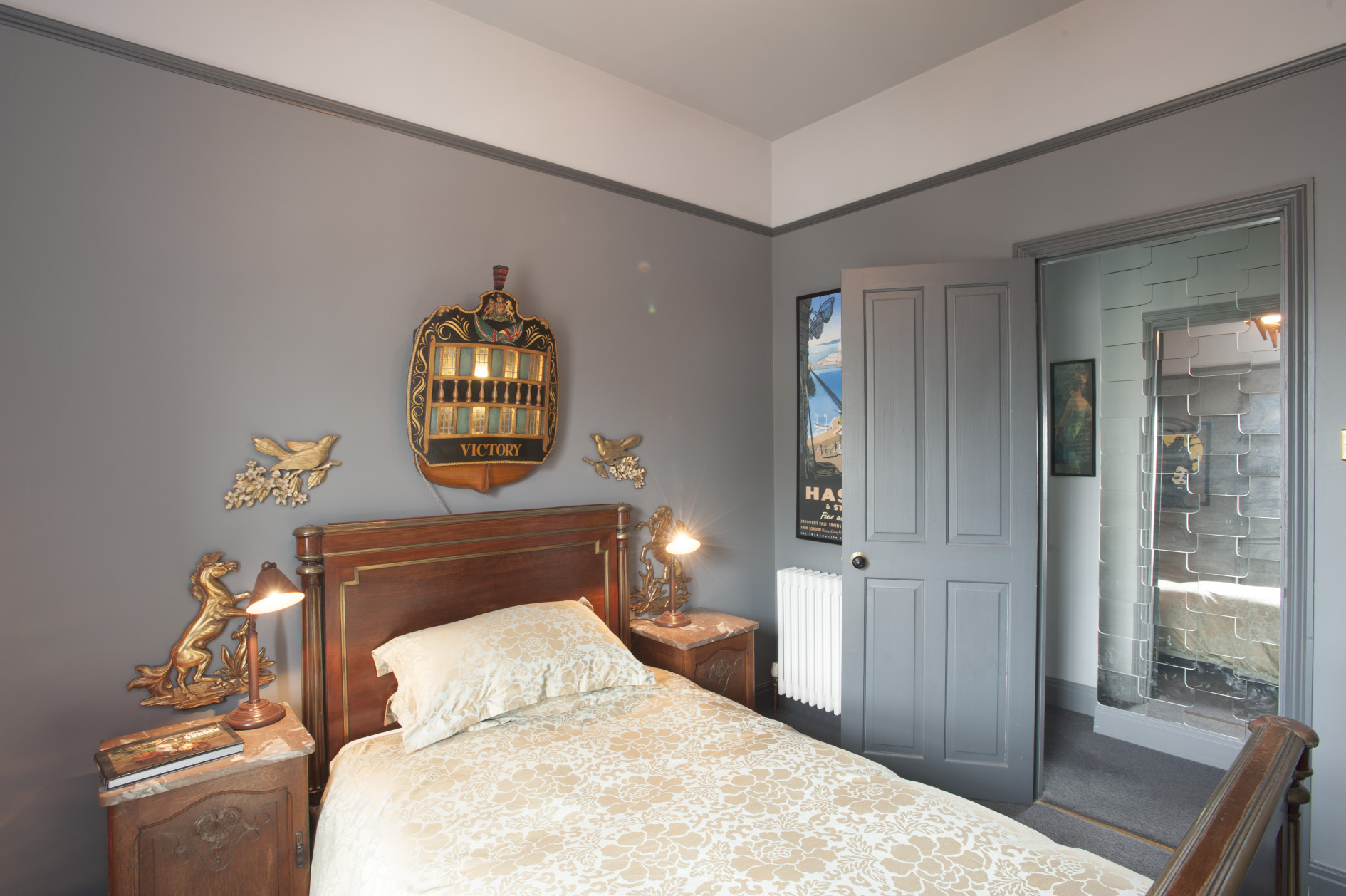
In the second spare bedroom the light over the bedhead is a wooden carving of the stern of the Victory which swings out from the wall to reveal a secret cupboard
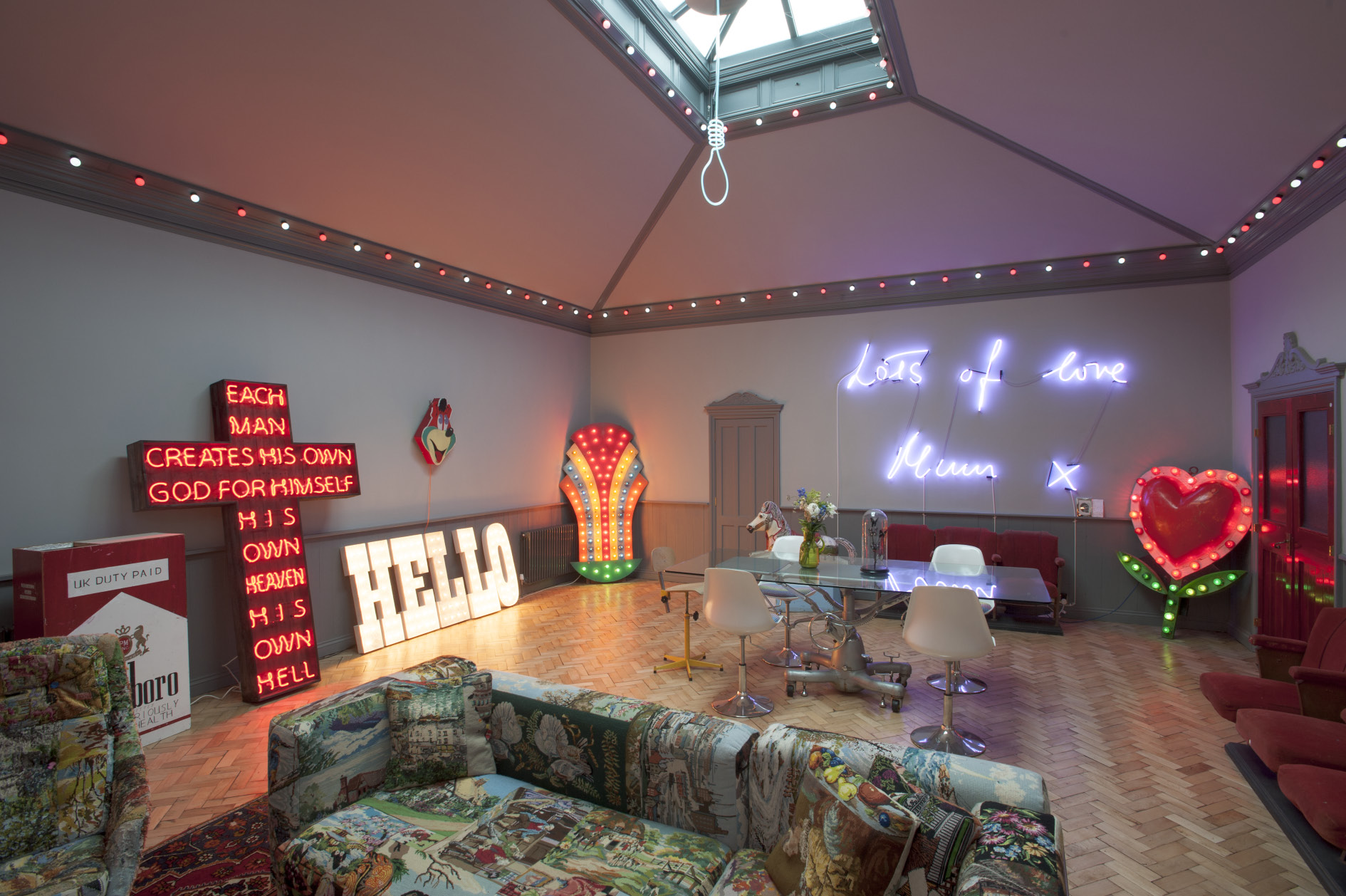
Everywhere are spectacular lighting features, some sourced from seaside promenades, others designed by Philip specifically for this room, others part of his own lighting range
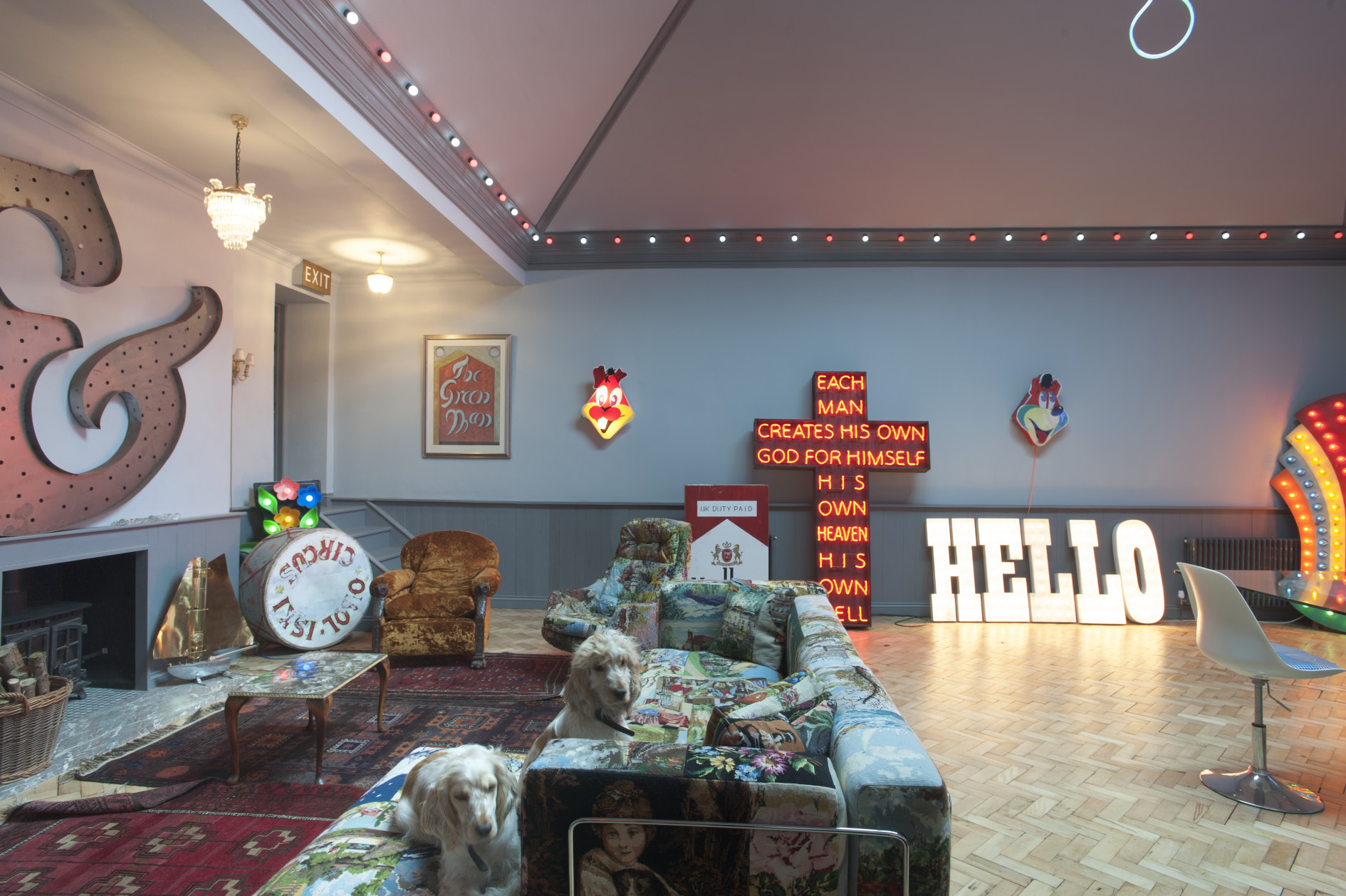
Philip and Olivia’s cocker spaniels, Joe and Jarvis, make themselves comfortable in the main reception room. On the wall is a neon sign designed and made by Philip in the shape of a cross bearing the illuminated quotation from Edgar Allan Poe’s short story ‘The Masque of the Red Death’

An almost full-length picture of an elegant society lady to the left of the fireplace isn’t what it seems. It swings back and down comes a little staircase that leads up to a secret pub bar complete with stools and miniature banquette – a tribute to the building’s origins.

Above the former operating- now dining- table, in pride of place is a beautiful neon tribute to Philip’s mother: Lots of love, Mum in his mother’s handwriting taken from a letter she wrote him from Venice

Philip, a former director of the Blackpool Festival, sourced the 30-year-old, seven-foot high, 150-lamp road feature, which stands in one corner of the room, from Blackpool Illuminations
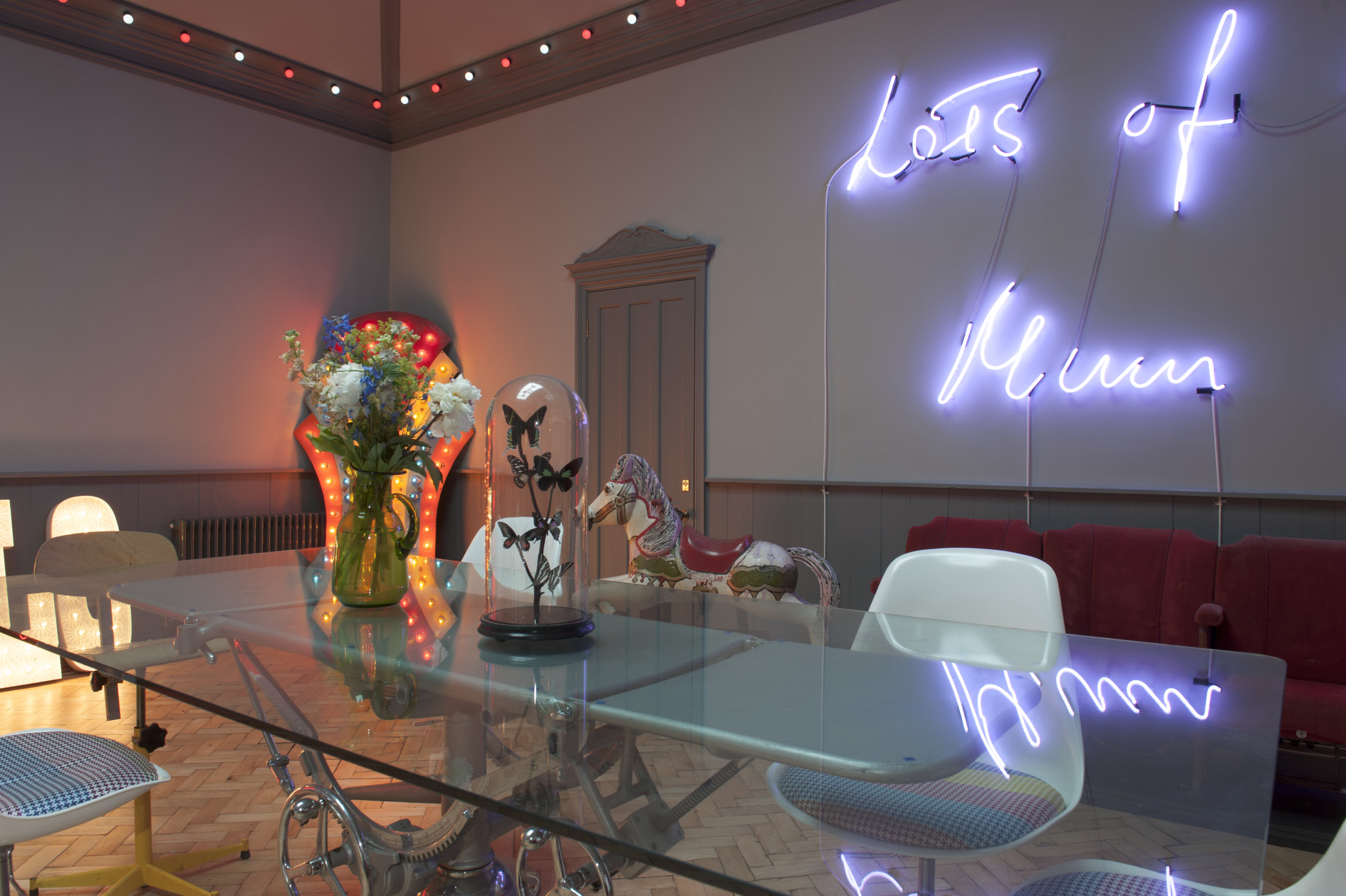
A 40-year-old horse from a fairground Kiddie Ride stands beside the door to the first floor washroom, complete with illuminated mirror
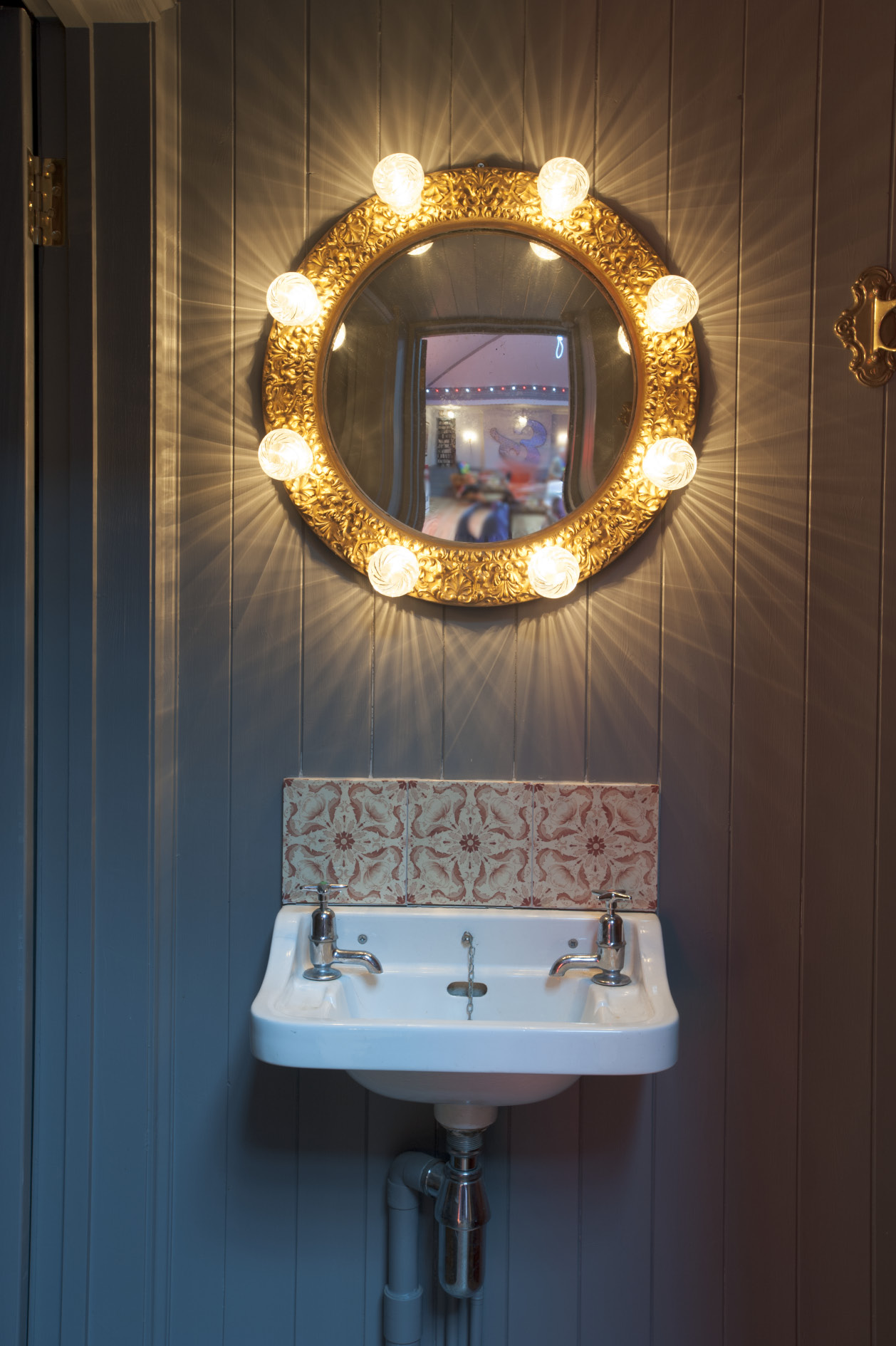
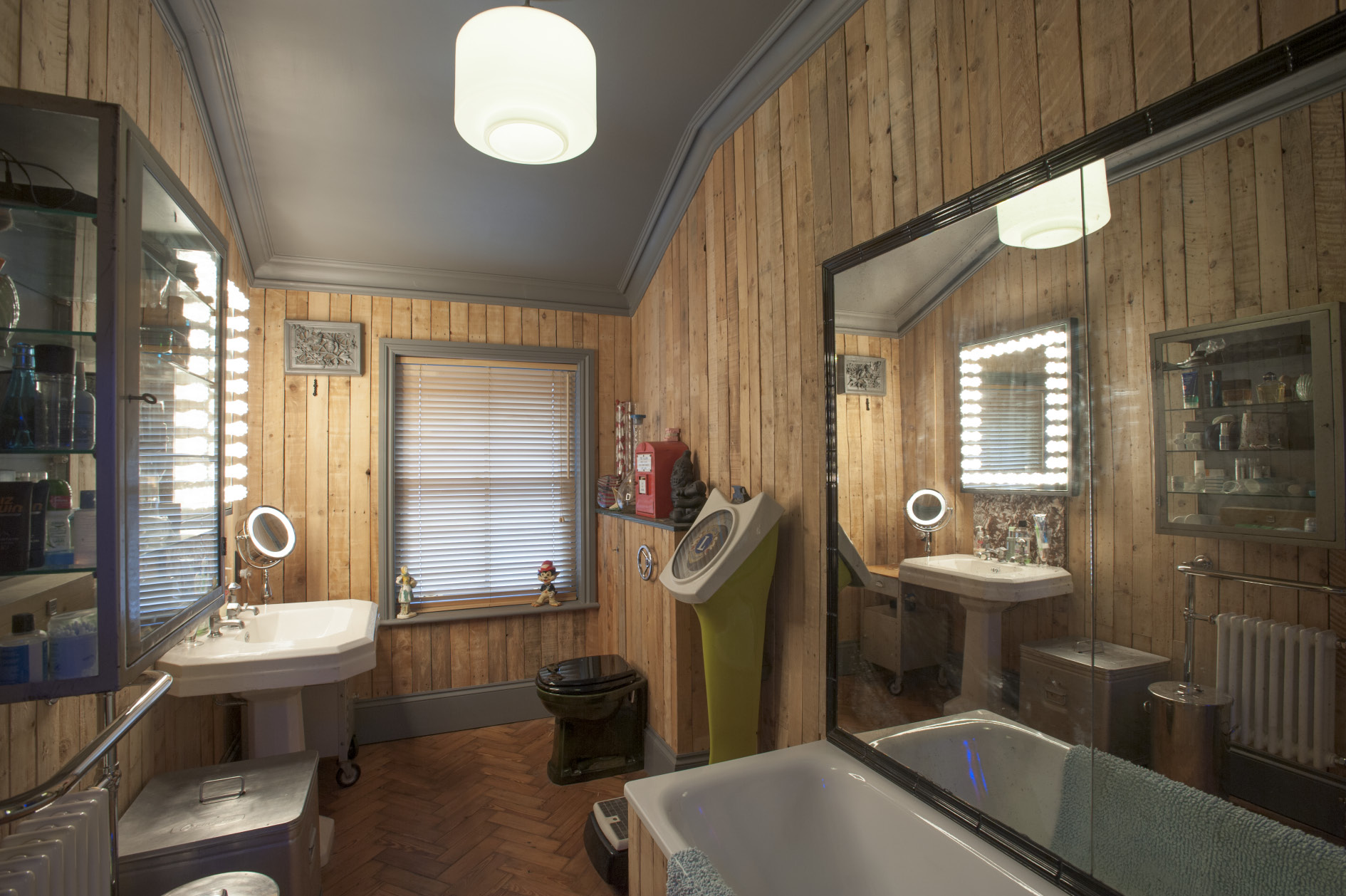
The timber-clad bathroom is home to an old full length, glass-fronted-and-sided surgical cabinet and French basin – another Old Town find. Old penny-in-the-slot scales stand beside the loo, the flush handle for which is a chrome wheel valve-opener from a fire engine

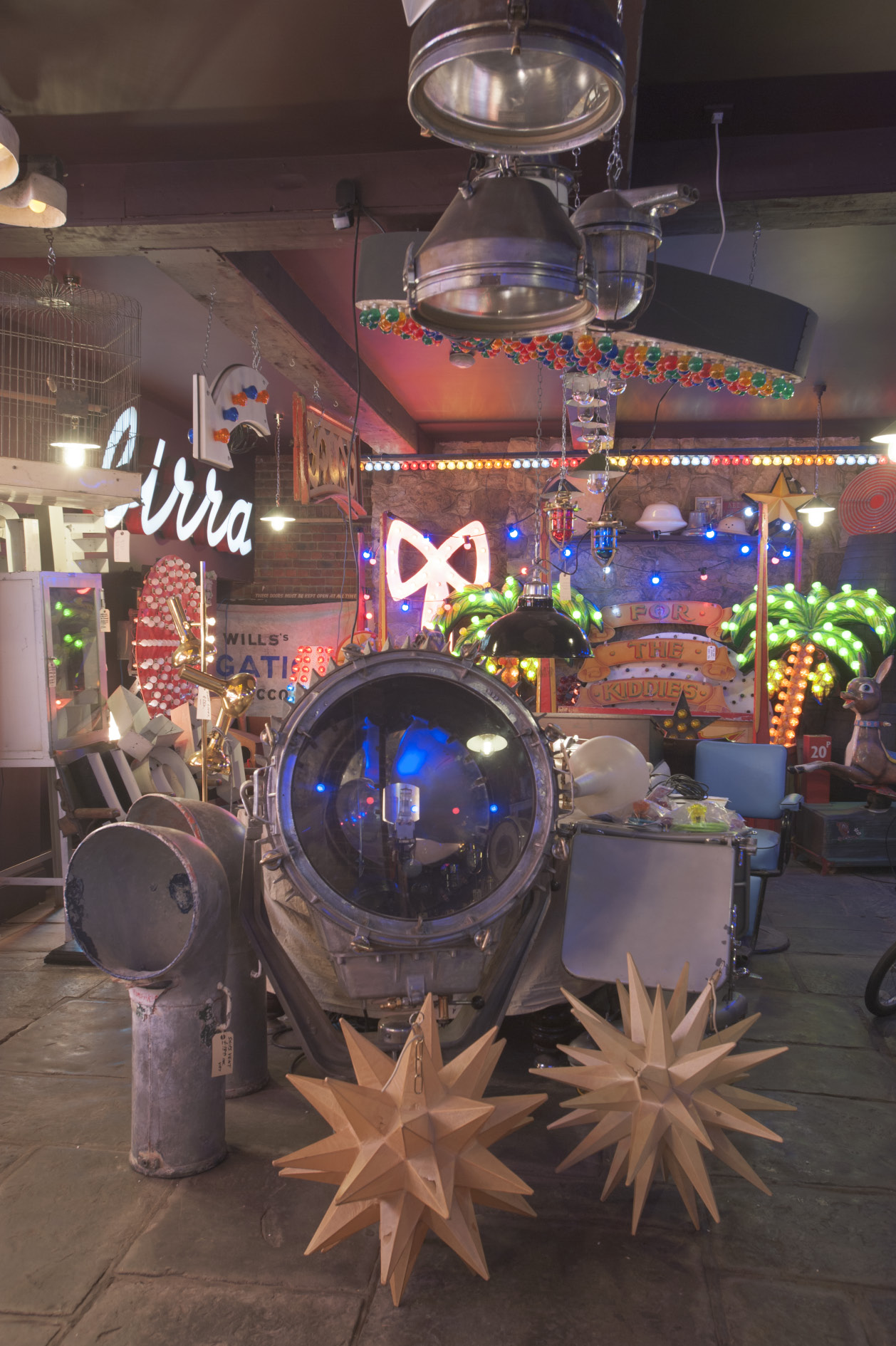
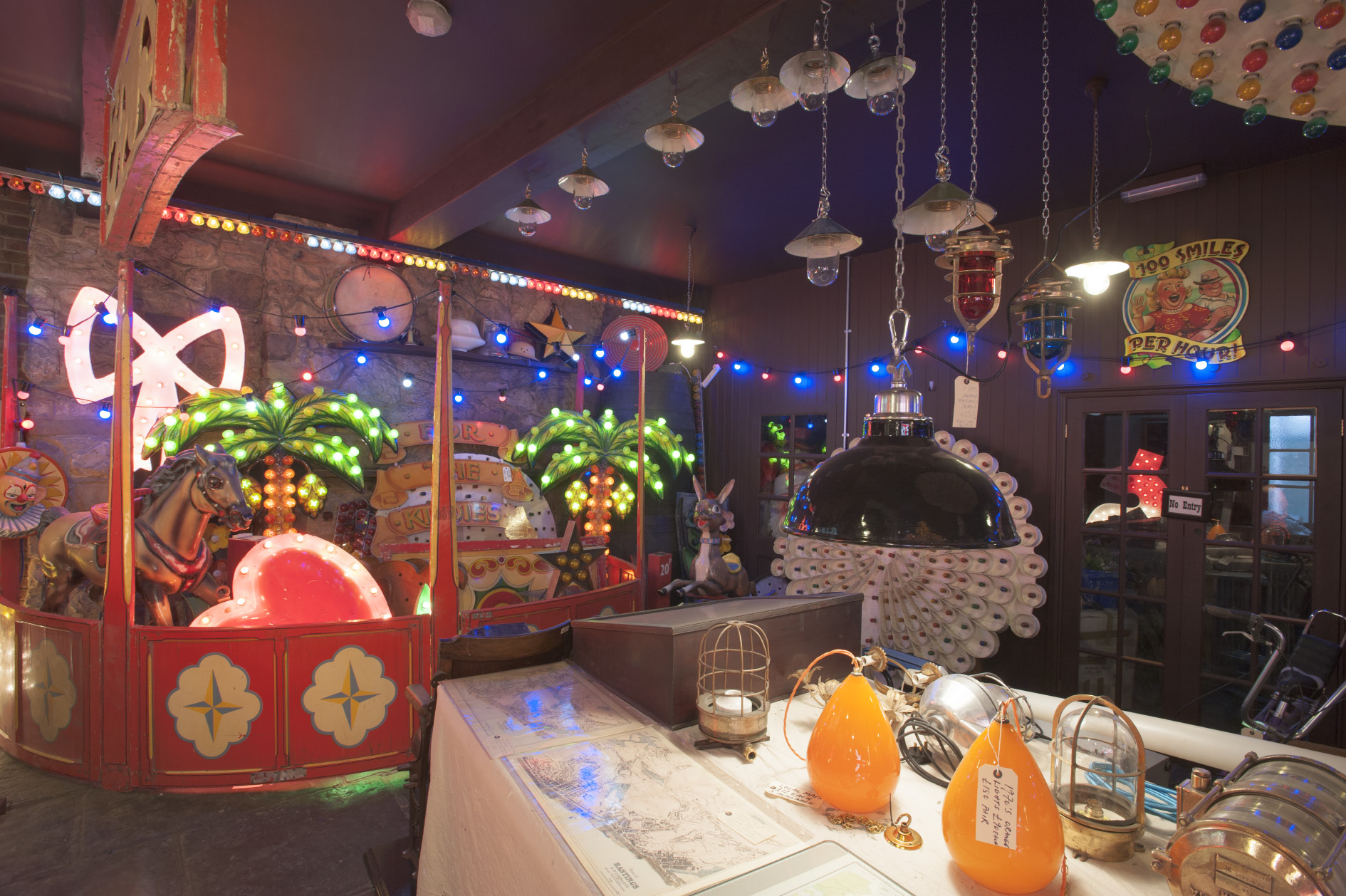
Philip’s lighting workshop occupies the basement of the building. “Space was a major attraction because it allowed me to live and work from the same location which hadn’t been possible in London,” he said. “The pub was perfect because it was already divided into commercial and domestic space and that meant the minimum of planning problems.”

‘Something of a collector’, however, doesn’t quite cover his commitment – this is a man who owns, for instance, 1,000 sets of Christmas fairy lights.
- Eras of Style www.erasofstyle.com Hastings 01424217640
- Deborah Bowness www.deborahbowness.com 01757248500
- Vitsoe www.vitsoe.com
- Philip Oakley Illuminations www.oakleyilluminations.co.uk/
- words: John Graham-Hart
- pictures: David Merewether
- styling: Lucy Fleming
You may also like
An Artful Restoration
Once a derelict reminder of Kent’s agricultural past, Old Smock Mill has been painstakingly restored into a luxurious retreat. Its revival is the story of one woman’s passion, creativity and determination to preserve a remarkable landmark. When artist Clare Winchester...
Our family and other animals …
Filled with rescue pets, characterful interiors and rural charm, Sarah and Max’s farm is a place where country living and cosy style go hand in hand Many of us who have read or watched My Family and Other Animals will...
The Art of Good Living
Set against the rolling landscape of the South East, this remarkable home blurs the line between private residence and public gallery. Driven by a passion for contemporary art and a desire to bring inspiring work beyond the confines of the...