Jules Haines set up her online business, Haines Collection, to offer leftover stocks of beautiful high-end fabrics, preventing them from ending up in landfill and providing the chance to snap them up with substantial savings. Her environmental awareness naturally extends to the decor of her own home, where she has cleverly combined fabrics from her collection with interesting pre-loved finds
The word that pops into your head when you walk into this Victorian terrace house, in central Tunbridge Wells, and take in the paint – in a refined mid-green, up to the elegant dado rail – the sisal runner on the stairs and a vista carrying the eye along the hall to a black cabinet and appealing lamp, is: decorated.
Just as in a boutique hotel, you have the impression of a planned scheme, with every detail considered and rendered in a high finish. It makes it a space pleasing to be in.
If you’ve ever watched that Netflix show Dream Home Makeover (which I confess I’m obsessed with), it’s the polished look the houses have when Shea McGee has worked her magic – but with a lot more character.
Because one of the things that fascinates me about that show is the idea of moving into a house where someone else has chosen absolutely everything in it, down to the last knickknack and quirky object. All brand new, box fresh, off the shelf. You almost feel there would be cute kindergarten projects already magnet-ed to the fridge – pre-made in a factory.
So how does Jules Haines’ house have the finished feel – without the off-the-peg thing?
Well, the proper decorator standard comes from her professional experience, starting off working with a fabric designer in Singapore, when she was living there with husband Ollie, and segueing to her current business, Haines Collection, on their return to the UK.
This online fabric store is a fantastic resource for anyone aspiring to decorator-level upholstery options, but on a home-spun budget, offering leftover stocks of beautiful fabric designs from a range of different high-end companies.
“They are ends of rolls, or sometimes seconds, direct from the printers,” explains Jules. “Designers can end up with a lot of fabric left over, because if they want to be stocked by a big retailer, they have to keep 100 metres of each design in stock. Some of them just dispose of it, but the ones I work with, would rather have what’s left sold on for smaller projects than just throw it away.”
It’s one of those win-win set ups, where the designers shift old stock, customers get fabrics at a fraction of their full price and – something that really satisfies Jules – it’s all ‘saved from landfill’.
And it is this environmental awareness – aligned with her superb taste and style – that gives her house the charm and originality so lacking from those Netflix ‘dream homes’.
Practically nothing in it was bought new and a great deal of the most interesting items came from sources I am sure would horrify a factory-fresh US interior designer: Facebook Marketplace and charity shops.
Chatting to Jules as we walk around her house – taking in details such as the fabric-cutting table she made for her workroom, by putting a board on top of a chest of drawers (British Heart Foundation furniture shop) and the high stool, the perfect height to sit at it (Facebook Marketplace) – I start to see that the chase and finding of such re-purposing solutions is a big part of the fun of decorating for her.
And Tunbridge Wells, with its wealth of excellent charity shops – particularly in the central neighbourhood behind the Royal Victoria shopping centre, where the house is located – is the perfect place to do it.
Jules and Ollie made the move there, out from Balham three years ago, when their son and daughter were still small and like so many house-finding stories we hear for these articles, there seemed to be an element of serendipity in it. “The kids were tiny – 6 months and 2 years old – when I came down to look at houses. I had one day, with four appointments – and one of them was this house. I cried when I saw it, it was so perfect, with the tall ceilings and all the space.”
As well as having the lovely bones of the early-Victorian Tunbridge Wells housing stock, the house was already liveable, with nothing structural to do – and very pleasingly, the all-important kitchen floor knock through, providing the eat-in kitchen of modern requirements, was already done. “All we did was put in two new bathrooms – and we reinstated the dado rail, which had been taken out.”
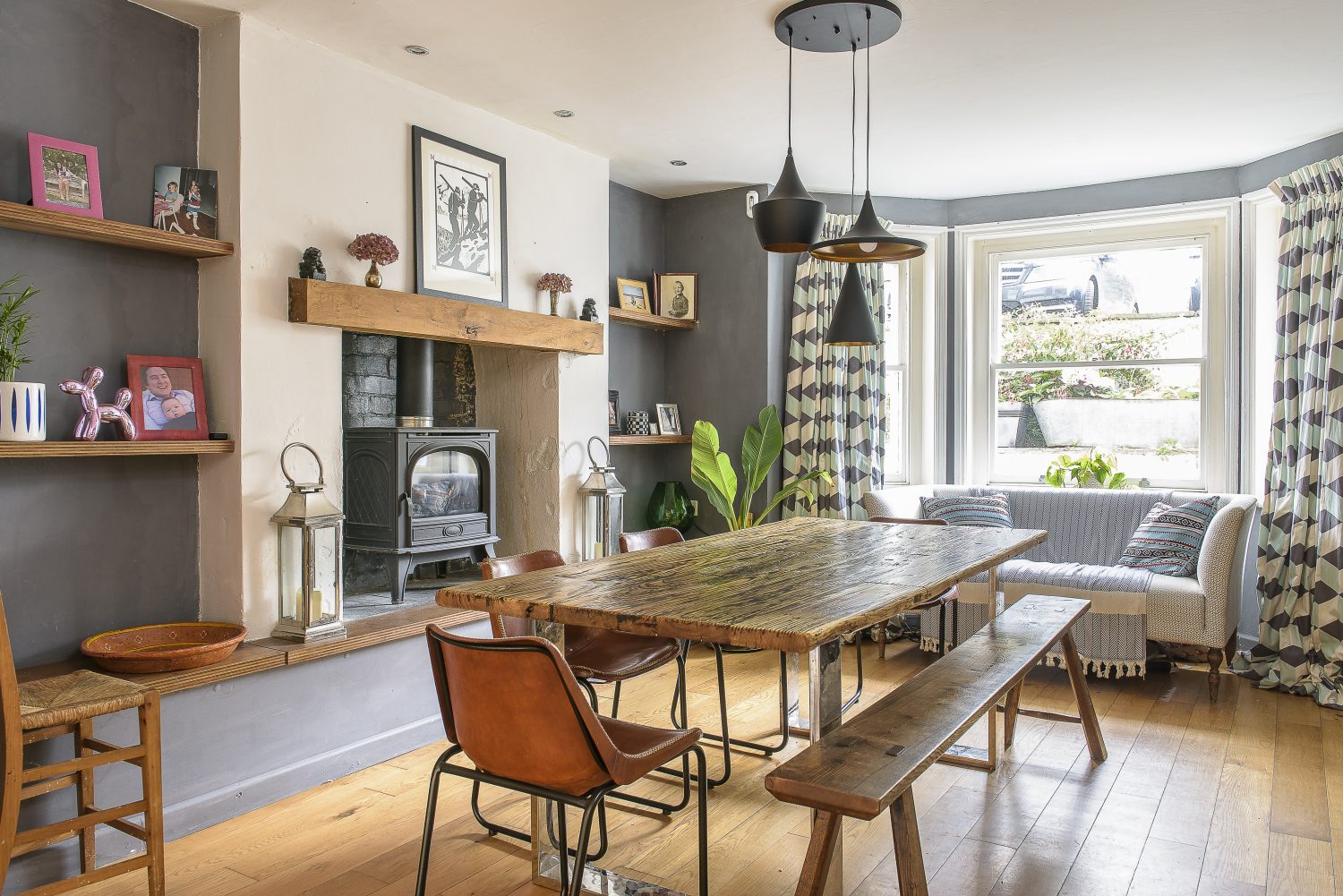
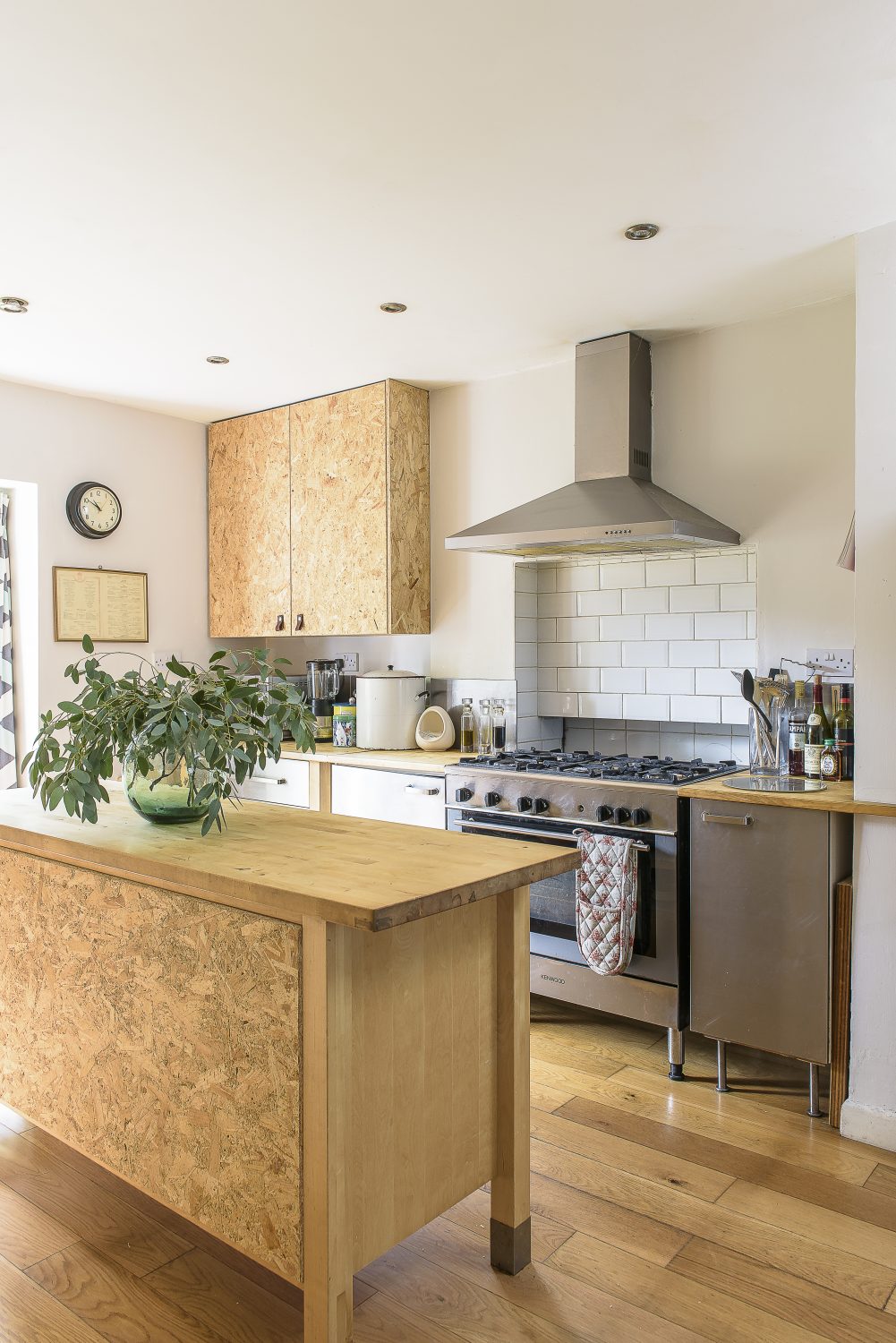
And in keeping with Jules’s don’t-bin-it philosophy, they gave the existing kitchen a clever makeover, rather than tearing it out and putting a new one in. “There was a perfectly good IKEA kitchen in place. So we updated it by making open shelves from old scaffolding boards and adding new doors made of OSB, because we like the texture.”
In case you’re not familiar with the term, OSB is short for ‘oriented strand board’ formed out of compressed layers of wood strands, combined with wax and synthetic resin. Rather than randomly mixing it up, each piece of wood is strategically placed, for maximum strength and it’s a very sustainable material, because the timber is sourced from fast-growing aspen poplar and southern yellow pine trees.
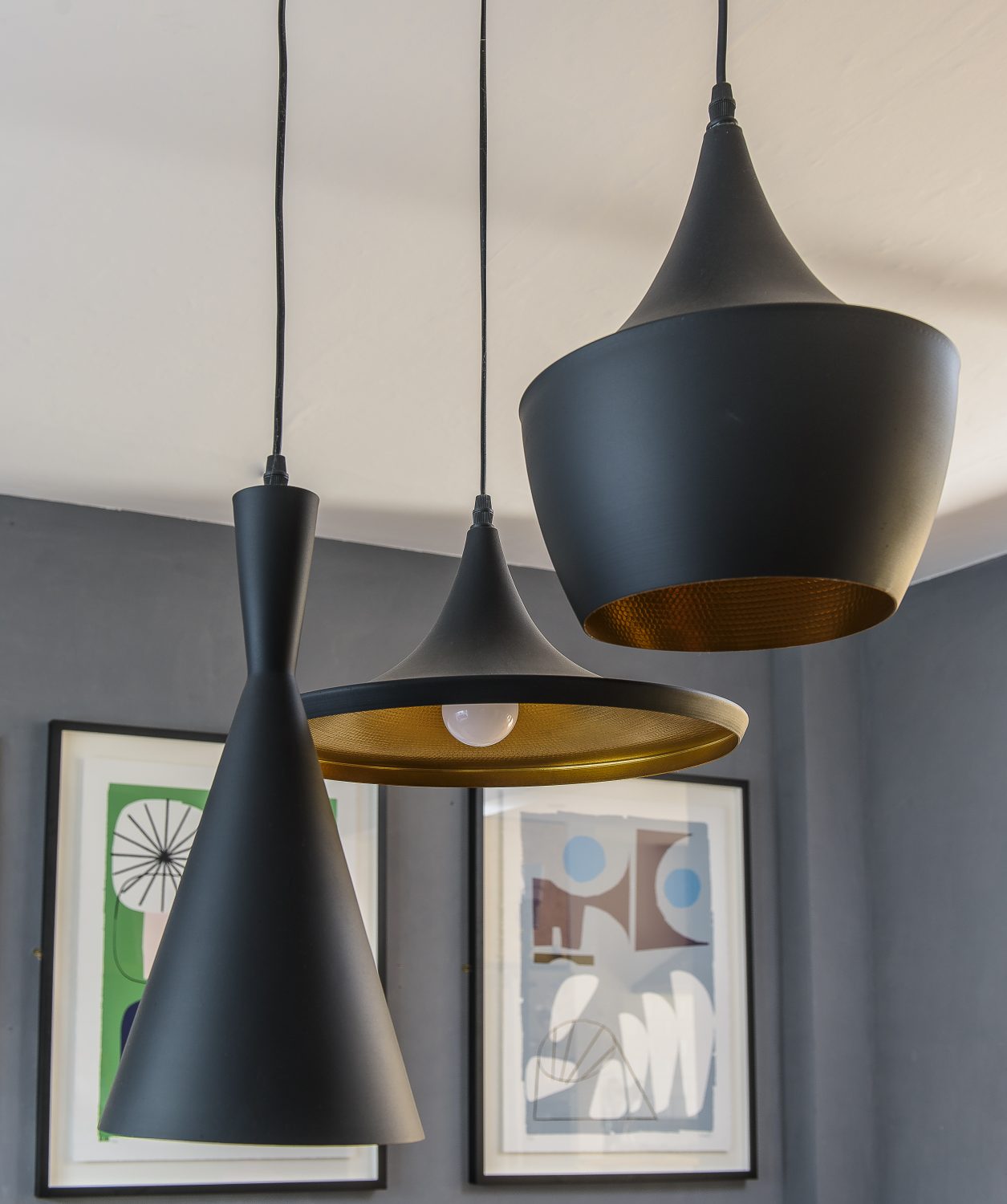
Many rooms feature pretty lampshades, that Jules makes herself using Haines Collection fabrics – and the kits she sells on the website. When people can meet more easily, she will resume her workshops showing people how to make them
As well as for its eco and practicality credentials, OSB is increasingly popular used ‘raw’, as it is here, showing off the very distinctive decorative, golden-brown finish.
Adding an additional feature, Jules made groovy handles for the hanging wall cupboard, by riveting leather from an old belt.
This is the first of many do-it-herself projects that add a bespoke finish through the house. Many rooms feature pretty lampshades, that Jules makes herself using Haines Collection fabrics – and the kits she sells on the website. When people can meet more easily, she will resume her workshops showing people how to make them.
Just outside the kitchen – in a corridor she hopes to knock through one day, for extra space – is another example of her original ideas. The staircase down from the ground floor was left open, with no outer handrail or bannisters and, not surprisingly, it made Jules uneasy. “I thought ‘my children are going to fall off, I have to do something!’”
Many rooms feature pretty lampshades, that Jules makes herself using Haines Collection fabrics – and the kits she sells on the website. When people can meet more easily, she will resume her workshops showing people how to make them
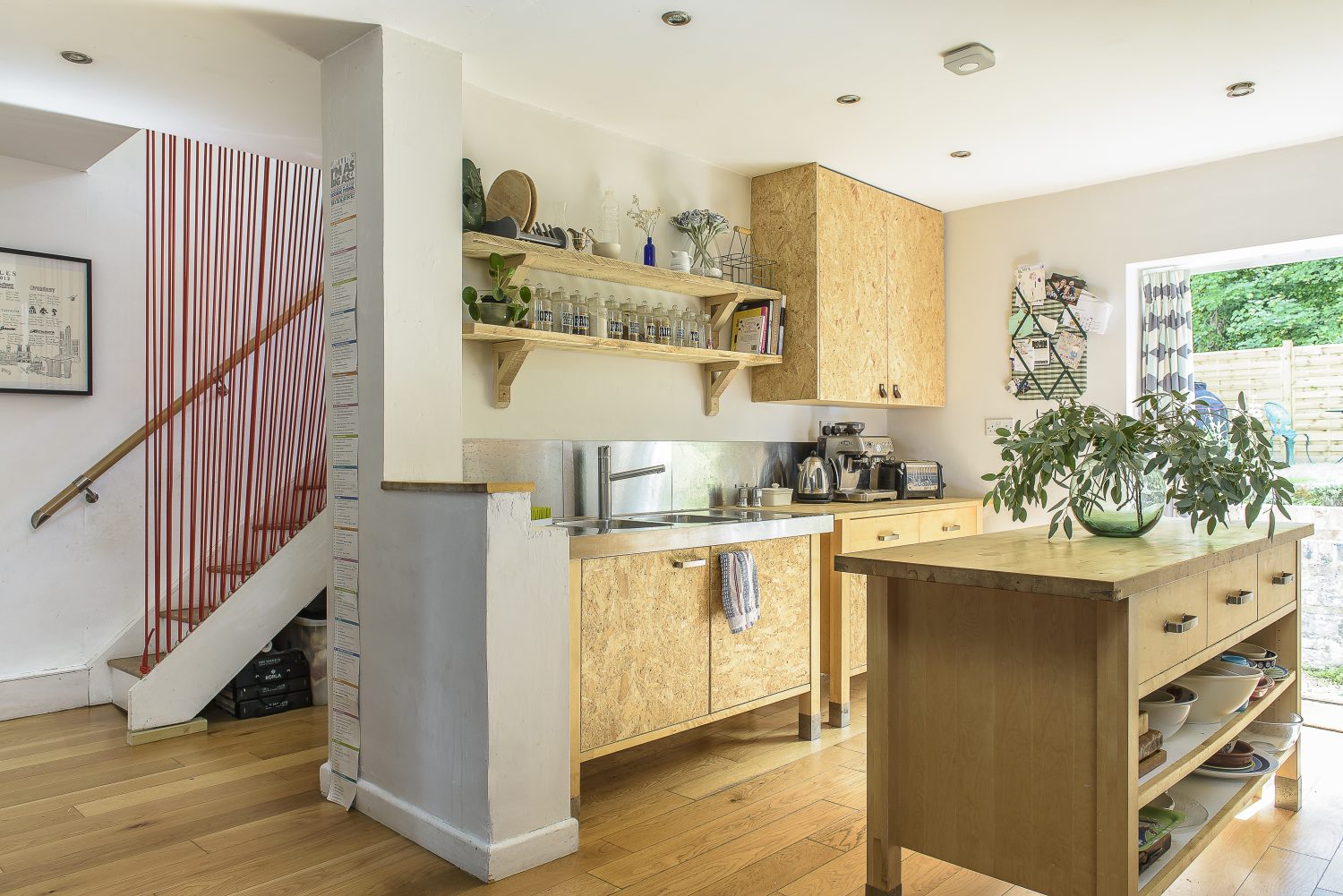
But rather than putting in a standard bannister she used red bungie cords, threaded through brass plumbing pipe holders, to create a visually arresting feature – that also keeps the stairs safe. It’s very original and very effective.
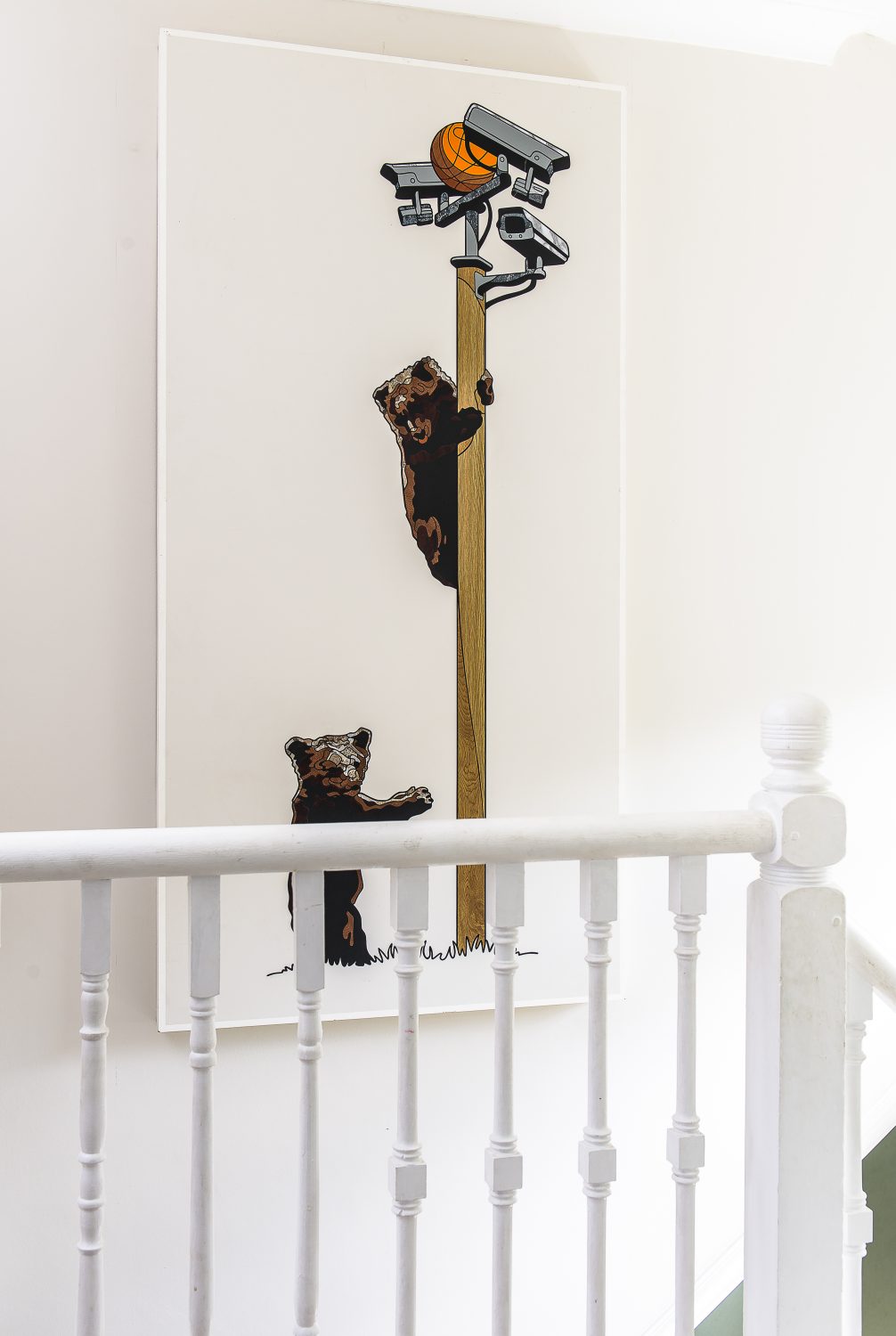
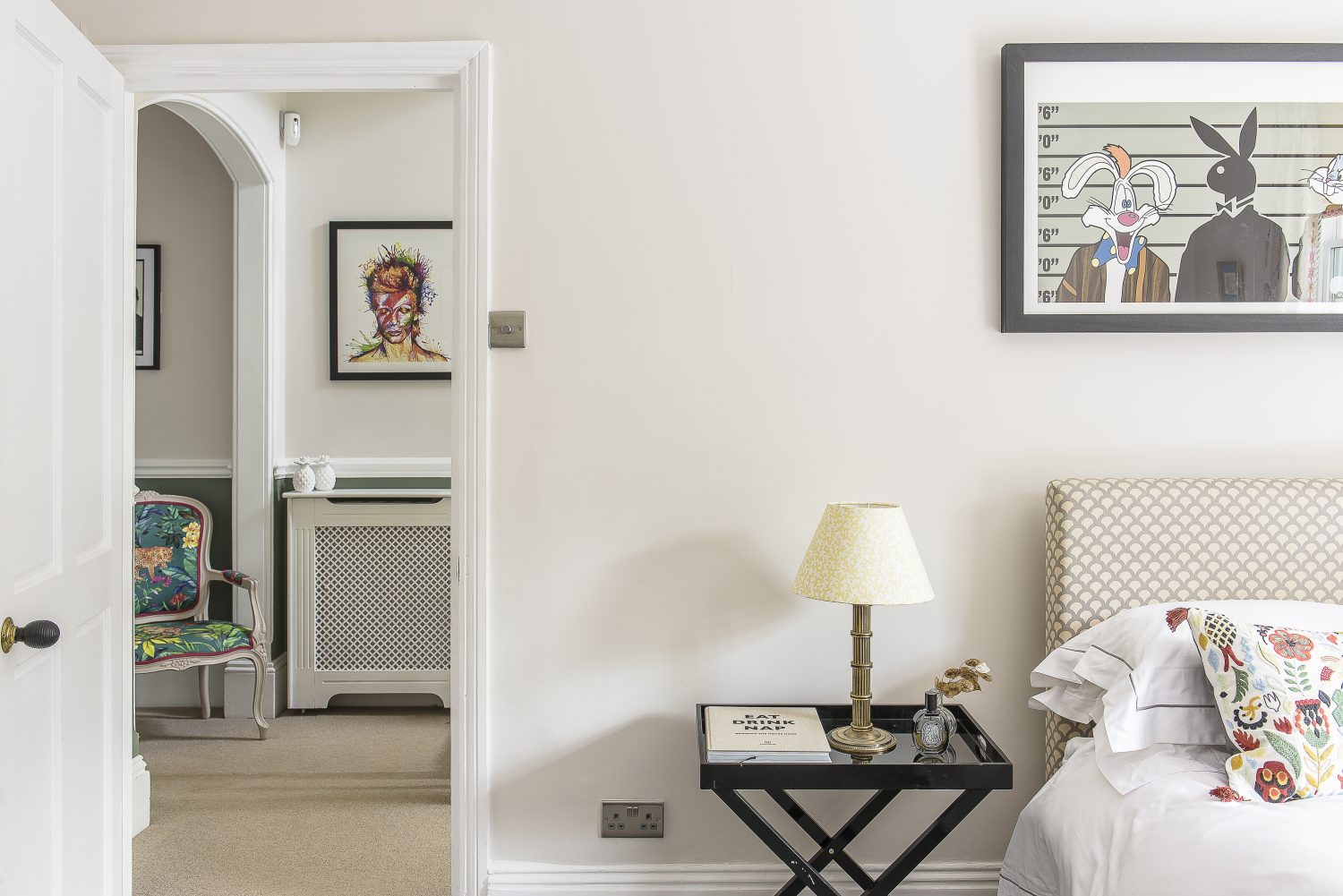
Heading back up the stairs, we stop in to look at the guest loo, which is decorated with framed prints by pop ‘cartoon’ artist Lichenstein, part of the large collection of vivid art prints in the house, which are Ollie’s special interest.
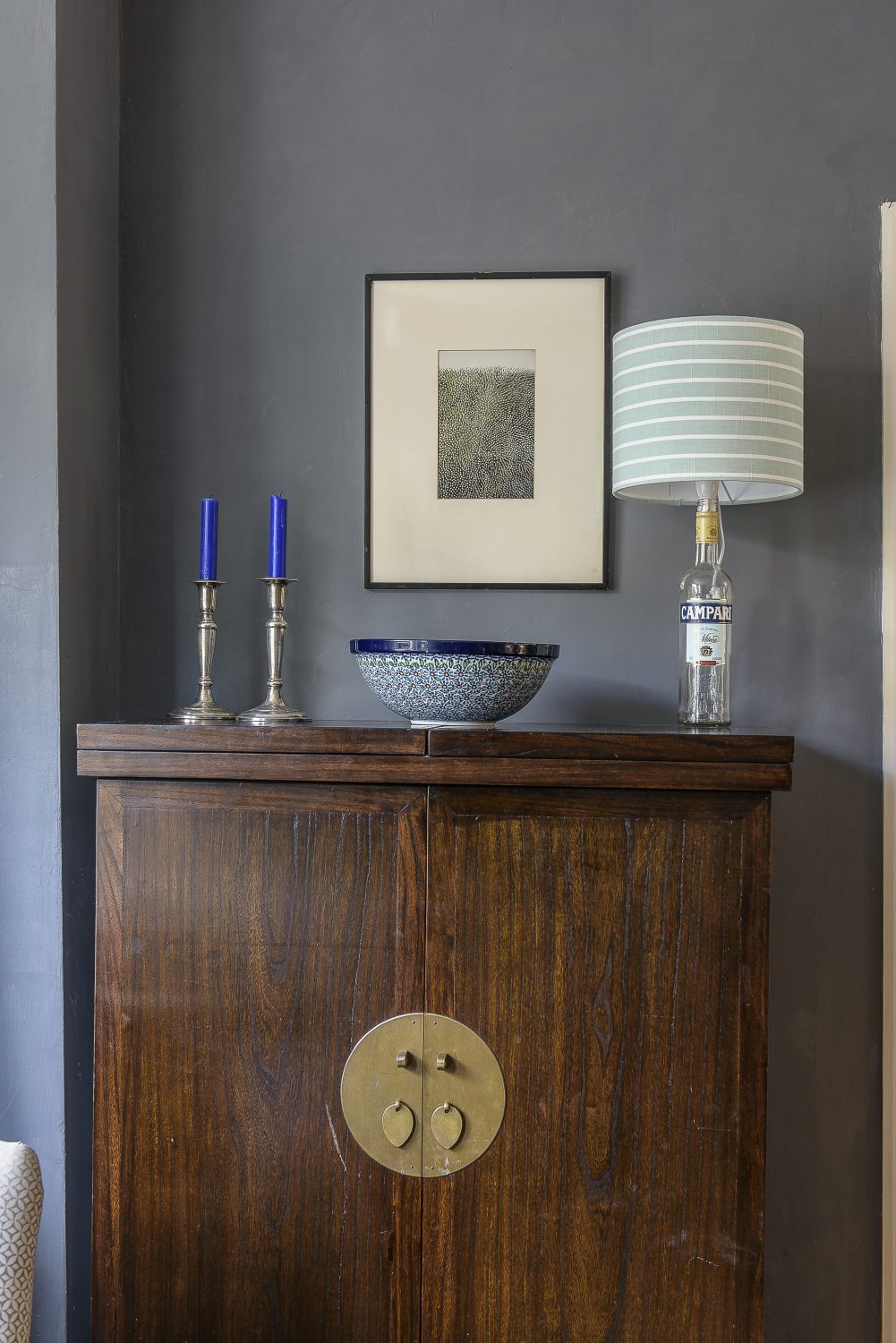
At the turn of the stairs next to it, we come to the striking black cabinet and very appealing tin lamp base that I spotted when I first came through the front door.
The cabinet is Chinese, one of many lovely exotic antiques Jules collected during their Singapore years and the lamp gives a hint to the source of her preference for ‘pre-loved’ homewares – it had belonged to her aunt.
Heading into the workroom we come to another inherited piece, which suggests passing things on for another generation to enjoy is a family thread. “The desk is very old, it belonged to my great grandmother,” she says, fondly. “I revised for my GCSEs on it.”
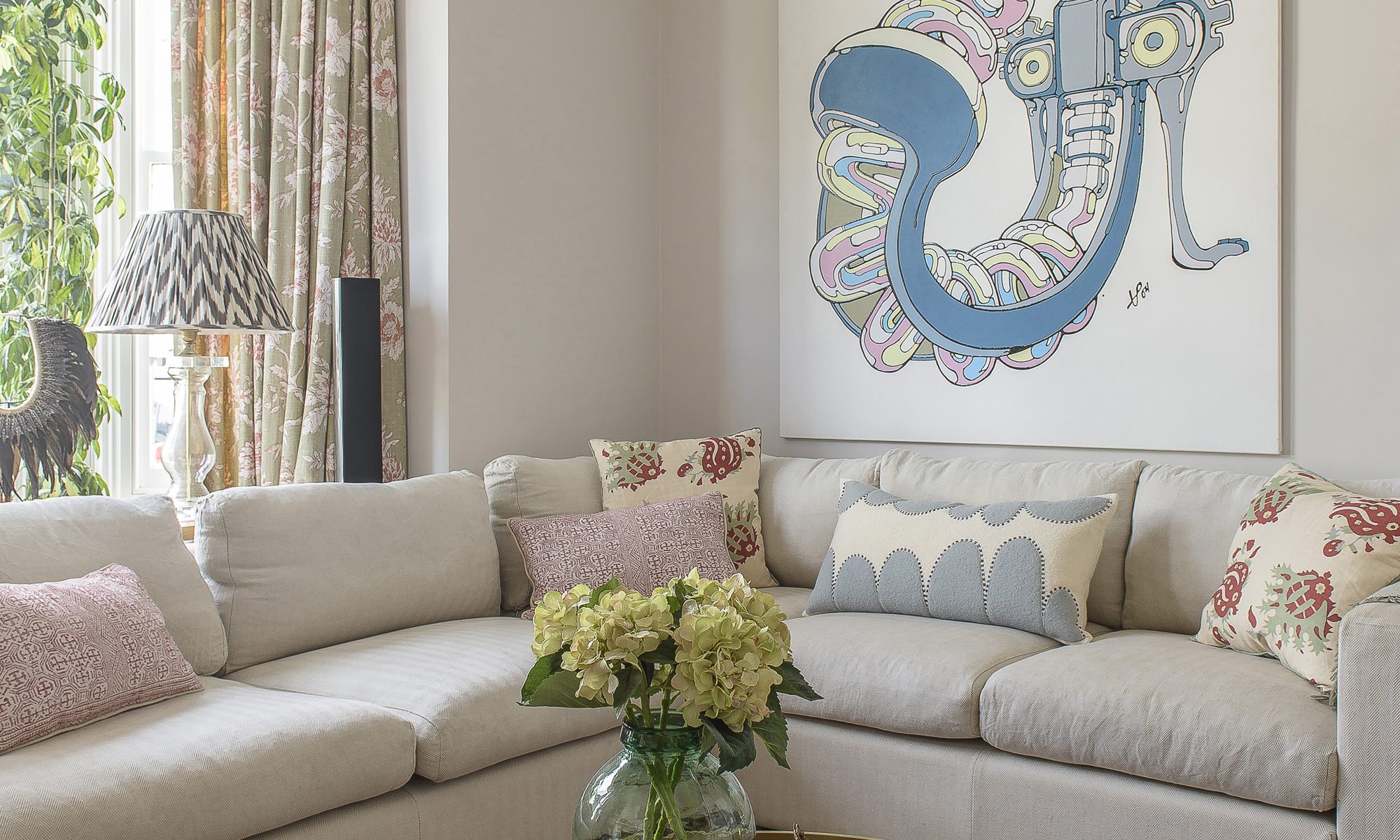
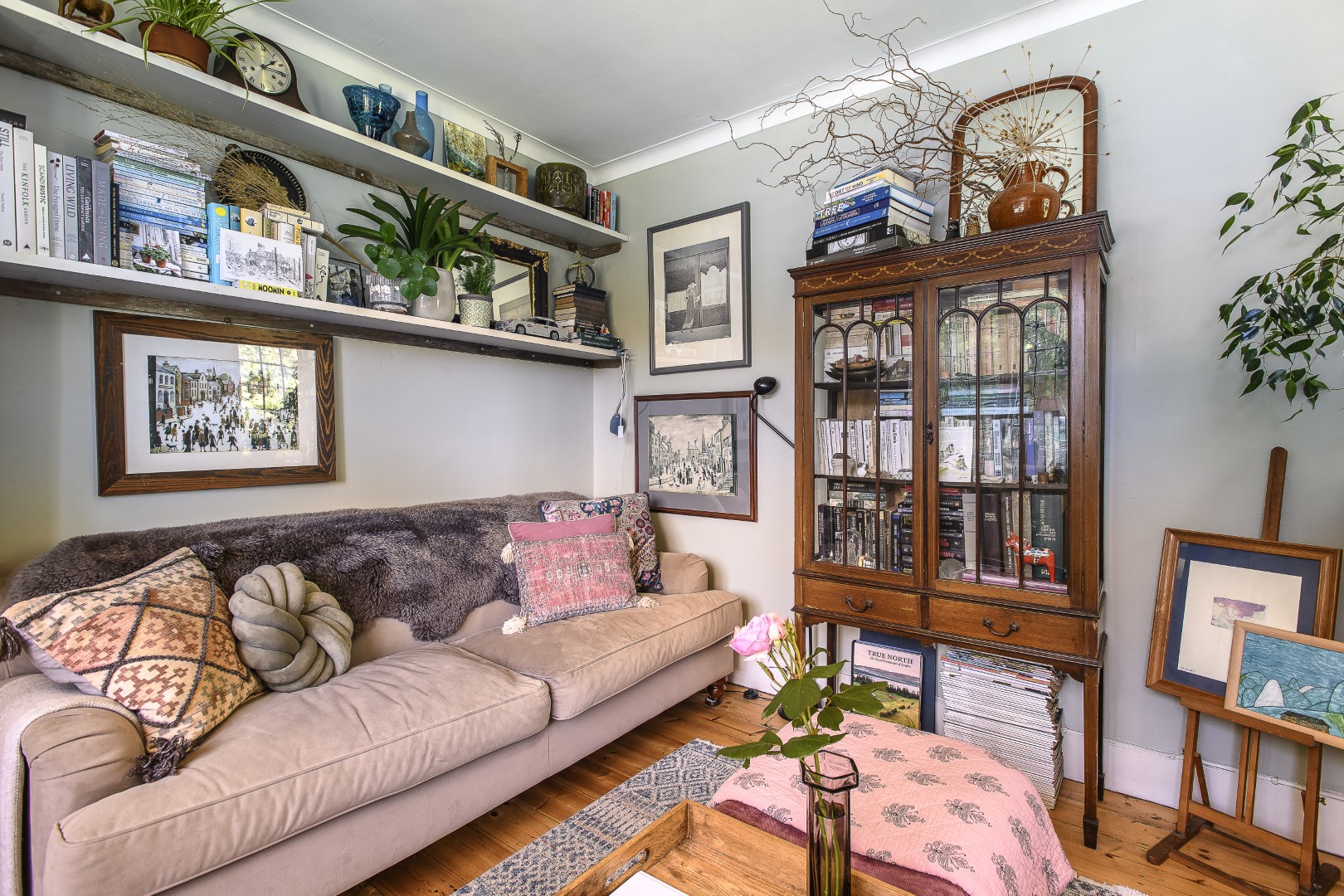
Next door, in the wonderfully high-ceilinged sitting room, the mindfully ‘decorated’ feeling, combined with quirky original pieces, really sings out.
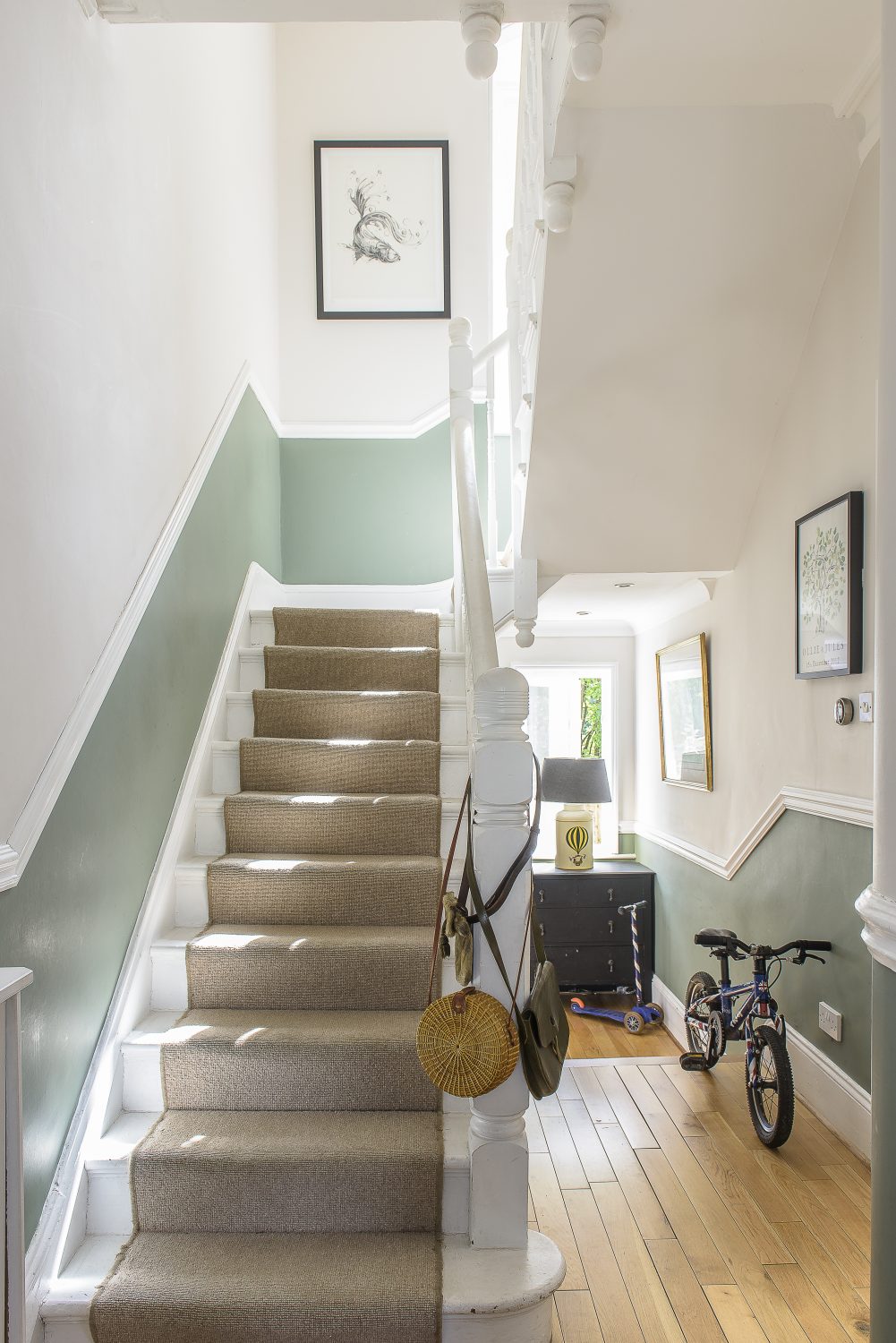
The couple reinstated the dado rail throughout the house 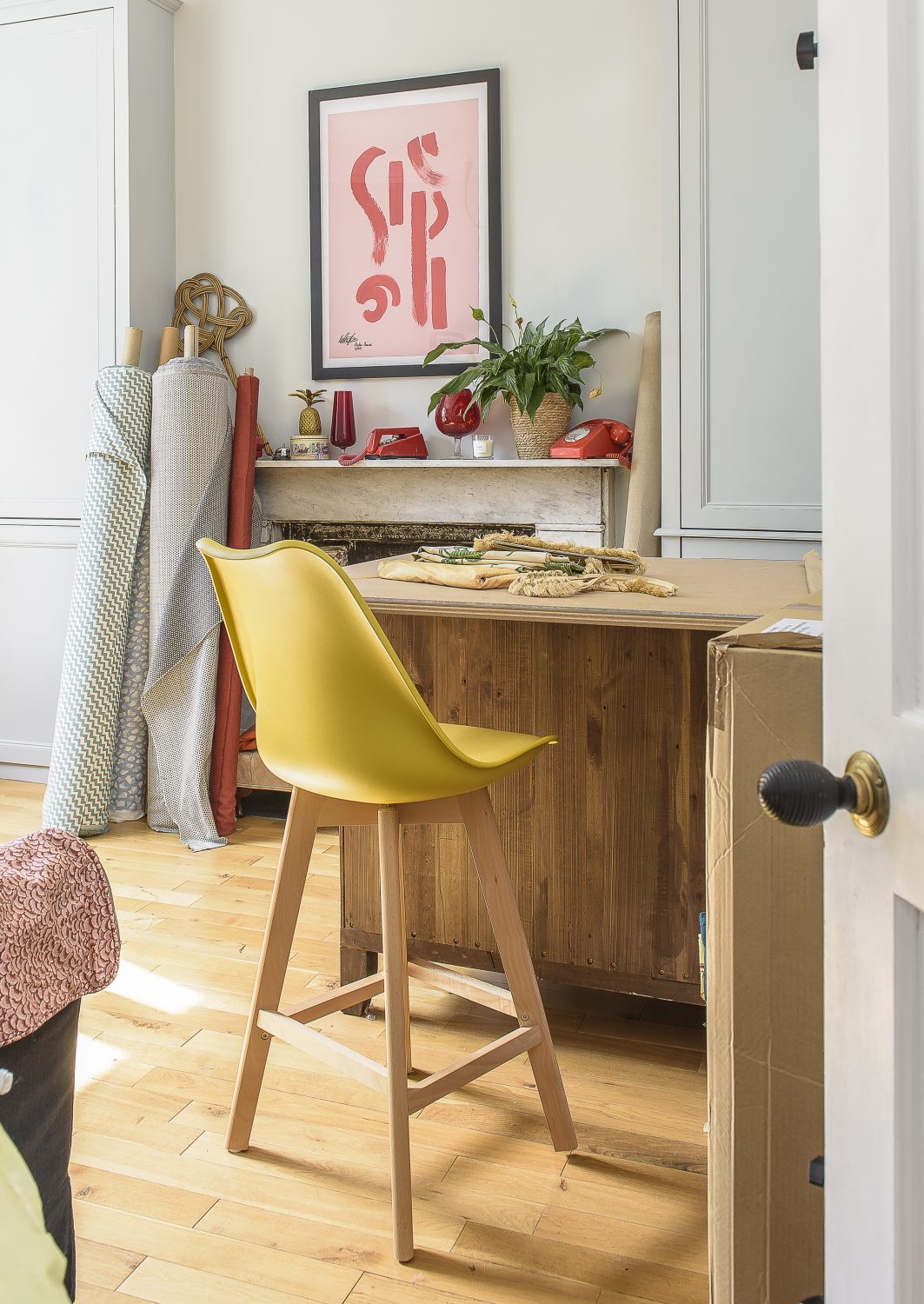
Jules made the fabric-cutting table in her workroom by putting a board on top of a chest of drawers that she bought from a British Heart Foundation furniture shop. The high stool was a Facebook Marketplace find
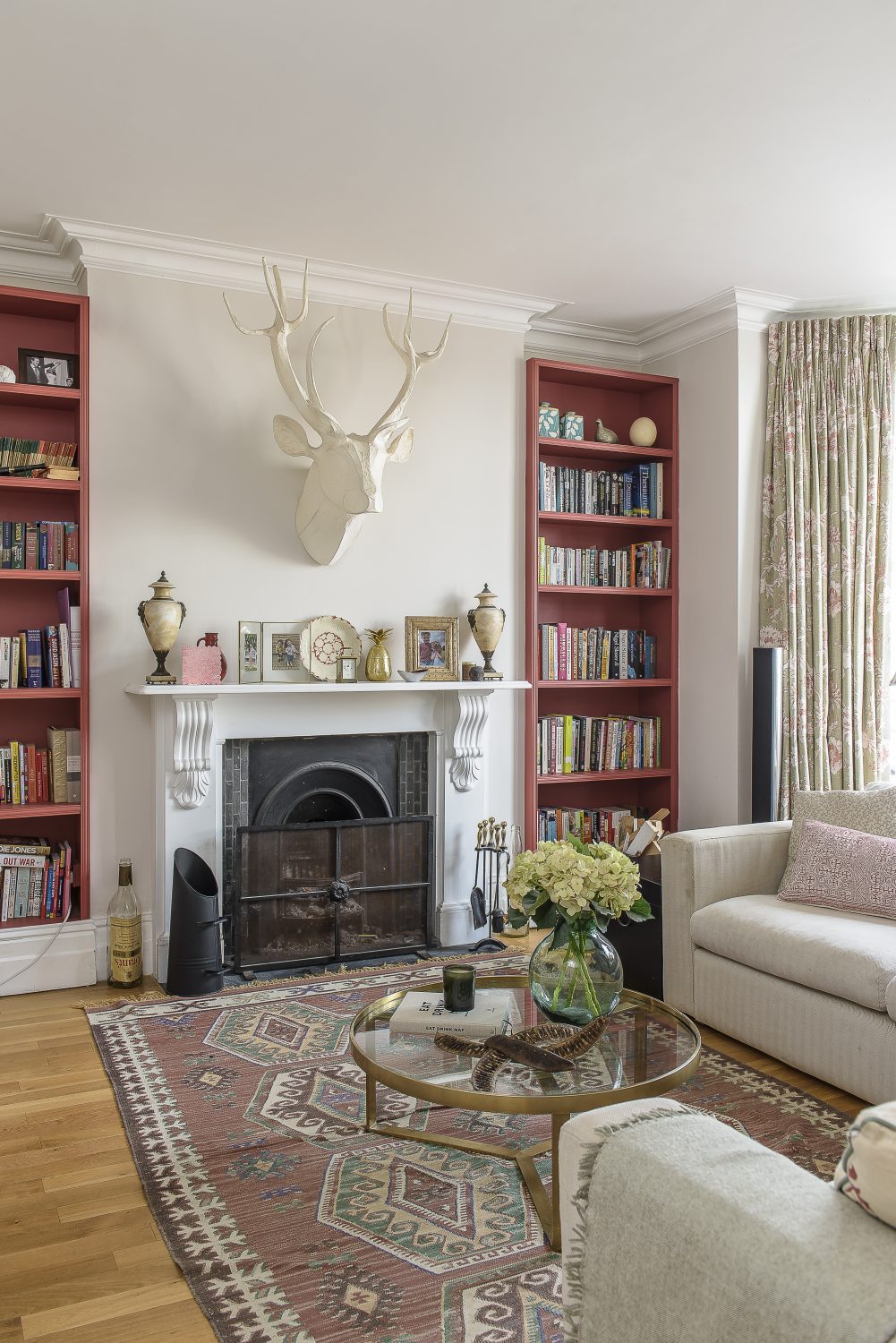
In this neutrally painted room, on either side of the original fireplace, book shelves have been picked out in Farrow & Ball Blazer, a wonderfully bold brick red, and an oversized papier maché stag hangs on the wall between them.
The curtains are in a fabric from the range Madeaux by Richard Smith, which was featured on the site. “The colour was slightly off, so it was reduced from £100 metre, to £25…” The cushions are also her own and are available to buy ready made from the website. The lamps on the table behind the sofa were finds from a an unusual and brilliant-sounding resource – a warehouse in Singapore where unwanted fixtures from refurbished hotels are sold off.
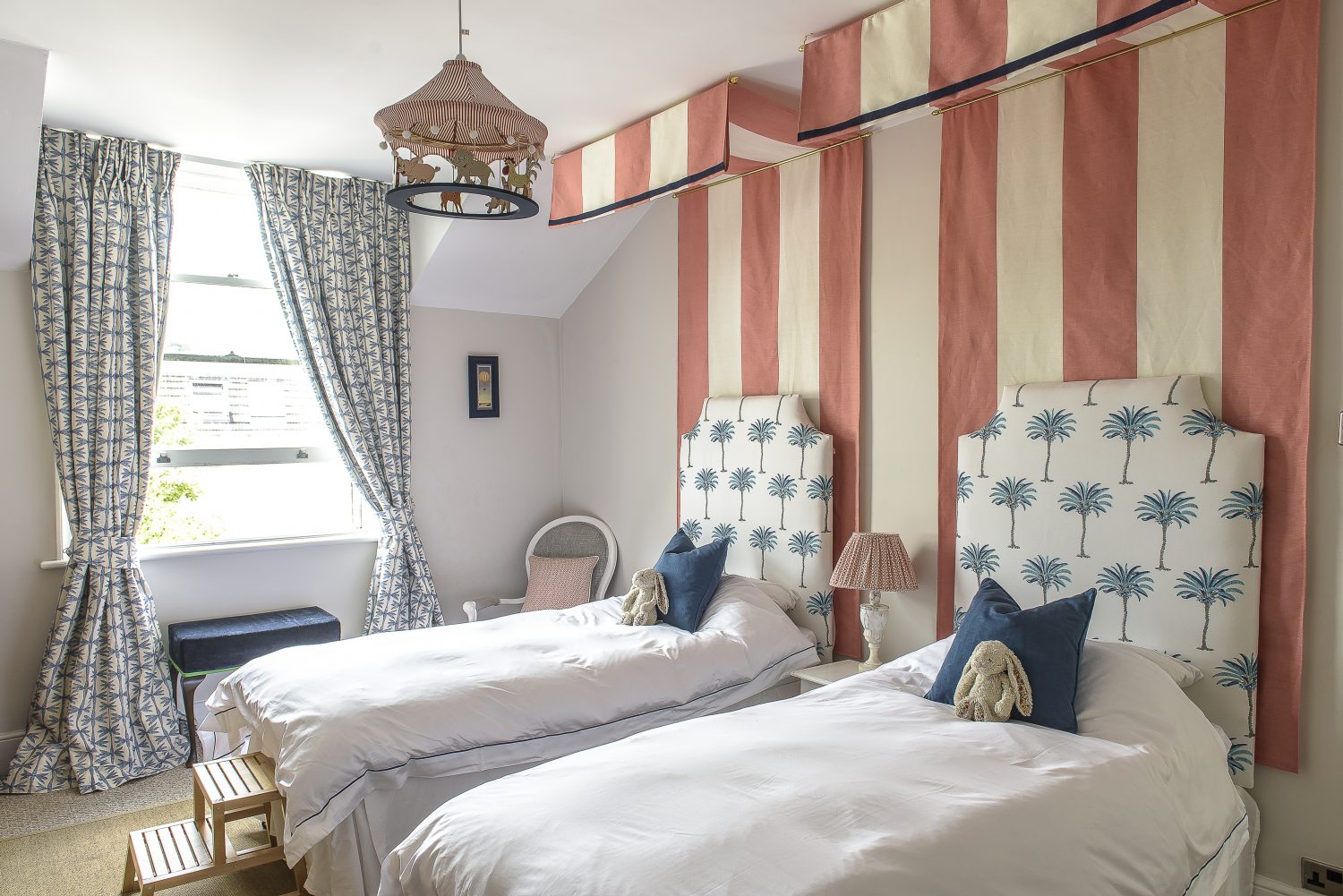
Up on the top floor, Jules’s making abilities are in glorious display in the couple’s three-year old daughter’s simply glorious bedroom, where twin beds are resplendent with headboards made by Jules and upholstered in palm print fabric, set off by splendid circus-stripe canopies.
The adorable animal light fitting above the beds is another Jules special – found in a charity shop and made even more special with the addition of some strategic pom poms.
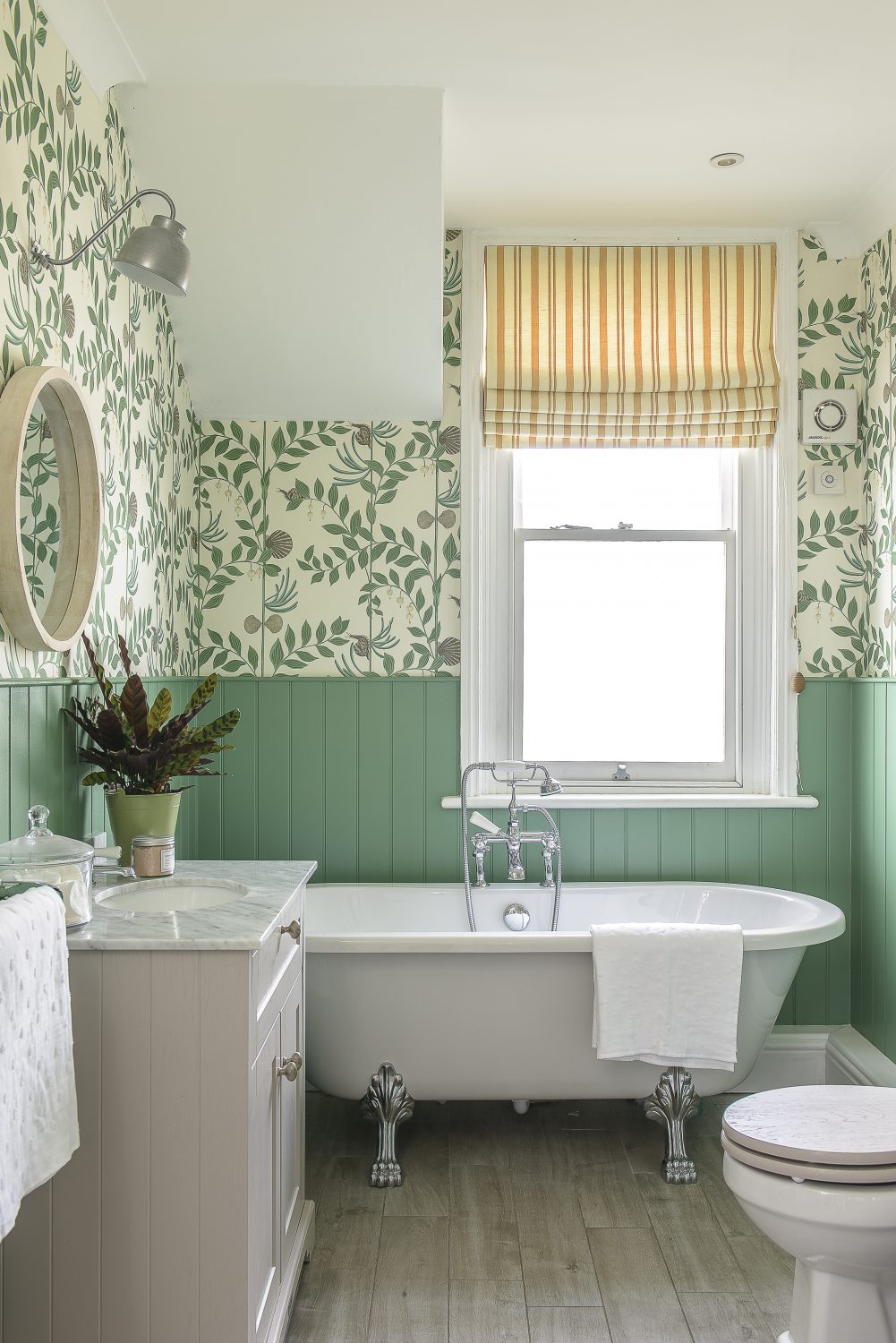
Next door, the family bathroom is beautifully fresh, with peppermint green tongue and groove panelling halfway up the wall, painted and bold Cole & Sons leaf and snail wallpaper above.
With a round white-framed mirror, a striped Roman blind – in a Haines Collection fabric – and the basin set into a marble bench top by Hudson Reed, it looks completely finished and has that atmosphere of being a proper room that is part of the house, not just a sterile hygiene zone.
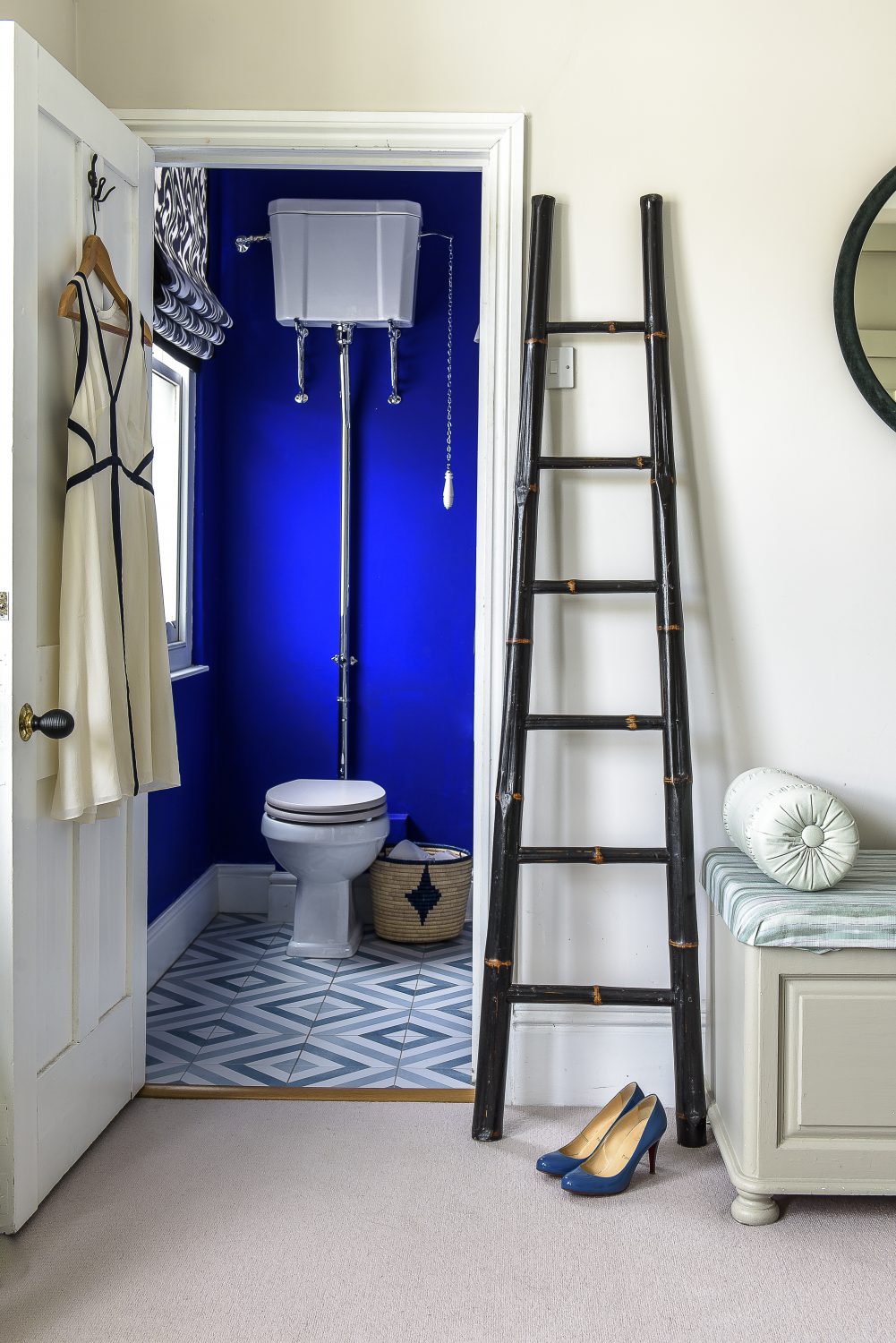
The same is true of the en suite bathroom – which was fortunately already in place – off the master bedroom one floor down, which is painted the most thrilling intense matt blue, ‘Ultra Blue’ by Little Greene.
The fittings in here particularly reflect Jules’s preferences, with the Moroccan bowl basin found on Etsy, set into an old washstand, which was sourced via Facebook Marketplace and painted black.
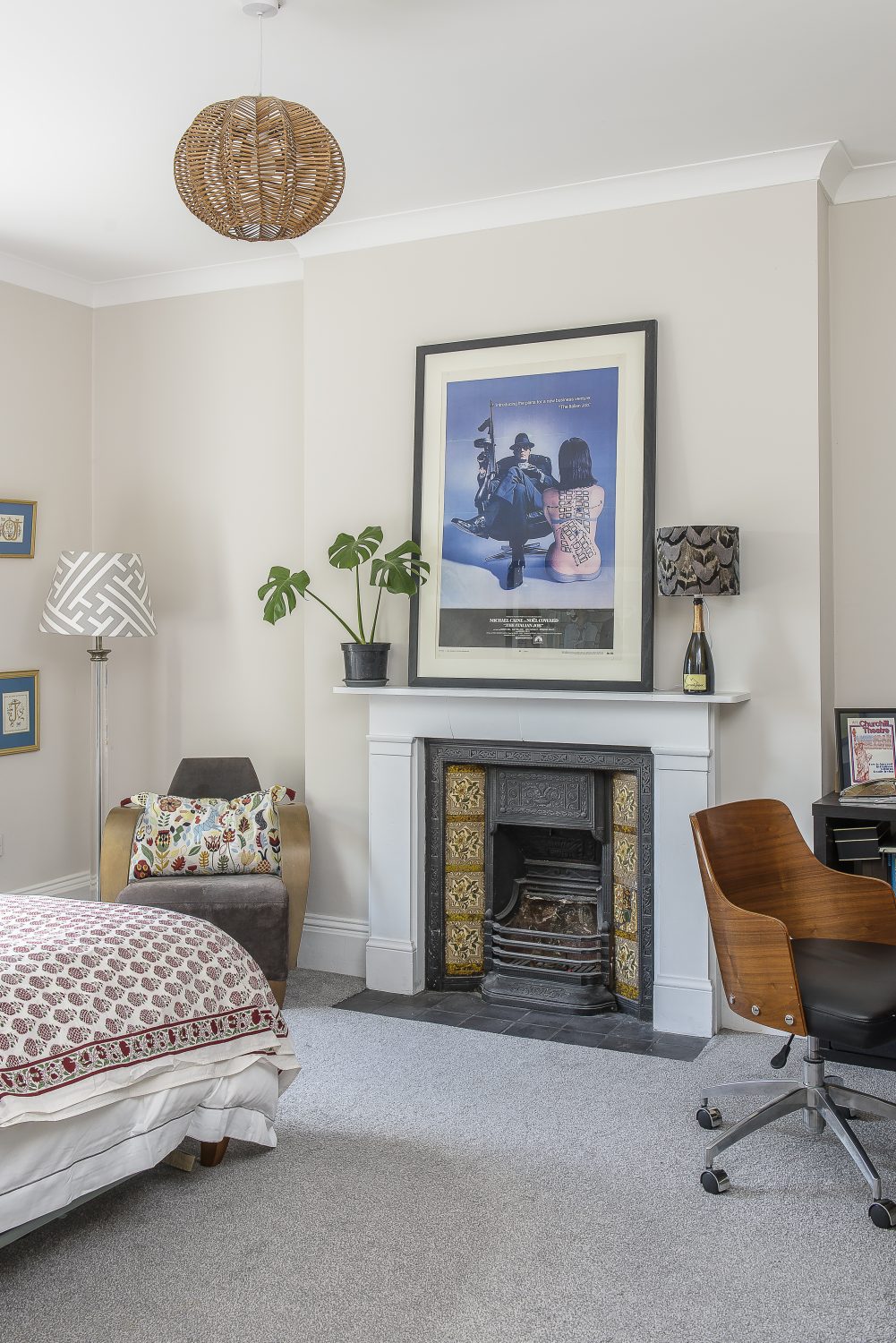
In the bedroom are many more examples of her vision – and ability to bring such ideas into being herself, without calling on the pricey services of professionals.
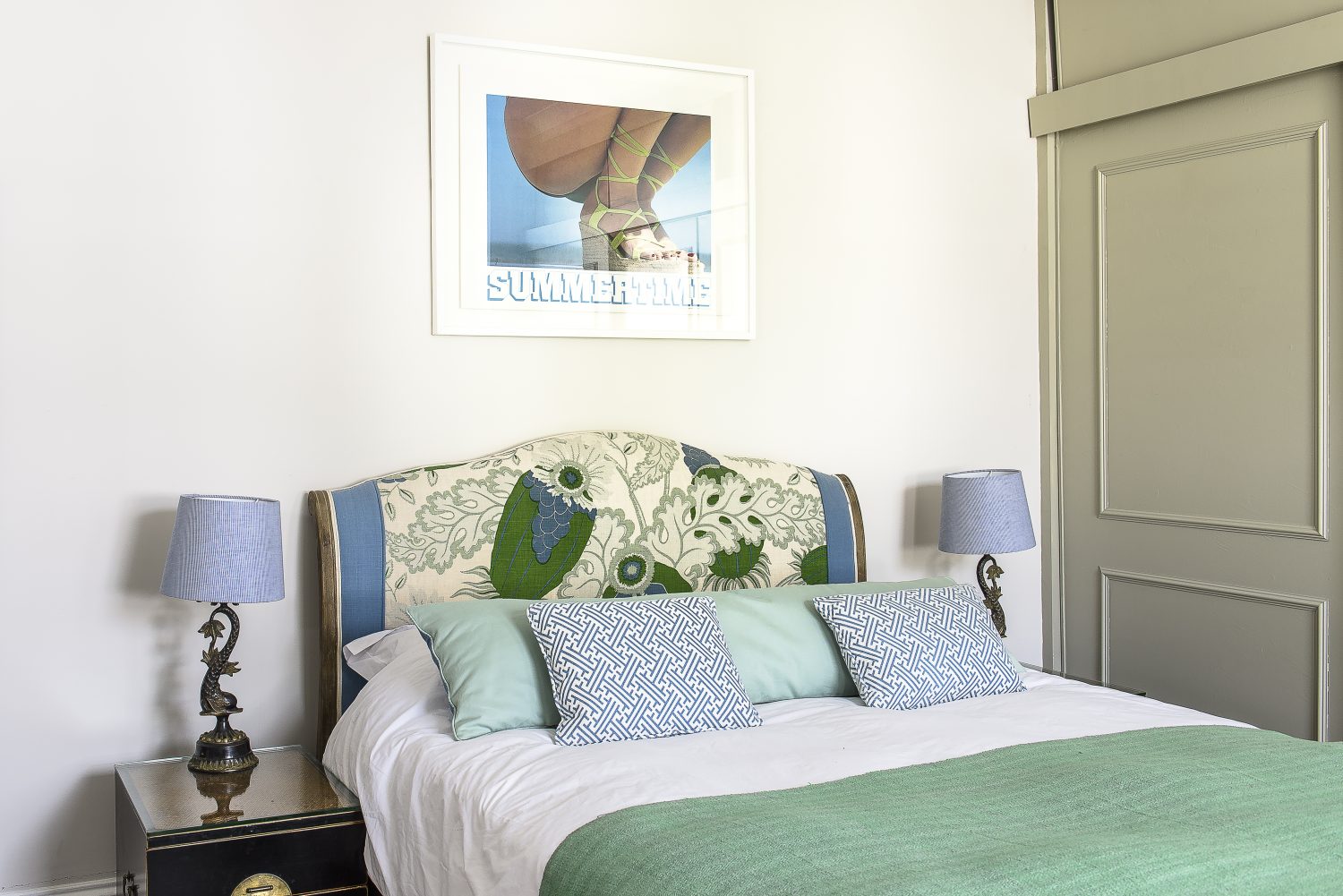
She has transformed the fitted wardrobe doors, just by adding some simple beading to create a panelled effect. On the bedside tables – part of the Chinese collection from Singapore – are bronze dolphin lamps, from unwanted stock that she sells on Haines Collection. The bed is from Loaf, but the headboard was re-covered by Jules in a beautiful Christopher Farr fabric.
Thinking back to her daughter’s beautiful palm-print headboards, I ask Jules how she went about putting them together – a construction she makes sound easy… “You buy the MDF in squares and cut them to shape, then glue on egg-crate foam cut to the same shape. I buy it in The Range. To attach the fabric, you cut it to size, then lay it on the ground, place the board on top and staple the fabric to the back with a staple gun, pulling it tight.”
I really want a new boutique hotel-style headboard for my bed, but I have a sneaky feeling that my attempt to do something like this would end up looking extremely wonky and home made.
But help will be on hand – in hopefully, the not too distant future – when Jules hopes to get her workshops up and running again. Headboard making will be one of them. Sign me up now.
To find out more about Haines Collection and to see the current fabrics – new stock lands every Monday – visit hainescollection.co.uk. You can keep up to date with future workshops by following Jules on Instagram @haines_collection
Fox Murray Home foxmurrayhome.com
Wilde Wod Creations wildewodcreations.co.uk
- words: Maggie Alderson
- pictures: David Merewether
- styling: Holly Levett
You may also like
Made to Last
Returning to the UK after a work stint in Dubai, Tracey and her family happened upon a house the likes of which they had never imagined living in before. Five years on, they still relish its clean lines, large windows...
Pretty much perfick
Garden designer Agnieszka Gebka found a horticulturist’s haven when she and her family relocated from Wimbledon to Sevenoaks and a former gardener’s cottage on the edge of a large country estate, a space that has allowed her to pursue her...
Love where you live
Careful to inject plenty of each homeowner’s personality into every project, interior designer Jenny Branson’s gentle and measured approach has won her many clients who adore her use of colour, pattern and mood-lifting design There is something instantly connecting when...