Ensure your summer containers are built to last with Jo Arnell’s expert advice
If you need some colour, some interest and visual appeal – or just a quick fix for the garden this summer – container plants are hard to beat. An attractively planted pot becomes an instant focal point, enhancing a doorway, steps, or patio. Containers will soften hard surfaces and either divert the eye away from, or light up, a forgotten corner. Keeping the garden borders full of colour all summer can be tricky and annoying gaps often occur just when we want to do some outdoor entertaining – that heady June moment, packed with cottage garden flowers, is soon over and summer containers are a great way to ensure that the garden keeps on blooming.
As for the container itself, anything that holds soil and has some drainage will work. I heard Bunny Guinness on the radio recently talking about how even a rubble sack wrapped in hessian could look stylish – and once you start thinking along those lines, all sorts of ideas might come into your mind. The important thing is to choose a style that suits your house and garden – and your taste. Old boots stuffed with petunias might look whimsical by a cottage door, but may well cause a shudder at the front of a smart contemporary building or elegant Georgian townhouse. Terracotta pots are timeless, but they dry out more quickly than glazed or metal containers.
Zinc, lead-effect and galvanised metal tend to look more contemporary, while baskets and wooden crates create a look that’s softer and more relaxed. Whatever they are made of, drainage is essential. Most plants dislike sitting in waterlogged compost, so ensure there are drainage holes and, especially if the planting is to last through the winter, use pot feet (or half bricks) to raise containers slightly from the ground.
Size matters
Go big or go dry. Small pots, even when grouped together, dry out very quickly, and in these times of water shortages and hosepipe bans this is an important factor to bear in mind. Groups of little pots also offer five star accommodation for slugs and snails – they are a total des res, offering cool shady nooks to hide in during the day, and plenty of well watered tasty plants to munch on through the night. An added bonus of extra lovely dampness occurs if you water in the evening – a slug’s delight.
Plants in a large container often look better too. They are definitely more dramatic and create more of a focal point – and if you enjoy the process of combining plants and making colour schemes, they can be really striking and impactful.
Planting
Composts seem to vary a lot these days and although many peat-free multipurpose mixes are fairly good, once they dry out it’s very hard to wet them again. It could be a better plan, especially if you are growing shrubs and perennials in pots, to use a soil-based medium, or even to add in some of your own (weed-free) soil and homemade garden compost.
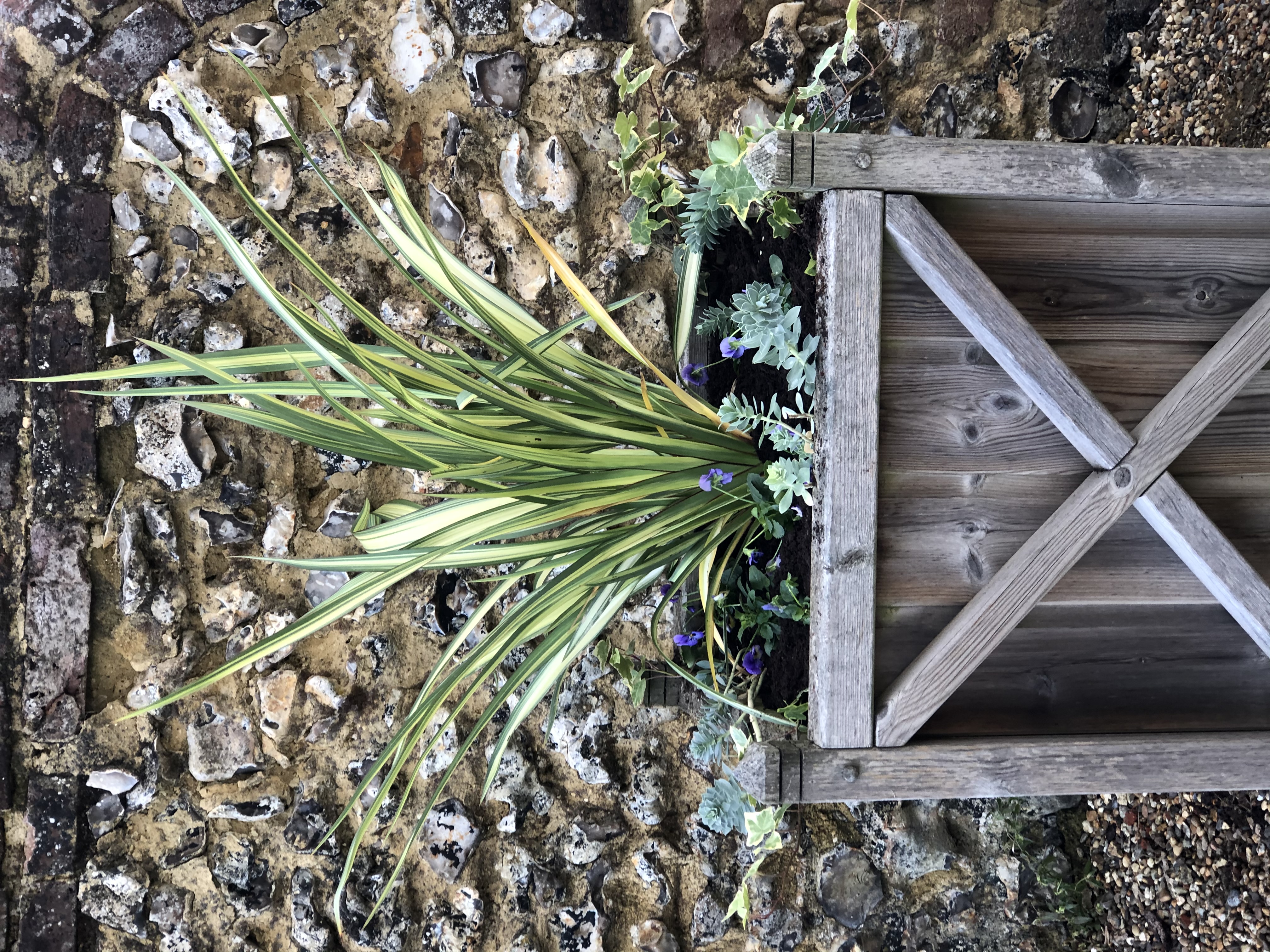
When you plant up your containers, try to be generous. Sparse planting can look a bit dismal for weeks – summer containers should look full and abundant. The idea of ‘thriller, (or ‘pillar’) filler and spiller’ is tried and tested, but this recipe need not be followed rigidly. The ‘thriller’ is the main focal plant – something tall or architectural such as a canna, grass, phormium or upright salvia. The ‘filler’ plumps it out – providing body and cohesion – try nicotiana, small salvias, bushy upright pelargoniums or fuchsias. The ‘spiller’ softens the edges and trails over the sides – calibrachoa, ivy, bacopa, diascia or trailing verbena work well.
More naturalistic arrangements are looser and not so formulaic. A pot planted entirely with airy gaura and trailing oregano can look elegant and understated. A single dramatic plant – a banana or a large aeonium, say – will look more stylish than a crowded mixture. Repeating certain plants or colours creates harmony and prevents displays becoming chaotic – unless you are going all out ‘pub garden’, in which case, anything goes.
Foliage is just as important as flowers. Silver leaves from artemisia or helichrysum cool down brighter colours, dark foliage adds richness and contrast. Grasses bring movement and catch the light in afternoon sun. These can look better for longer than the purely floral combinations.
Annuals & tender perennials
Short-lived, happy go lucky plants will flower their socks off all summer – and then, when the autumn chill sets in, they are chucked unceremoniously onto the compost heap. While plants like cosmos and nicotiana die at the end of the year no matter what you do – one year is their lifespan – some of the other bedding and container plants that we mercilessly dispose of are actually tender perennials that, with the right care and a frost-free overwintering place, will live to bloom another day. It isn’t always worth it – we need to weigh up the costs of looking after them versus their monetary value. A petunia costing a pound would cost more than that to keep going over the winter, but a tender salvia will get more impressive each year and is worth protecting. In our increasingly mild winters I’m finding that plants I once considered to be annual – diascia, nemesia and bacopa for instance – are managing to live outside through all but the coldest snaps these days.
Shrubs & hardy perennials
While longer lived plants will provide a more permanent display, remember that a plant in a pot is your prisoner. You are responsible for watering and feeding – plants in the open ground are able to find their own food, to make use of microscopic underground networks and build healthier root systems.
Permanent plants will need pruning to keep them in good shape and to restrict the size if they get too big. Ultimately if they outgrow their container, they’ll either need potting on into a bigger one, or at least regular top dressing with fresh compost. If possible scrape off some of the old soil from around the roots and replace with fresh.
Crops in pots
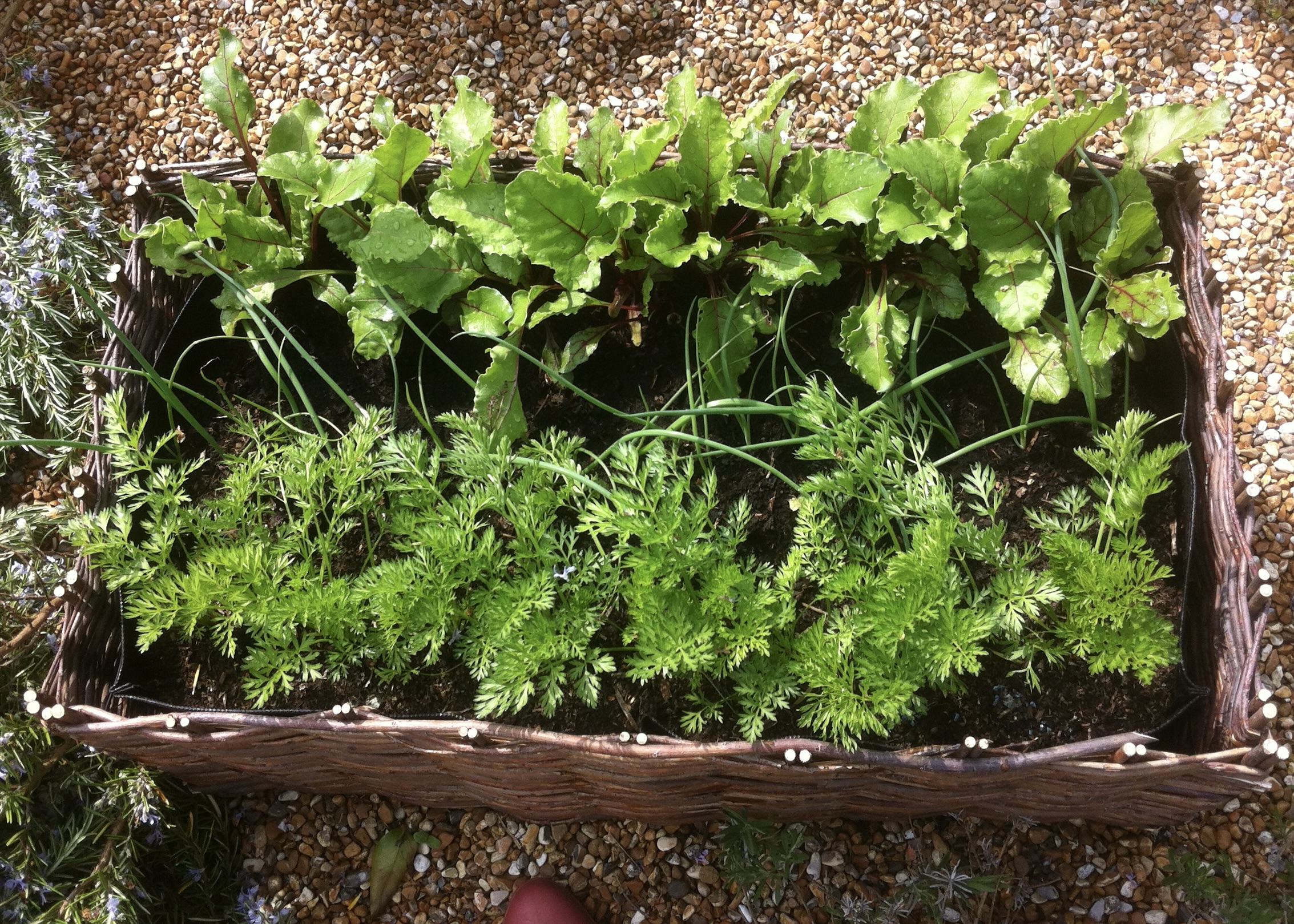
There are many vegetables that can be grown in containers – and edible plants can easily look as good as flowers if you choose the right varieties. Dwarf Chantenay carrots are probably better grown in containers anyway, because you can position them up higher than the carrot fly can reach – apparently they can only fly 60cm above the ground so are easily thwarted. Chilli plants are great for pots and look highly decorative, or try a hanging basket brimming with tumbling cherry tomatoes. Kale, chard and bronze fennel bring some drama to an edible pot display.
Herbs will happily grow in window boxes or small pots by the back door, somewhere that you can easily pop out to harvest them. Most don’t need too much water and benefit from the regular trim that a cook will want to give them.
Maintenance
Feeding and watering are the key to maintaining healthy looking summer containers. Water deeply rather than little and often, ensuring the compost is properly soaked. During heatwaves, some containers may need watering morning and evening – and this sadly is when we most need to conserve water, so try to have enough water butts available.
Feeding is equally important because nutrients wash out of compost quickly. Liquid seaweed or tomato feed should be given once a week. Basically feed weakly weekly through the summer and this should keep flowering and edible plants vigorous and productive.
Deadheading also makes a major difference. Removing faded flowers encourages plants to keep on blooming rather than setting seed. Petunias, cosmos, pelargoniums, dahlias and many annuals respond particularly well – in fact with something like cosmos or other meadow annuals, the minute you stop dead heading, they will seize their chance to set seed and immediately retire and put their feet up. Regular trimming and tidying will prevent containers becoming exhausted or leggy by late summer – we know how they feel.
Containers – whether filled with colourful annuals or long-lasting perennials will add another dimension to the garden through the summer, when we want to be outside surrounded by flowers. You can place your pots just where you choose to create focal points and splashes of colour and beauty. Look after them well and they will bloom away for many months.
Jo Arnell runs gardening courses and workshops throughout the year at her home in Woodchurch, Kent. To find out more, see hornbrookmanor.co.uk.
You may also like
Wild Winter
As temperatures drop, Jo Arnell encourages us to look out for the creatures who share our gardens The natural world has been busy making preparations for the colder months ahead; seeds have set, berries have ripened, fruit has fallen. The...
Season of change
Jo Arnell explains how to recover from this summer, have a tidy up and make next year’s gardening easier with her tips for an autumn garden reset Autumn’s arrival always feels more like the start of things than an ending...
Sow Natural
Let your plants do some of the hard work for you, with Jo Arnell’s recommendations for fuss-free, easy self-seeders I spent a fair amount of time sowing and growing earlier this year sprinkling seeds into trays of compost, nurturing little plants,...