Returning to the UK after a work stint in Dubai, Tracey and her family happened upon a house the likes of which they had never imagined living in before. Five years on, they still relish its clean lines, large windows and zero nooks and crannies, allowing for a complete reinvention of Tracey’s interior aesthetic and the development of her new venture, The Hus Edit
There are some homes that feel like they were always waiting for us. For Tracey Thompson, what started at a Coldplay concert in Copenhagen via a chance detour through East Sussex, finally resulted in a move to a dark wood-clad modern conversion, sitting on the outskirts of a pretty village. A home that, by Tracey’s own admission, was nothing like anything she had ever considered before.
“My husband said, ‘This is so not you,’” Tracey recalls, laughing. They were standing inside a house designed by RX Architects based in Rye; it was all clean lines, large glass windows, low-slung and quietly radical. Before she knew it, Tracey was in love. “Ben had been initially cautious when I first told him about the property, but when he came back to the UK and looked around, he was blown away as well.”
That was five years ago and the family – Tracey, Ben and their seventeen-year-old daughter Tilly – have now made the house their home. But as well as providing the backdrop for the family’s new life, since their return from Dubai where they had been relocated for Ben’s job, the house has done something rather more than just provide a roof over their heads. With their new style of living has also come a complete reinvention of Tracey’s interior aesthetic and, in doing so, planted the seed of something new, her lifestyle and interiors website The Hus Edit.
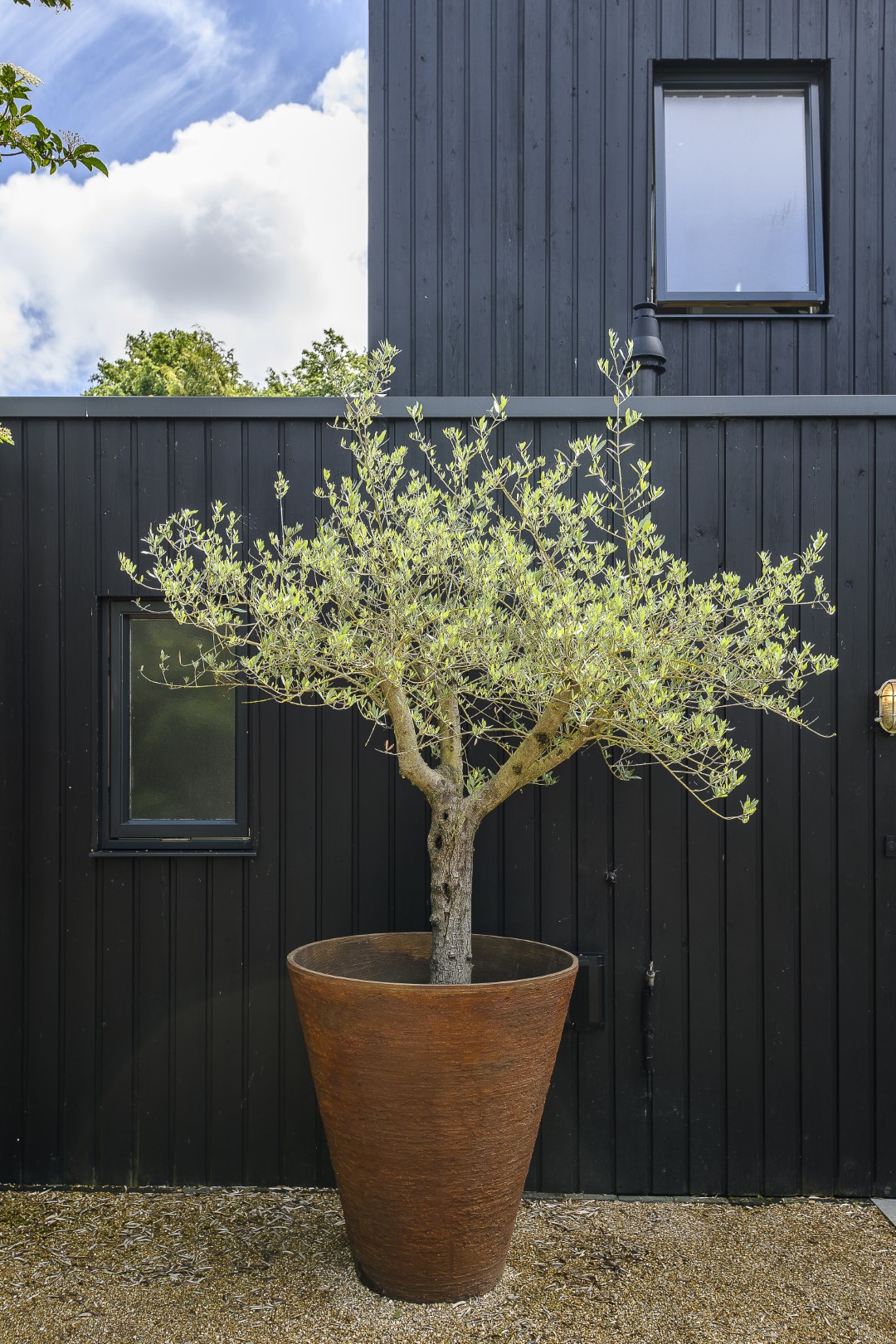
The house itself has a story. Designed by architect Rob Pollard as his own residence, what was once a bungalow was transformed into something altogether more considered and forward-looking. Clad in black stained cedar, the house sits quietly at the edge of the village, looking out over playing fields and the nearby bowling green. “We wanted a fresh start when we came back to the UK,” says Tracey. “I didn’t really realise at the time quite what a re-start it would be!”
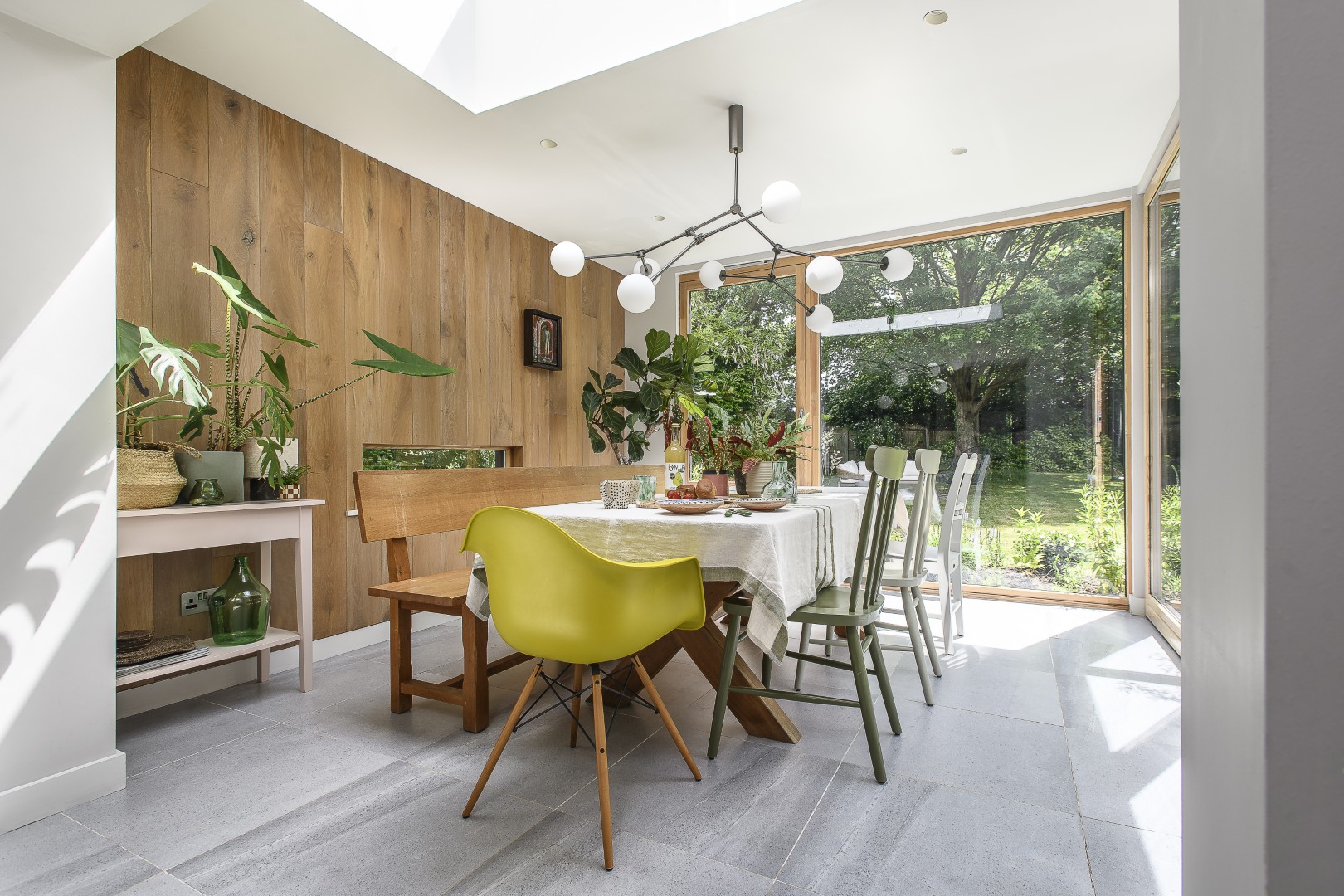
For a family who had always lived in period properties, the house was the antithesis of everything the couple had previously chosen. “We used to have nooks and crannies everywhere in our old house in Tunbridge Wells: alcoves, fireplaces, cupboards, shelves. Here, it was a completely blank canvas and everything was on show.” But what really stopped Tracey in her tracks, as soon as she stepped inside, was the glass. Vast panels of it: (almost) floor-to-ceiling windows in the bedrooms, sliding doors that open the living space wide onto the garden, and a series of clever little oblong glazed panels, one in the dining area (where the original architect’s children had their own tiny sightline onto the garden) and another by the hob in the kitchen, so that whoever is cooking can look out. “I just thought, whoever designed this is very, very good,” says Tracey. “It’s those little touches that you might not even notice at first, but once you do, you really love them and they become so integral to the design and feel of the house.”
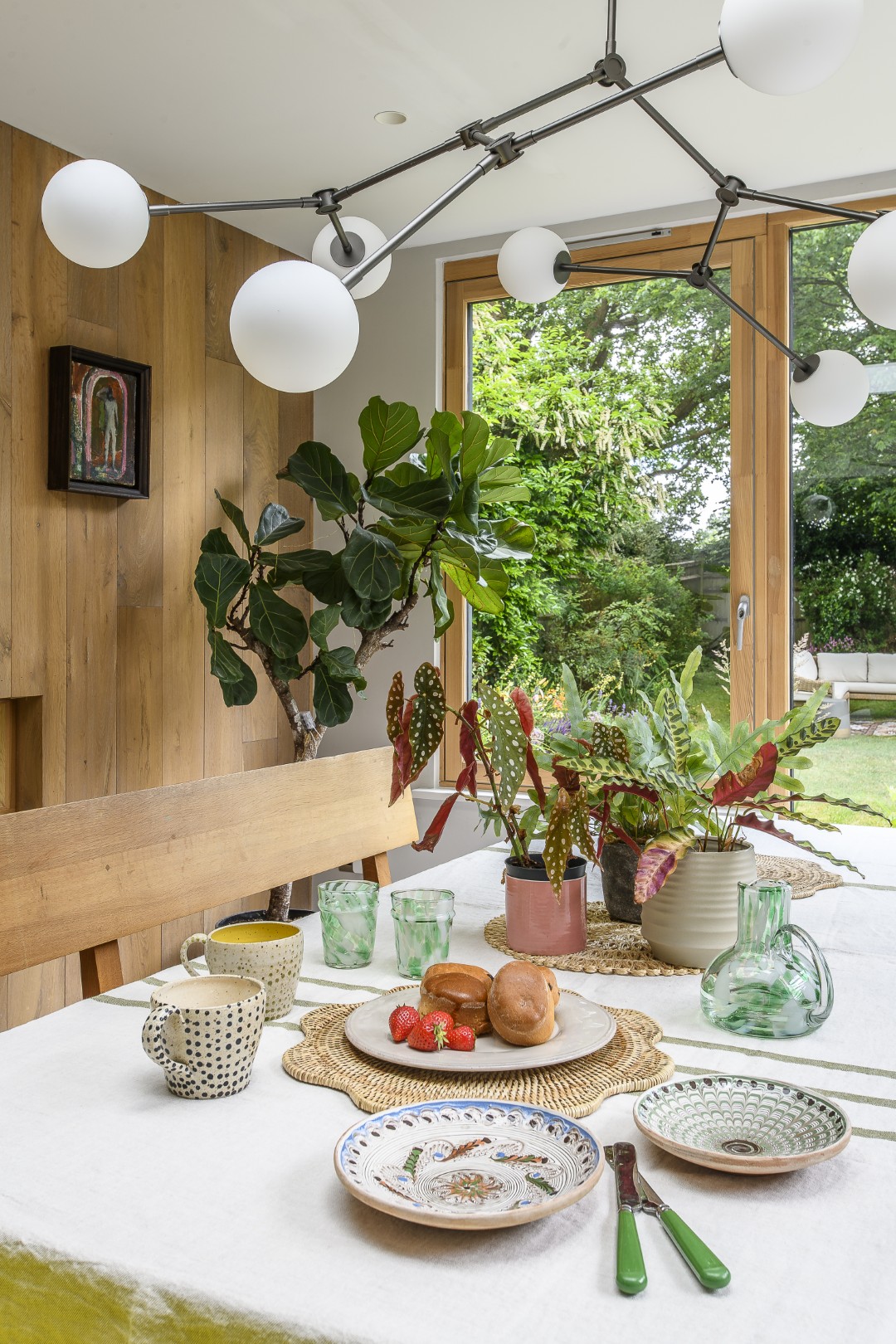
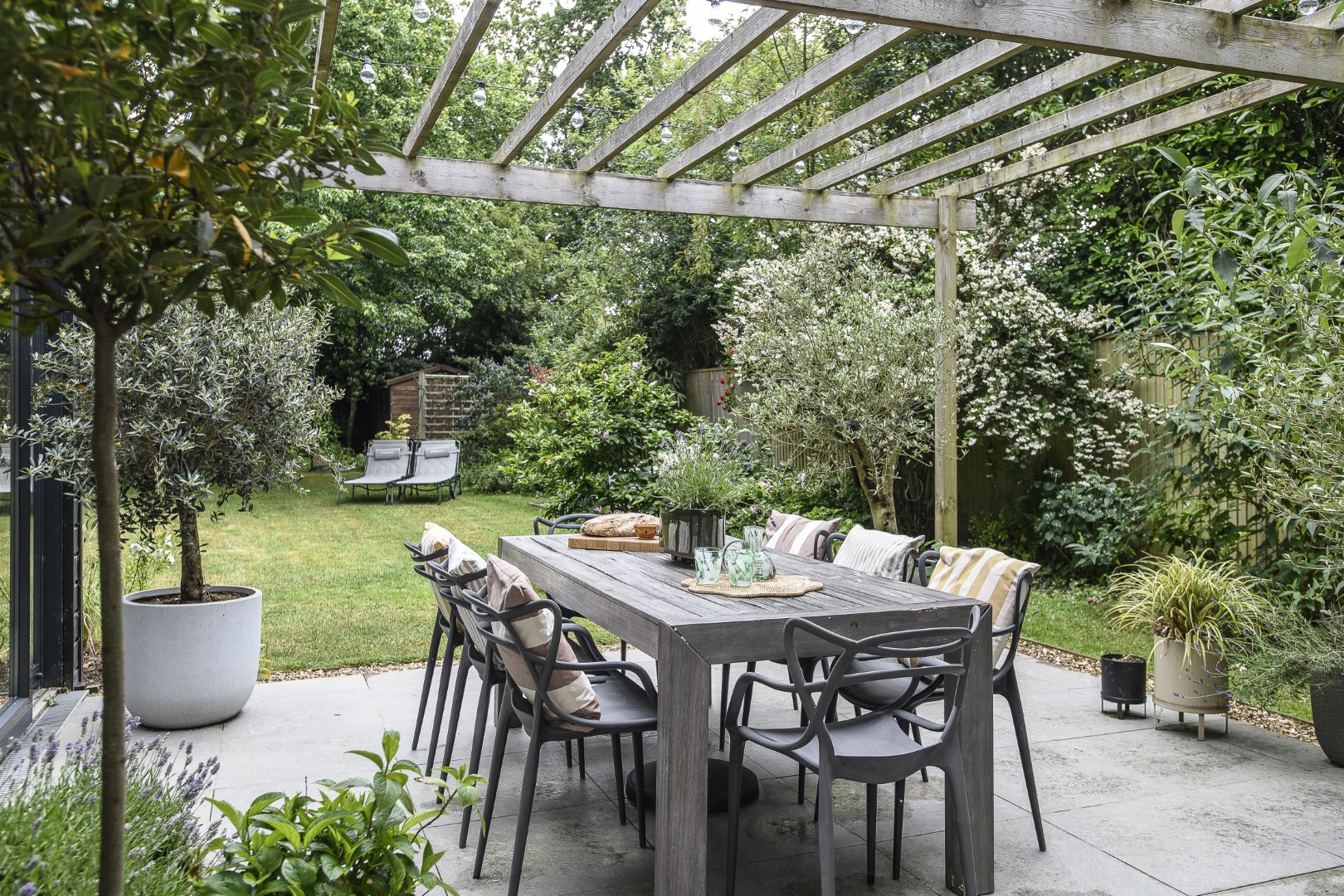
That play of inside and outside is the defining spirit of the house. From wherever the family are located, be that seated at the long dining table, tucked away in the snug, or lying in the upstairs master bedroom on a Sunday morning with a cup of tea, the house is always in dialogue with the garden. The entire ground floor is wrapped in glass – huge windows, sliding doors or skylights. The sense of the indoors/outdoors is given a nod to on the dining room wall – it is lined floor-to-ceiling in oak (the surplus boards from flooring elsewhere) a design detail left by the architect, and it works beautifully, being both warm and natural and also grounding. “I would never have thought to do that myself,” Tracey admits. “But it absolutely ties the room to the outside.”
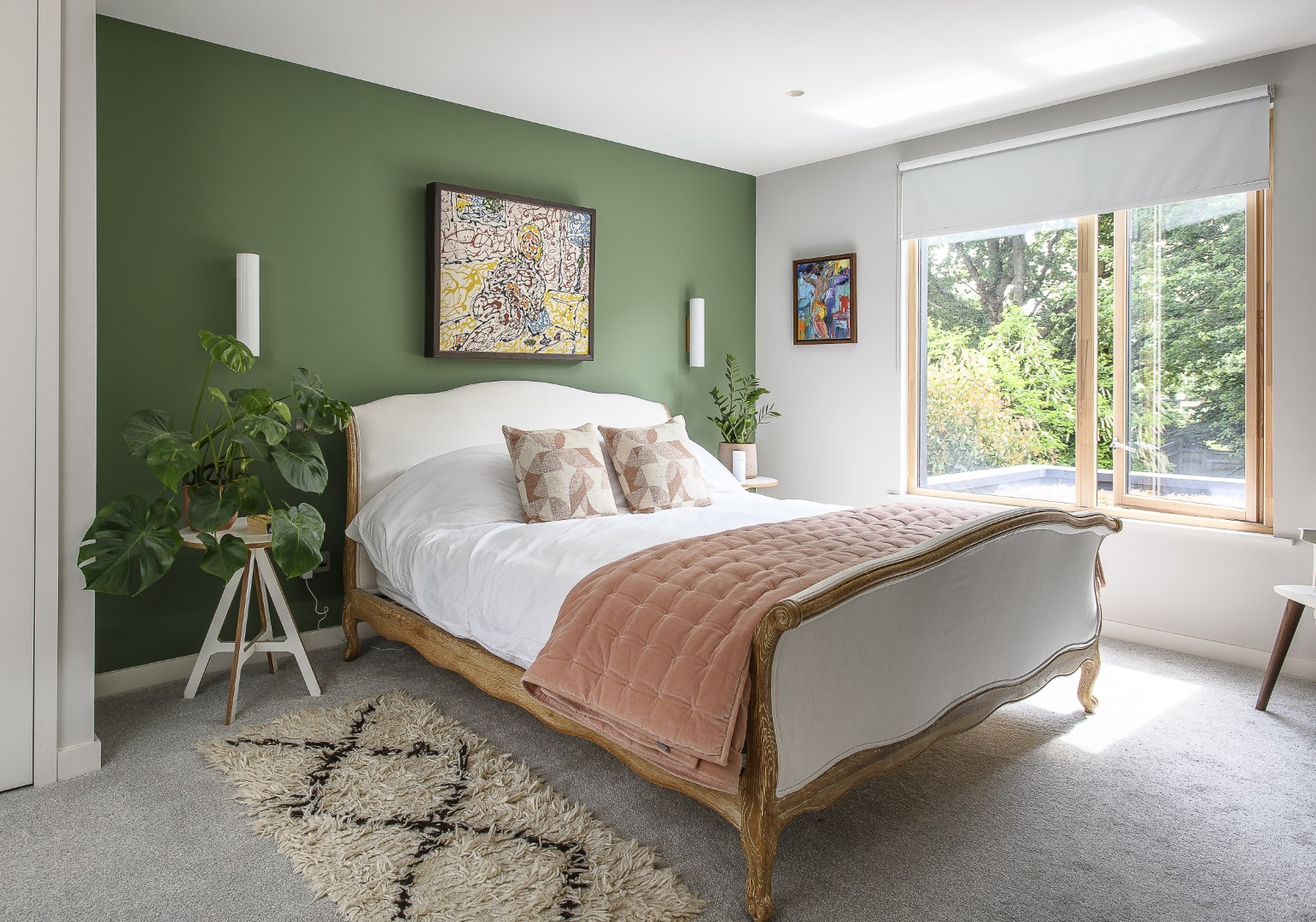
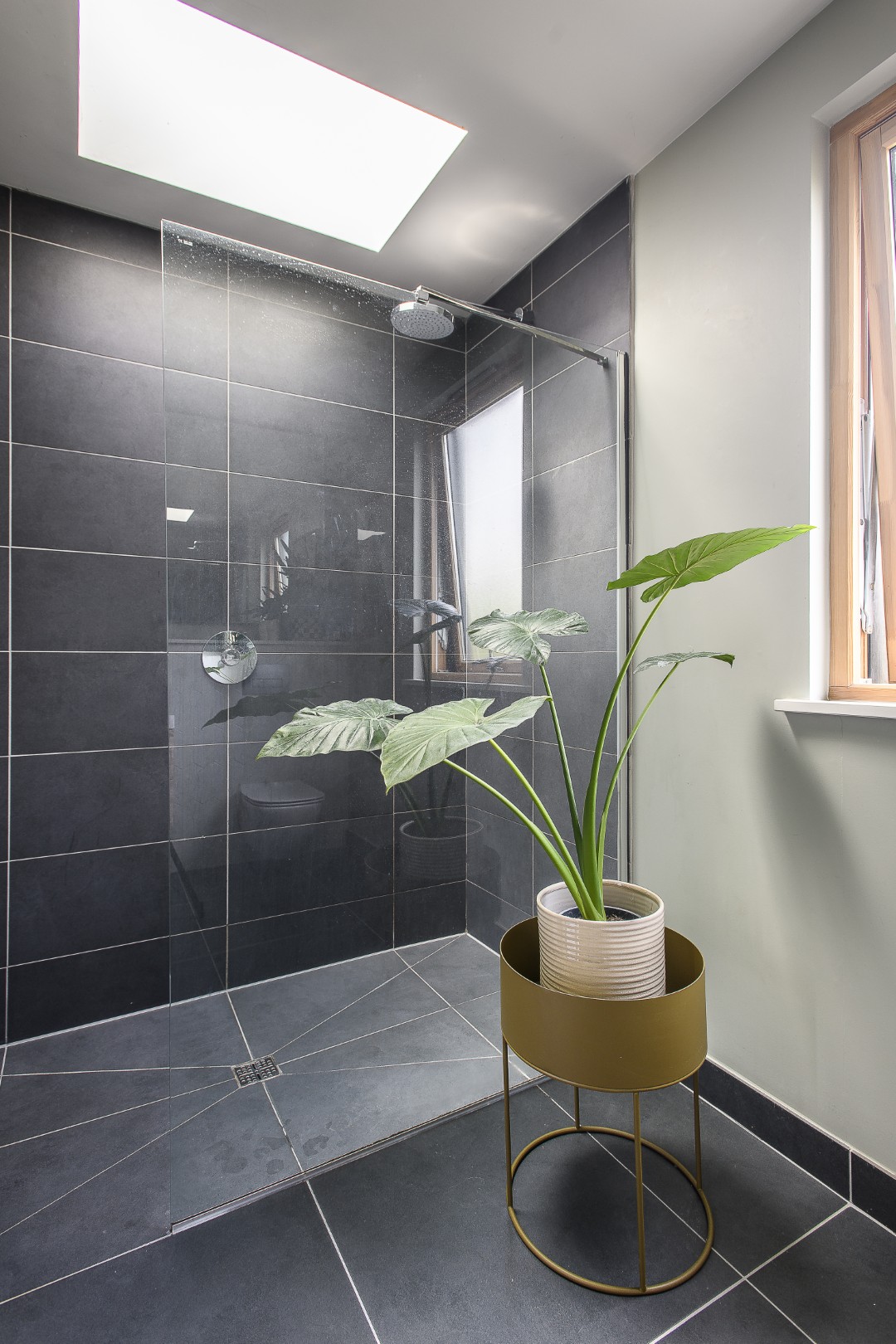
In the principal bedroom, another touch was to feature a sedum roof on top of the projecting dining room below, which is visible through the enormous bedroom windows, with the green turning to pops of vivid pinks and reds in summer. “When you come home to the UK after years of no real seasons,” explains Tracey, “you become much more aware of them,” she says. “Every room has something green in it now and I am always watching things change.” Plants appear throughout the house in considered clusters, bringing in the outside green palette.
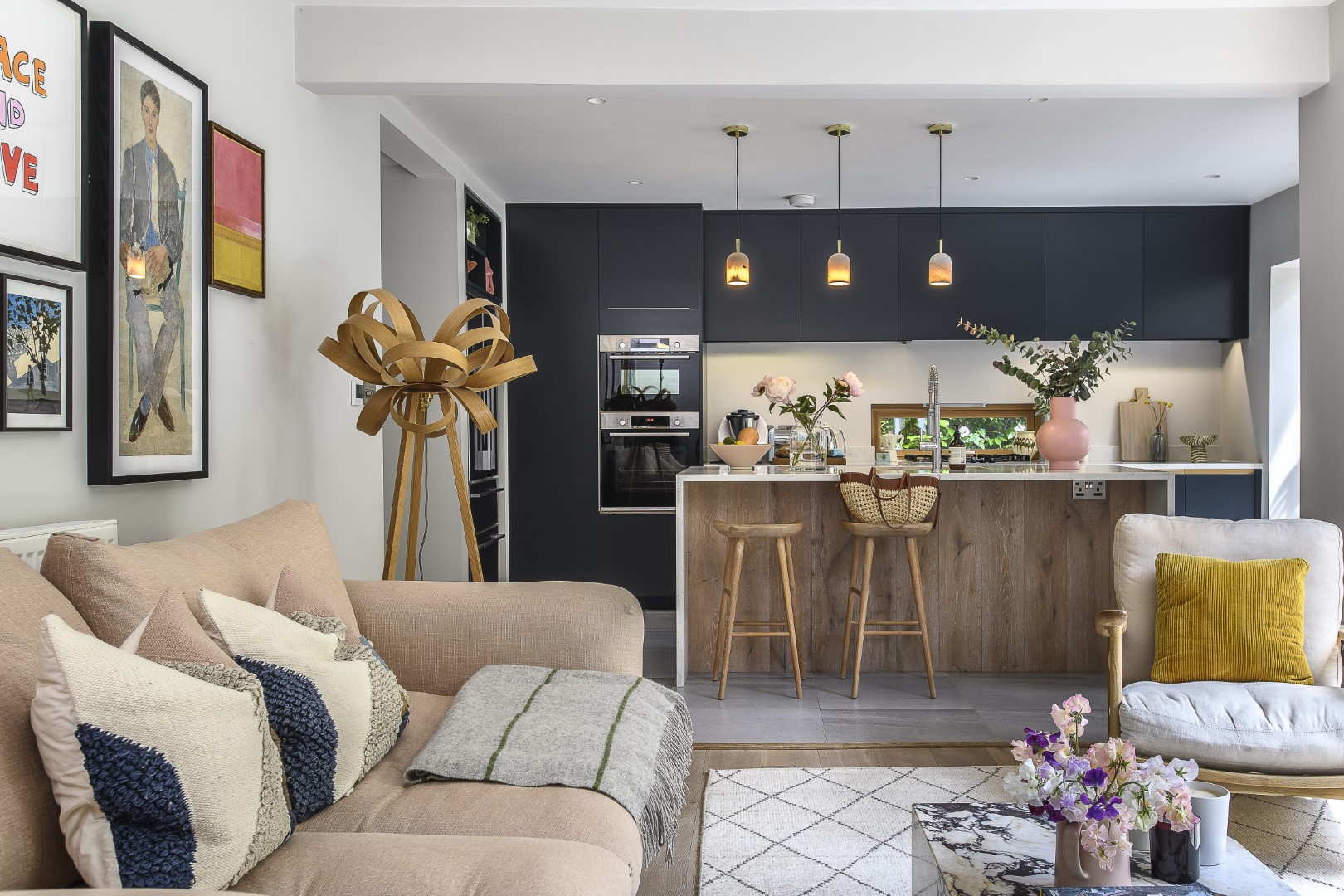
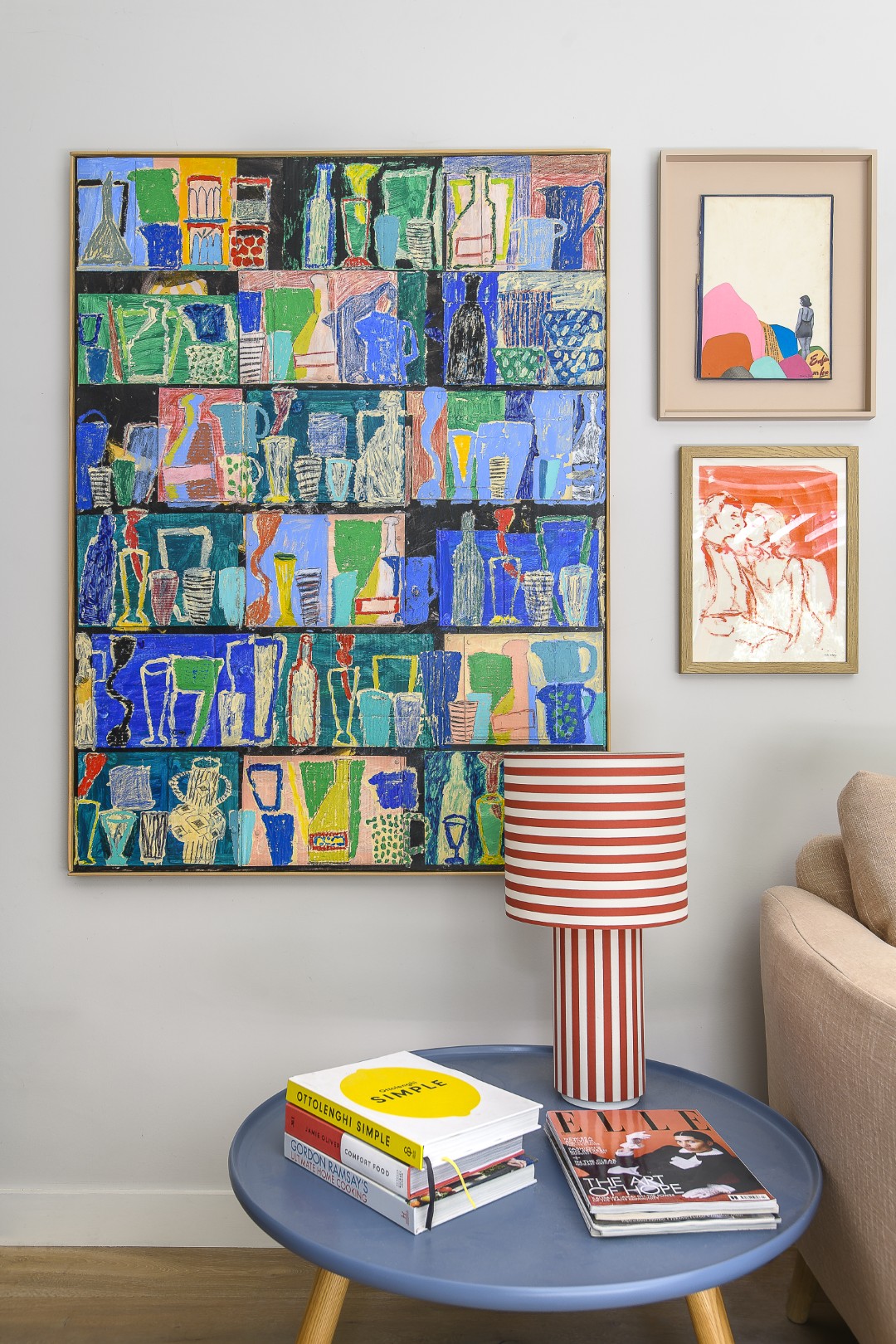
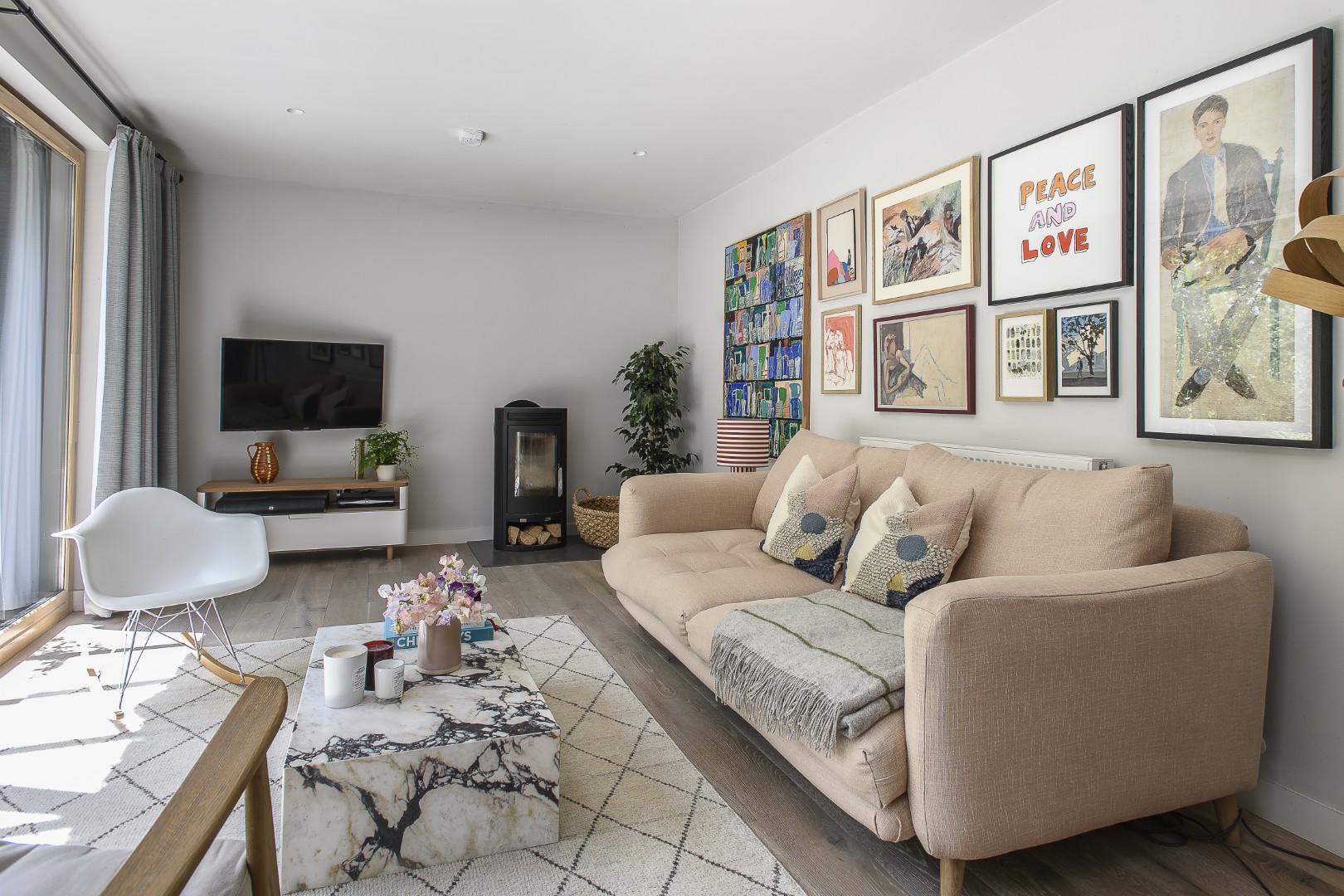
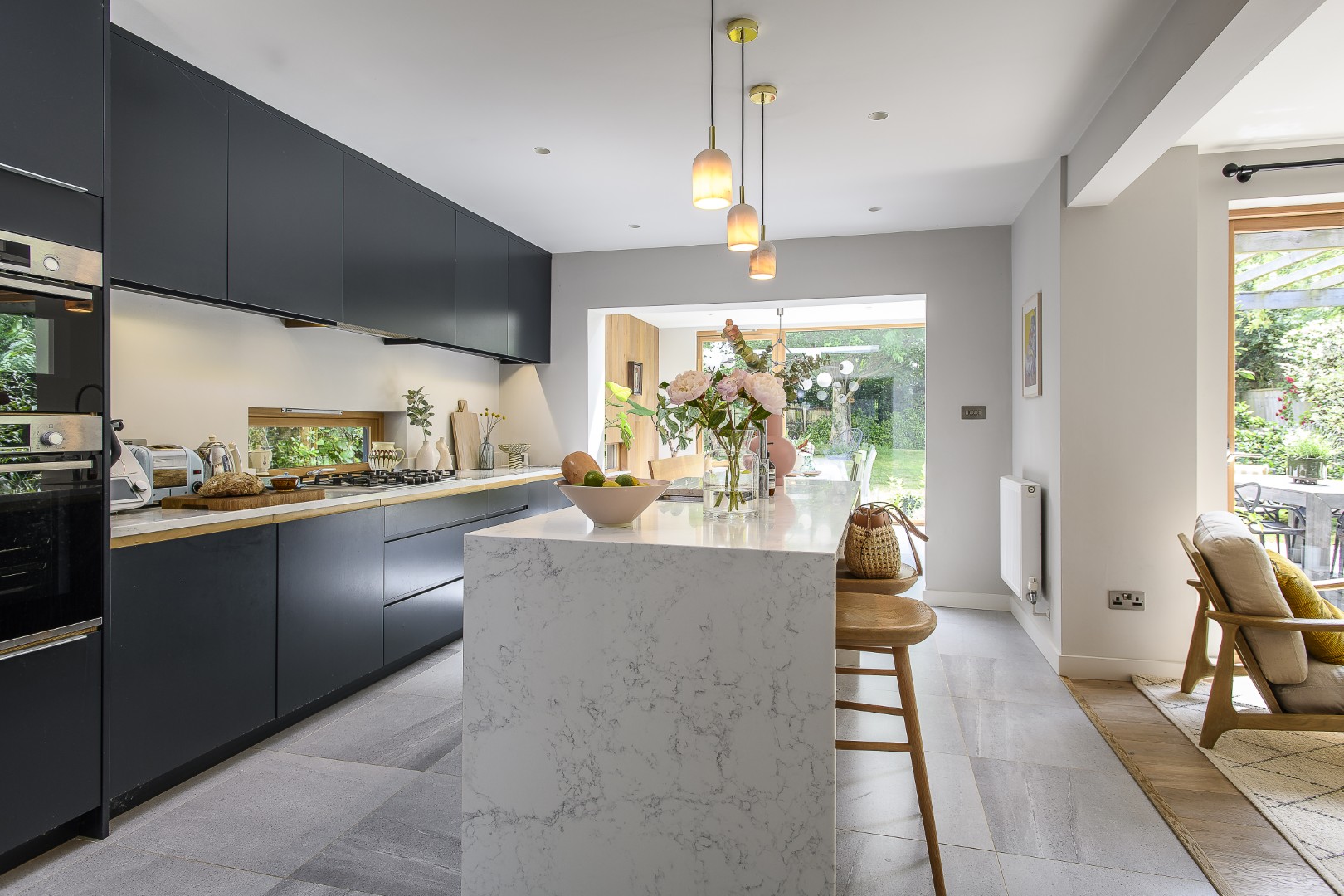
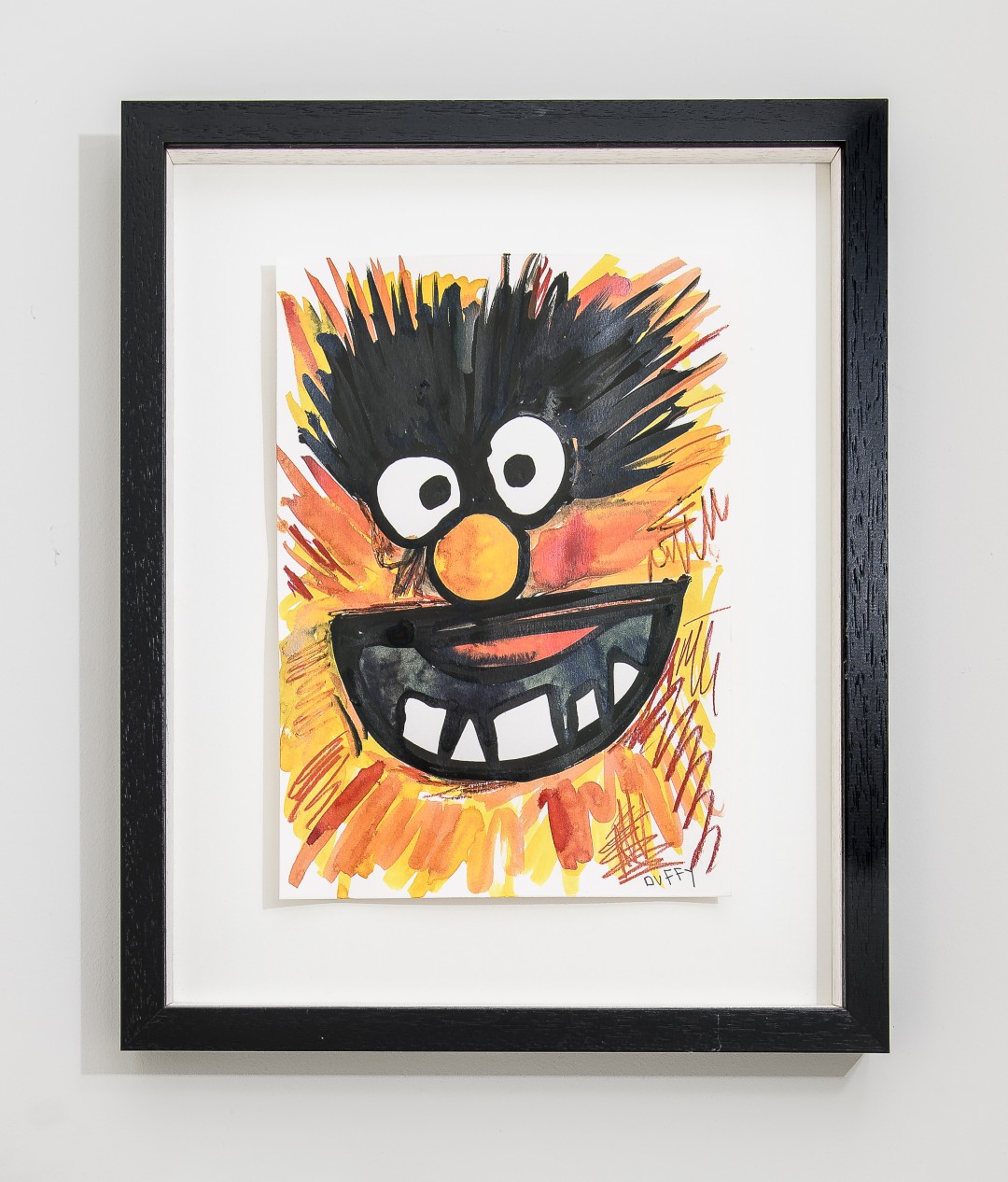
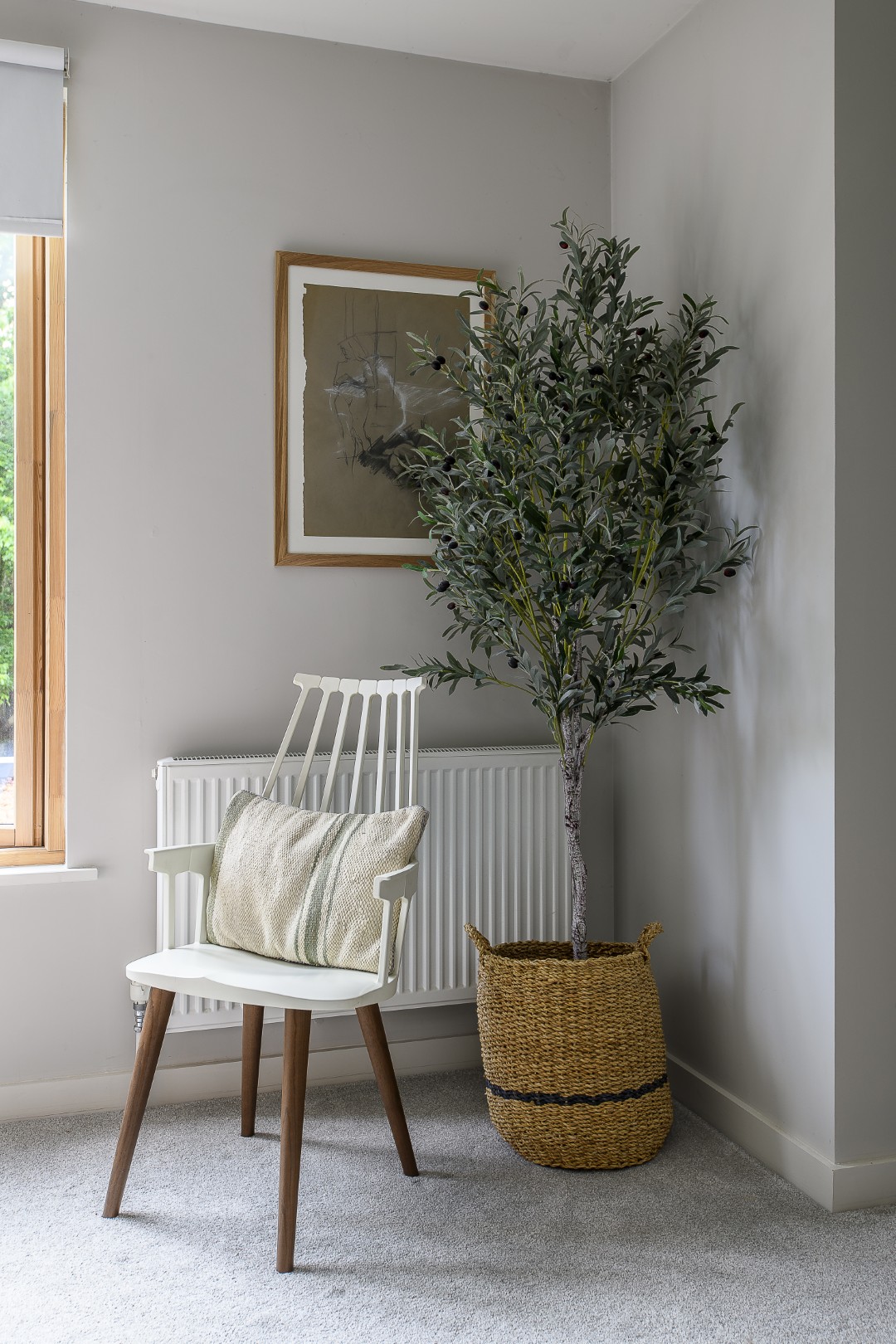
The house came, as Tracey describes it, as a near-blank canvas of pale grey walls and wooden floorboards, but with very excellent bones. What the couple have since added has been measured: new light fittings including a Ferm Living pendant that hangs above the dining table, and a stunning marble coffee table by Norm Architects of Copenhagen, which anchors the living room, whilst also referencing the marble of the open plan kitchen island and kitchen flooring. A Tom Raffield bentwood standard lamp shares the living room with a Muuto blue side table and a pop of fun in a candy-stripe table lamp from Heal’s. A wall of curated art, much of it gathered from Rye gallery McCully & Crane adds colour and narrative touchpoints.
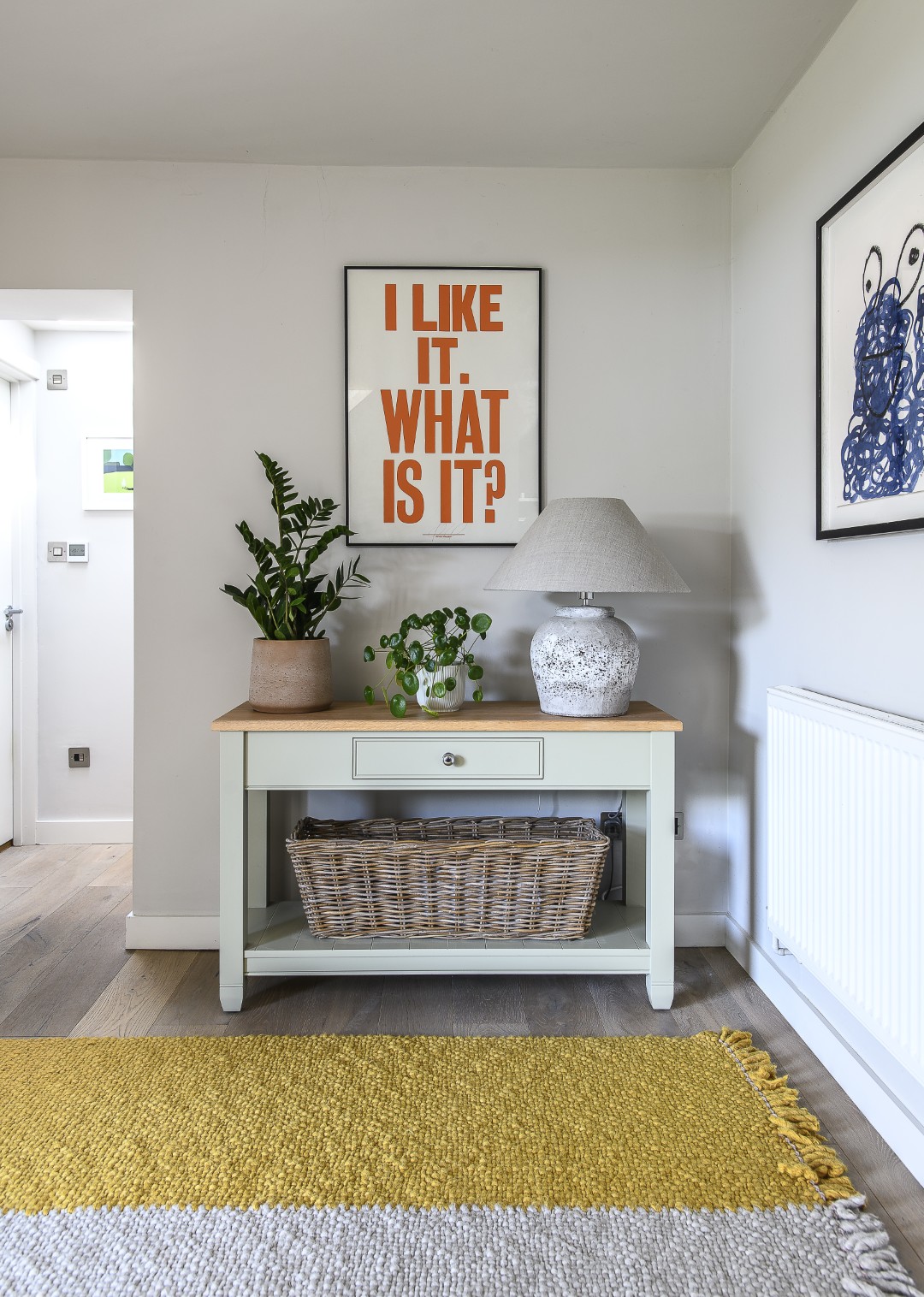
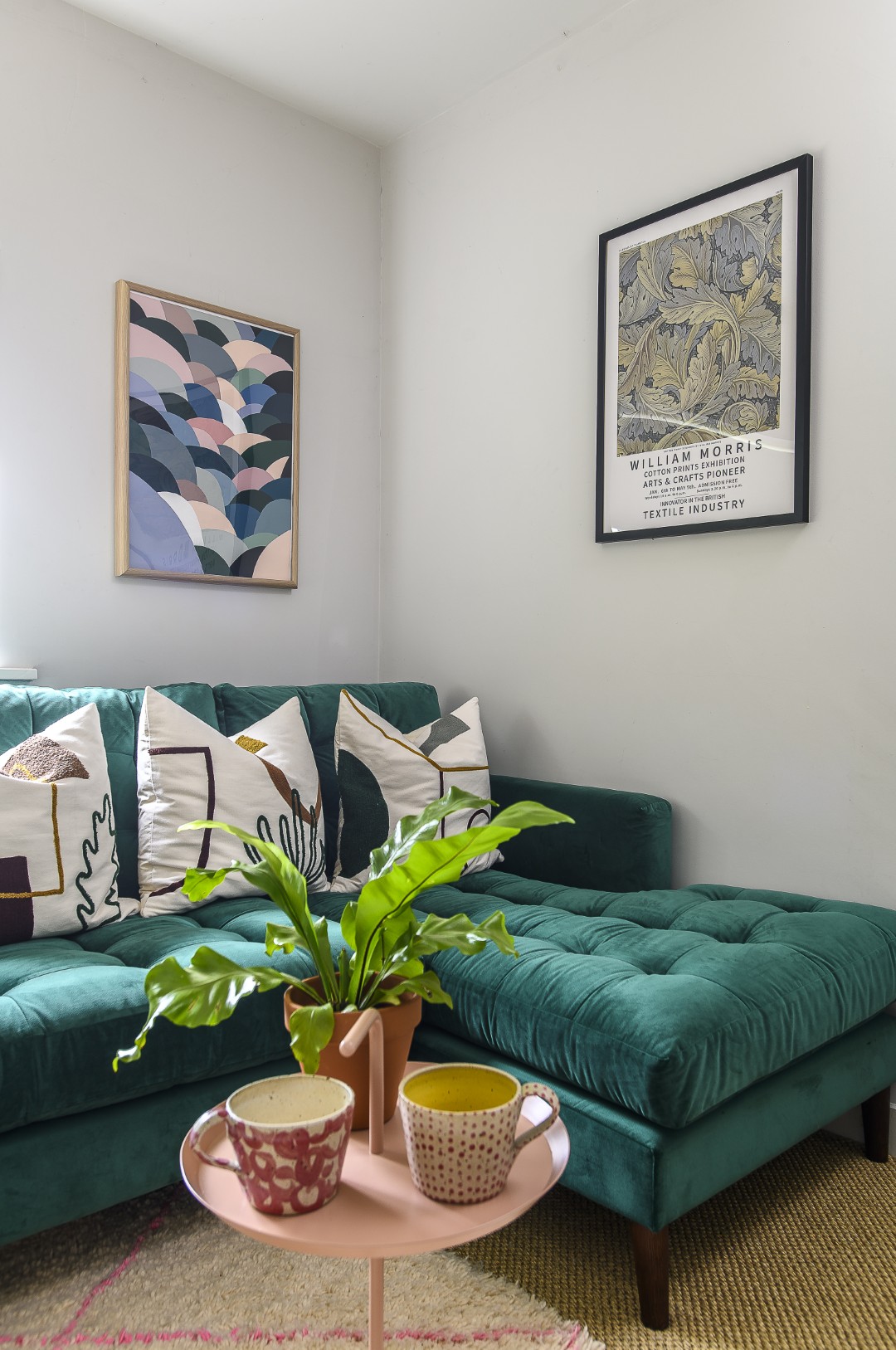
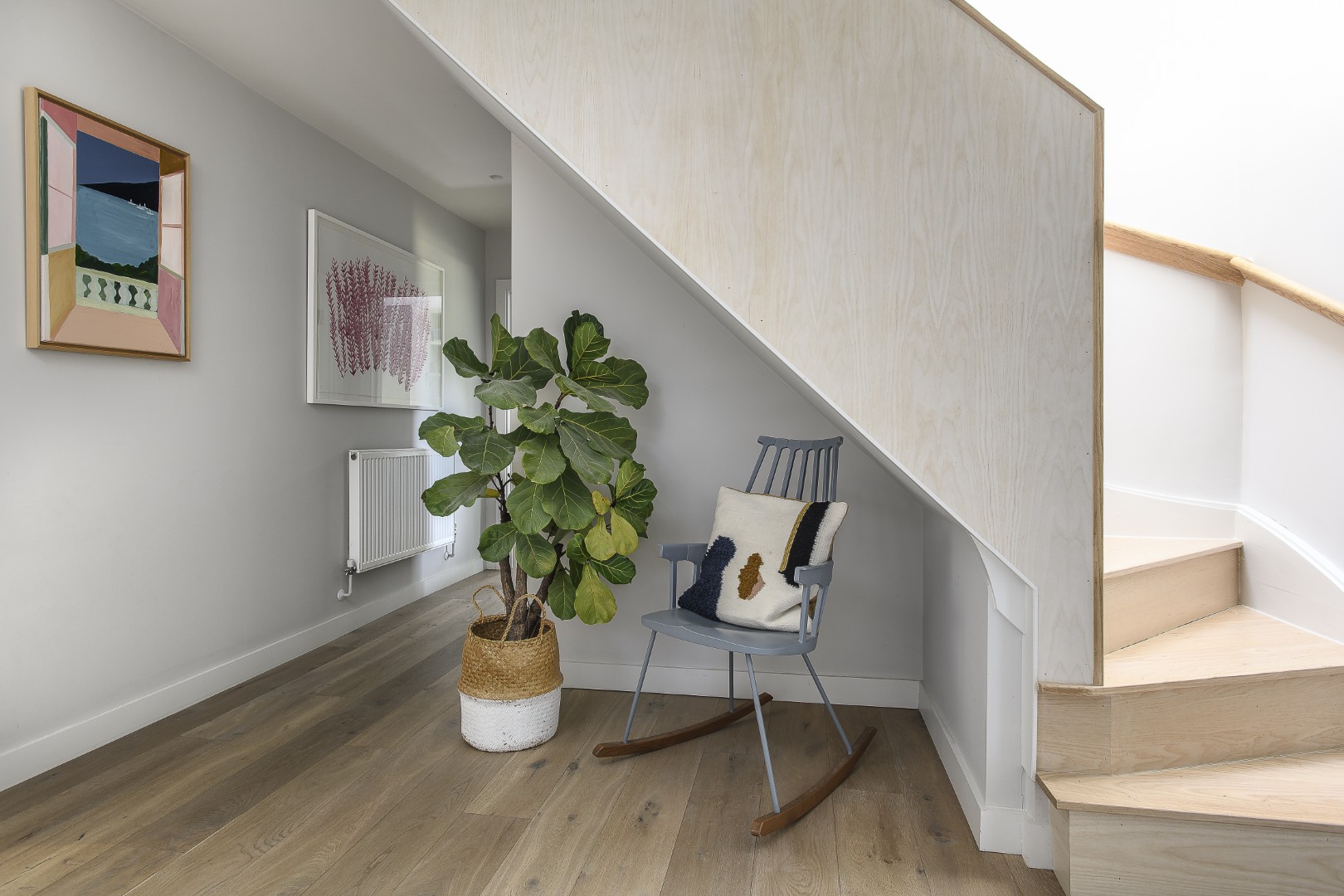
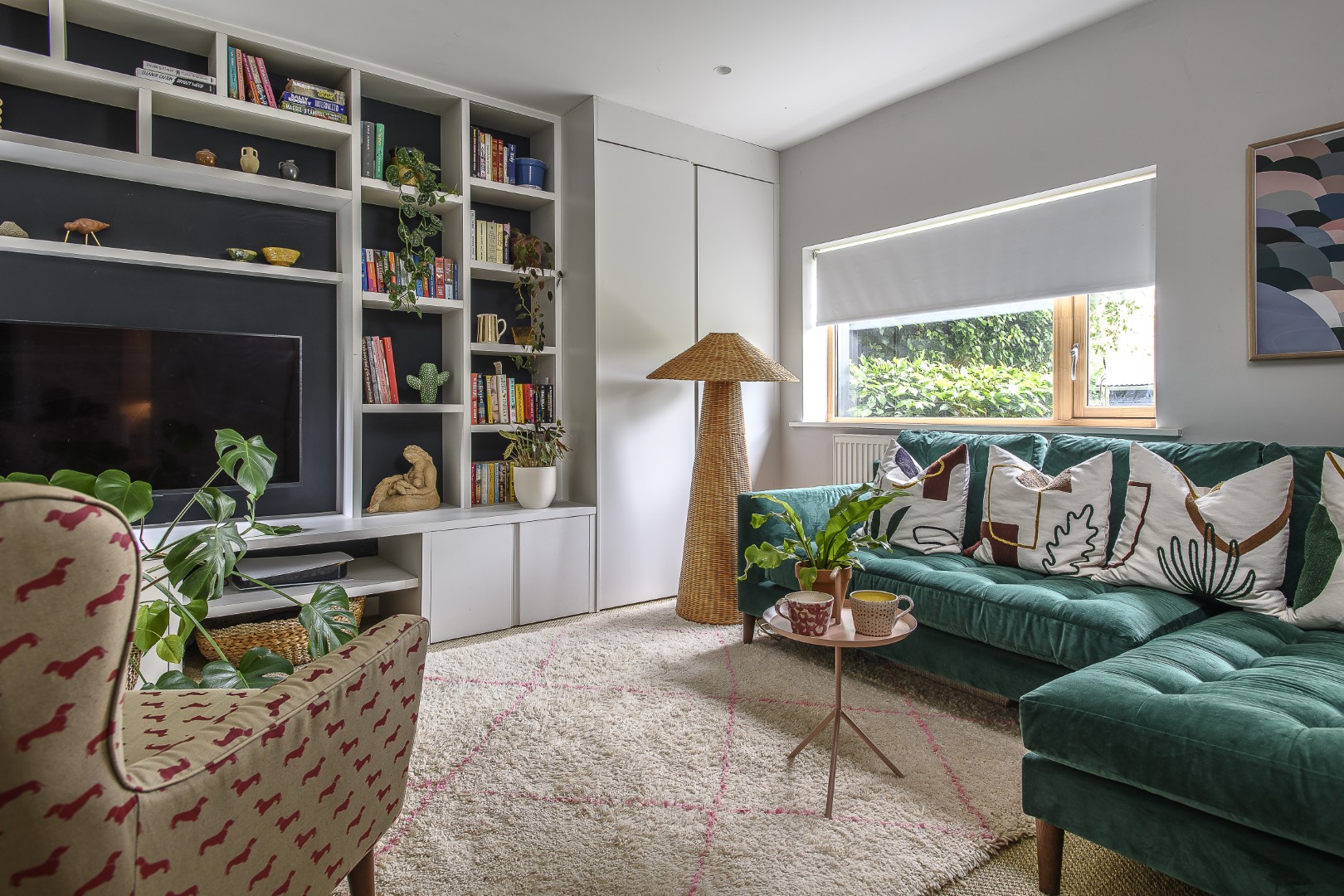
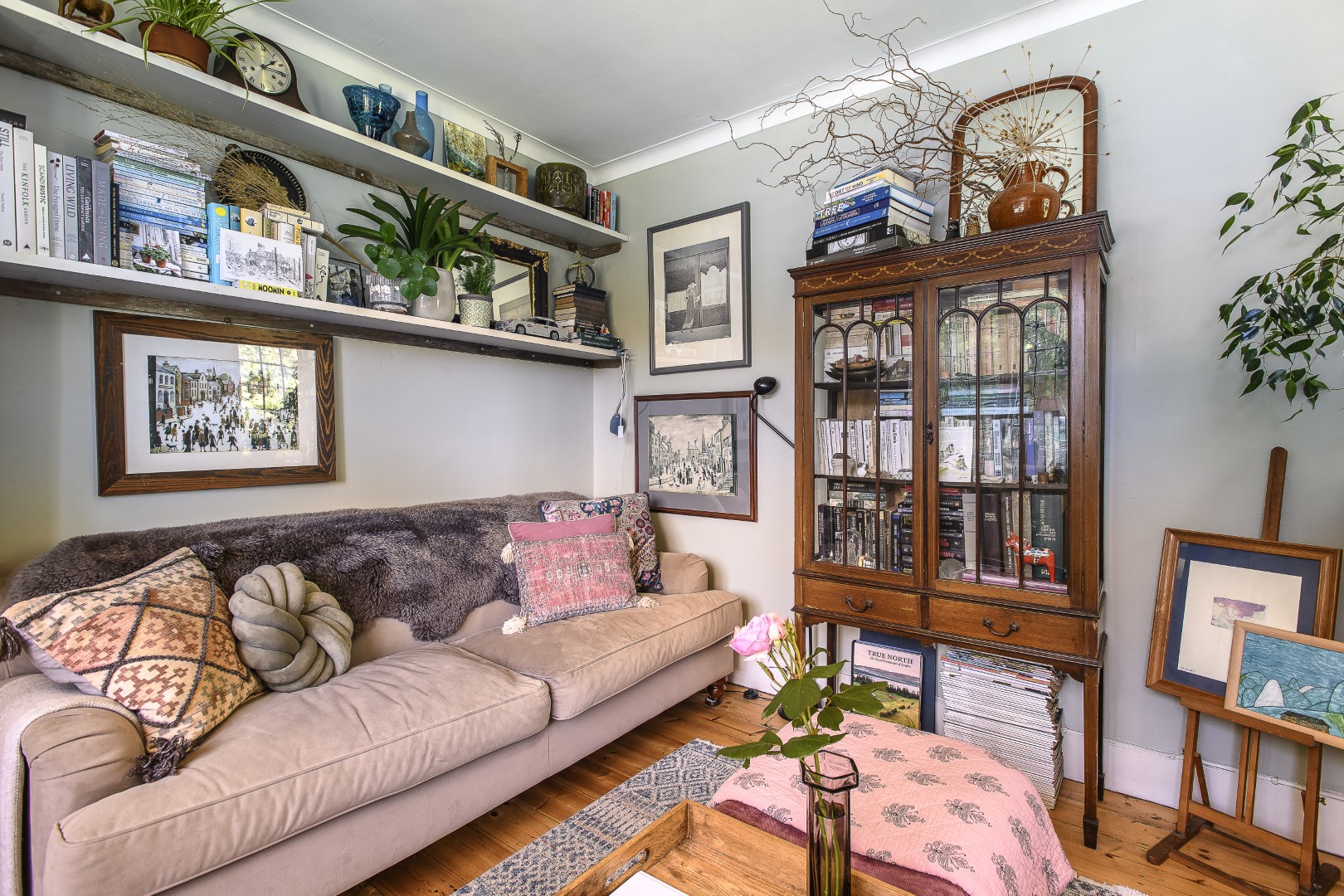
What strikes you, moving through the house, is the way hard surfaces and soft textures are used in easy counterpoint. The kitchen, with its deep navy cabinetry and tiled floor, gives way to the warmer tones of the dining room and then into the living space, where a Loaf sofa is piled with Scandi inspired cushions and throws. In the snug downstairs, which Tracey says is very much her daughter Tilly’s domain, a bright-green sofa sits on a deep Moroccan rug, the whole space also made more intimate (and practical) with bespoke shelving. “In period properties, you have focal points handed to you,” Tracey reflects. “Here you have to create them. It made me think completely differently about objects. Now I’d rather have three or four really considered pieces than a room cluttered with discarded and forgotten possessions.”
It is no coincidence that this shift in thinking sits at the heart of Tracey’s newest venture. This spring, she launched The Hus Edit (thehusedit.com),
an online homeware shop selling beautifully made, thoughtfully sourced pieces rooted in Nordic living and also in the craftsmanship and landscape of East Sussex. The name is a nod to the Danish word for home. “It really is just a collection of beautiful things I would love to have in my own house,” she says simply.
The catalyst, as with so much else in Tracey’s life lately, was her trip to Copenhagen, where she had spent several days happily wandering the city. “The shops, the design, just everything it really lit something up in me,” she says. “I always loved interiors, always spent too much on cushions and blankets. But this new project feels like more than just a love of beautiful things. It feels like, now in my forties, if ever I was going to try something different, out of my career comfort zone, it has to be now.”
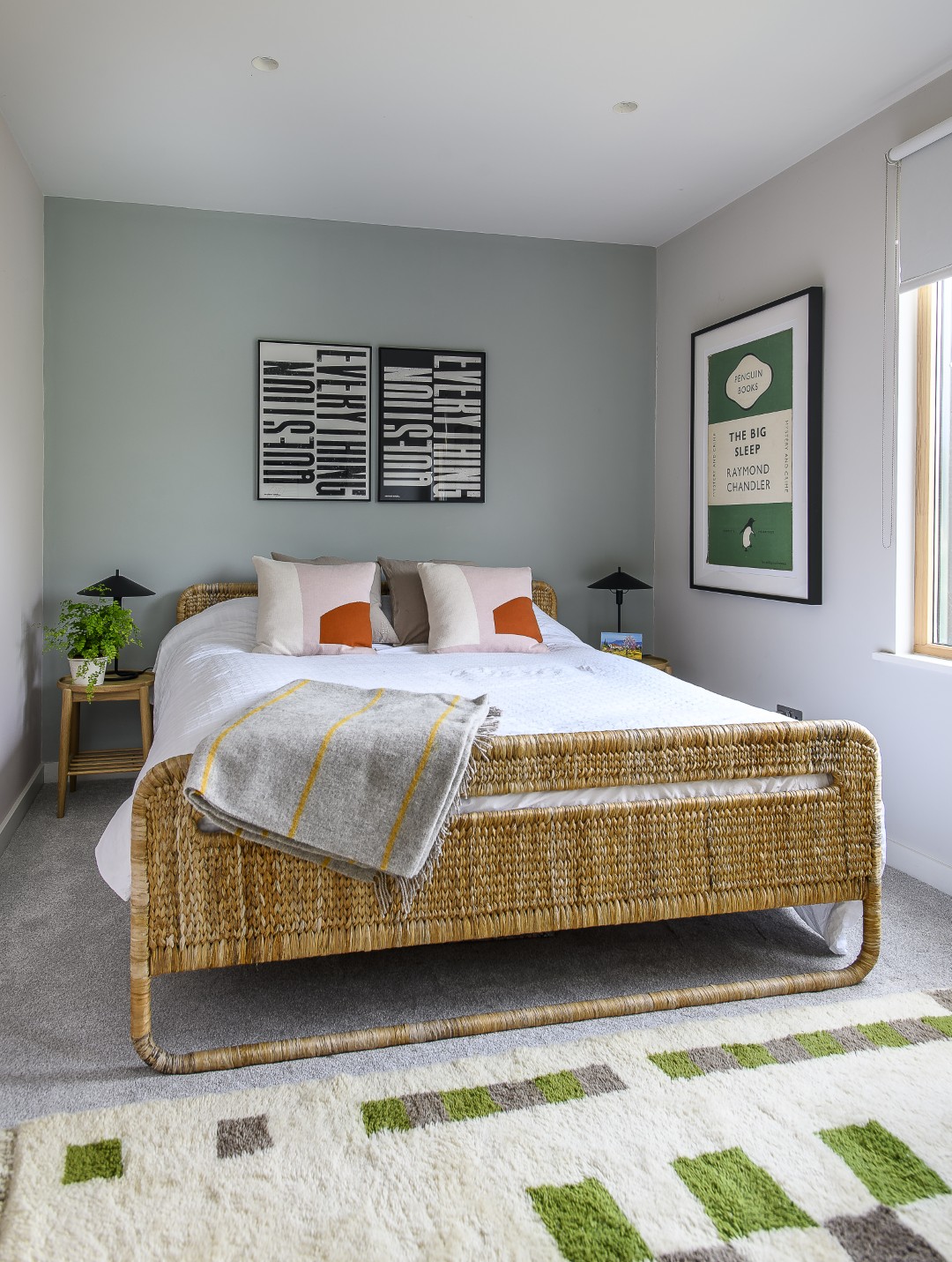
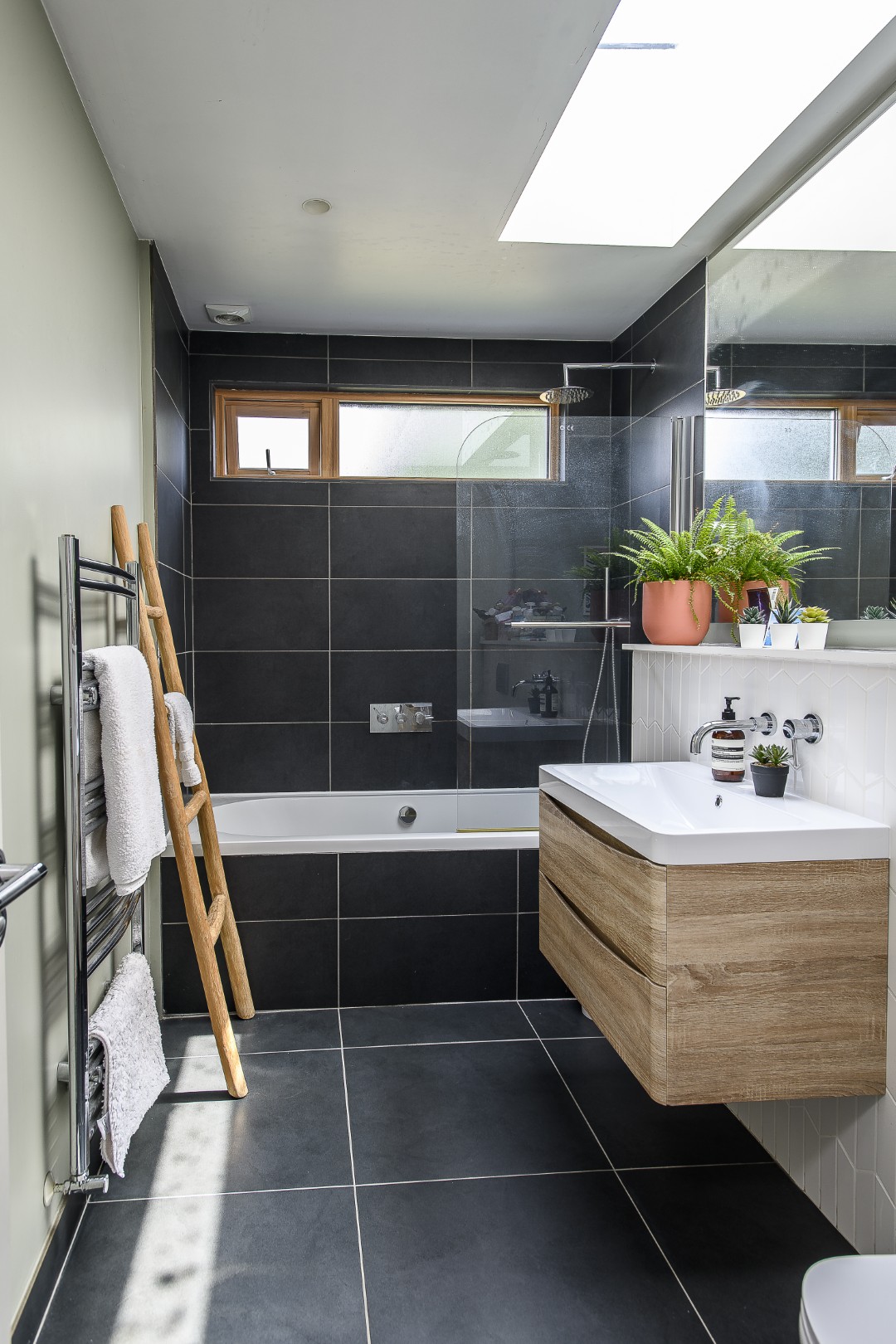
Whilst still navigating her day job as a healthcare PR, working with amazing charities including Cardiac Risk in the Young as well as her clinical clients, Tracey decided to pursue an idea that spoke to her love for interiors. “At this stage of life, you have enough confidence to do these new and often challenging things,” she says.
The curation of The Hus Edit reflects both Tracey’s aesthetic and her principles. She has spent months researching and reaching out to designers whose work genuinely stopped her mid-scroll. One key textile brand, Lapuan Kankurit, is based in Finland, its heritage rooted in generations of mill weaving; the pieces are sustainable, made to last, and unmistakably Nordic in their palette of soft, muted tones.
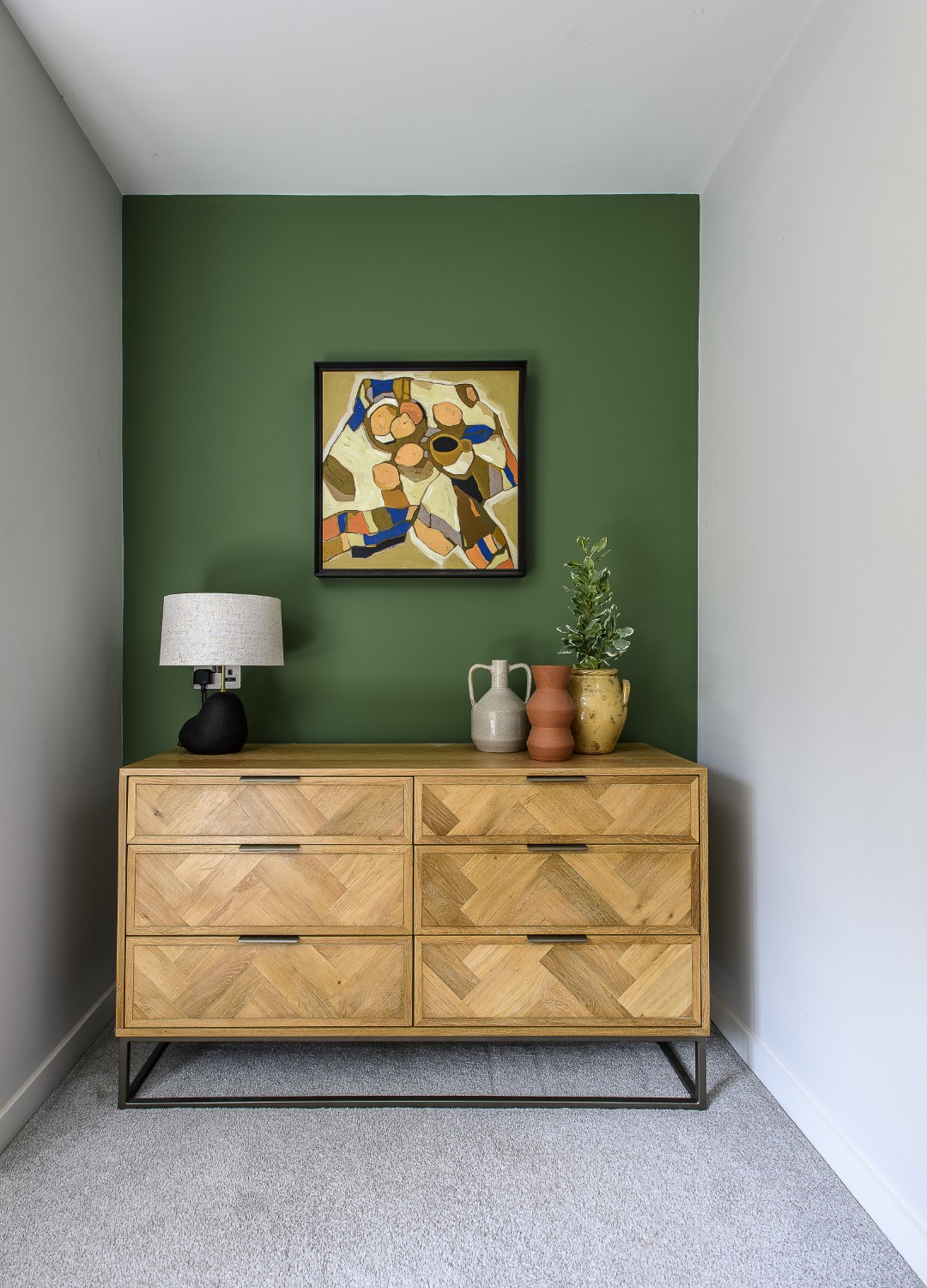
Another is ceramicist Emily Doran, based near Tunbridge Wells, whose wheel-thrown pieces in coastal-influenced forms, sit easily alongside the Scandinavian work. And then there is the Danish potter Polli Pots whose enormous, gloriously rustic-glazed mugs – or Dotty Mugs, as they have become known to Tracey – she fell for completely. “I reached out and said, ‘I love your work’. We went back and forth for a while. It’s that relationship I have with my makers that matters to me as much as the products.”
By chance rather than design, almost all of the makers Tracey has chosen are women. “It was entirely unintentional. But I don’t mind at all.” On The Hus Edit website, she has created a Meet the Maker section for each designer; a natural instinct from someone who has spent a career understanding the power of the human story behind a brand. The ethos of the website, one that Tracey absorbed from her home, is that quality, functionality and beauty should all be interconnected, something to reach for every day.
“There’s a Scandinavian idea,” she says, “that you use everything. Nothing is kept for best. Everything is there to be lived with and used.” It is, she acknowledges, a shift from our Victorian habit of having the ‘best’ china and glasses kept separate and closeted away, an idea that many of us were raised on.
Standing in her kitchen, a Hus Edit carafe of green-flecked glass catching the afternoon light from the garden, the Dotty Mugs steaming with freshly brewed tea, the house wrapped in green on all sides, Tracey Thompson seems precisely where she is meant to be.
The PR world will still have her, but her new life feels like the start of something else entirely: a small, considered, quietly joyful business grown from a life well-observed and, at last, a home that feels exactly where Tracey wants to be.
Address Book:
You may have met Tracey on her beautifully curated stand at this June’s Wealden Times Midsummer Fair. You can find out more about her business, The Hus Edit, and shop online from her collection at thehusedit.com.
Wealden Times readers can enjoy a 10% discount by entering the code PRICELESS at the checkout.
- words: Antonia Deeson
- pictures: David Merewether
You may also like
Collected at the Oast
Room by room, year by year, artist Sarah Featherstone and her family have poured their creativity into the renovation of a large oast, transforming it not only into a family home, but a wonderful venue in which to display Sarah’s...
Finally Home
With a refined eye for art and furniture, journalist Patrick McAleenan has spent the last few years curating the interior of his St Leonards home with carefully chosen pieces, prompting his latest venture, South Coast Stories, a PR platform for...
Pretty much perfick
Garden designer Agnieszka Gebka found a horticulturist’s haven when she and her family relocated from Wimbledon to Sevenoaks and a former gardener’s cottage on the edge of a large country estate, a space that has allowed her to pursue her...