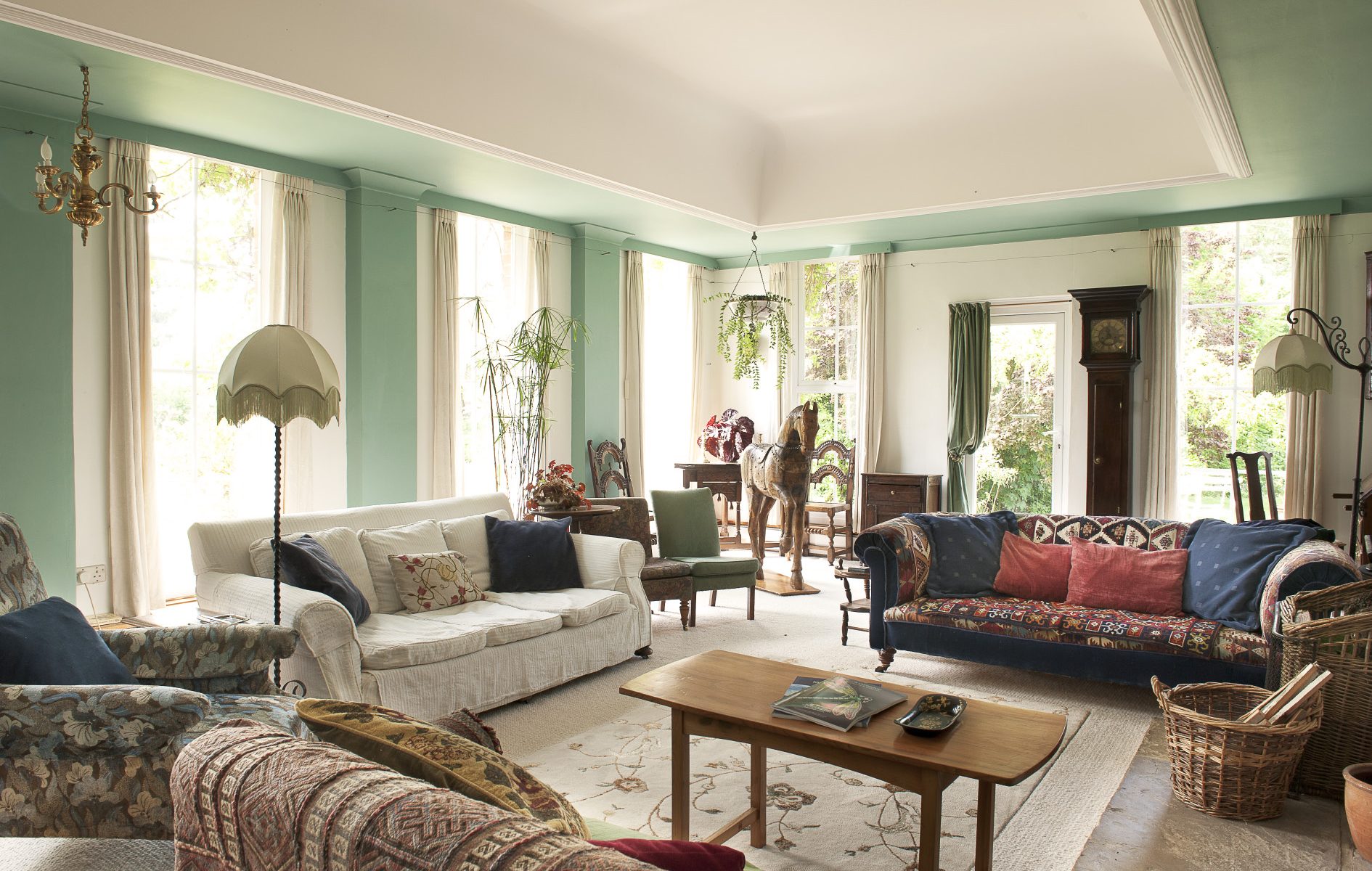
Converted oasts can be rather like those childhood Christmas presents from Great Aunt Hermione – they look the biz from the outside but inside they are too often architectural socks. Oasts are, after all, industrial buildings built for hops not people and a truly outstanding conversion requires serious courage and imagination. So how wonderful would it be to be able to take a vast triple kiln oast and to create a home from scratch, a home for the long term, a home where one would raise one’s children, from which they would sally out into the world and which would finally be the joy of one’s later years? Well, this is just the opportunity that Jenny and David were given in the mid-1960s – an age, glorious in memory, when, provided one didn’t set out to trash single-handedly the country’s entire national heritage, the authorities pretty well left one to one’s own devices. True, not the most wonderful idea if you were an architectural vandal but perfect if, like Jenny and David, you had real vision and the determination to create a unique home and garden that would be a joy to anyone lucky even to visit. “When we moved down from London, we hadn’t thought of an oast,” says Jenny. “I was rather thinking of a ready-made, rose-clung cottage but a brief look at our finances revealed that if we wanted something really special, we were going to have to put in a lot of hard work of our own.” When they first saw Home Oast and its three square kilns, it was derelict and its garden just a patch of field delineated by stakes. Today, it is difficult to judge which is the greater triumph, the elegant house or the garden that complements it so beautifully. What strikes one first about the house and which differentiates it from so many later conversions are its windows. Overlooking the main lawn are no fewer than eight soaring Georgian windows framed by wisteria and clematis, roses and honeysuckle. In keeping with a traditional agricultural building? Probably not. A bold concept that immediately lifts Home Oast above virtually every other oast conversion I’ve seen? Certainly. Needless to say, the windows are not just a pretty face. Inside they run the length of a truly spectacular double aspect drawing room, 36 feet in length with a soaring barrelled ceiling, flooding it with light and inviting in the garden. And as for the furnishings? “There’s nothing new in here – in fact there’s nothing new in the whole house,” says Jenny, pointing out that neither of the sofas cost more than £20 and the armchair – which her children always called the ‘witch’s chair’ – just £4. The lovely dining table, made by David from a single slab of elm, is surrounded by Chippendale country chairs and nearby stands a tiny and rare hawthorn chair. By a glazed door that leads out onto a paved terrace is a slim and elegant Georgian oak grandfather clock by Thomas Sharp of Stratford-upon-Avon and beside it a large and glowing wooden statue of a Mongolian pony that came from Afghanistan. At the other end of the drawing room is a modest-sized, shaker-style kitchen with a pleasing little alcove breakfast table for two. “Personally, I don’t really need a large kitchen. But if a later owner ever wanted to expand it, all they would have to do would be open the existing kitchen through into my workshop!” Jenny says as she takes me through into a huge adjacent room in which she works on her ‘roothouses’, wonderful intricate fantasy houses carved from the roots of trees. The houses are only the latest turn her artistic career has taken; she began as a potter and a silversmith but her real love was pottery and she ultimately became known as one of the best makers of handmade and painted real porcelain miniatures which has now made its way into doll’s houses around the world – and of course into her own roothouses. Both upstairs and downstairs hallways are considerably more spacious than most oast conversions both because the overall size of the oast allowed this extravagance and because Jenny and David were determined that nowhere would seem ‘pokey’. The downstairs hall is far from pokey and is home to a treasure trove of fascinating goodies from a collection of antique irons to a superb polyphon – just one of the couple’s extensive collection of music boxes – and, in pride of place, a grandfather clock by the Derby clockmaker John Whitehurst to whose family David is related. Off the hallway is another large reception room, home to a handsome brick fireplace, the couple’s collection of musical boxes, a rare orchestrelle, a pianola and a barrel organ. And then as one moves through, one is in a fantasy land of roothouses. It is impossible to convey the level of intricate workmanship that has gone into each of these houses. Some have taken more than two years to complete. Not only are the exteriors incredibly detailed but the interiors even more so. And sections of outer wall can be removed to reveal the secret interiors. And then it’s back to the real world and up an impressive, cantilevered almost art deco staircase, half reclaimed wrought iron, to the upper floor where Jenny and David have combined space with a wide landing and corridor with intimate and unexpected twists and turns. They’ve tried wherever possible to keep the original levels which has resulted in perhaps half a dozen little staircases each leading to its own little world. First, on the same level as the hallway is a pretty guest bedroom gathered around a lovely old brass bed in which all their children were born and which they bought in the Portobello Road for £4. A stride across the landing and one finds a self-contained one-bedroomed flat they once let. Off the landing are also two sets of stairs leading up to two of the kiln rooms – a spacious double bedroom and an equally spacious family bathroom. To reach the third kiln bedroom – the en suite master bedroom – one enters a secondary hallway and, passing a fourth bedroom, an old hop press and walls festooned with old farm tools past, one climbs up another little staircase. The master bedroom is as generous as its neighbours and features a wonderful full-size double bed suspended from the ceiling. Both the kiln bedrooms are double aspect thanks to the pretty dormer windows the couple installed and the views they give over the garden and surrounding countries are superb. Jenny and David’s garden is simply a joy – and all the more so for the fact that it has been created from literally nothing. In the beginning was an open field, now there is a garden that hundreds of people visit each year and which has become an integral part of the life of their village hosting everything from Cubs days to garden open days. “Despite the fact that to begin with we had nothing at all, we have always resisted planting for the short term,” she says. The result is that now, surrounded by a local ragstone wall, is a mature garden shaded by soaring pines, birches and chestnut all grown from tiny saplings, none, at first, more than six inches tall. “The first thing we did was to plant 100 pines, birches and chestnut trees, none of which could you stand under, at a cost of £60 and then added some 500 Lawsons and another 500 beeches, six inches high and 6d each, as hedging,” she says. Today, the garden is divided very roughly into three areas of lawn broken by interconnecting islands of trees and shrubs. Within the latter is a magical water garden of five ornamental ponds. It’s truly a garden that might house fairies. “Absolutely not – no fairies, no pixies,” saysJenny adamantly. And then, relenting just a little, she concedes she might, under sufferance, accept “perhaps just the odd faun.” Modern planning regulations very rightly exist to protect our rich architectural heritage but every building is different, each one unique and there are times when one regrets that each project is judged not on its individual merits but by the rule book – for if the current book had existed in 1965, Home Oast would not exist in its present lovely form today, which would be a great deal more than just a shame.
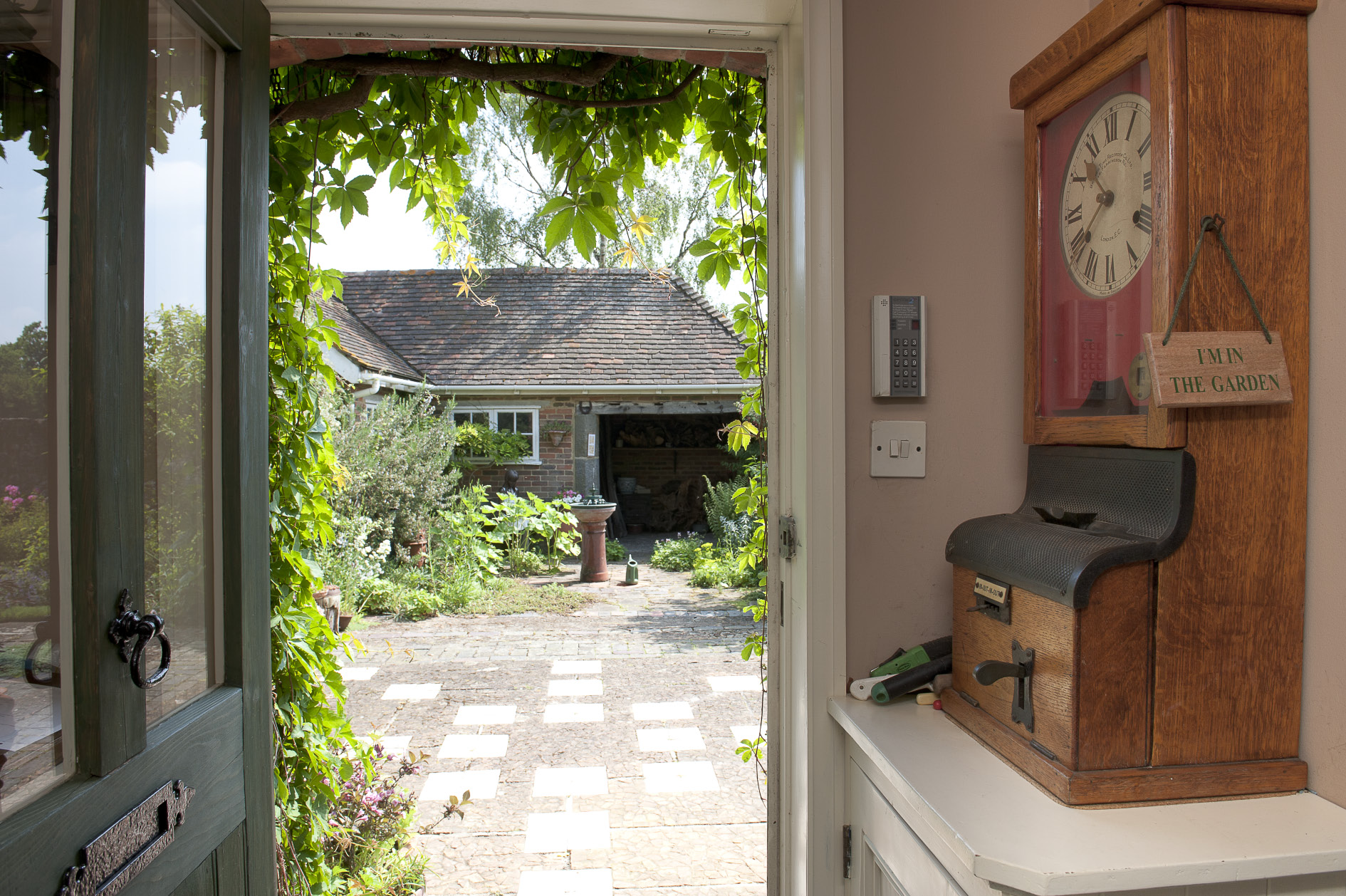
The front door leads straight out into the couple’s beautiful garden
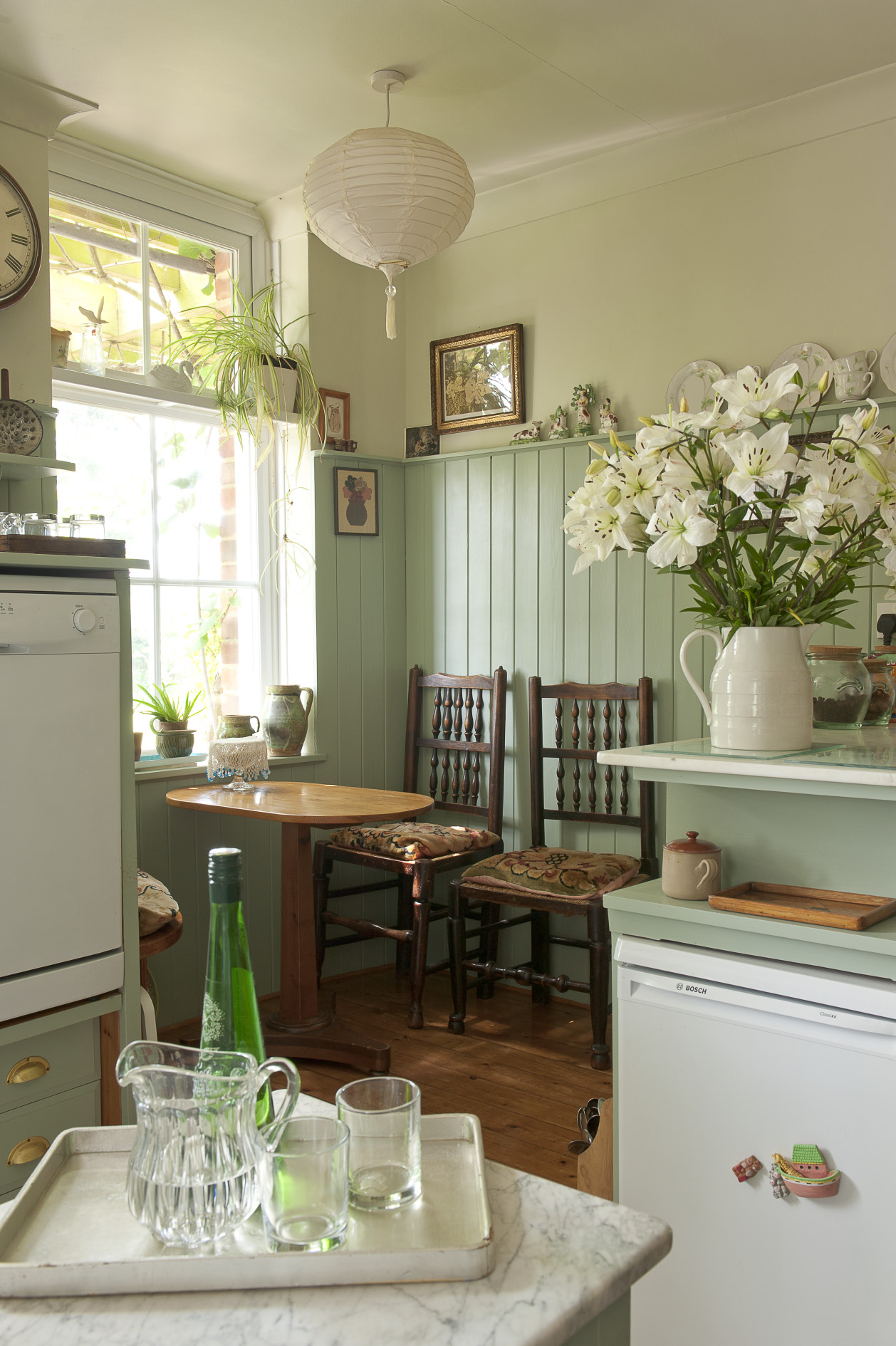
A little alcove breakfast table for two is nestled in one corner of the modest-sized shaker-style kitchen
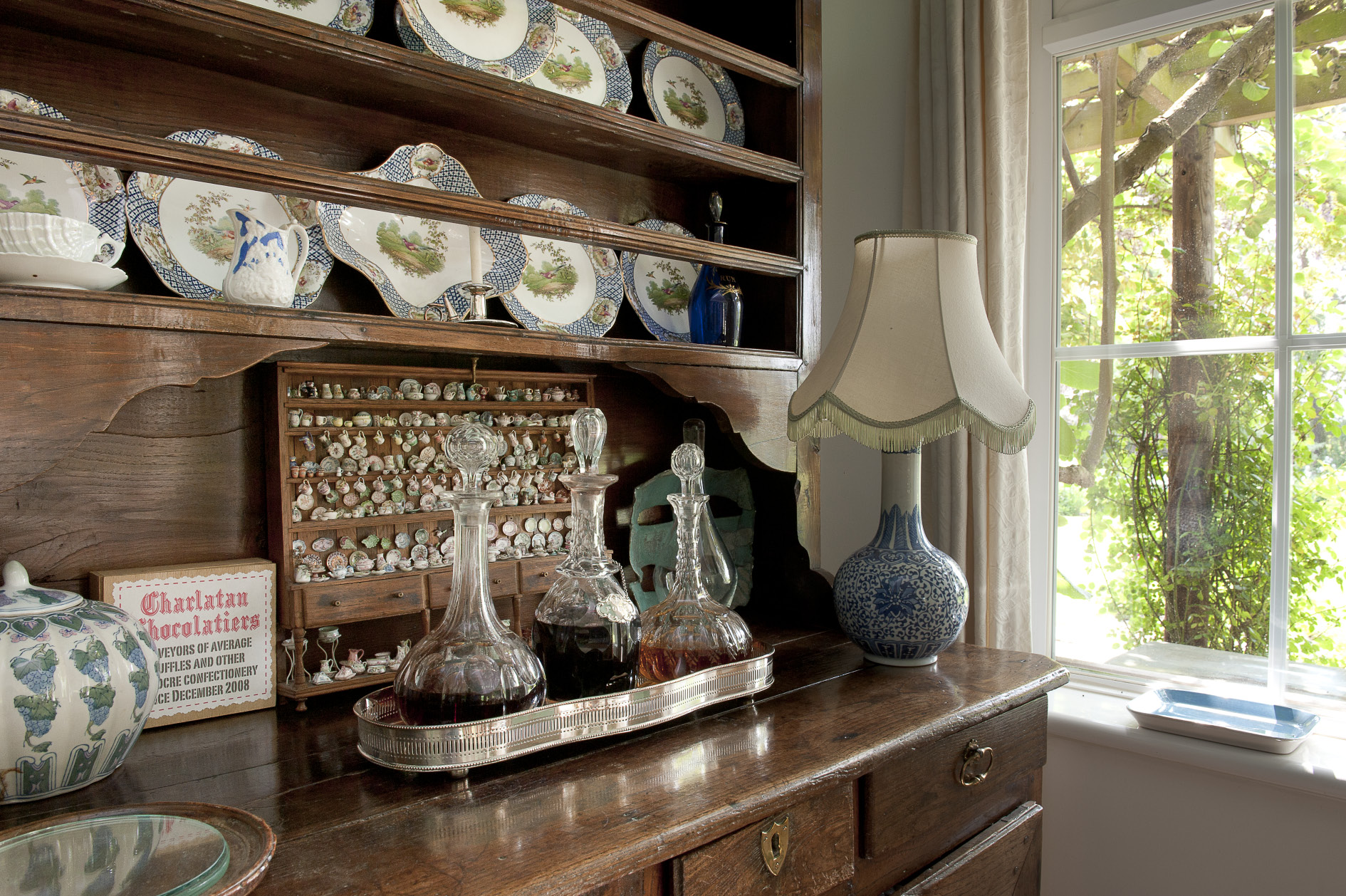
A miniature wooden dresser, filled with Jenny’s doll’s house pottery stands centre stage amongst the full-size crockery in the drawing room
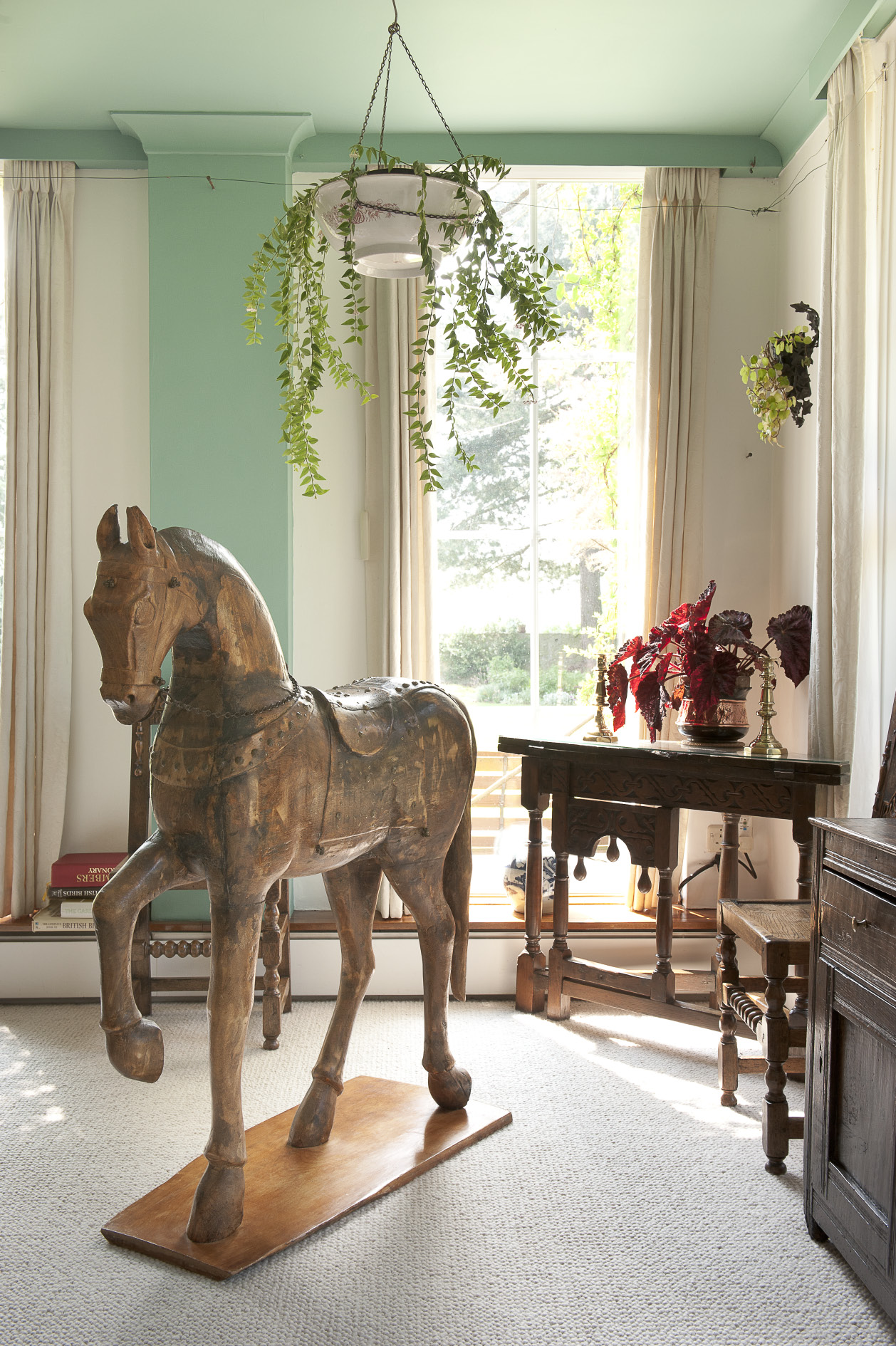
In the opposite corner of the room stands a wooden statue of a Mongolian pony that came from Afghanistan

An impressive, cantilevered, almost art deco staircase, leads to the upper floor. A fully-functional juke box lights up the space underneath the staircase with its neon lights
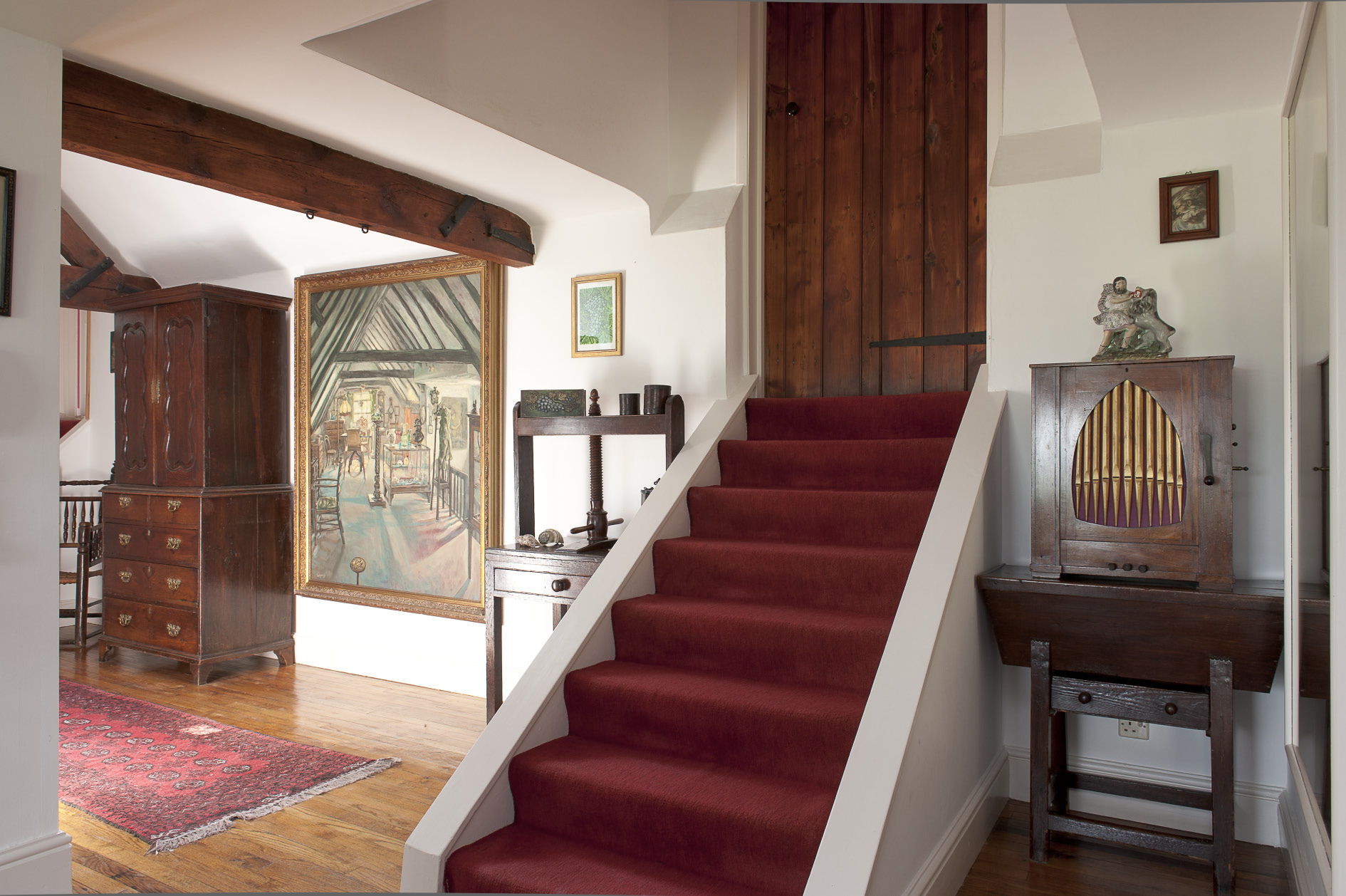
They’ve tried wherever possible to keep the original levels which has resulted in perhaps half a dozen little staircases each leading to its own little world
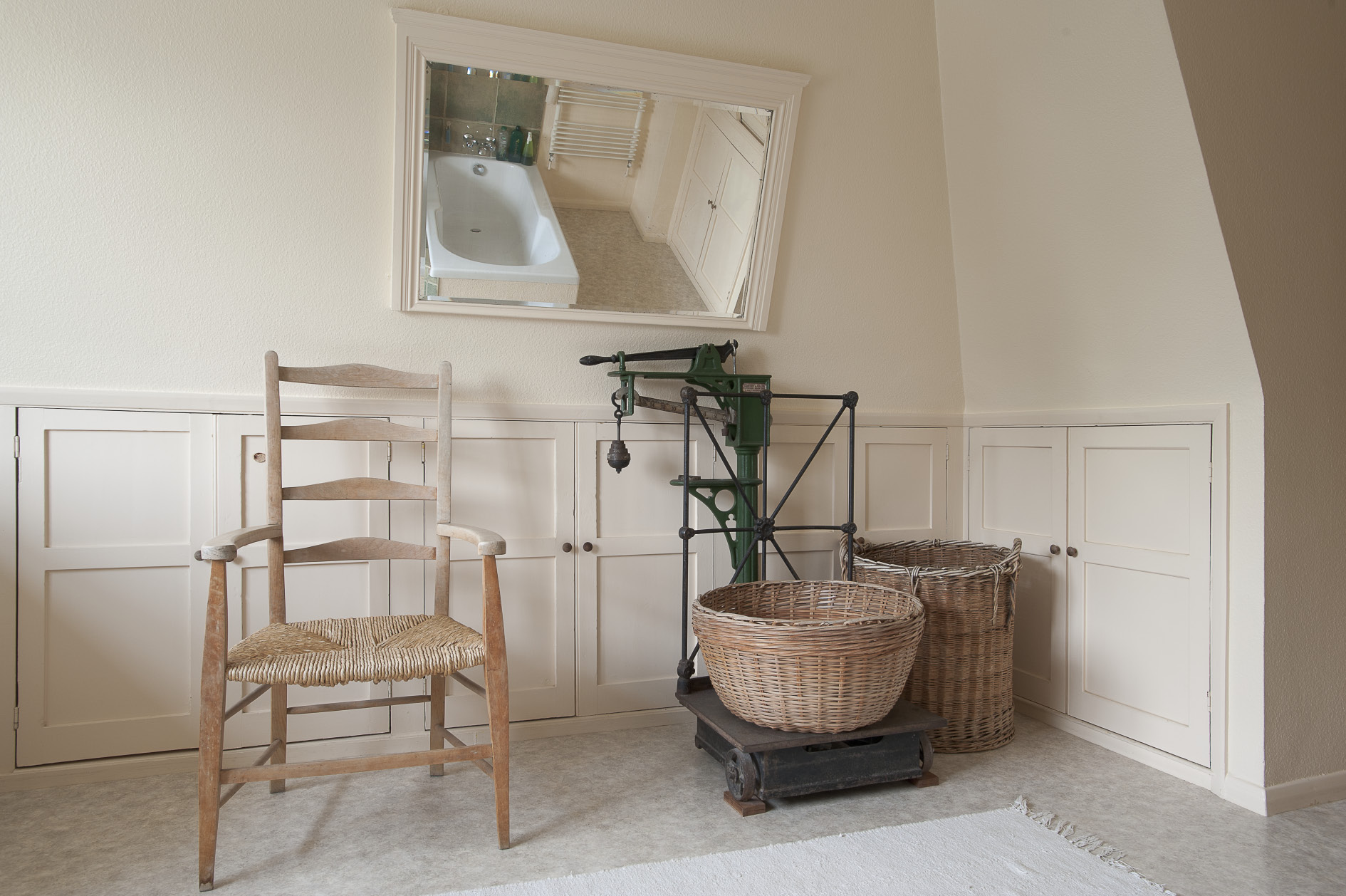
A hop weighing machine in the bathroom
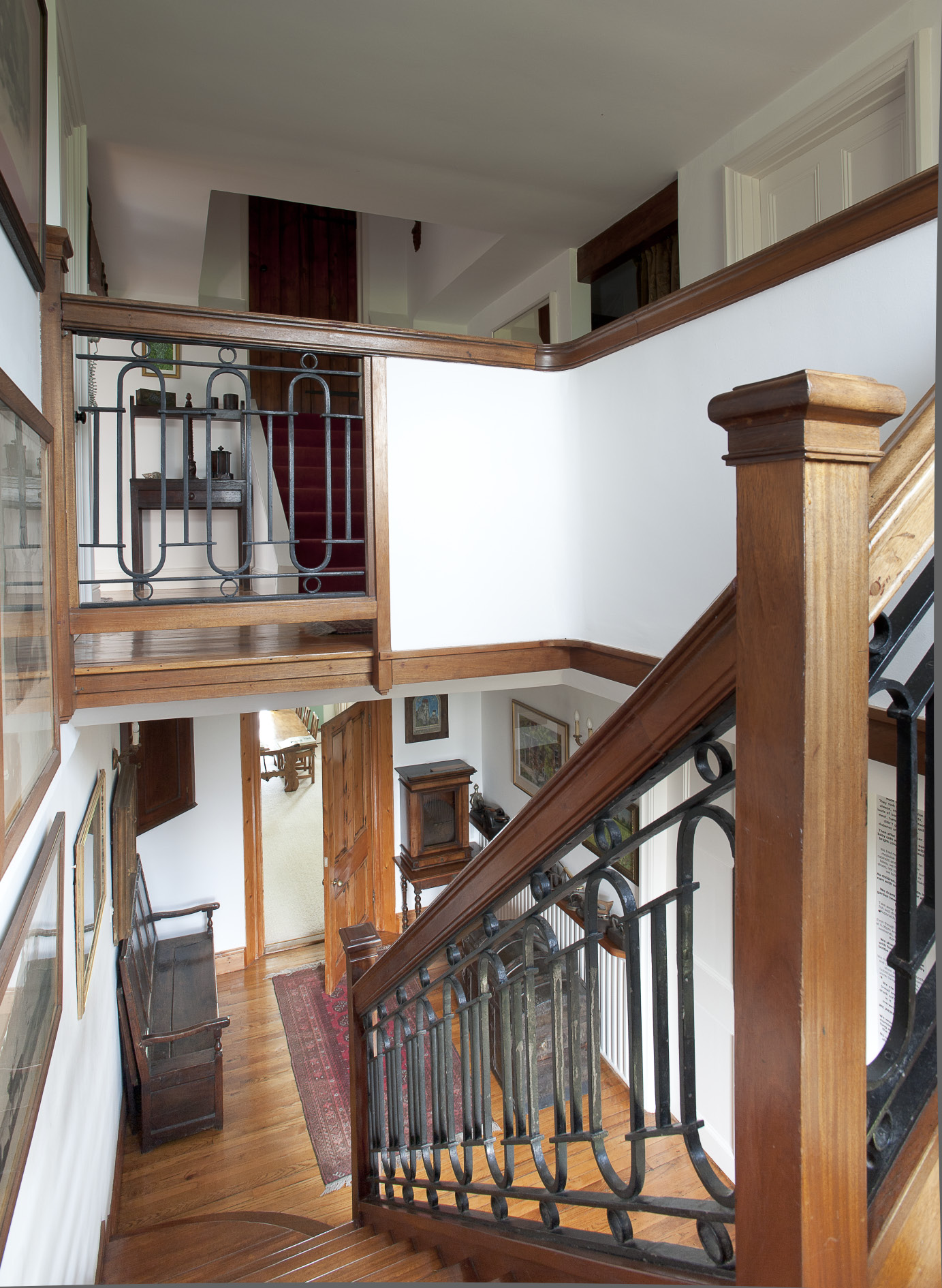
Upstairs, Jenny and David have combined space with a wide landing and corridor with intimate and unexpected twists and turns
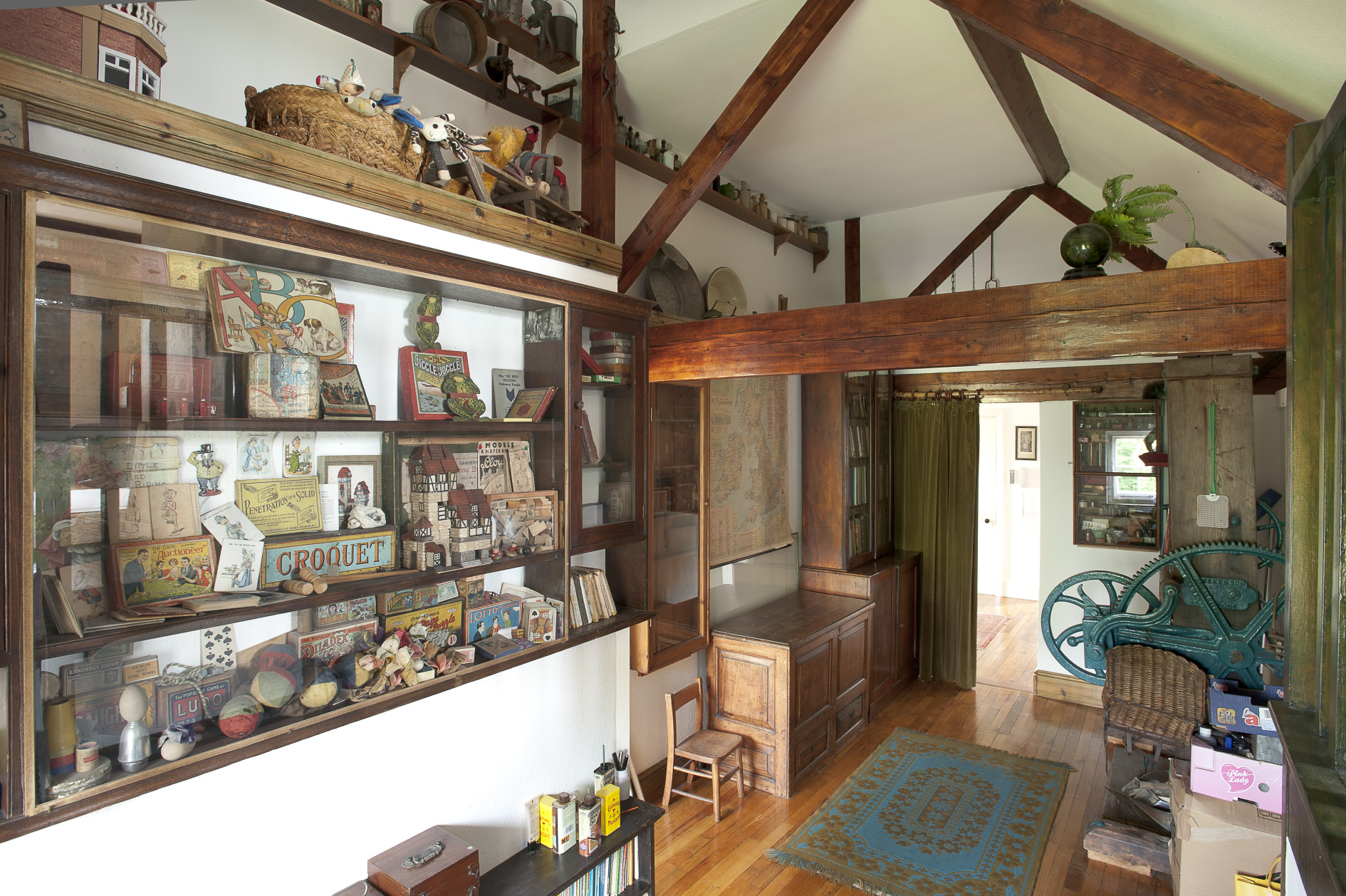
Upstairs a secondary hallway, home to an old hop press, has walls festooned with old farm tools, cabinets filled with children’s games and writing and drawing tools
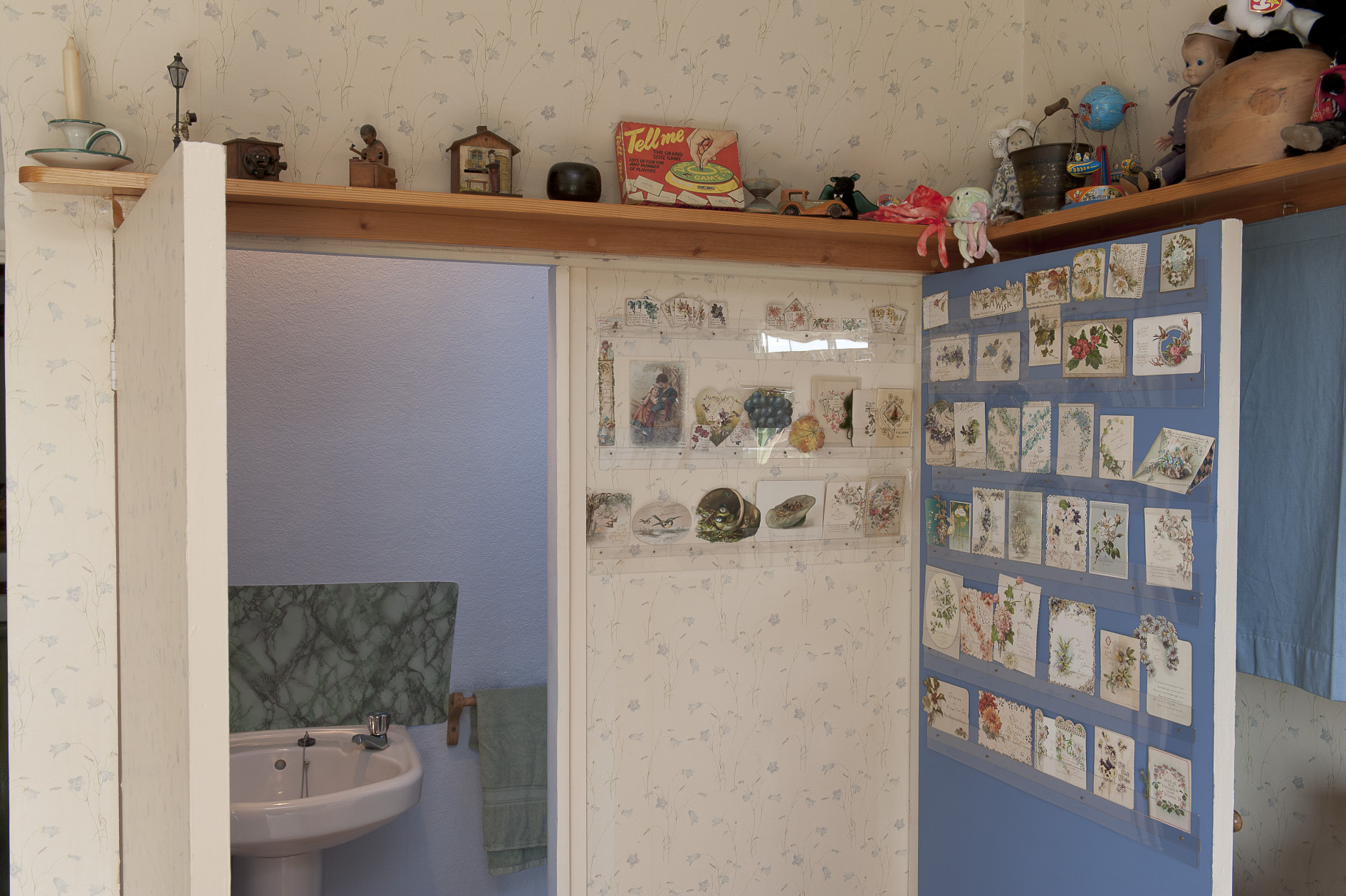
In one of the guest bedrooms, what appear to be the doors of a wardrobe open up to reveal a mini bathroom
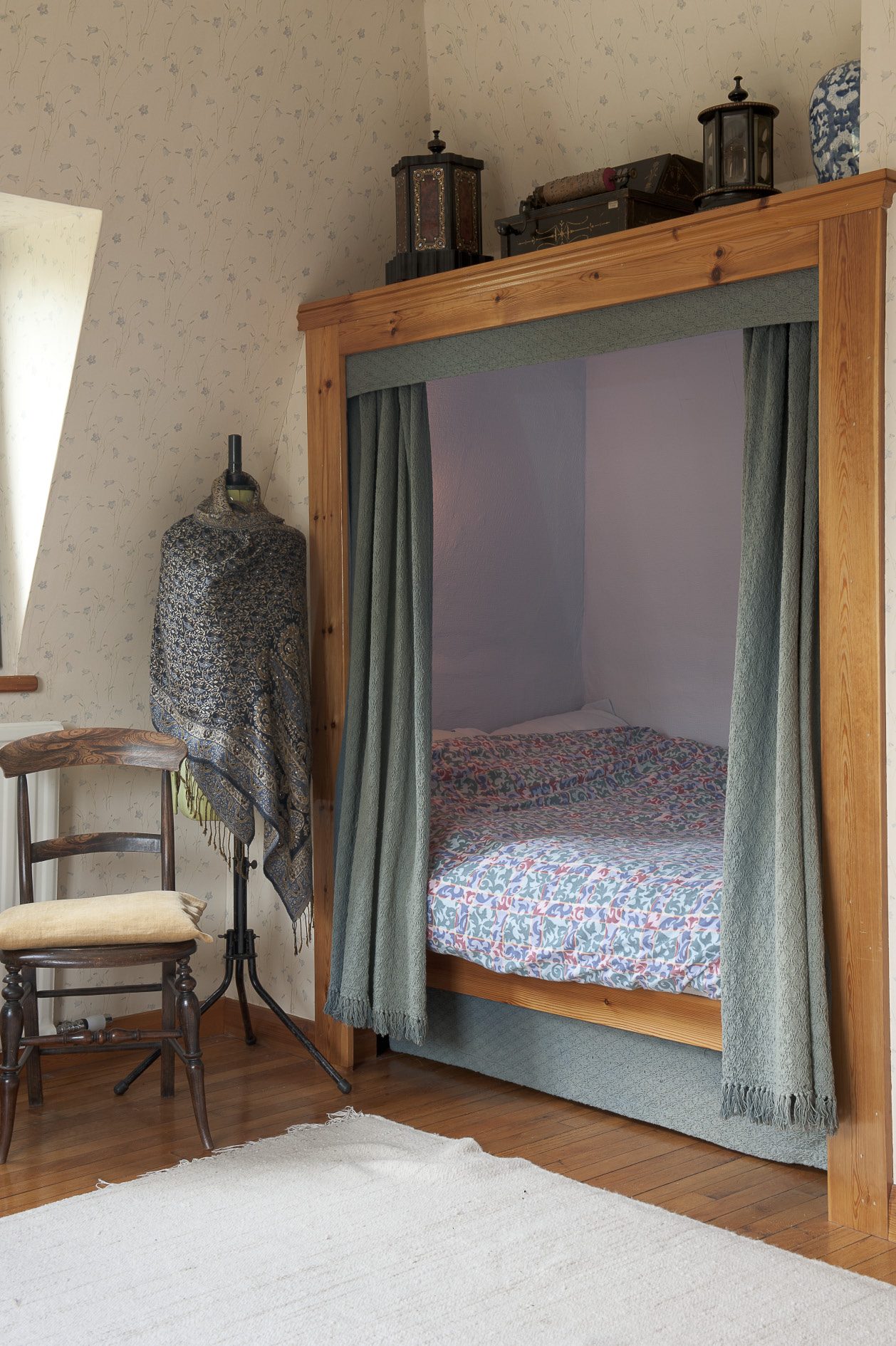
A double bed is tucked secretly behind a pair of curtains
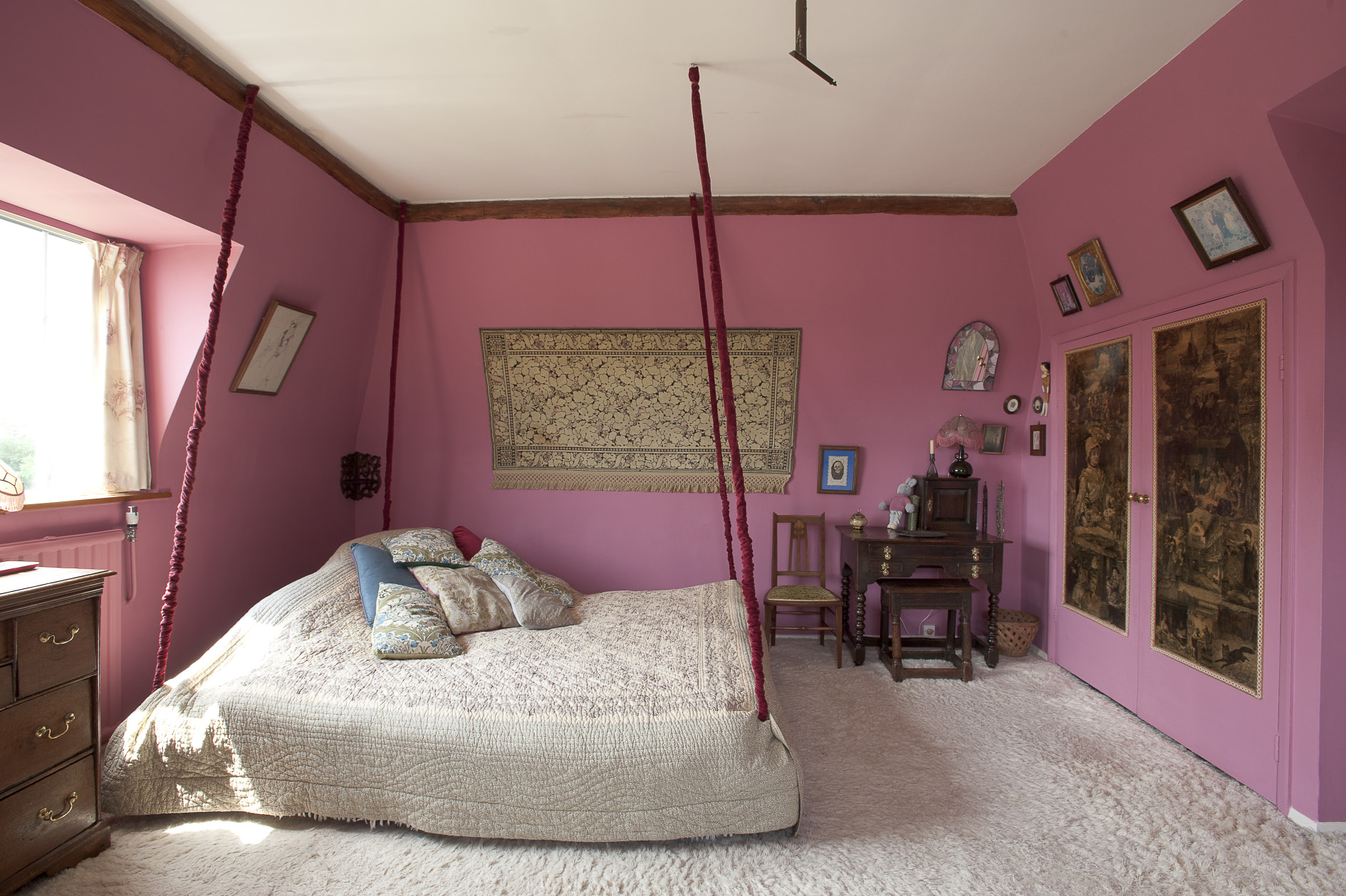
The master bedroom features a wonderful full-size double bed suspended from the ceiling
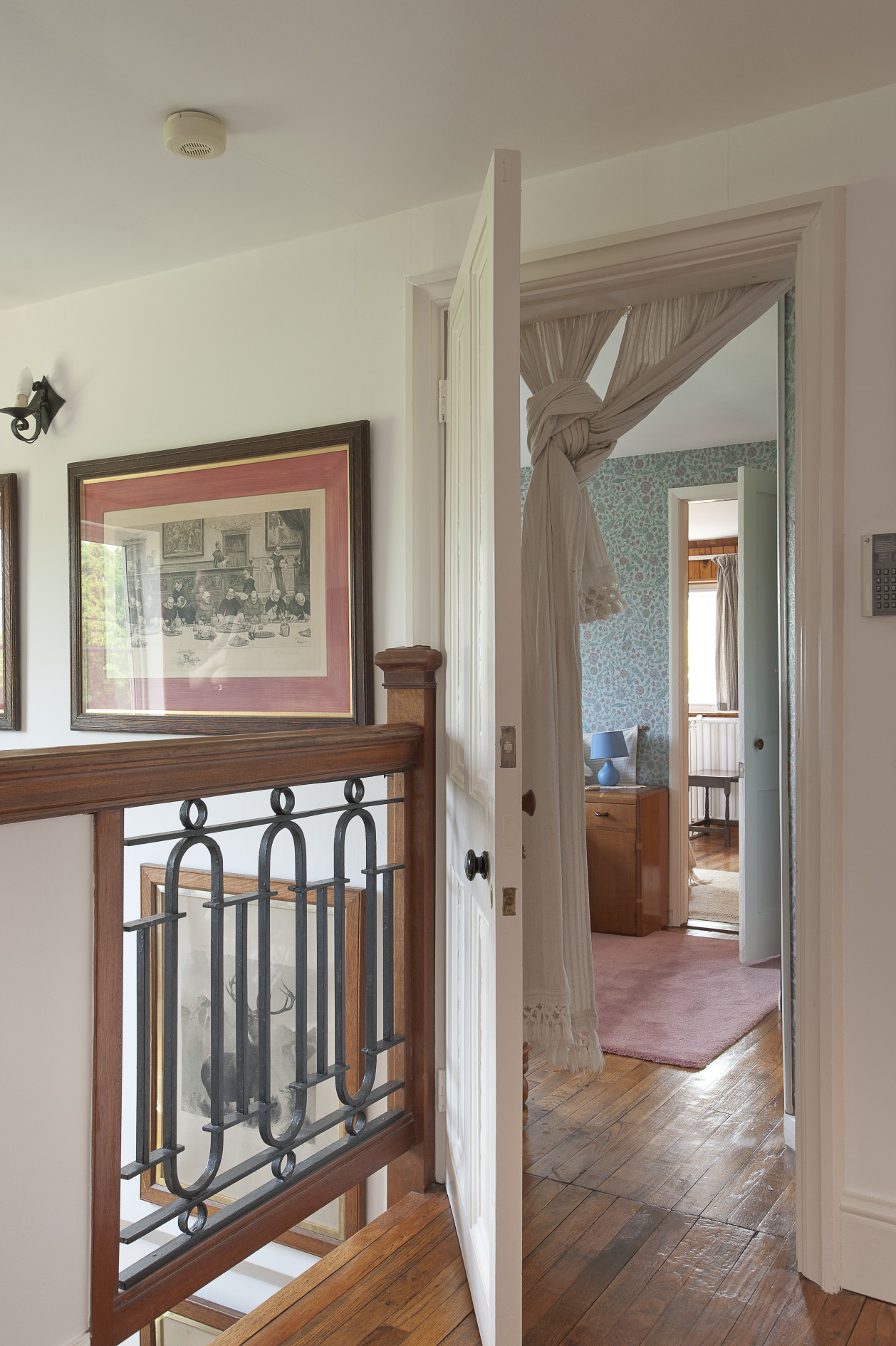
A door leads off the landing into a self-contained one-bedroomed flat that the couple once let, complete with its own spiral staircase

The intricate wrought-iron spiral staircase
- words: John Graham-Hart
- pictures: David Merewether
- styling: Lucy Fleming
You may also like
An Artful Restoration
Once a derelict reminder of Kent’s agricultural past, Old Smock Mill has been painstakingly restored into a luxurious retreat. Its revival is the story of one woman’s passion, creativity and determination to preserve a remarkable landmark. When artist Clare Winchester...
Our family and other animals …
Filled with rescue pets, characterful interiors and rural charm, Sarah and Max’s farm is a place where country living and cosy style go hand in hand Many of us who have read or watched My Family and Other Animals will...
The Art of Good Living
Set against the rolling landscape of the South East, this remarkable home blurs the line between private residence and public gallery. Driven by a passion for contemporary art and a desire to bring inspiring work beyond the confines of the...