With a focus on quality and sustainable sourcing, designer Lucy Dwyer’s carefully considered family home is built to last
We shape our buildings; thereafter they shape us.” – Winston Churchill. It’s a line often used to describe grand civic architecture, but it feels just as true, perhaps more so, when talking about our home. Because the spaces we live in don’t simply shelter us; they influence how we feel, how we move, even how we see the world.
We’re often told we are judged by the company we keep. But perhaps we are also quietly shaped by the spaces we keep. The right home, like the right friends, doesn’t just contain us, it lifts us, reflects us, and, at its best, brings us joy in ways both subtle and surprising.
This is what makes Lucy Dwyer’s home so compelling.
Structurally, the big change we made was moving the kitchen into the barn, with the garden views, the light, and the big doors,” Lucy explains. It’s a decision that feels instinctive: the kitchen as the heart, anchored not just by function but by outlook and atmosphere.
It’s not defined by scale or symmetry, but by a series of carefully considered moments: bold colour choices that catch the eye, artworks that invite a second glance, and beautifully crafted tiles that feel almost like punctuation marks: small, joyful interventions that animate the everyday.
Throughout the house, these elements are layered with confidence and a clarity of vision. A splash of colour here, a textured surface there – each one deliberate, each one designed to spark a moment of delight. It’s a home that doesn’t reveal itself all at once, but rewards attention, offering up little surprises that make you smile, again, and again.
And in that sense, it does exactly what Churchill suggested. It shapes the experience of those within it, not through grandeur, but through joy. Having observed how Lucy has so naturally put this vital quality into play throughout the house, it came as no surprise to discover that she is the co-founder of interior design studio Palliser Dwyer, which she started with business partner Fabia Palliser.
Since Covid, and the shift towards more flexible working, numbers of people choosing to move from London to Kent has climbed steadily, with thousands seeking a gentler rhythm of life. They are not simply chasing square footage, but something less tangible: light, space, and the opportunity to live more deliberately.
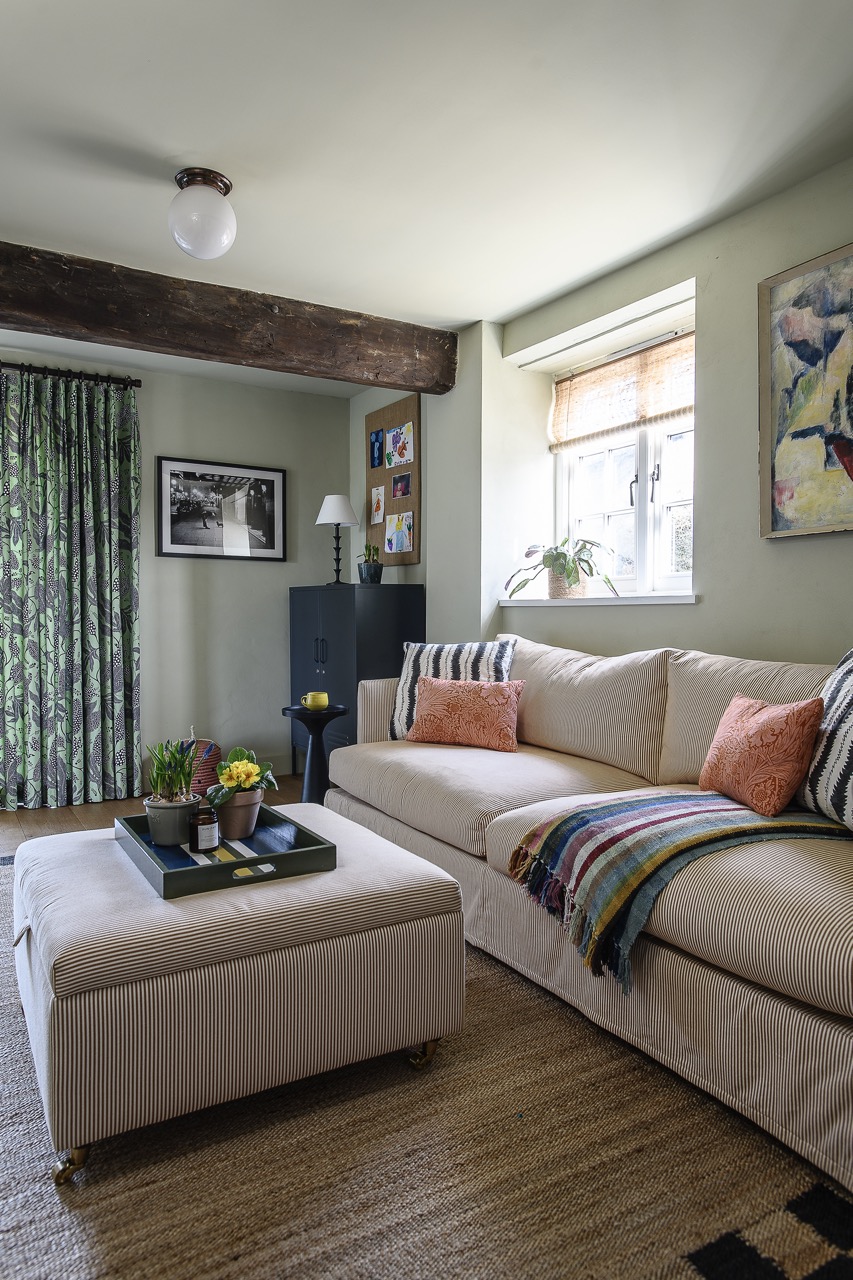
The ottoman is emblematic of Lucy’s approach to family living. “We often put these into TV spaces and family rooms,” she says. “They’re stylish, versatile and children love them.” It’s a reminder that good design does not exist in opposition to real life; it enhances it
For Lucy, that journey led from London to Faversham – closer to family, and into a home that offered the rarest of luxuries: possibility. The house, an oast with a barn element, came with character in abundance, but also the familiar challenges of older buildings. What followed was not a wholesale reinvention, but a thoughtful rebalancing – an exercise in allowing the building to breathe and, in turn, to give more back.
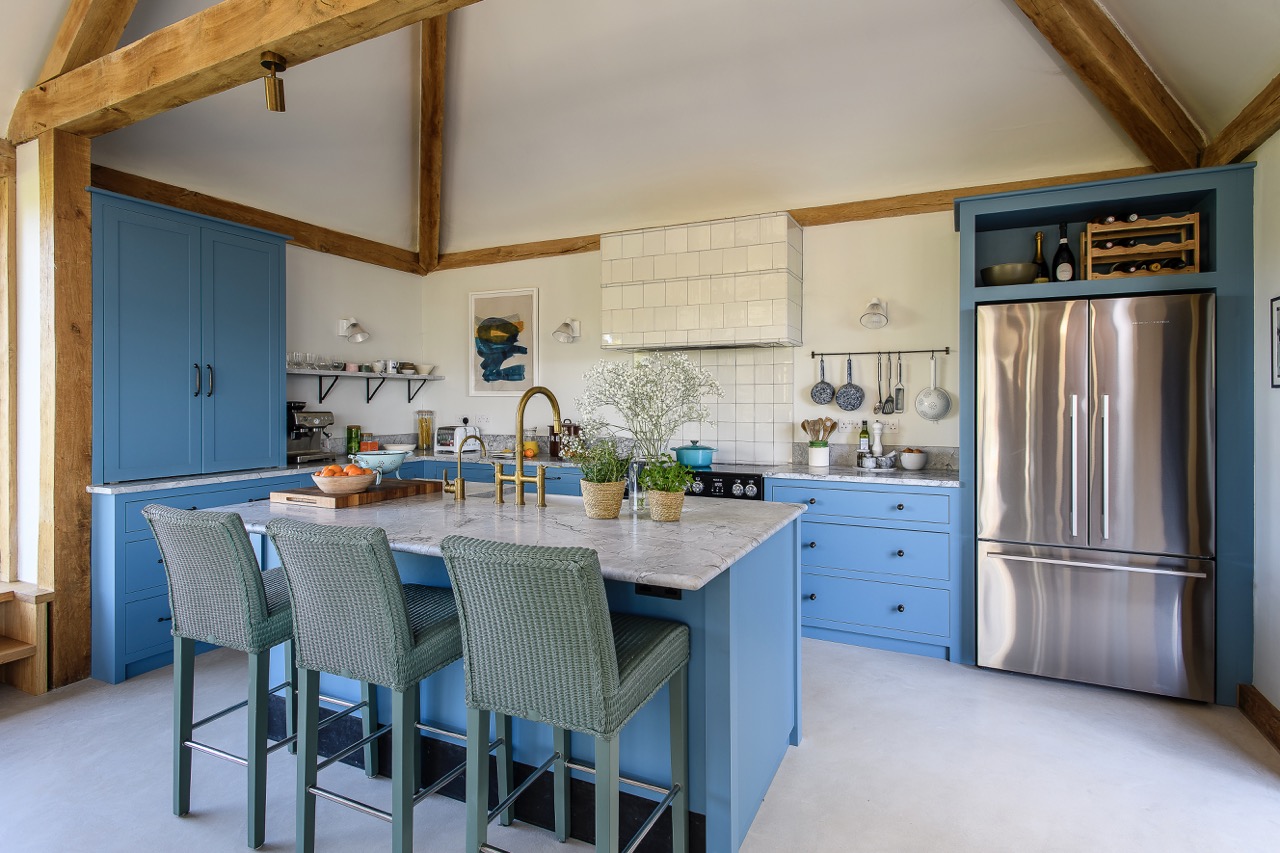
“Structurally, the big change we made was moving the kitchen into the barn, with the garden views, the light, and the big doors,” Lucy explains. It’s a decision that feels instinctive: the kitchen as the heart, anchored not just by function but by outlook and atmosphere. Here, beneath the drama of exposed timber beams, the kitchen unfolds in a palette of confident blues and cabinetry that feels both grounded and uplifting.
The island, topped in softly veined quartzite from StoneWright in Ashford, brings gentle movement to the room, its grey tones layered with natural variation. “I love this stone because it’s grey but has lots of veining,” Lucy says, and that sense of subtle complexity runs throughout the house. There’s something deeply satisfying about the way materials meet here: the cool
precision of the stone, the warmth of timber, the soft gleam of brass taps, and the reassuring solidity of an American-style aluminium fridge. It’s a space designed not just to be looked at, but to be lived in – morning coffees at the island, long lunches drifting into evening, conversations stretching as the light fades through the picture windows.
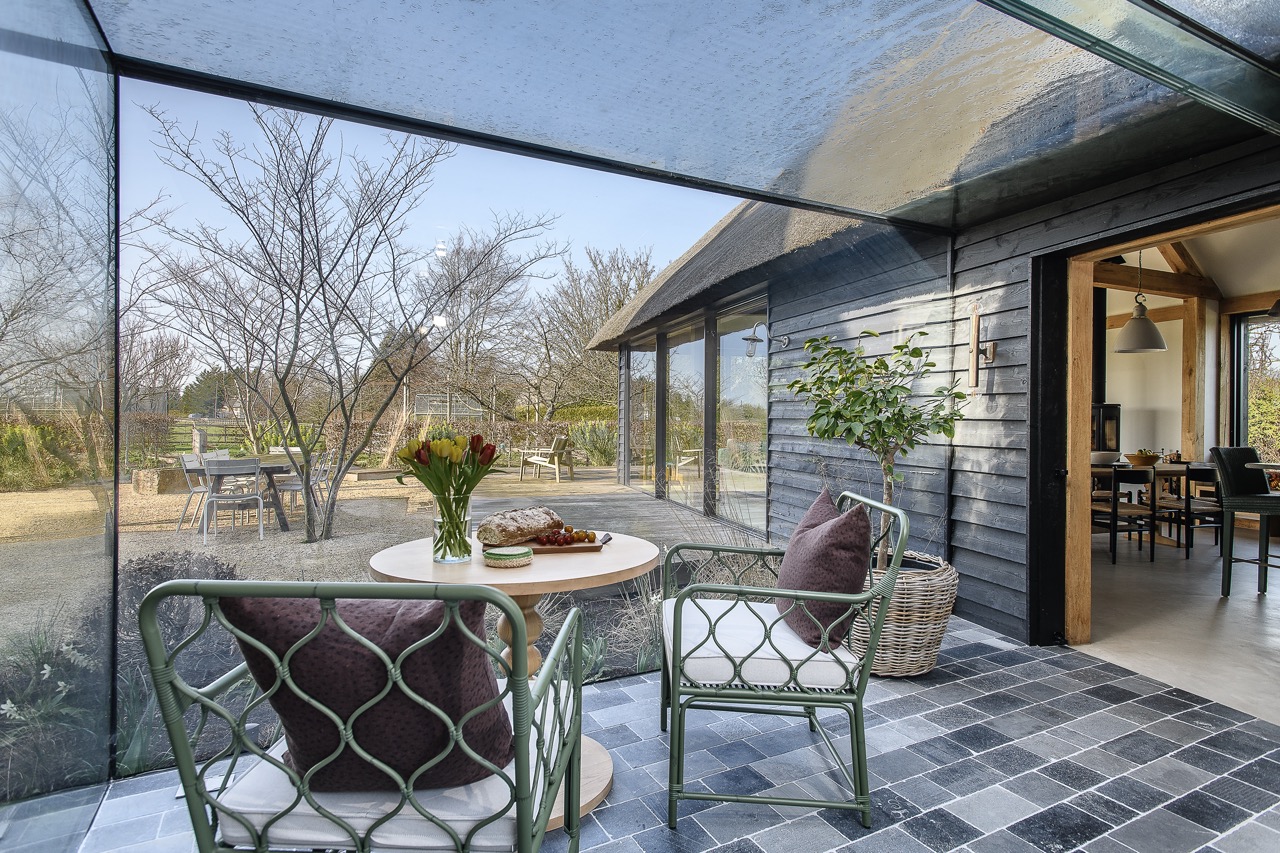
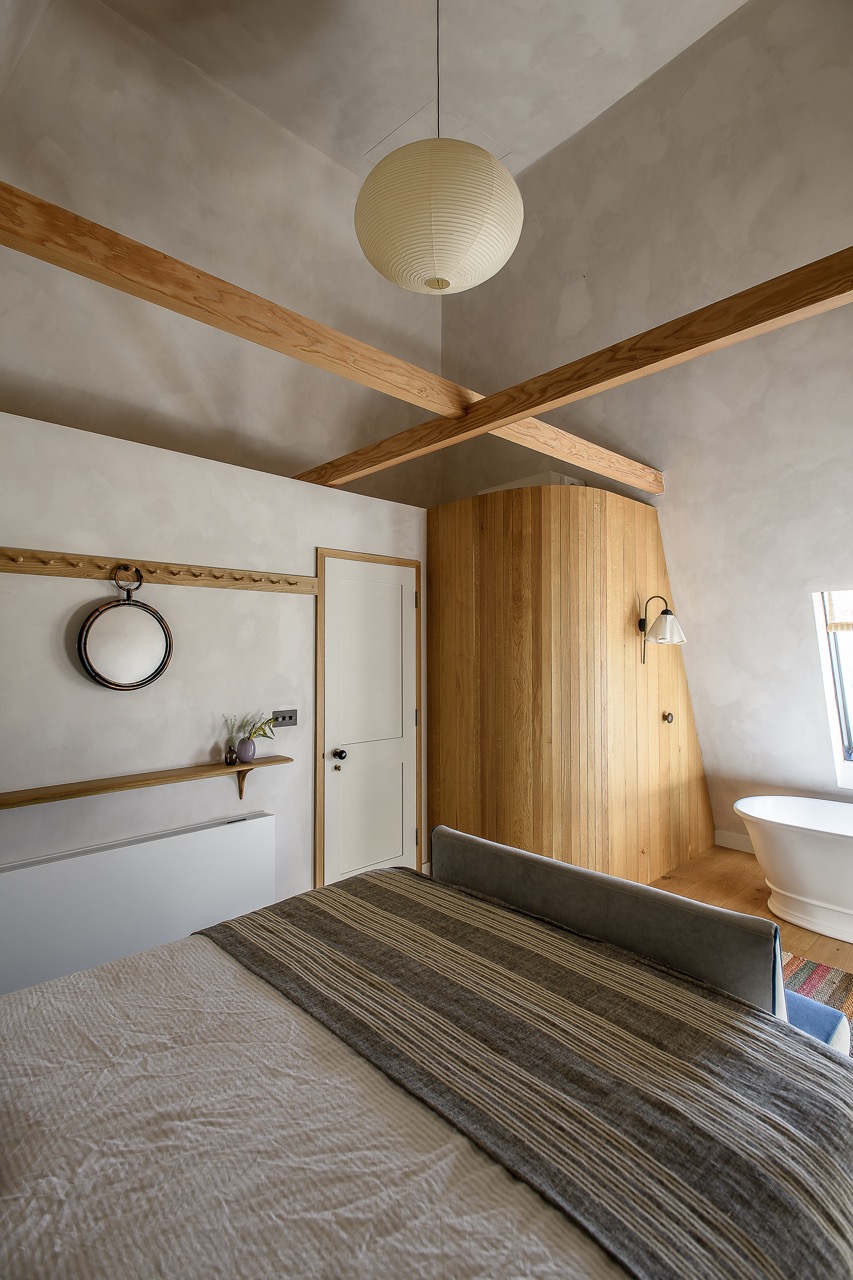
Light itself was one of the project’s central protagonists. “We replaced two small Velux windows with 1.4 metre roof lights, which fill the house with light from top to bottom,” Lucy explains. Elsewhere, an additional window brought a dual aspect to the bedroom, while the kiln room now opens through generous double doors and side lights, providing pleasing glimpses of the barn’s thatched roof. Alongside these architectural interventions
came a quieter, pragmatic layer of work. Insulation was upgraded throughout, requiring the house to be stripped back in places – a moment of disruption that became an opportunity. A ground source heat pump was installed, along with underfloor heating across the ground floor. “It’s future-proofed the house,” Lucy notes. In many ways, that phrase encapsulates the broader approach: a home designed not just for now, but for the years ahead.

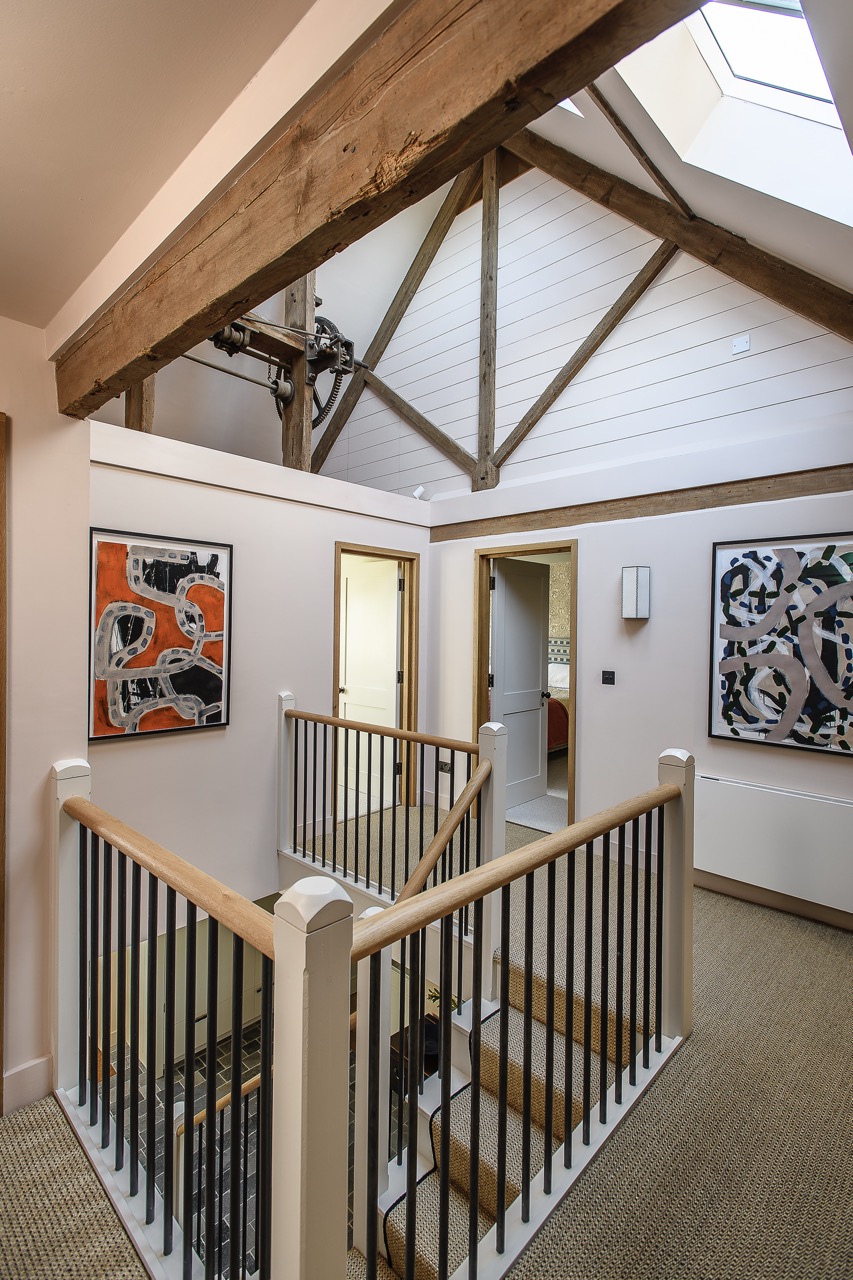
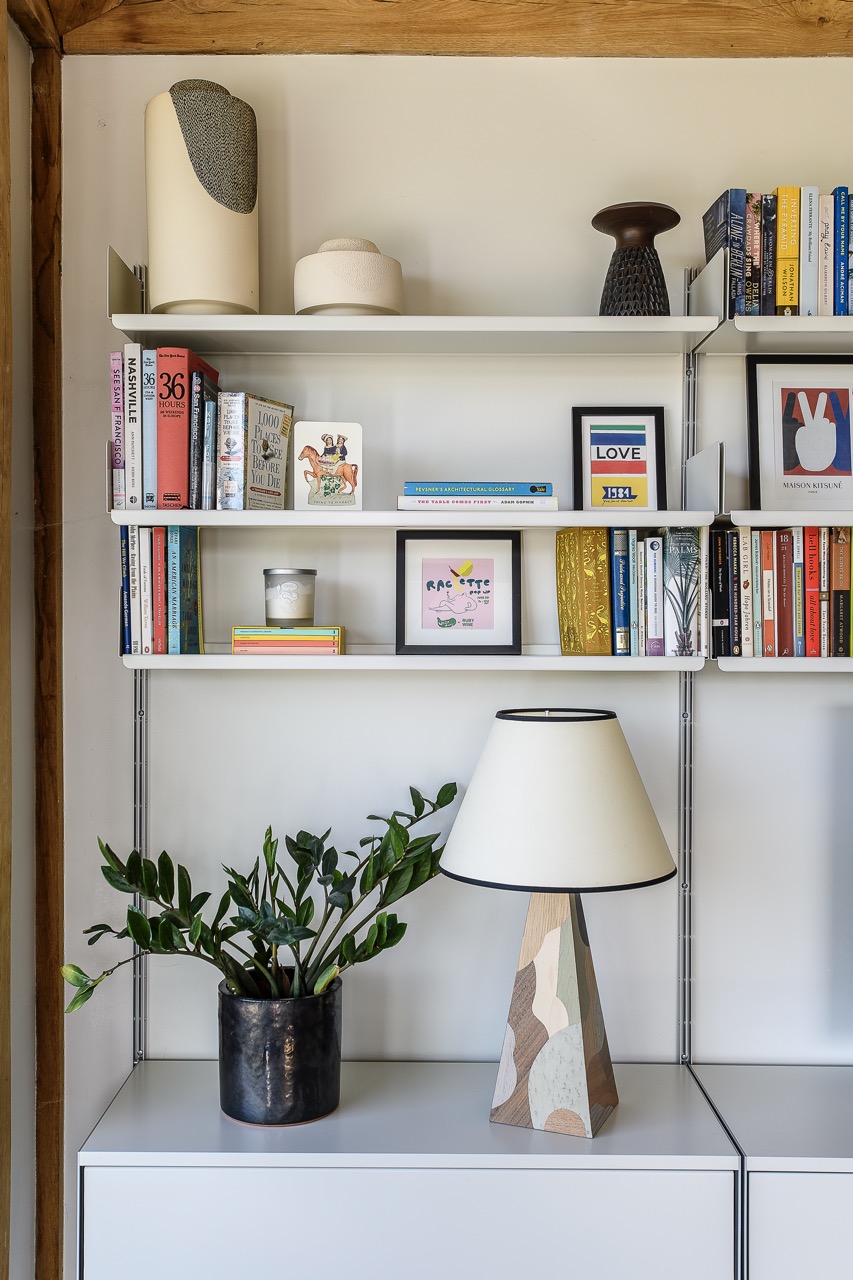
If the structure provides the canvas, it is Lucy’s eye for detail that brings the house to life. Art, in particular, plays a central role. “Art is a really important finishing piece – we always try and encourage clients to add it. You never regret adding art. It can bring it all together.”
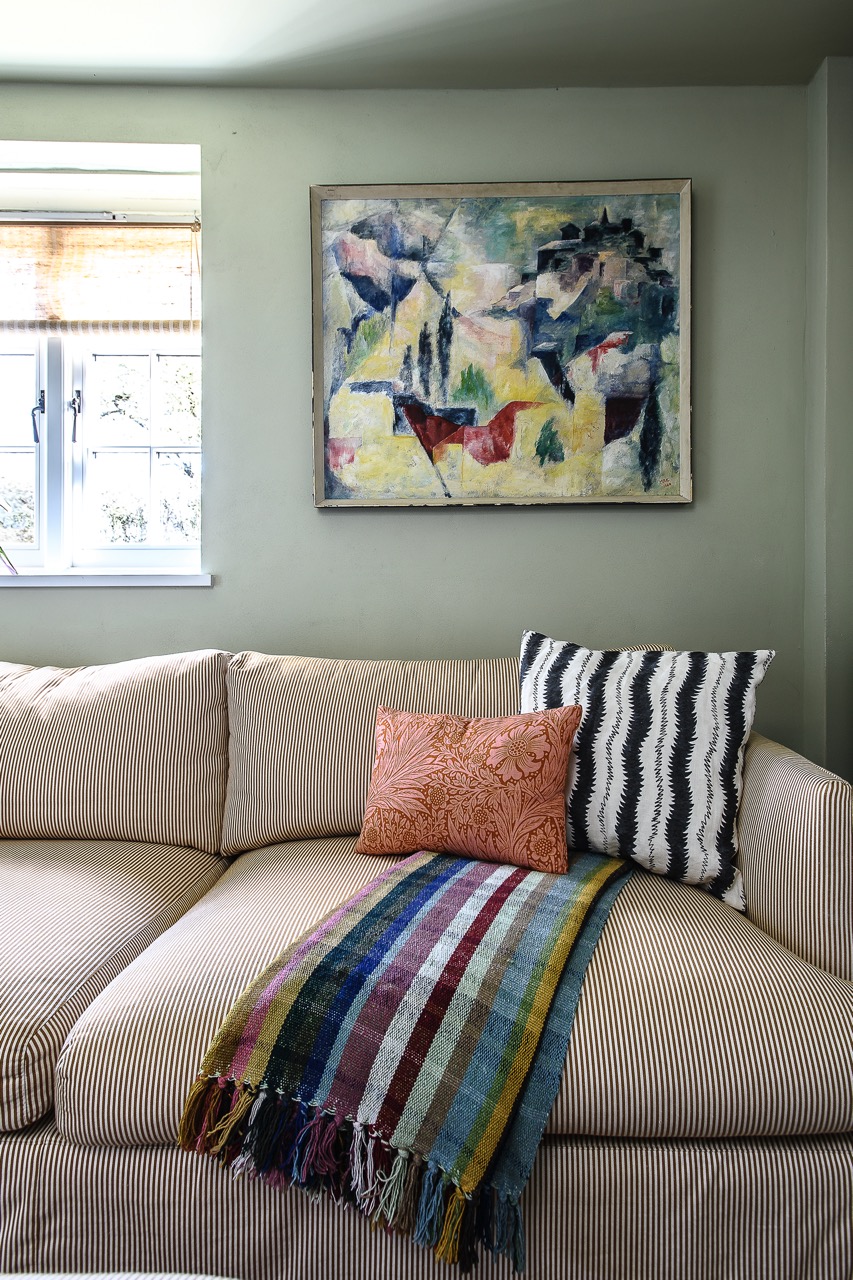
There is a refreshing lack of preciousness in her approach. A treasured oil painting discovered on eBay sits comfortably alongside framed postcards collected on travels, each one elevated through
thoughtful presentation. “If you frame them with large mounts and group them together, it can look great,” she says. “It’s especially nice to put art where you wouldn’t expect it.” In the kitchen, an expressive picture by Heather Day (heatherday.com) – discovered during Lucy’s time in San Francisco – brings colour and energy to the space, while the hall landing showcases pieces by Danish artist Mogensen Lopez.
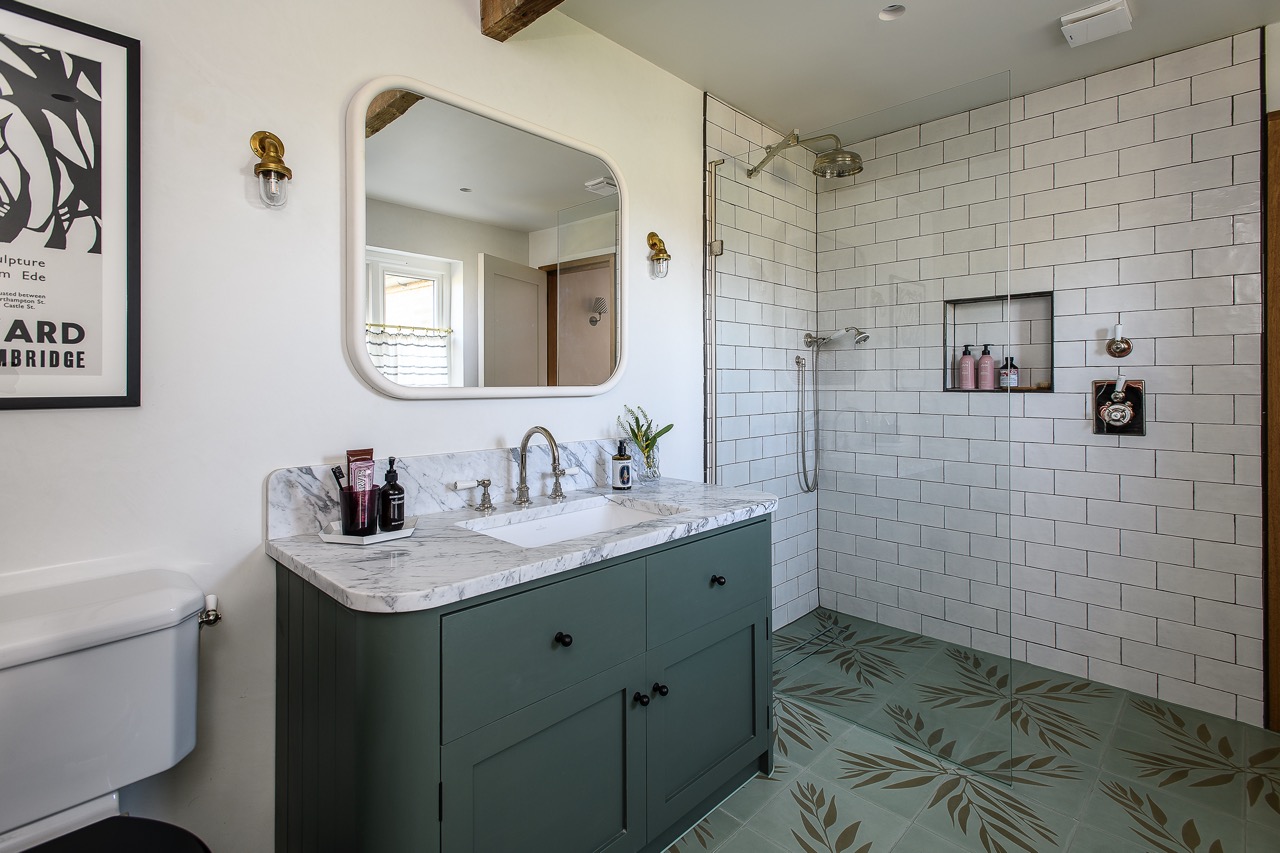
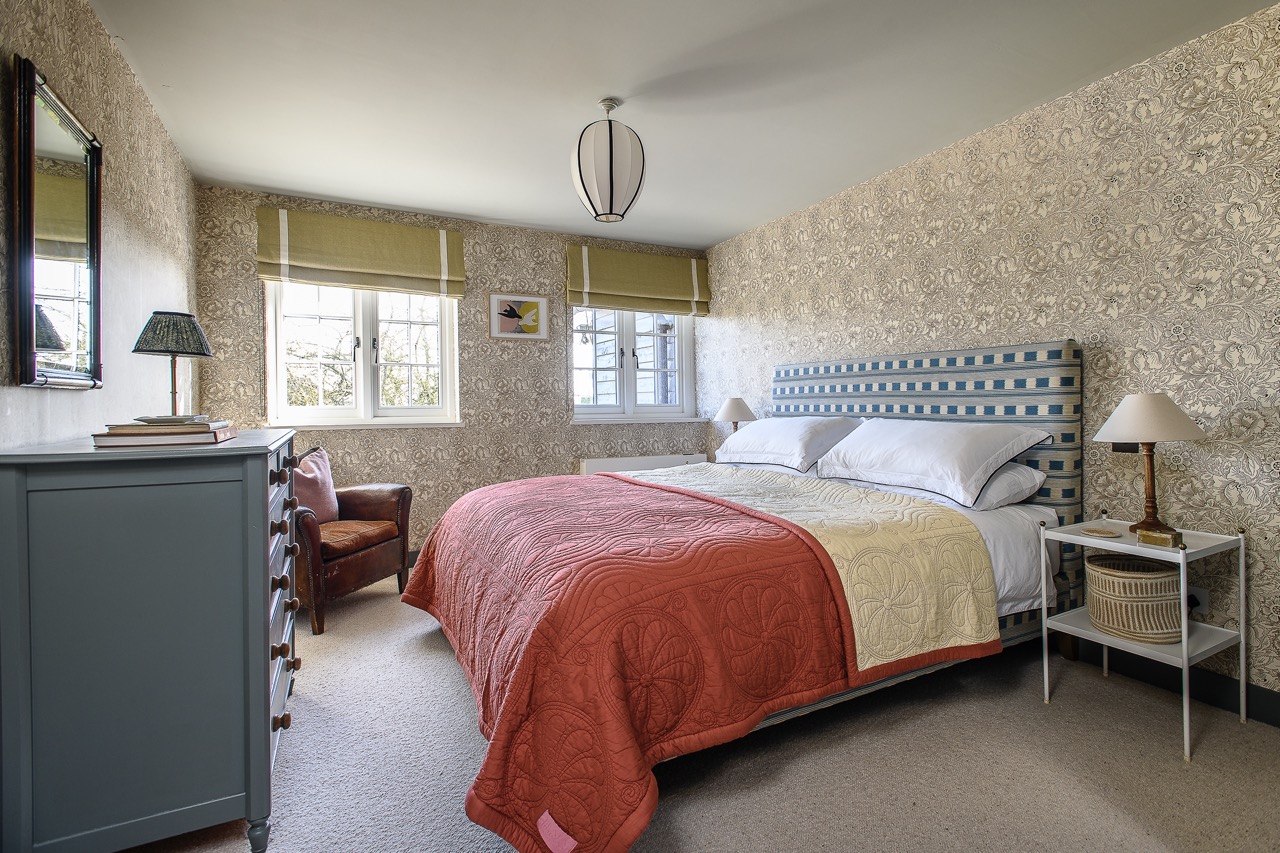
“Mixing patterns can scare people,” says Lucy, “but very often contrasting and layering can bring a room to life.”
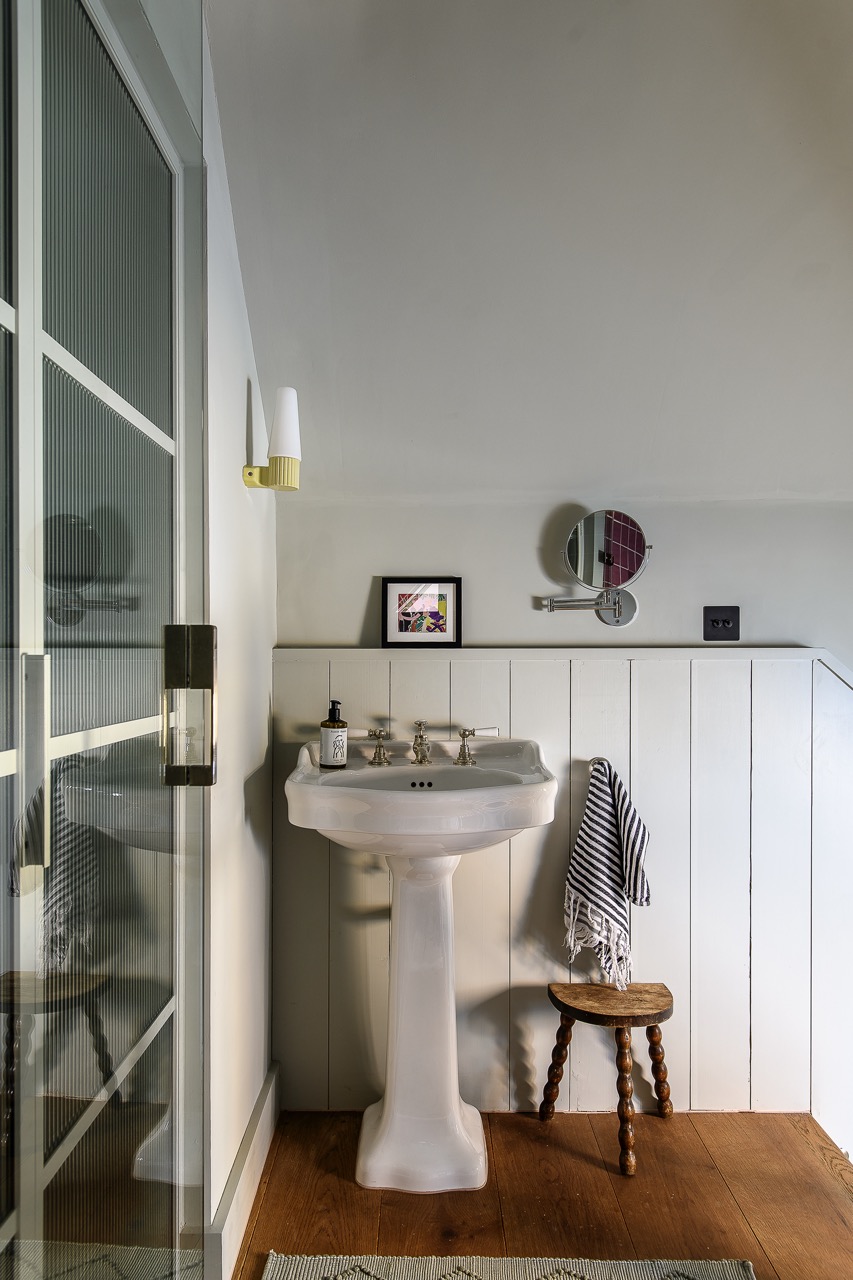
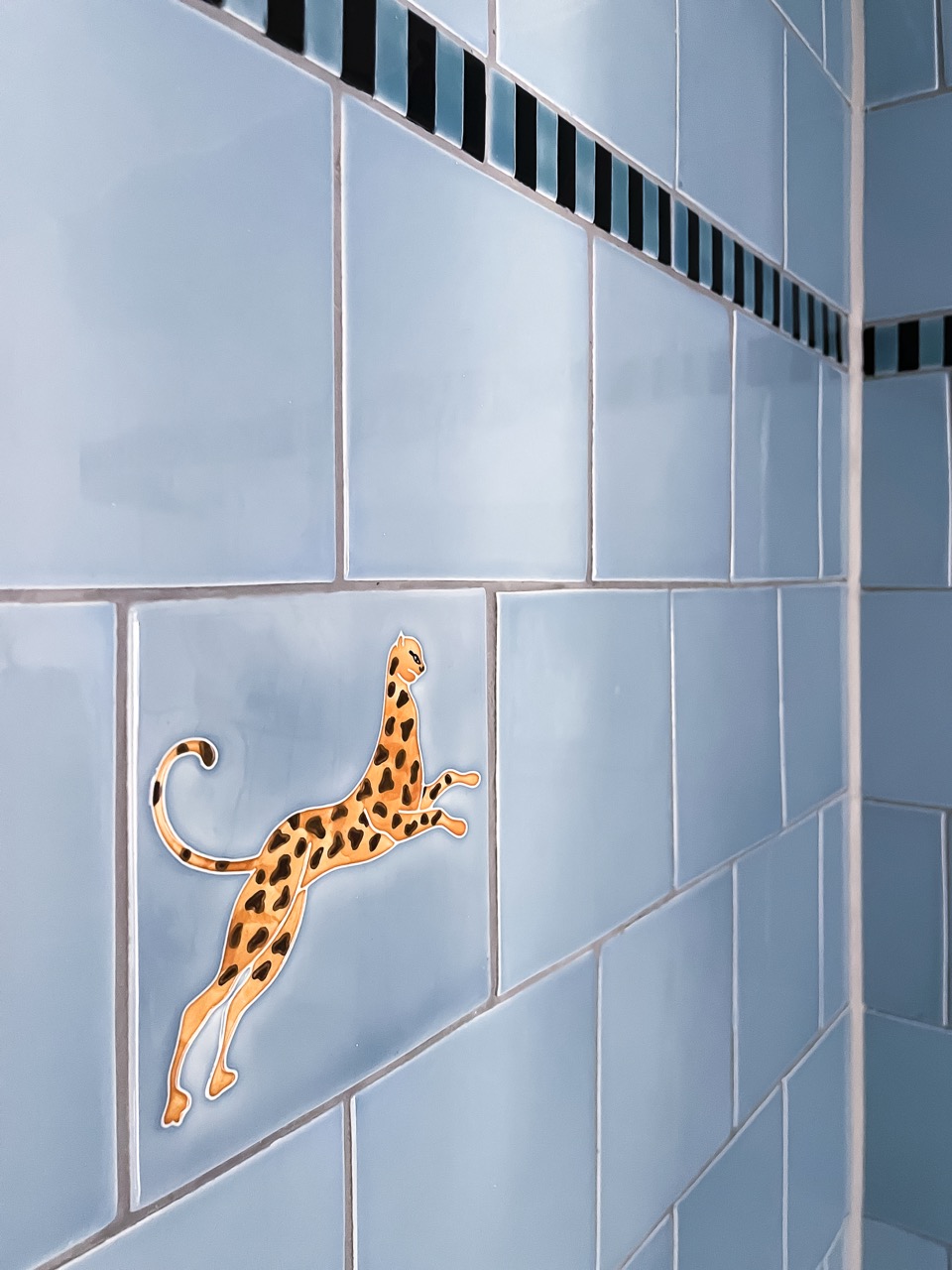
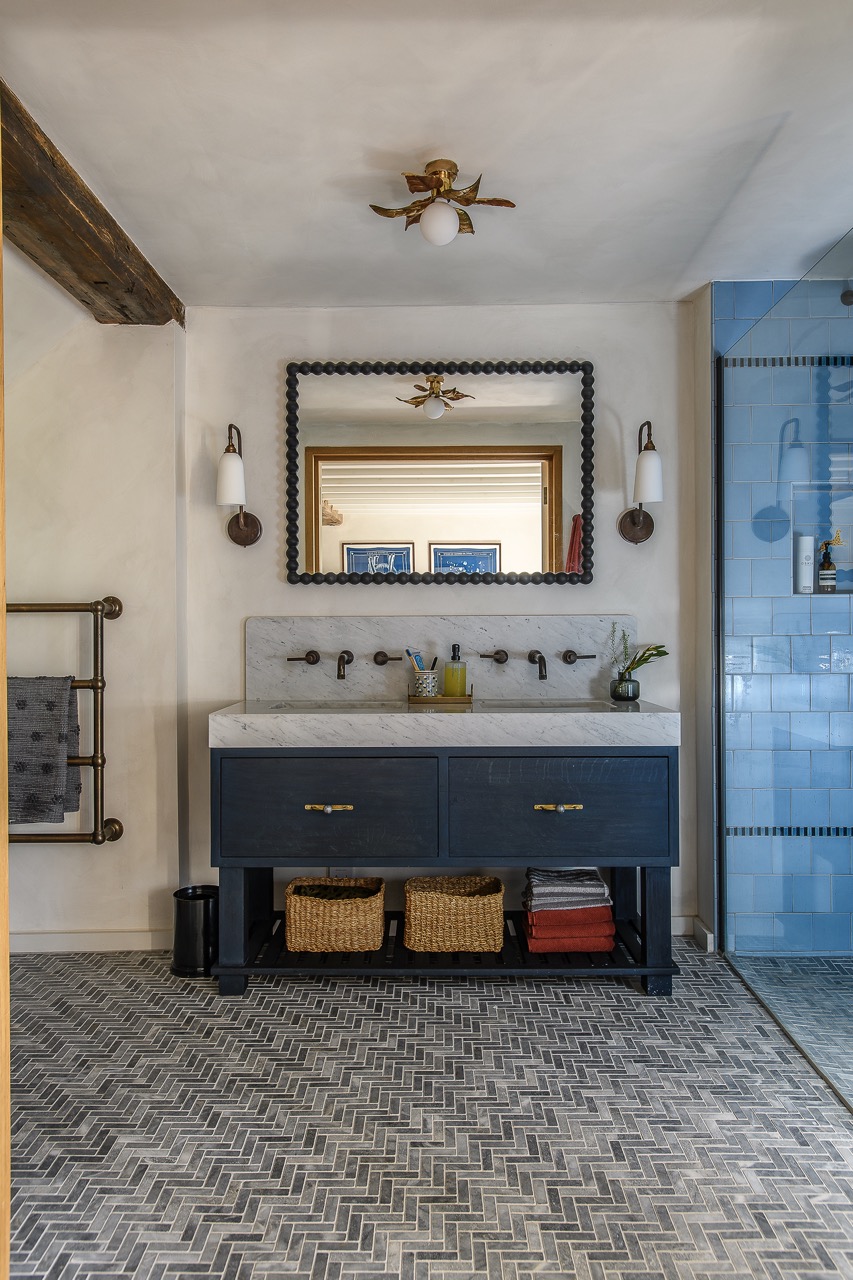
This idea of the unexpected – of delight found in small, unanticipated moments – threads its way through the house. Nowhere is this more evident than in the use of tiles. Throughout the oast, surfaces are enlivened with texture, colour and pattern: a white tiled cooker hood that catches and reflects the light; a mottled Victorian tortoiseshell splashback in the utility; playful leopard tiles in the bathroom. Many are designed by Balineum, from Stoke-on-Trent, whose work draws on traditional techniques such as tube lining
to create pieces that feel both historic and contemporary.
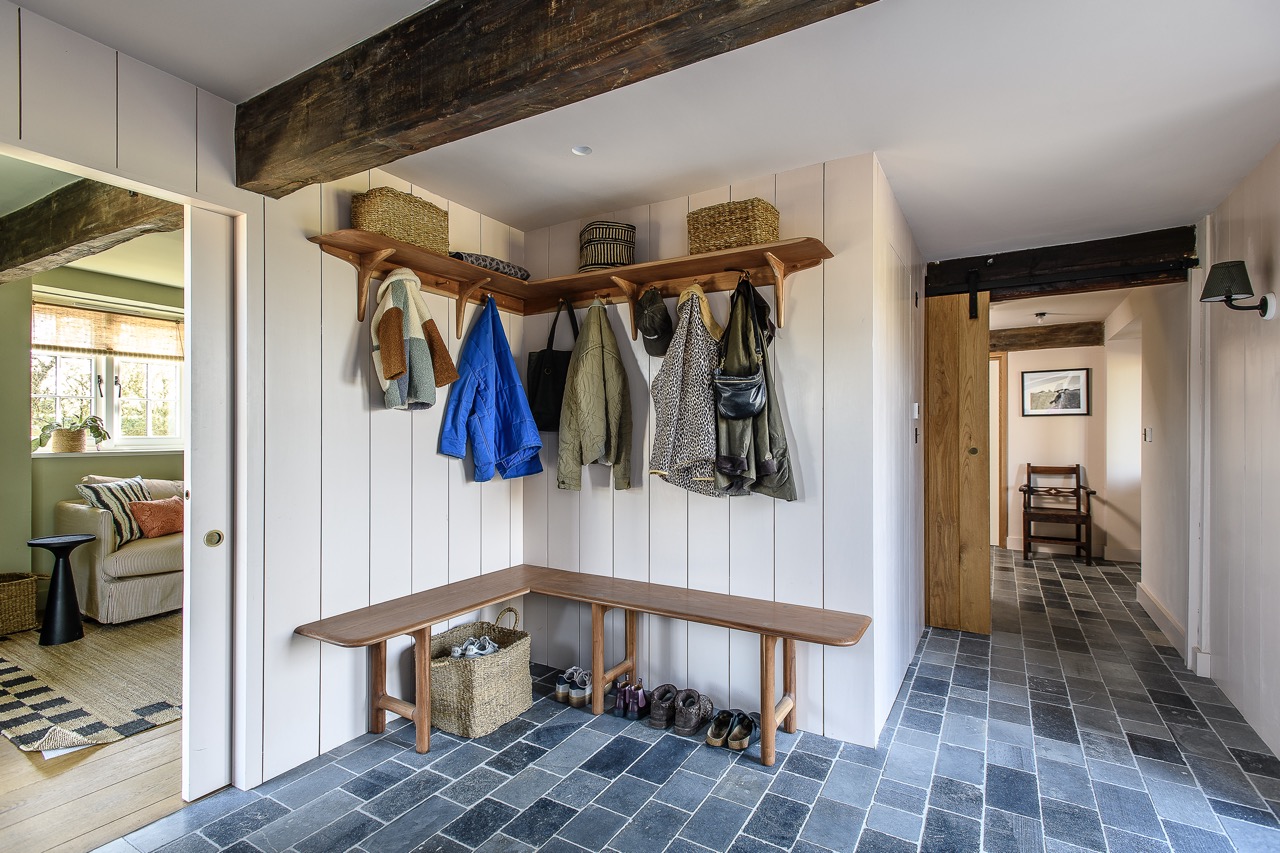
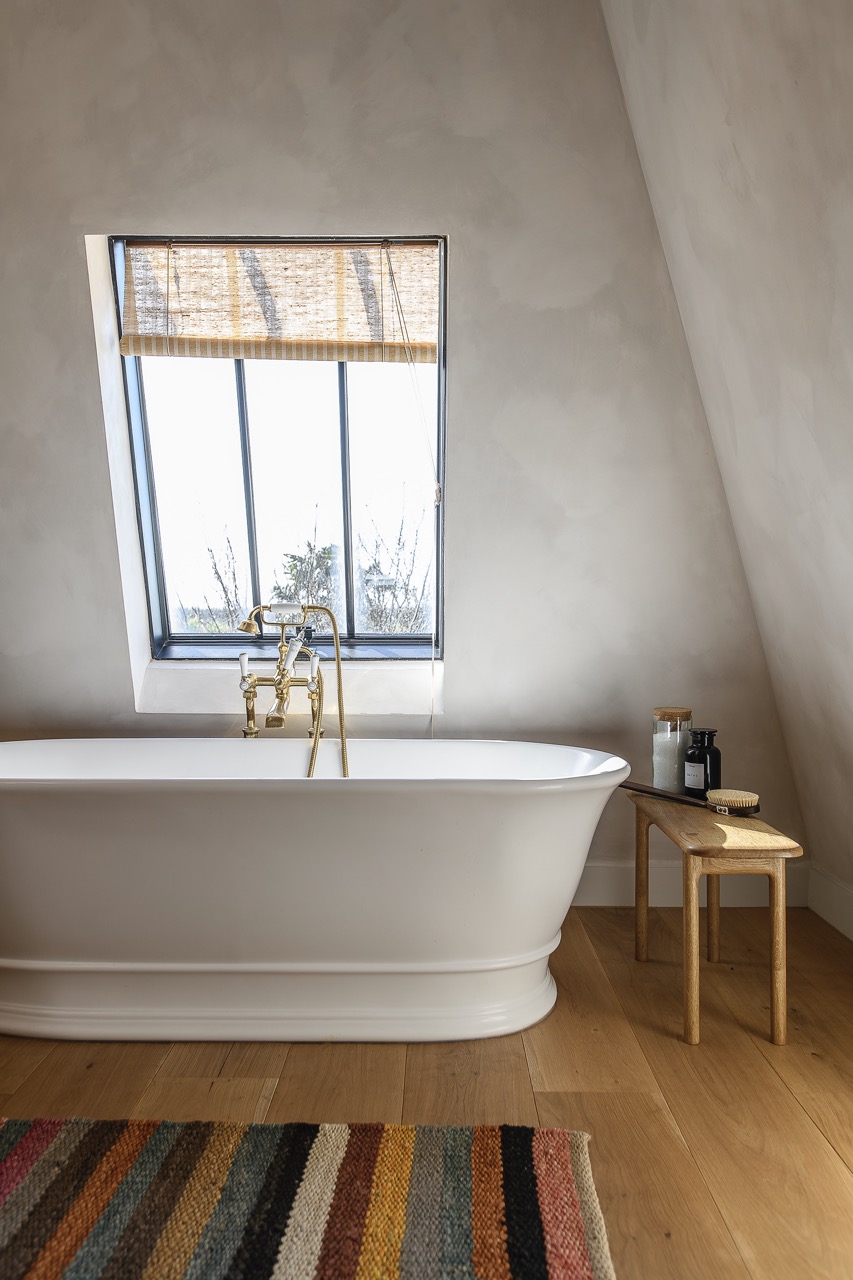
Even the floors are given equal consideration. English Blue Limestone from Artorius Faber grounds the scheme with its cool, natural tones, while in the bathroom, willow-pattern tiles sourced from Morocco introduce a subtle nod to the Arts and Crafts tradition.
Texture, Lucy believes, is as important as colour. Cotton and linen sit alongside more structured weaves, while pattern is used with confidence rather than caution.
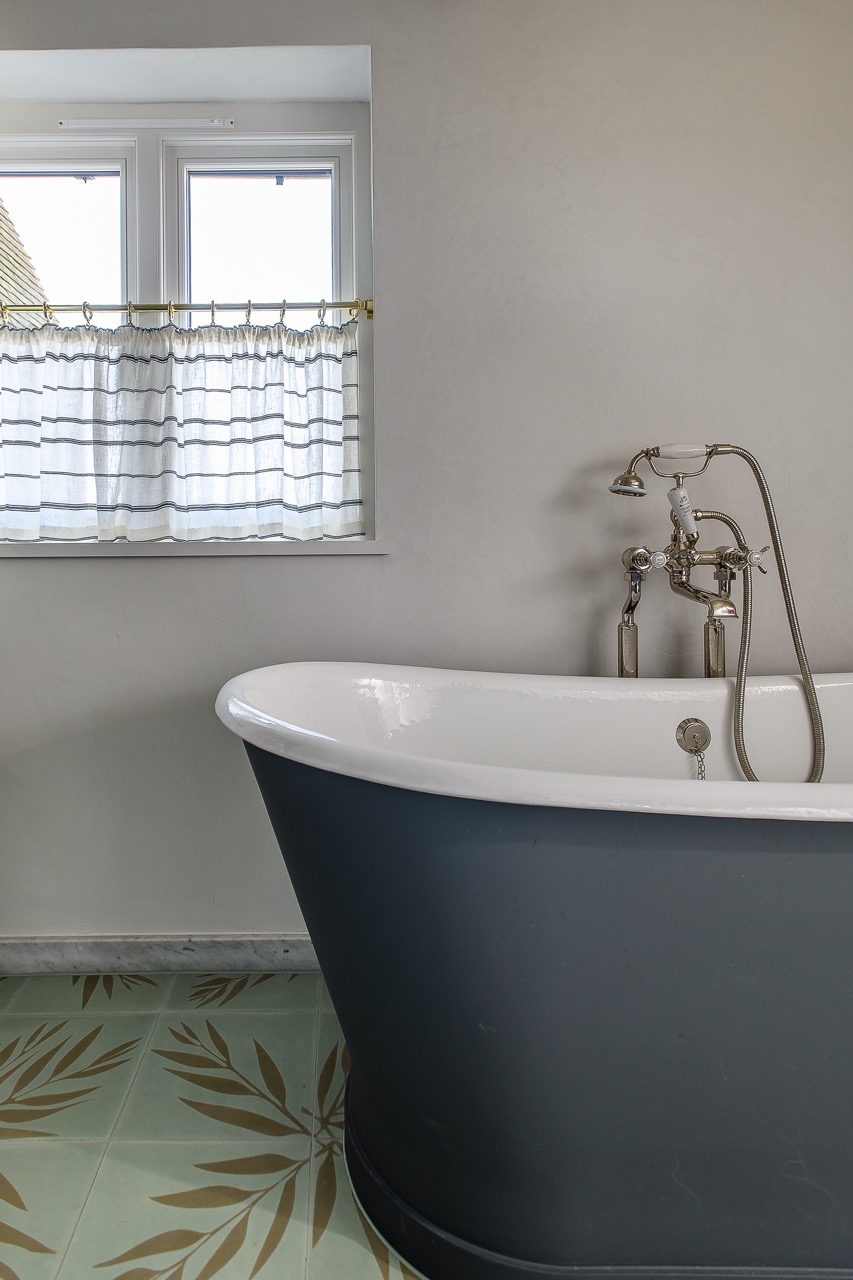
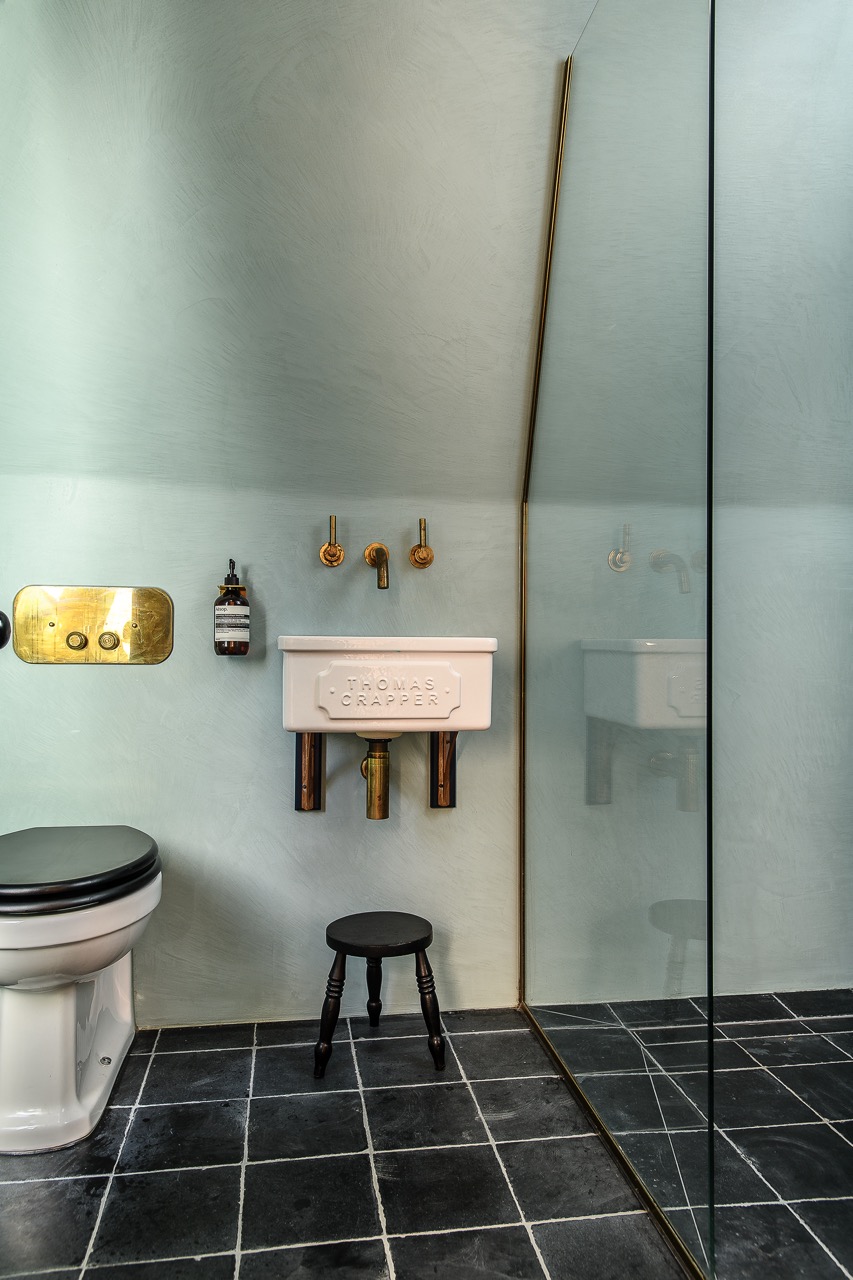
“Mixing patterns can scare people,” she admits, “but very often contrasting and layering can bring a room to life.” A touch of black and white grounds the palette, while in the bathrooms, metals are mixed with an ease that feels instinctive – brass, bronze, nickel – like well-chosen jewellery. This confidence with layering is rooted in
Lucy’s own journey into design. Originally working in the City as a portfolio analyst, she retrained at the acclaimed KLC School of Design before moving to San Francisco, where she worked with award-winning interior designer Catherine Macfee on private residences ranging from mountain homes in Tahoe to Californian coastal retreats.
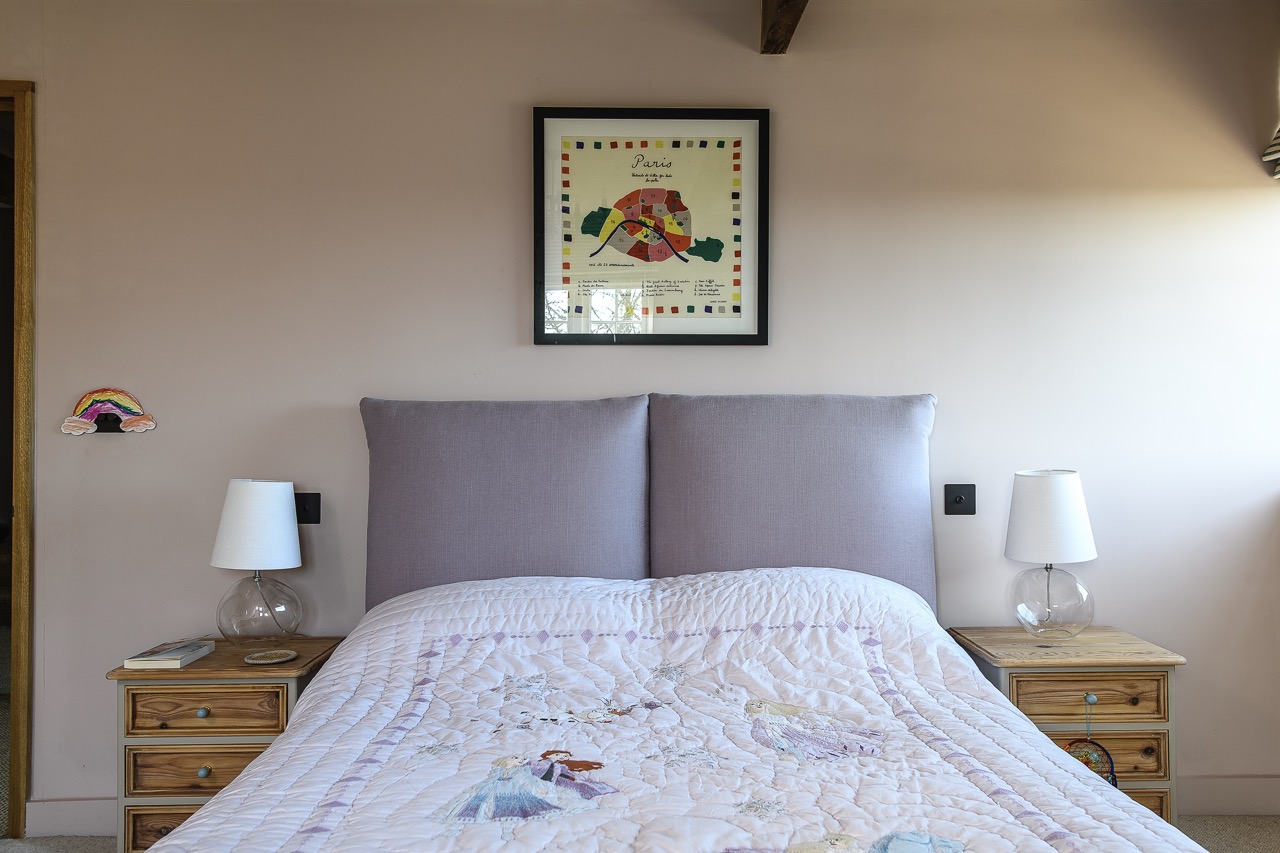

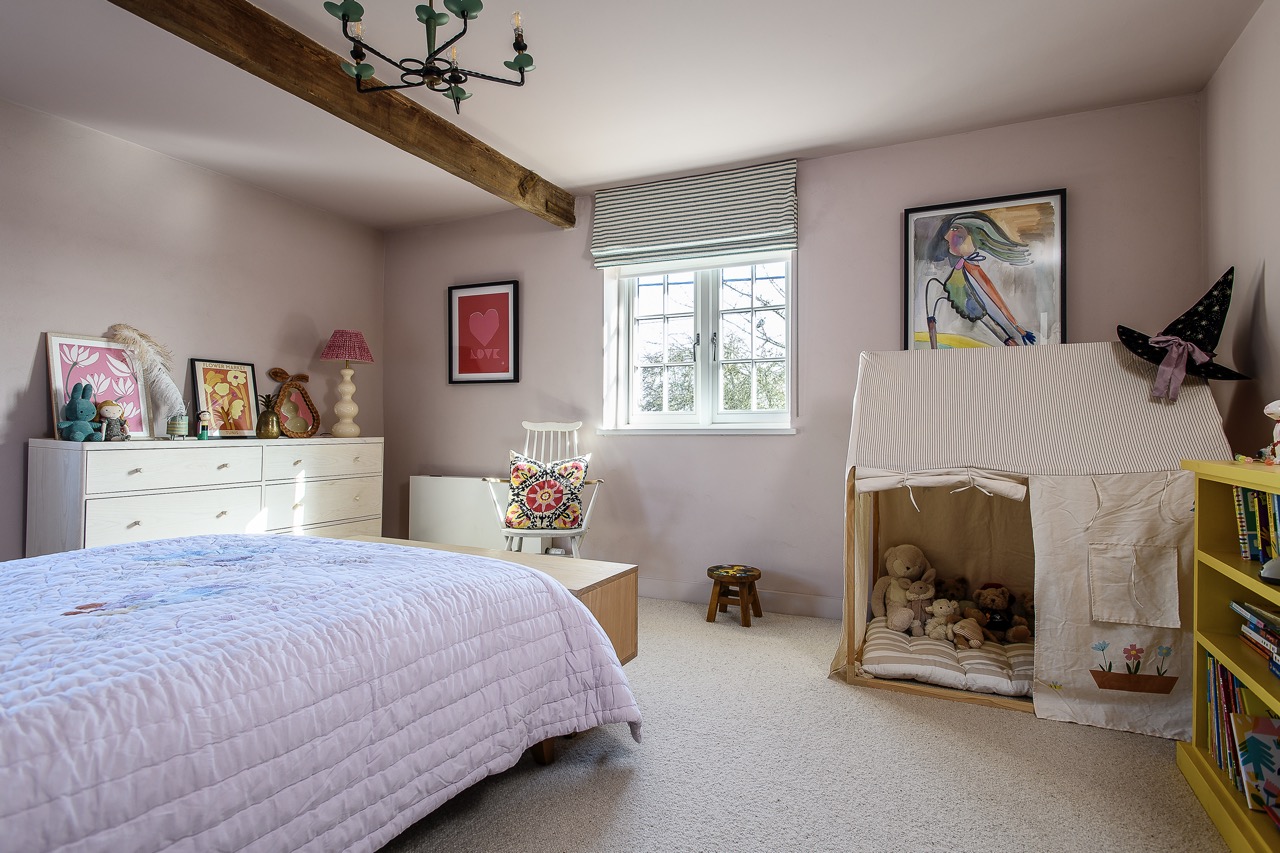
It was there that she honed her understanding of how interiors can feel as well as function. Texture, layering and the integration of antiques into contemporary settings became central to her approach – principles clearly visible in her own home.
Furniture, too, carries stories. A well-loved loveseat from loaf is now on its third re-covering, currently upholstered in a GP & J Baker fabric named California, by Vinall & Macey in Hadlow, who also crafted the ottoman.
The ottoman itself is emblematic of Lucy’s approach to family living. “We often put these into TV spaces and family rooms,” she says. “They’re stylish, versatile and children love them.” It’s a reminder that good design does not exist in opposition to real life; it enhances it.
And then there are the spaces designed not just for living, but for living well. In centuries past, houses often contained rooms of retreat – libraries, drawing and smoking rooms – spaces where the rituals of social life were played out.
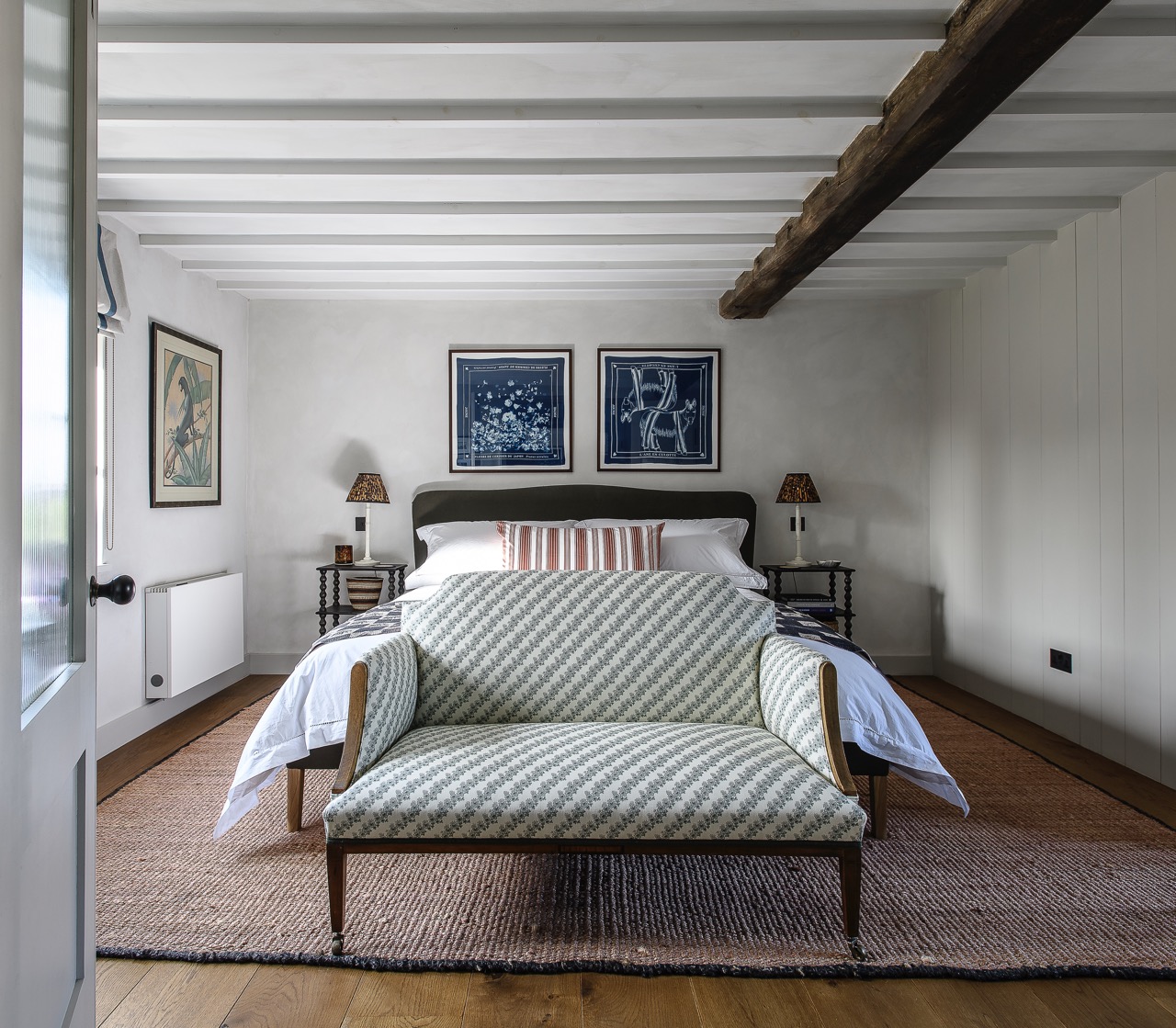
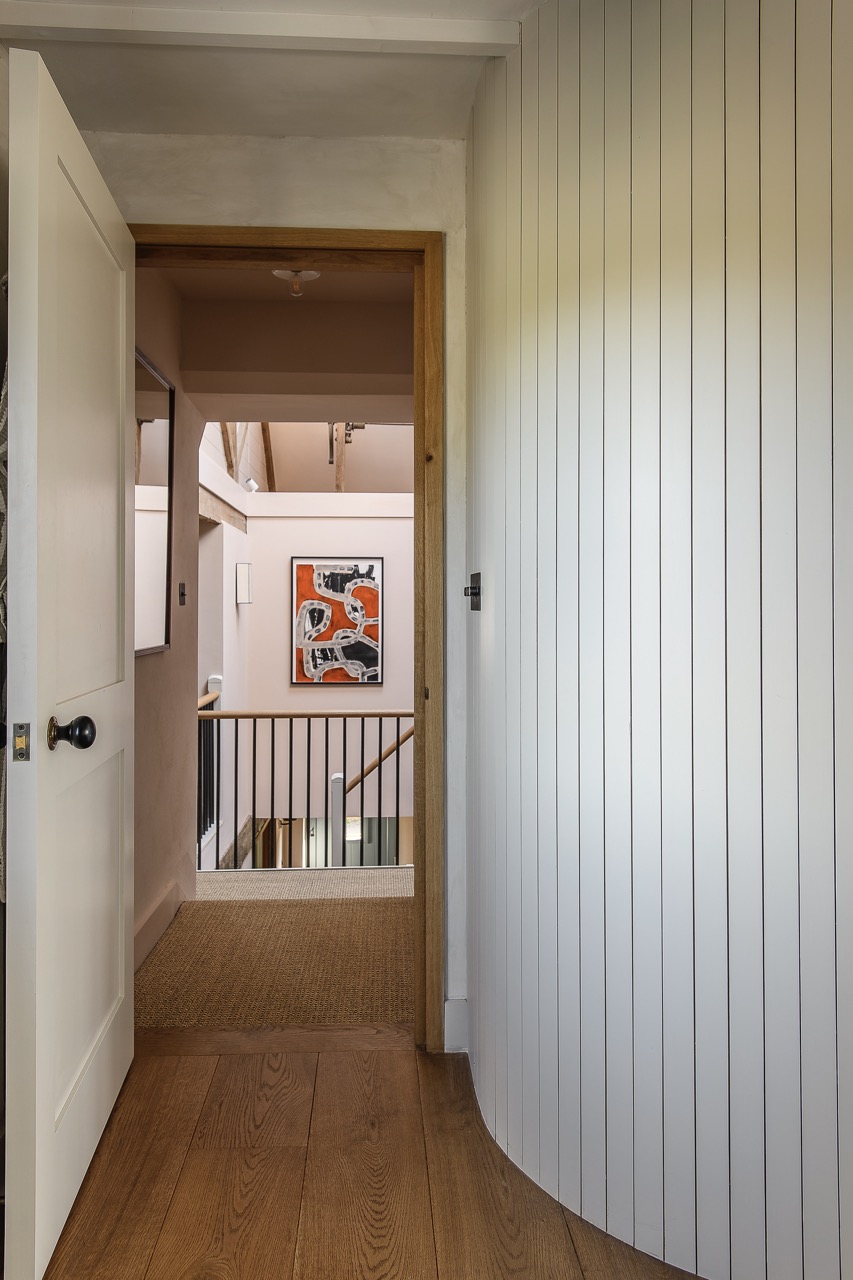
“Art is a really important finishing piece – we always try and encourage clients to add it. You never regret adding art. It can bring it all together.”
Today, those rituals have evolved, but the instinct remains. We still seek places within our homes where we can gather, unwind, and connect.
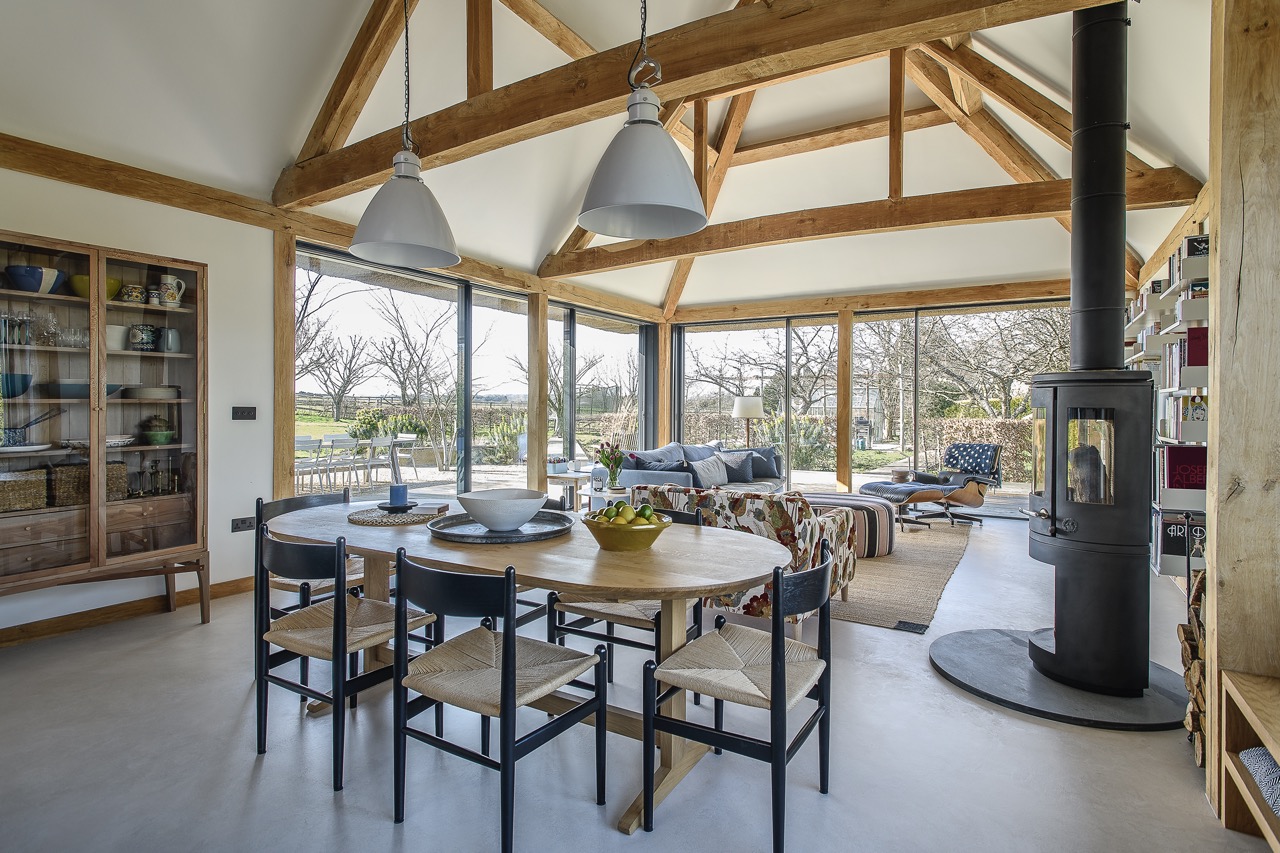
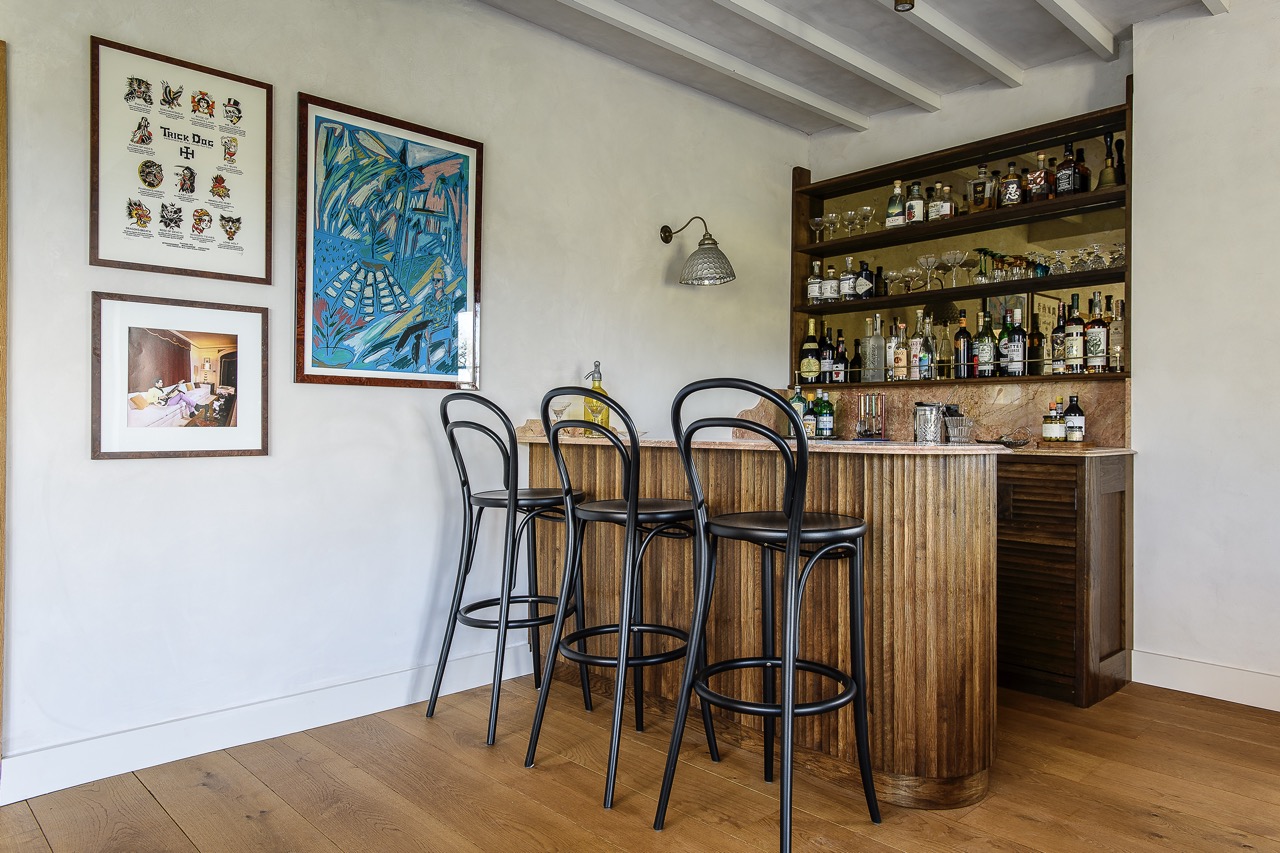
At this oast, that role is played by a beautifully crafted bar within the sitting room. Made by Ben Wheeler of Dering Studio, based out of their workshop at Godinton House, Ashford, it is both a focal point and an invitation.
“We already had our kitchen sorted, so we got Ben to make the bench in the hallway and then the bar,” Lucy explains. “Since we’ve added the bar, it’s made it a fun place to hang out.” And you can almost picture it: the gentle clink of glasses, the low hum of conversation, the glow of evening light settling into the walls of the oast. It is here that the house reveals its true purpose: not as a static composition, but as a stage for life’s small, joyful rituals.

Because in the end, that is what this house understands so well. That design is not about perfection, or even coherence in the strictest sense. It is about creating an environment that reflects who you are, supports how you live, and, crucially, makes you feel something… A lift of the spirits. A moment of delight. A quiet sense of belonging.
And perhaps that is the truest measure of a home. Not how it looks, but how it shapes the life within it.
Address Book:
Connect with Lucy and Fabia at palliserdwyer.com
or follow @palliserdwyer on Instagram
Anthony Swaine anthonyswaine.co.uk
Fallow Workshops fallowworkshops.com
KLM Constructionklm-construction.co.uk
StoneWright stonewrightuk.com
English Blue Limestone – artoriusfaber.com
British handmade tiles – balineum.co.uk
Upholstery –vinallandmacey.com
- words: Gordon Lee
- pictures: David Merewether
- location: Faversham
You may also like
An Artful Restoration
Once a derelict reminder of Kent’s agricultural past, Old Smock Mill has been painstakingly restored into a luxurious retreat. Its revival is the story of one woman’s passion, creativity and determination to preserve a remarkable landmark. When artist Clare Winchester...
Our family and other animals …
Filled with rescue pets, characterful interiors and rural charm, Sarah and Max’s farm is a place where country living and cosy style go hand in hand Many of us who have read or watched My Family and Other Animals will...
The Art of Good Living
Set against the rolling landscape of the South East, this remarkable home blurs the line between private residence and public gallery. Driven by a passion for contemporary art and a desire to bring inspiring work beyond the confines of the...