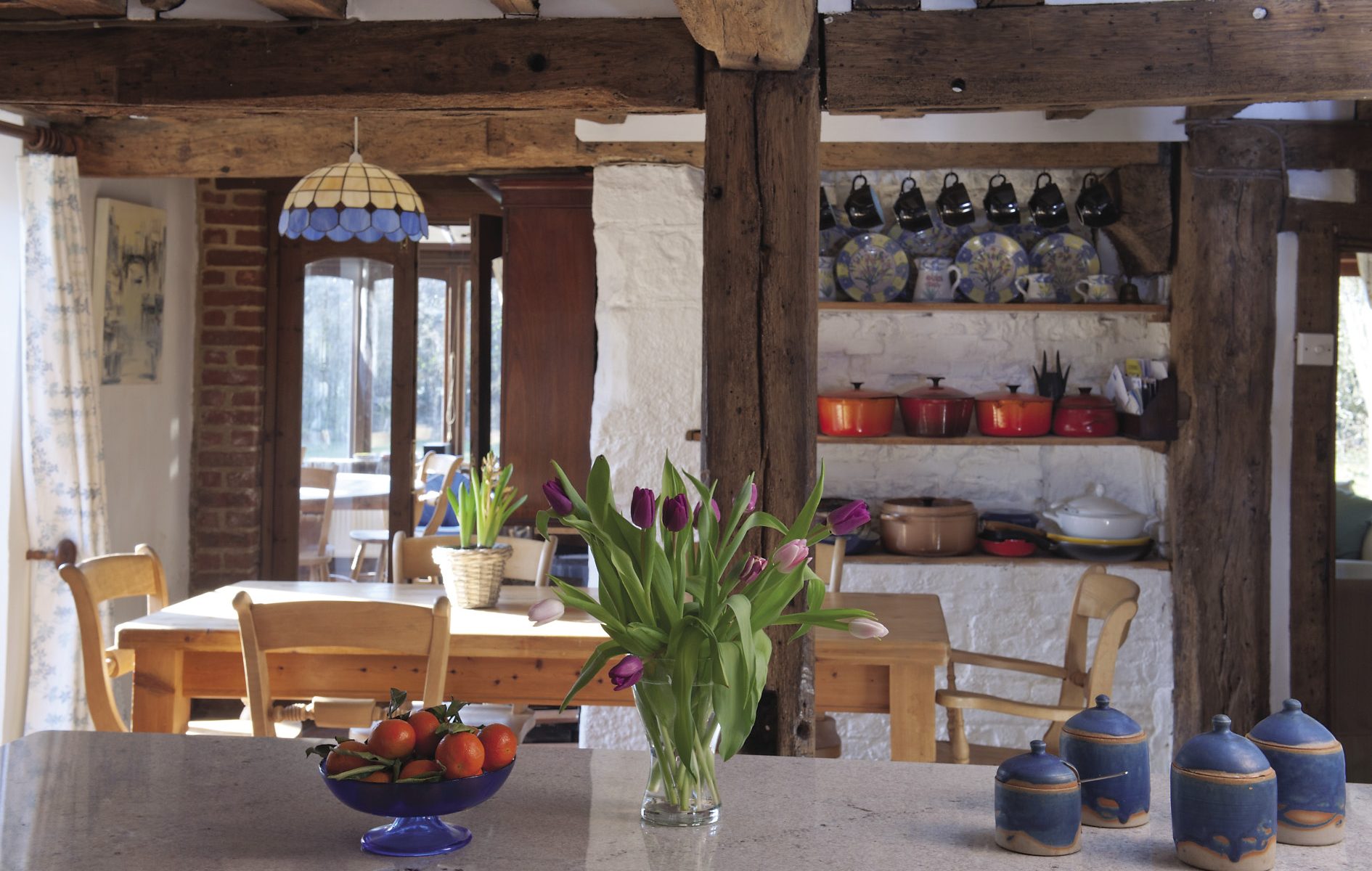
A move to the country from London can sometimes make an interesting career a little more difficult for some professions at least. Job opportunities for Art Historians (of the university academic variety) are not to be found in many villages in the Weald, so when Daphne talks about her family’s move, she is very aware of how fortunate she has been. “We moved here from Dulwich village which was lovely, but wanted more space for the children and for them to have a country childhood. The children were 14, 12, and 8 when we got here so the youngest went to Dulwich Prep and then all three went on to Cranbrook. We rented while we looked for a suitable house and we’d been in that situation for about a year when a friend told us about this place. It had only been on the market for a day, but the agreed sale had fallen through, so my husband David and I hared round and put in an offer straightaway. We were very lucky, because it was exactly what we needed. David had left the City and was lecturing up at Greenwich and amazingly, I happened to find a wonderful post at Herstmonceux Castle. In 1994 Drs Alfred and Isabel Bader bought the castle and gave it to Queen’s University, Ontario, Canada. Alfred Bader was a chemical magnate, painter and collector who dealt in Rembrandts. He was a refugee from Nazi Germany, and was actually interned in a Canadian POW camp for a while during the Second World War because almost all Germans and Austrians came under suspicion at that time. Somehow the experience didn’t prejudice him against Canadians, and he gave the castle to the university to use as an international study centre. “It’s a lovely place to work and so beautiful,” says Daphne. “I’ve taught there for 17 years now and I take the students up to London all the time, but tomorrow we’re off to Paris so I’m very lucky indeed.” The house has a mellow, relaxed atmosphere. Dating from around 1530, the narrow, handmade bricks are unmistakably Tudor and the honeyed oak timbers add to the sense of warmth. The kitchen has a terracotta tiled floor and simple, panelled ivory painted cupboards with a pale granite worksurface. “We’ve done things gradually really and we’ve been very lucky to find Mike Page, a really good builder, who has maintained the house for the whole 20 years that we’ve been here. We’ve recently re-done the kitchen over the summer holidays. David and our friend Jonathon Deacon also restored the Tudor floorboards on the landing at the same time, so we had two quite big projects on the go. The work on the landing was the result of a rainy Sunday afternoon when we suddenly wondered what might be under the carpet. Of course when we saw the timbers David had to do something with them. He’s a furniture restorer so he knows what he’s doing, but gosh, it was a lot of work.” An ivory and duck egg blue Aga occupies the generous brick fireplace and a large Windsor chair has been thoughtfully placed in front of it. “The cat loves to sit there of course,” says Daphne. We got her from Rolvenden Cat’s Home in Kent, she was a rescue cat and she’s been marvellous. She does look rather extraordinary though. Her fur never seems to stop growing so we actually have to get her ‘clipped’ every so often. I actually bought the Aga before the house. I saw it in the Wealden Advertiser and loved it, but I had to ask the sellers to keep it for a while. I bought a few things before we even had the house, a collection of painted pottery too. I actually hid that under the bed because I knew David would think I was potty, buying things for a house we didn’t even have!” Daphne sits at the far end of the kitchen at a scrubbed pine table. Her daughter is home for a day or two, having a short break from her work as a television producer before she begins script editing her next project for ITV. She started out on Lewis and loved working on location in Oxford with Kevin Whately, whom she says is every bit as nice as he seems on screen and Laurence Fox who is also great fun. Other programmes have included Lost in Austen, episodes of Miss Marple and Bouquet of Barbed Wire. Like most people in television now, she is freelance, so works for both ‘sides’ which must afford her a fair degree of creative freedom. “We have two freelancers in the family,” says Daphne. “One of our sons is a broadcast journalist currently working for Associated Press and the other one is a hospital registrar married to another doctor, though he’s about to take two years out of practice to go and do a Ph.D in research into leukaemia at Cambridge. We’re fortunate because the children come back here often and I think the house has quite a lot to do with that. They love to get together and sit in front of the fire with a bottle of wine. We have a rather substantial fire too. Reputedly the biggest inglenook in the county.” Moving through to the drawing room the fireplace is indeed enormous and stretches almost the whole length of one wall. There is a handsome iron fireback featuring a majestic looking lion with a Tudor rose and fleur de lys on either side of his head, and a pair of very smart firedogs that all ‘came with the house’. “Apparently, for years no-one knew that the fireplace was even here. It had been covered over and the room was divided into two, but fortunately for us, it was discovered just before we bought the house.” Two cream coloured sofas and a dainty armchair are set in front of the fire and scattered with sea green and ivory silk cushions. A pretty card table with an inlaid winkle shell motif on its front supports a collection of family photographs and an elegant ceramic lamp, whose twin sits on a dark mahogany table on the other side of the window. In an alcove, an inviting looking chaise longue with extravagant scrolls has also been upholstered in ivory silk with alternate satin and slubbed stripes. Above it a large oil painting of a Dutch sailing boat is hung and on the adjacent wall, a mirror reflects the image of the boat so that from a certain angle, the painting seems to continue around the corner. At the far end of the room is a door into the conservatory. “This house is great for entertaining because all the reception space goes around in a circle,” says Daphne. “We do entertain quite a lot too and I love to cook. We had a house in France for a while, so I think that probably influenced my style, and I always find cooking very relaxing. It’s a good way to wind down I think.” In the centre of the room is an oval pine table and chairs and there is a pine settle and a bamboo sofa and chair for relaxing in. An enormous money- or jade-tree plant stands on an early 20th century pot stand. Its trunk is as thick as a man’s arm and it is smothered in delicate white flowers. “My mother-in-law gave me that about 40 years ago and when we first came here we had it on the floor and it looked terribly unhappy. As soon as we raised it up, it blossomed and has just gone from strength to strength. I also grow verveine which is glorious in the summer and it makes delicious tea.” On the only solid wall, a huge oil painting in deep blues and greens is complemented by a pair of Tiffany light sconces that look rather like blue and white snowdrops. “That painting belonged to my father and it’s called Girl in a Wood. We have a few things by Wealden artists too. We have an Anne-Catherine Phillips that we really like and a Rosemary Houghton in the kitchen.” Upstairs on the landing the floorboards are magnificent in scale. Their broad surface has been polished to an almost glossy patina by the effects of age rather than artifice. There is enough space for a desk and a sofa too. A window set low in the wall combined with the floor and wall timbers gives the visitor the feeling of being on a Tudor ship. Up a few more steps, we pause in front of a leaded-light window that has developed such a slope over the centuries that it looks as if it is somehow melting away at one end. In one tiny pane of glass there is a signature in neat copperplate script: W.C. Laymouth, February 9th 1872. And high up at the top, David and Daphne have recently spotted another signature, but this time it has been etched on the glass from the outside. Perhaps they were craftsmen working on the house, or former residents. The intriguing thing is the precise nature of the date, as if it had some particular significance. Entering the main bedroom, the floor slopes away at a tipsy angle, so all the furniture has been given its own bespoke leg props. An actress’s dressing table was another gift to Daphne from her mother-in-law. “It’s from the late 17th or early 18th century,” explains Daphne, “it has these little shallow drawers and the top opens up and there is a large mirror at the back. I love to think of it being in a theatre. I trained at the Central School of Speech and Drama because I used to be an actress and it’s a wonderful job, but so much travel is involved and the hours are antisocial. I just found it too difficult with three children, I missed them too much so I changed direction and retrained at London University before doing my postgraduate at Kent.” There is a handsome brass and iron bed, either side of which mahogany corner washstands have been used as bedside tables. “I’m a bit evangelical about ‘brown’ furniture,” says David. “It’s so inexpensive. I bought those for about £65 at Bentley’s Auction Rooms in Cranbrook. The thing about it is it has lasted the test of time and old pieces of furniture have a story to tell too. I work on a lot of pieces that people have bought that just need some work to bring them back to their original glory. Wood inevitably shrinks, so inlaid metal banding can come loose, or veneer gets knocked and chipped. I love Regency furniture, but I’m currently restoring a really splendid Georgian secretaire chest of drawers. I’ve got it here at the moment so I can show you shortly.” Up one more flight, the couple’s son’s room displays more of David’s craftsmanship. The floor here is not so much tipsy as quite sozzled, and careers away from the window towards the door at such an angle that David decided to make the bed himself. One leg is almost half the height of the other, but such engineering is discreetly hidden beneath the bedcovers. The satinwood headboard is finely carved but was originally part of a wardrobe – another bargain found at Bentley’s. Back downstairs, David shows me the Georgian secretaire that he mentioned. “One of the problems was that the drawers had become stuck because the original runners had been worn down into deep grooves in the middle. This is for a friend and a client and it’s a lovely project. You can see that this is Georgian through and through because the back is made of a much cheaper timber but has been carefully put together using tongue and groove joints and handmade nails. There is cross-banding made of tulipwood, but it’s really difficult to buy the right thickness, so I have to cut it all very carefully by hand.” To one side of the chest, David has placed the top drawer with its writing surface that folds up and down with a perfectly engineered brass semi-circular runner. Inside the drawer there are arched compartments for letters and documents and elegant little drawers with tiny ivory button-like handles. With a deft turn of the hand, David reveals a secret recessed compartment and a hidden drawer. It’s easy to see why he is so enthusiastic about pieces like this. “It’s quite hard to let them go sometimes,” he admits. “I’ve recently made a display table for a client. She creates embroideries and she has sewn one in the form of a Moorish garden so I made a cherrywood table with a sort of satinwood ‘arcade’ around the edge with turned columns made from boxwood – actually Jonathon turned the pillars and I gave them capitals. It was such an involving project, it was a bit like letting go of a child at the end.” David does at least have some photographs of it that show an extraordinary piece of embroidery surrounded by the softly illuminated arcade so that looking at it from above gives the effect of a scalloped frame around a richly coloured canvas. “It’s on loan to the Royal School of Needlework at Hampton Court Palace at the moment, because they are going to display it in an exhibition this summer,” he says, “so I might just go and see it again.”
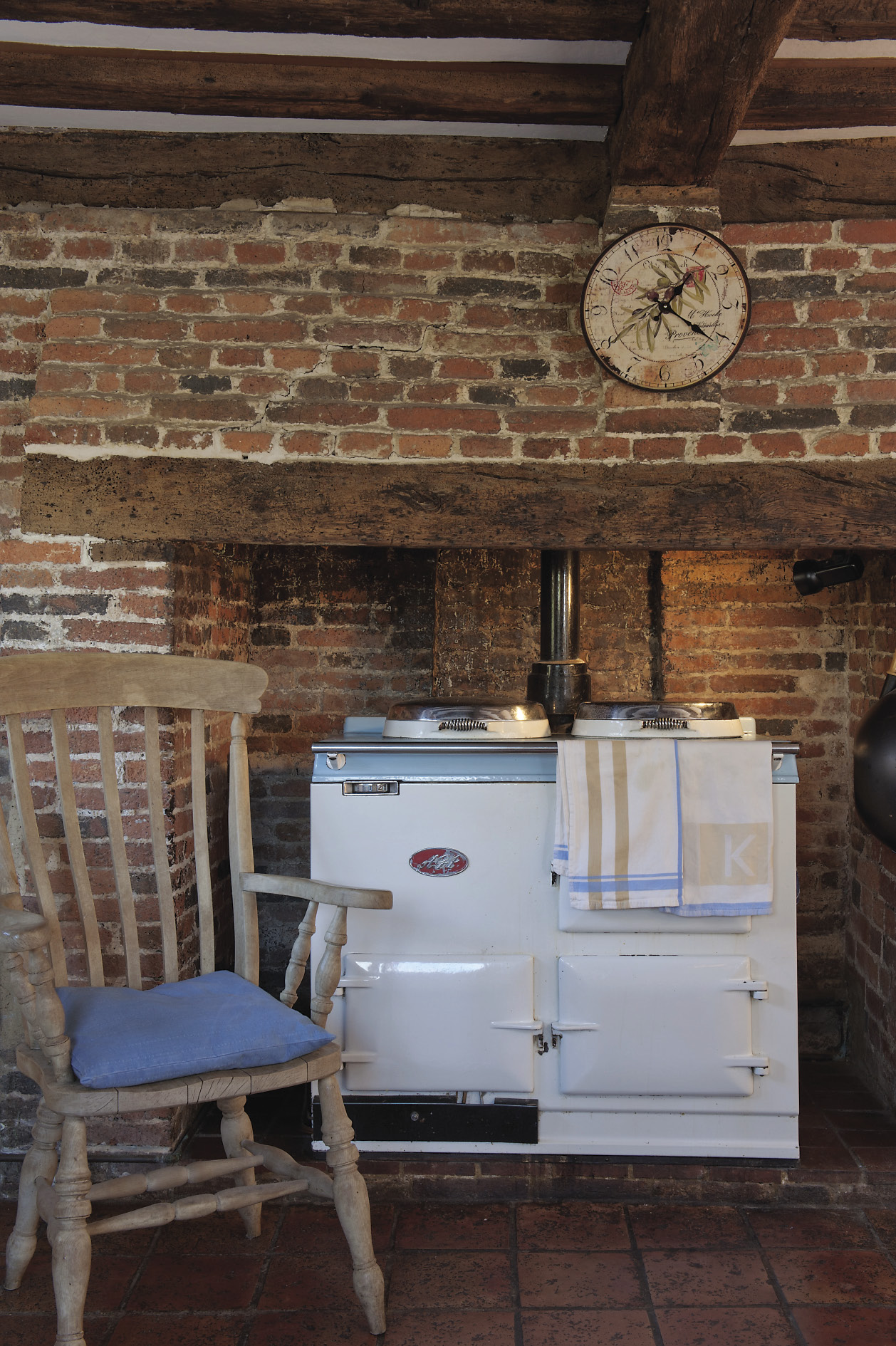
An ivory and duck egg blue Aga occupies the generous brick fireplace
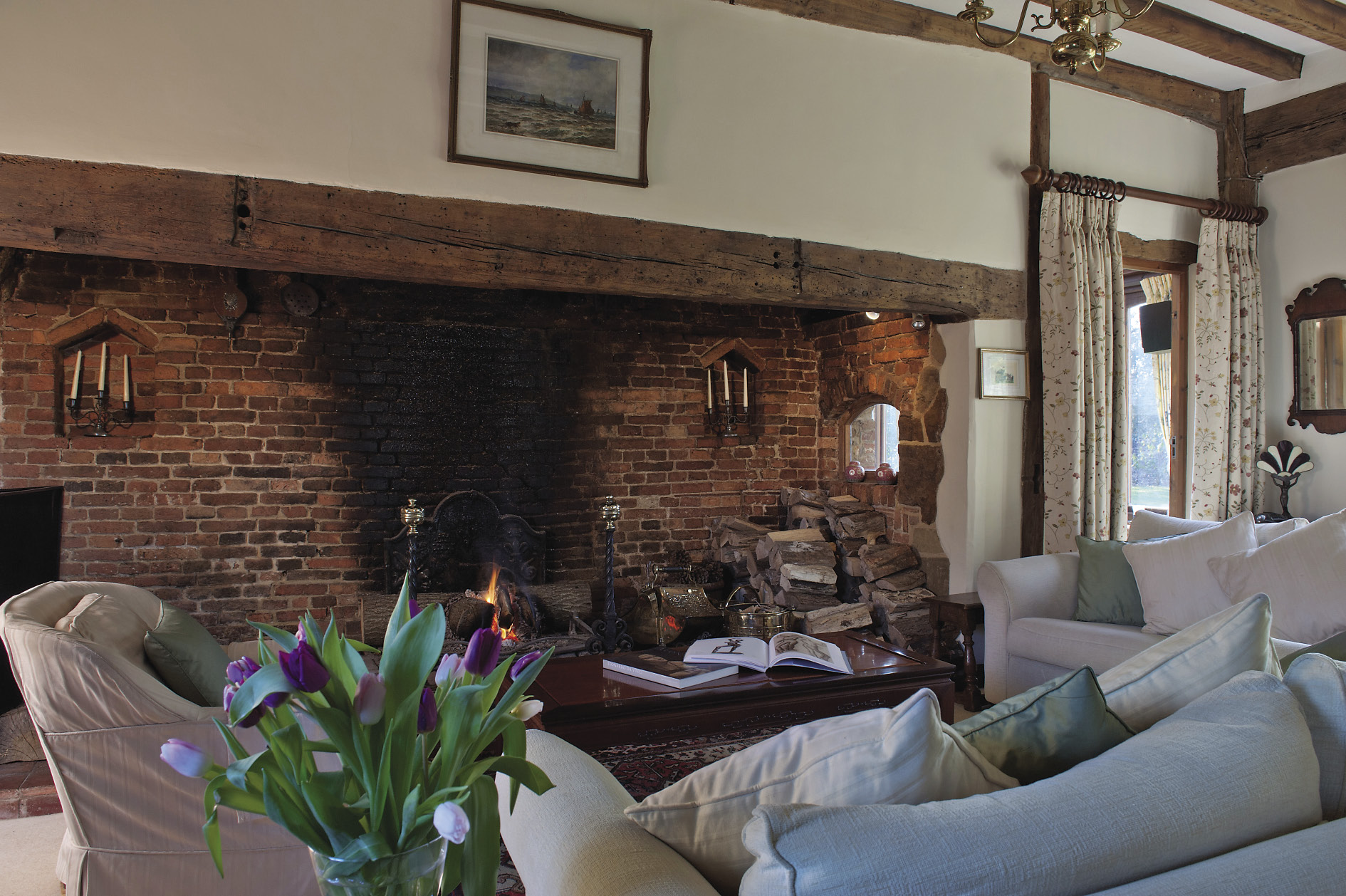
In the drawing room the fireplace stretches almost the whole length of one wall
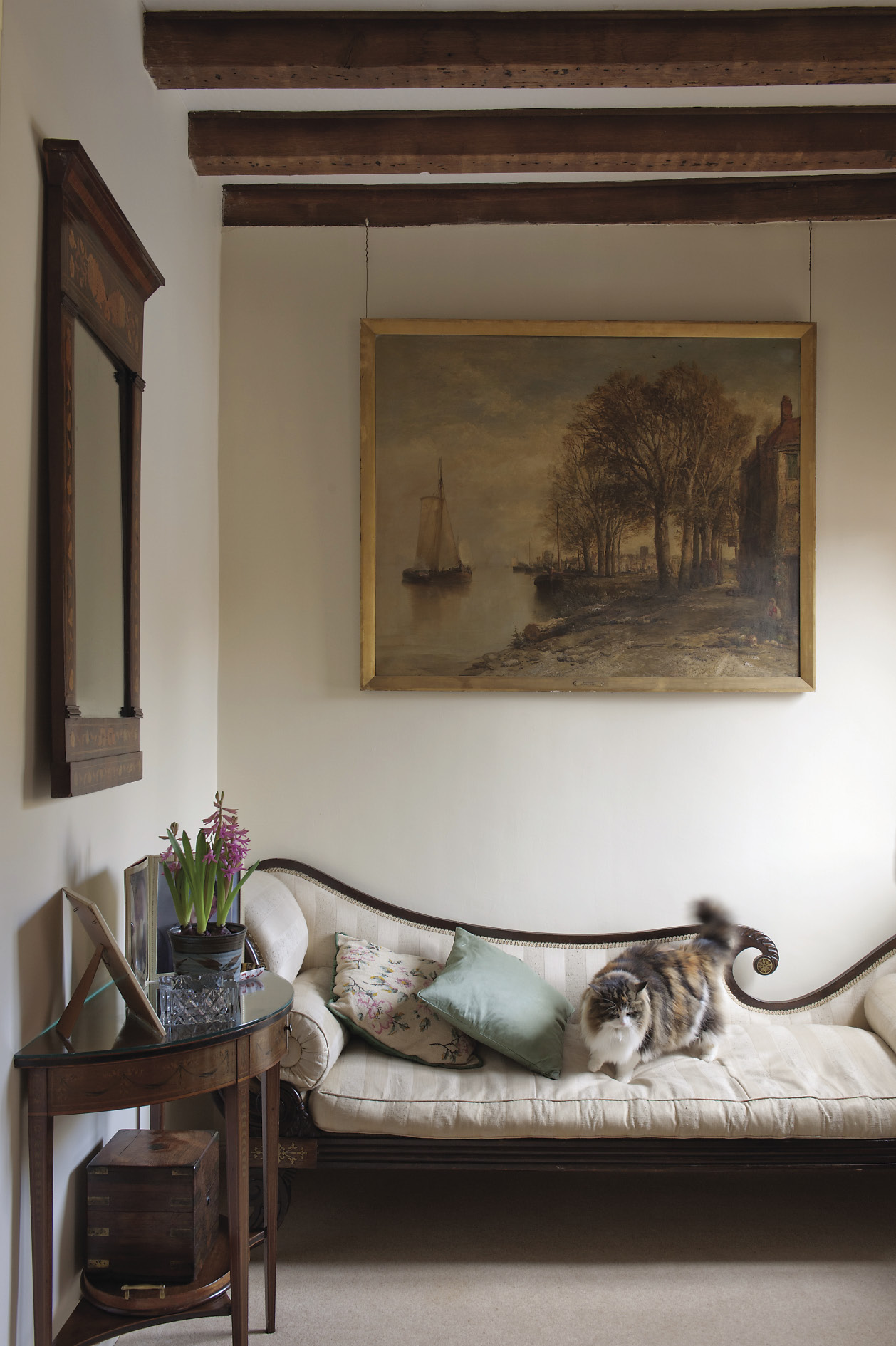
In an alcove, an inviting looking chaise longue with extravagant scrolls has also been upholstered in ivory silk with alternate satin and slubbed stripes

The cosy drawing room is the heart of the home where the whole family gather together to sit in front of the fire with a bottle of wine. “We’re fortunate because the children come back here often and I think the house has quite a lot to do with that,” says Daphne
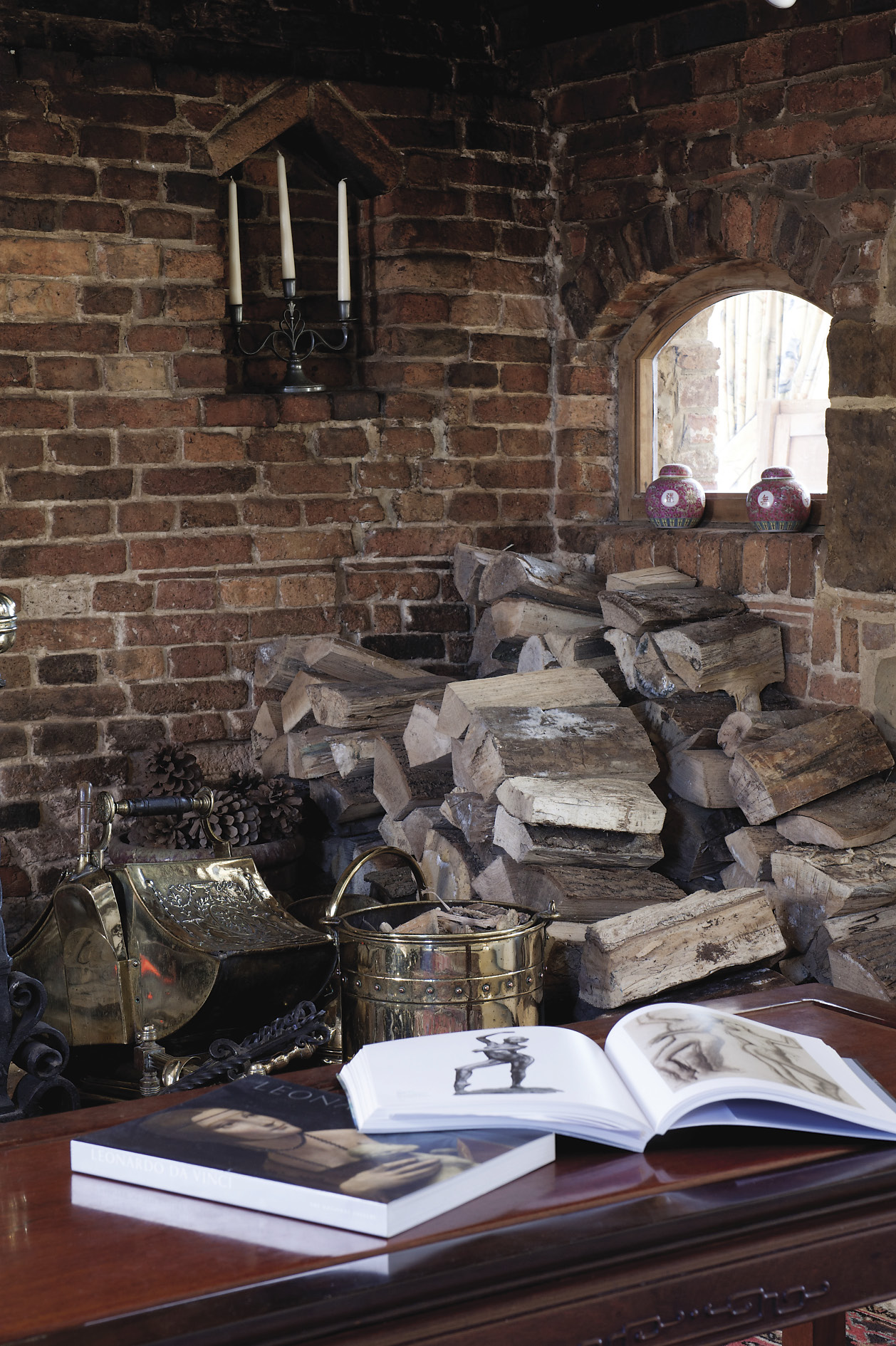
The inglenook is said to be the biggest in the country
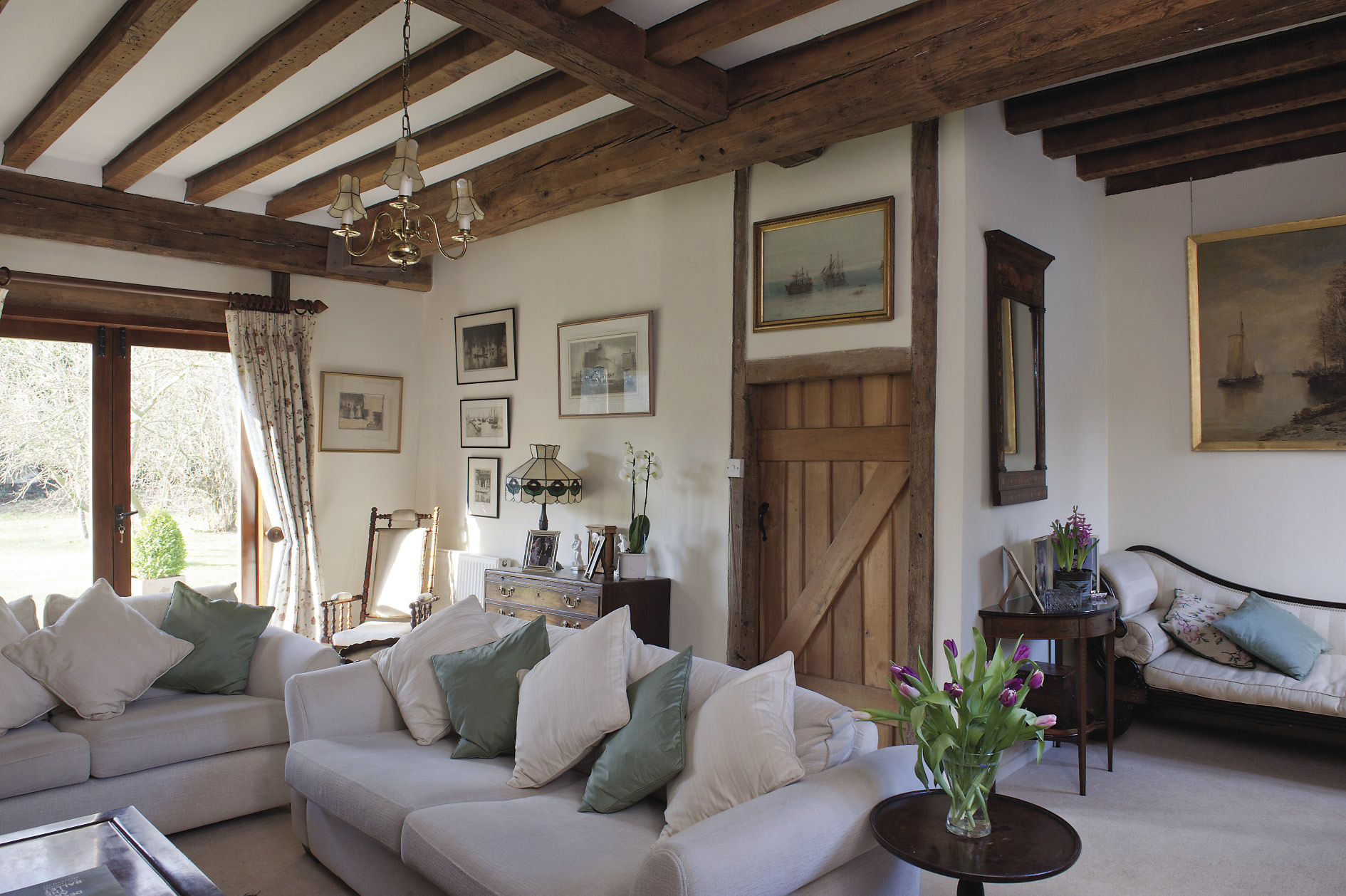
Two cream coloured sofas and a dainty armchair are set in front of the fire and scattered with sea green and ivory silk cushions
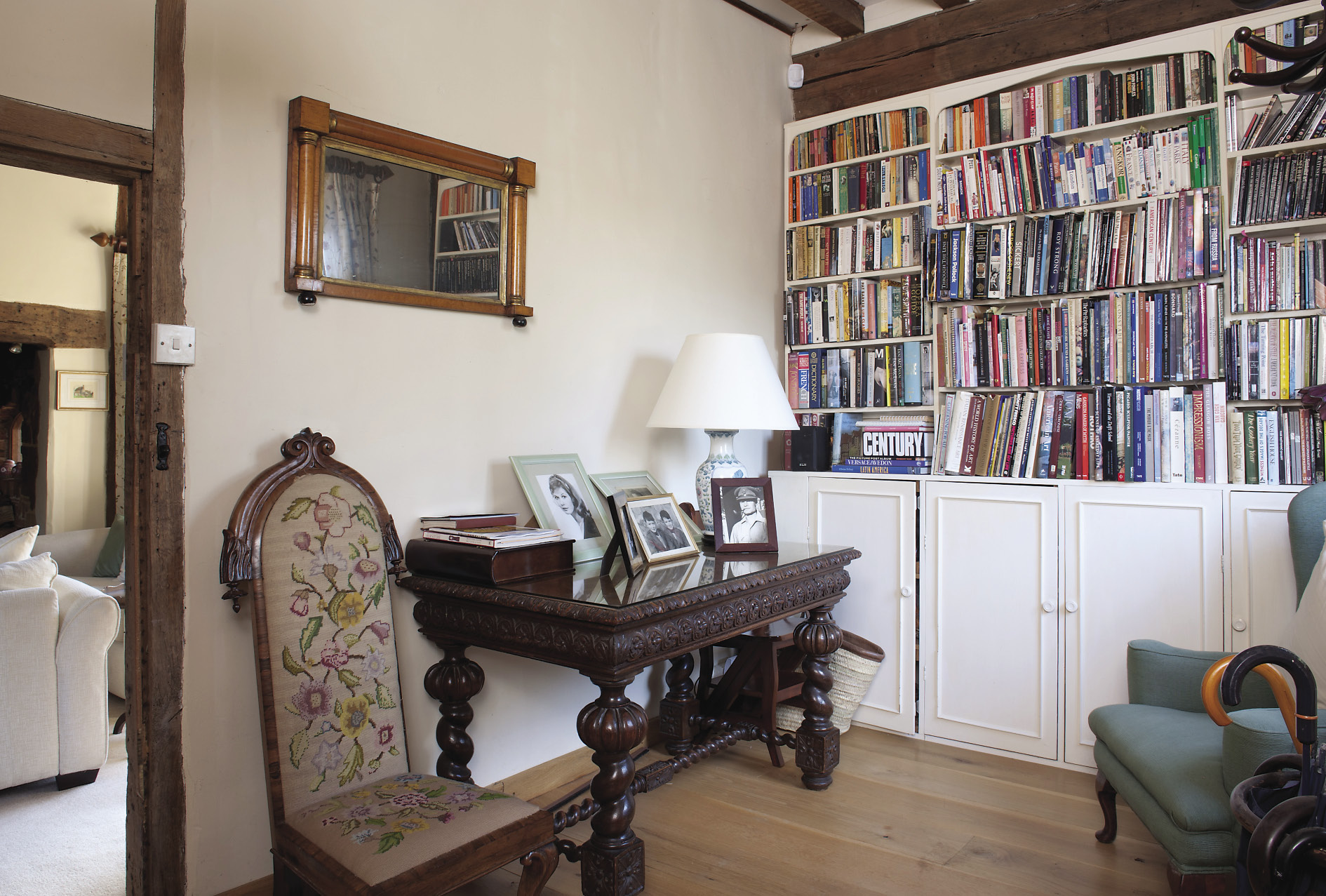
Bookshelves line the walls of the study
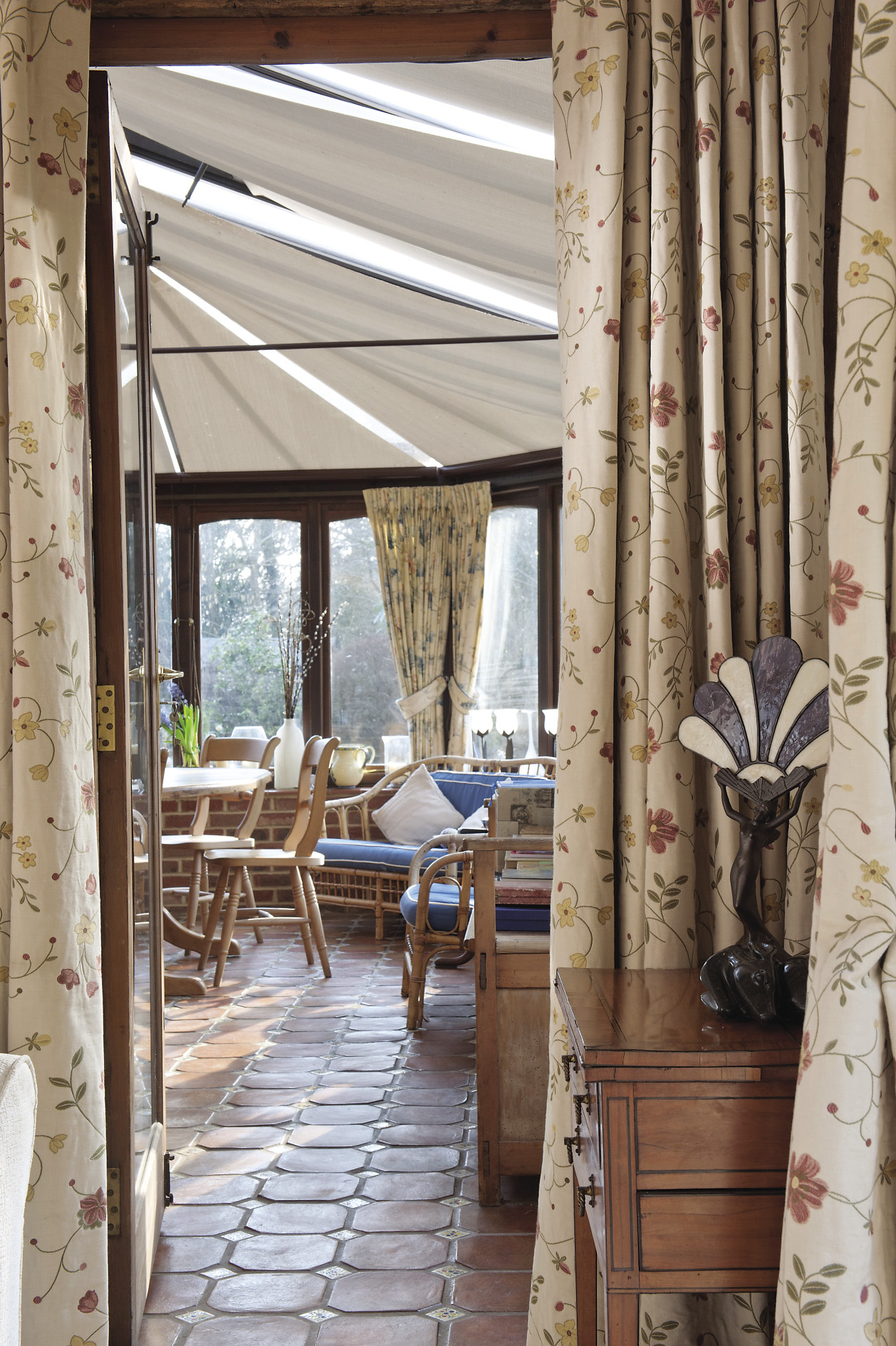
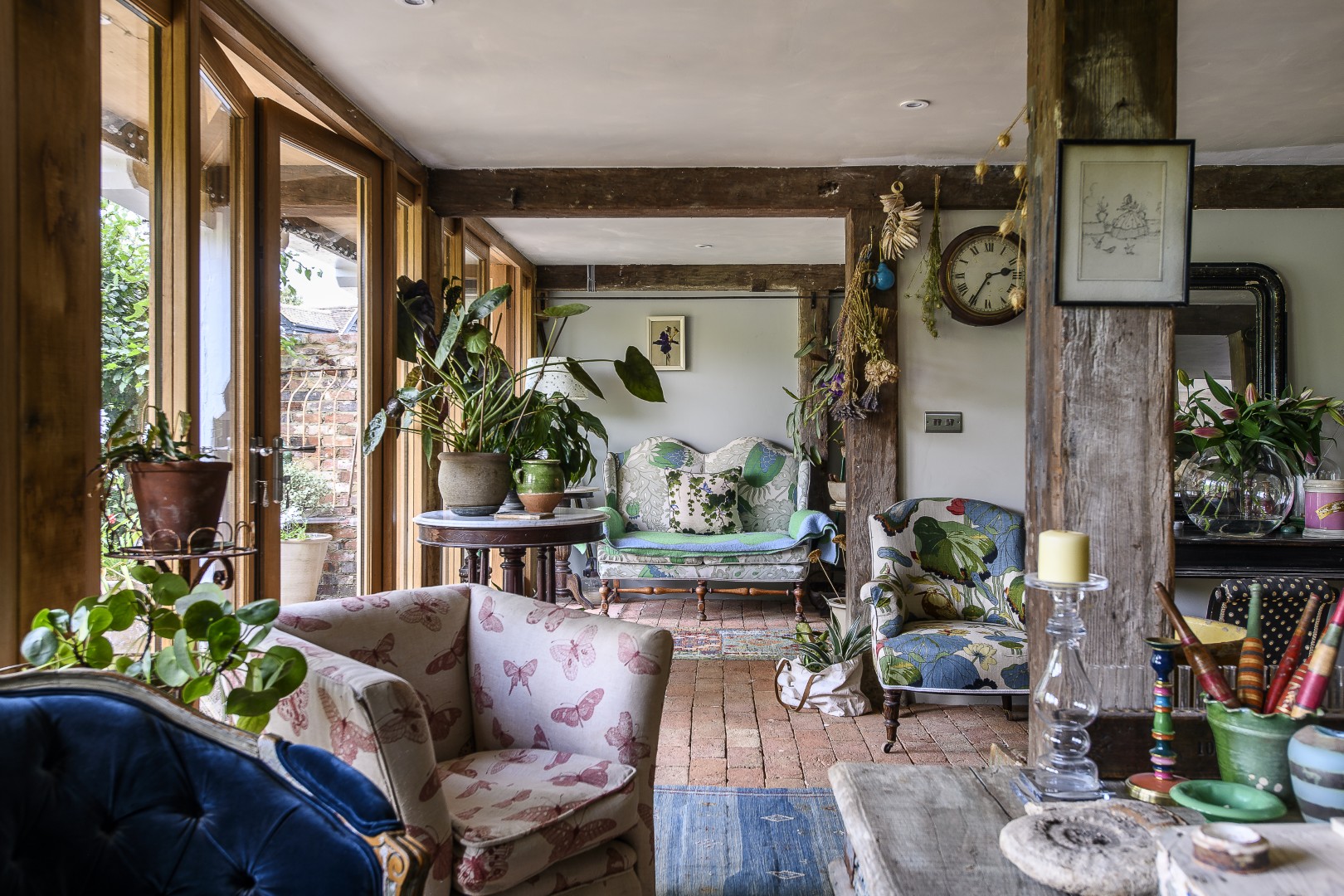
A door from the drawing room leads into the conservatory. In the centre of the room is an oval pine table and chairs and there is a pine settle and a bamboo sofa and chair for relaxing in

An enormous money- or jade-tree plant stands on an early 20th century pot stand
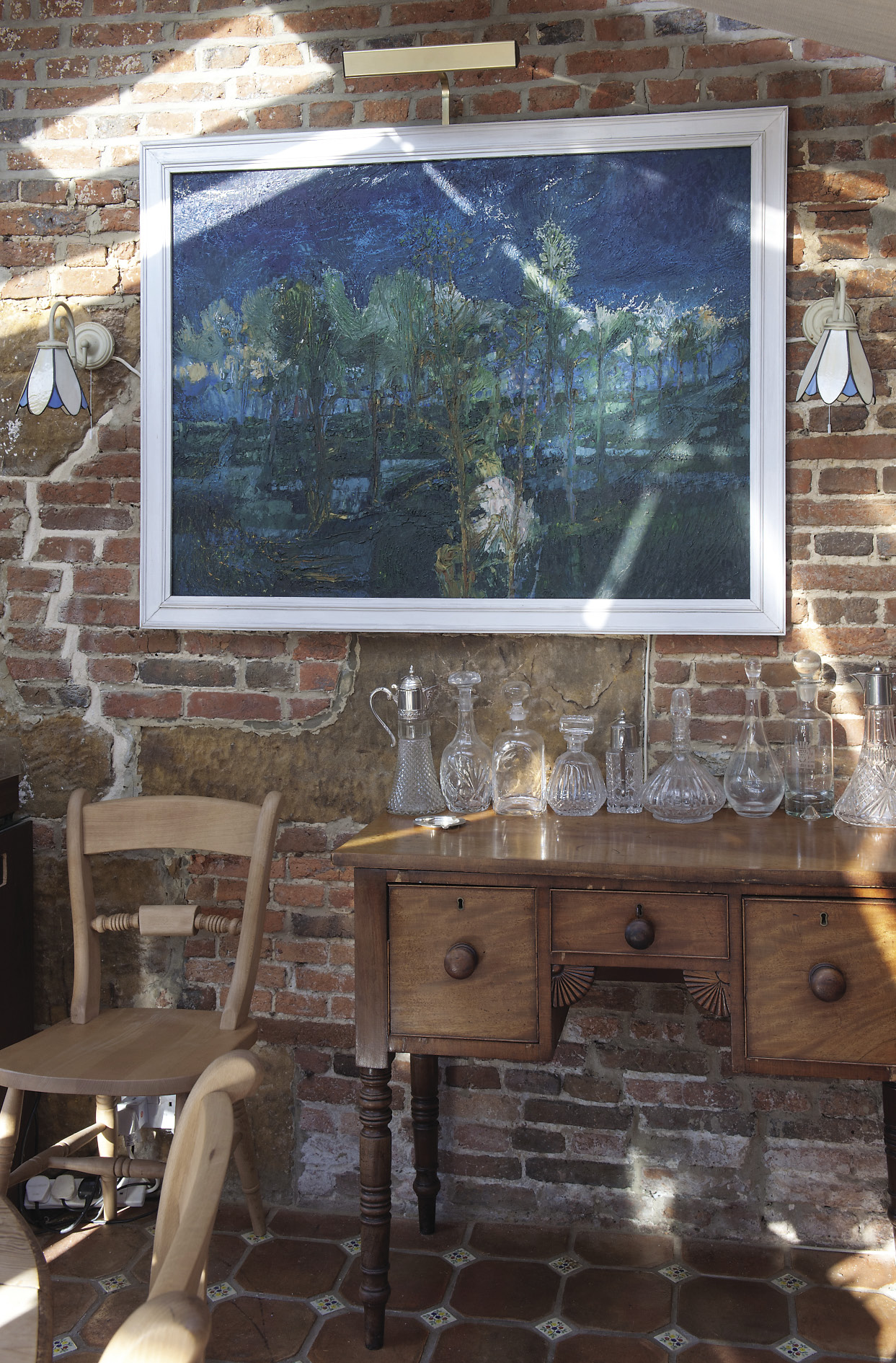
A huge oil painting in deep blues and greens is complemented by a pair of Tiffany light sconces
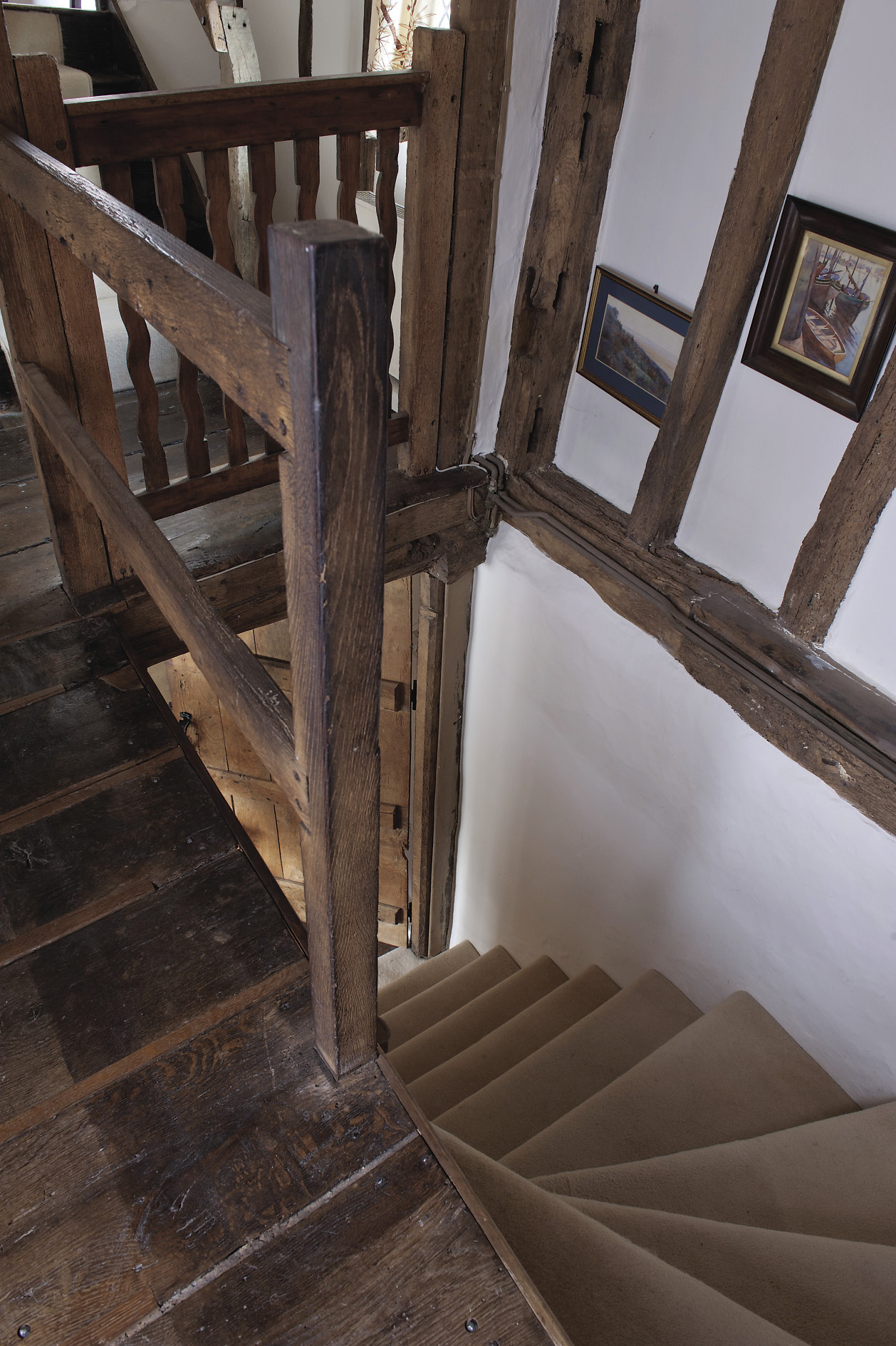
A door from the kitchen leads upstairs to the landing

On the landing there is enough space for a desk and a sofa
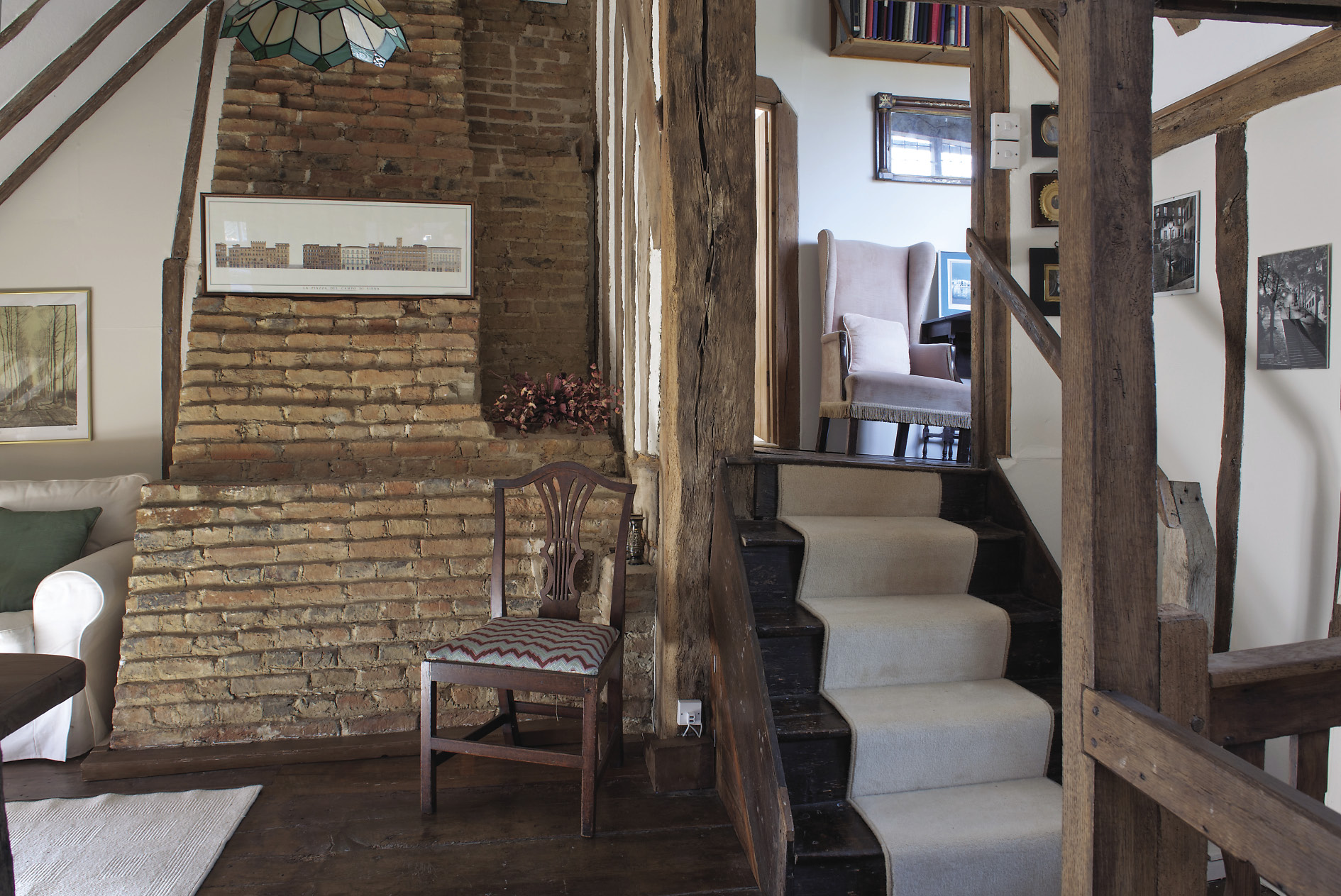
A small flight of stairs leads to the master bedroom and floor above

A window on the landing looks through into the guestroom

Up a few more steps, we pause in front of a leaded-light window that has developed such a slope over the centuries that it looks as if it is somehow melting away at one end

A leaded-light window that has developed such a slope over the centuries that it looks as if it is somehow melting away at one end. In one tiny pane of glass there is a signature in neat copperplate script: W.C. Laymouth, February 9th 1872
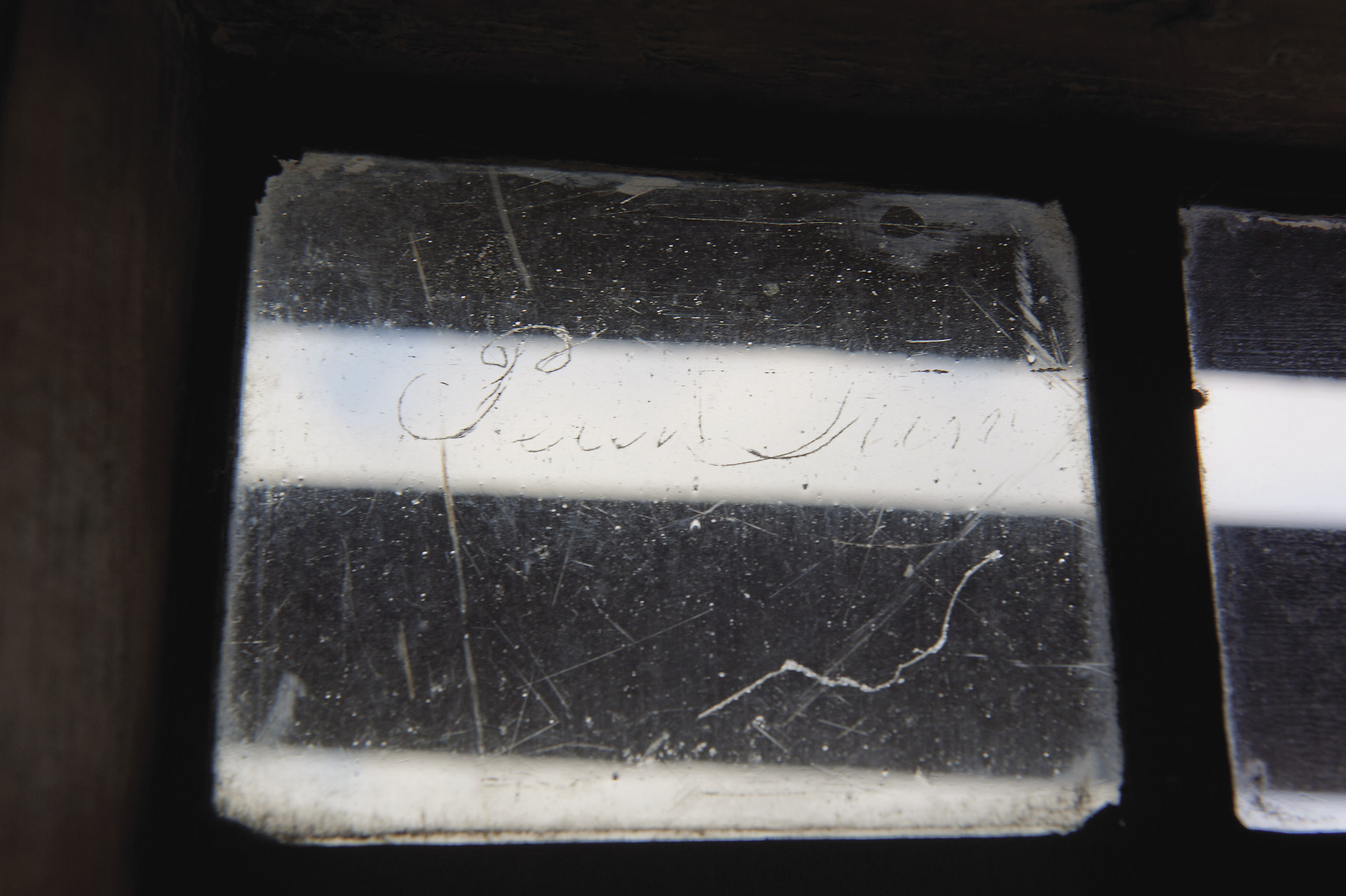
David and Daphne have recently spotted another signature, but this time it has been etched on the glass from the outside
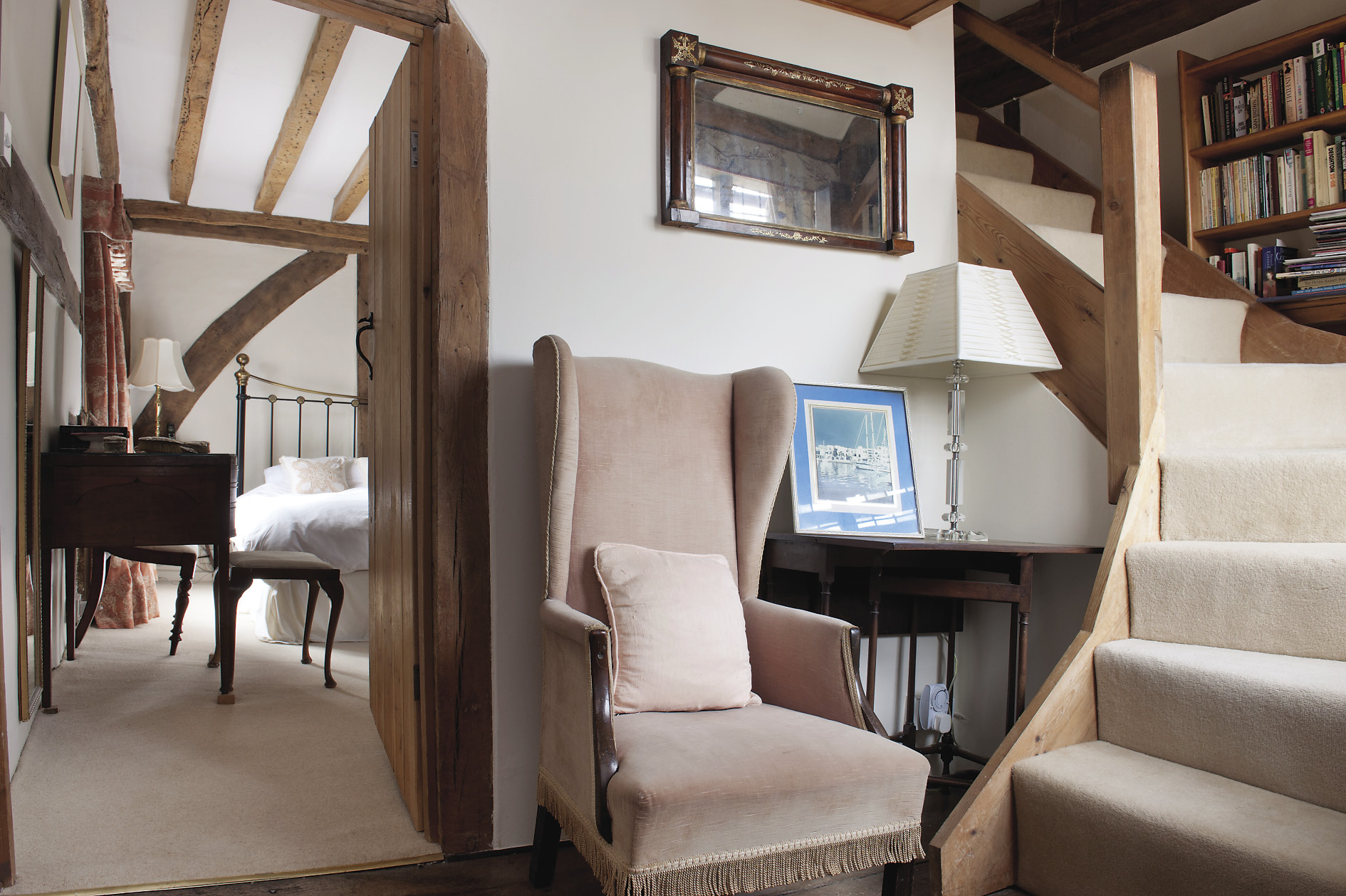
Entering the main bedroom, the floor slopes away at a tipsy angle, so all the furniture has been given its own bespoke leg props. An actress’s dressing table was another gift to Daphne from her mother-in-law
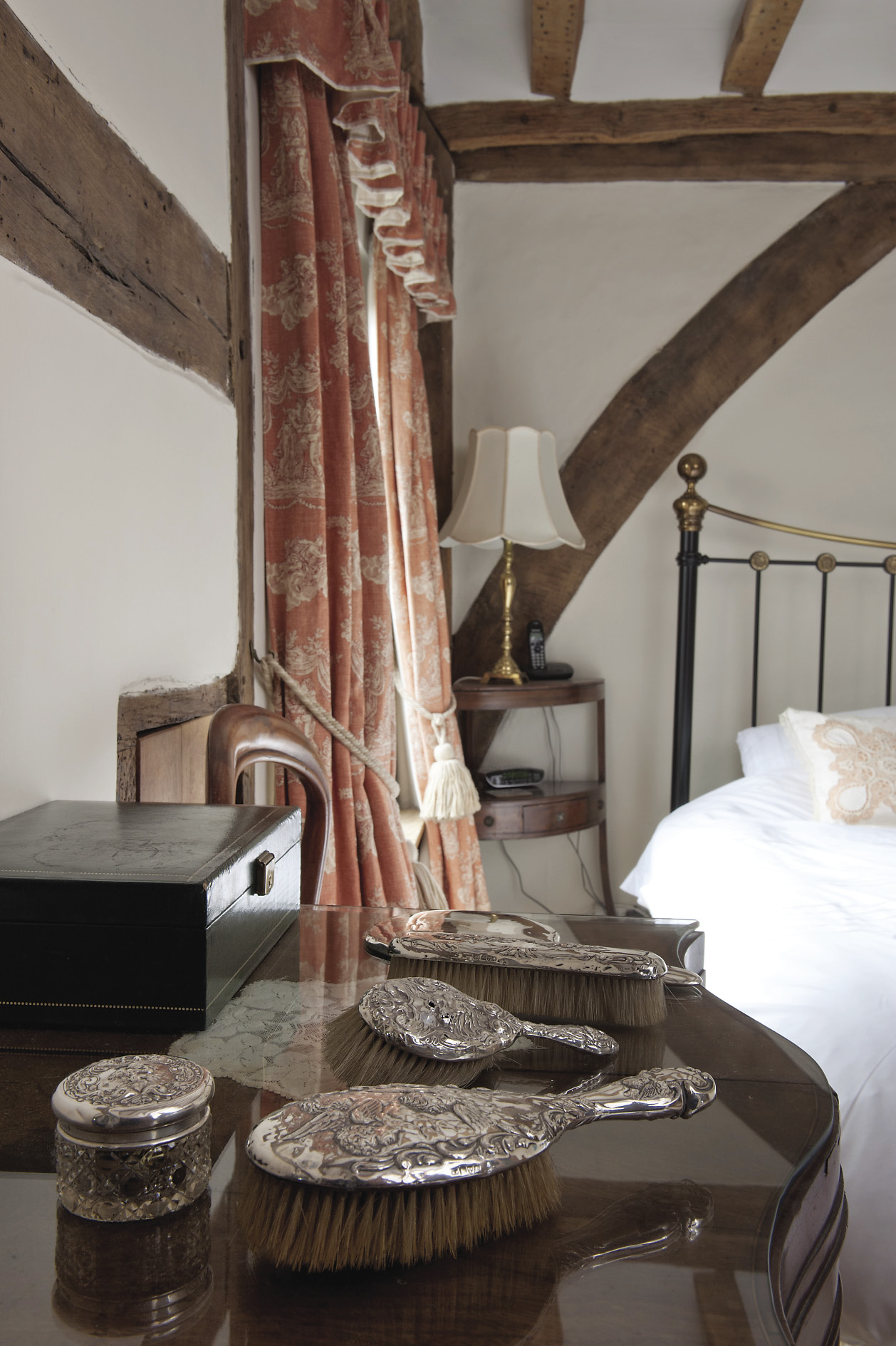
Daphne explains that the dressing table is from the 17th or 18th century
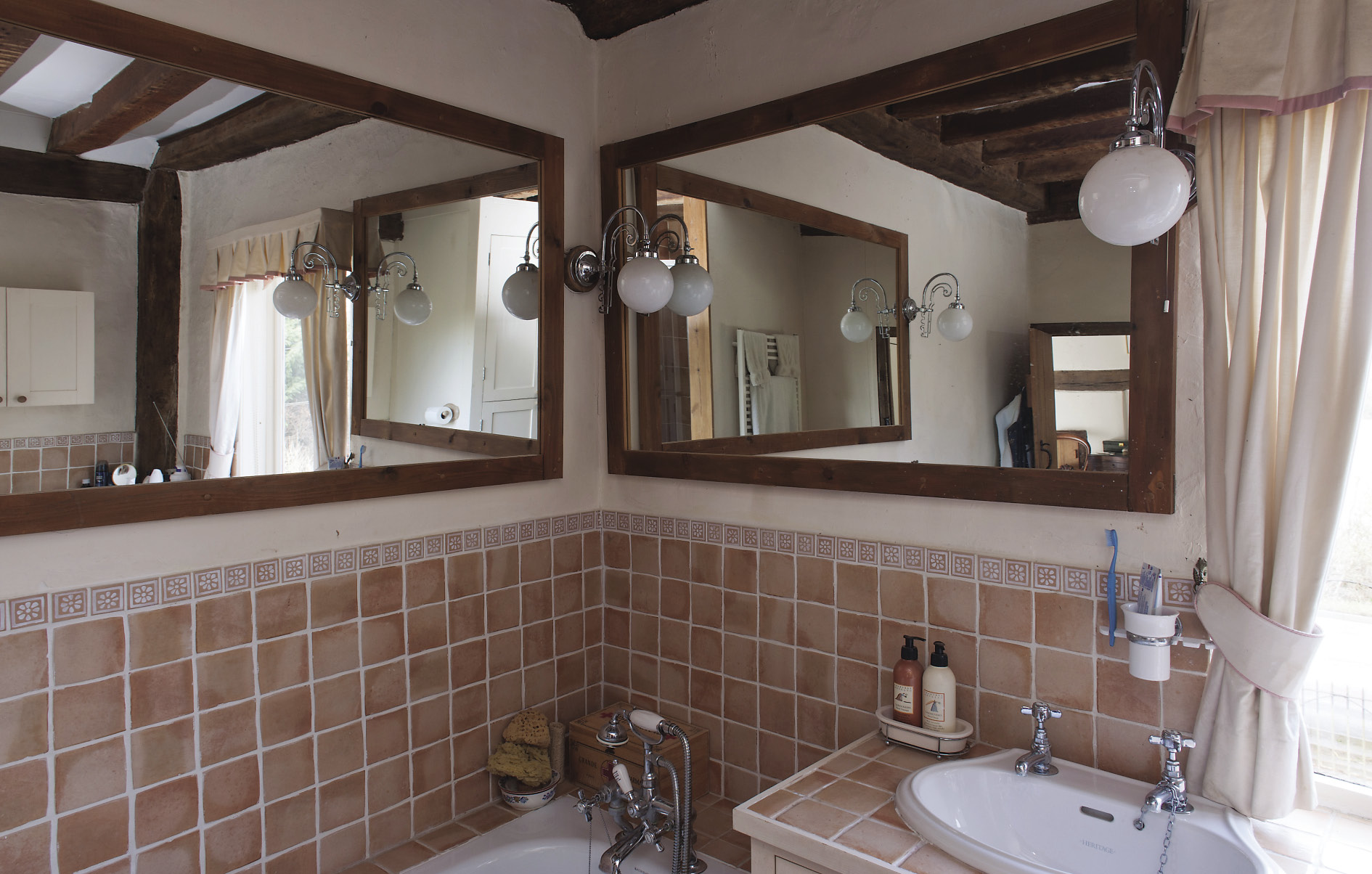
The master bedroom en suite
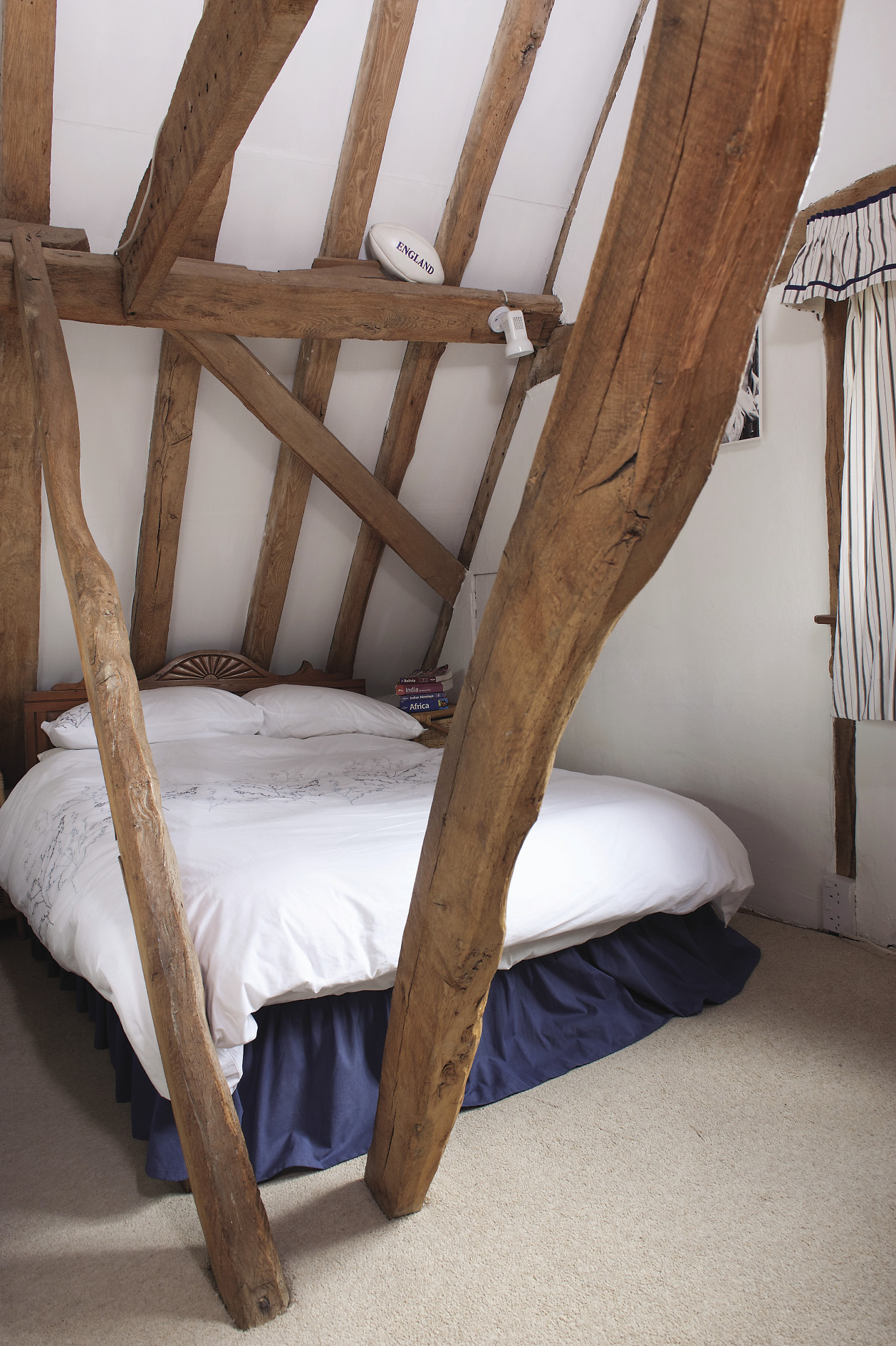
At the top of the house, the couple’s son’s room displays more of David’s craftsmanship. The floor here careers away from the window towards the door at such an angle that one leg of the bed is almost half the height of the other
- Bentley's Fine Art Auctioneers www.bentleysfineartauctioneers.co.uk Cranbrook 01580715857
- Jonathan Deacon 07977117853
- Kingsley Furniture Restoration 07812067372
- Mike Page 01580240340
- words: Claire Tennant-Scull
- pictures: David Merewether
- styling: Lucy Fleming
You may also like
The Art of Good Living
Set against the rolling landscape of the South East, this remarkable home blurs the line between private residence and public gallery. Driven by a passion for contemporary art and a desire to bring inspiring work beyond the confines of the...
Letting the House Lead
Hidden within its own private grounds on the historic Highfields Estate, Blackham Court Farmhouse offers a serene escape, enveloped by the beauty and tranquillity of the Sussex countryside For a few years now, there has been a quiet shift in...
Collected at the Oast
Room by room, year by year, artist Sarah Featherstone and her family have poured their creativity into the renovation of a large oast, transforming it not only into a family home, but a wonderful venue in which to display Sarah’s...