Charity founder Katie Dockery’s incredible home, designed by Richard Hawkes on the site of a former Qatari prime minister’s stud farm, has allowed her to create a safe and welcoming countryside retreat where she and her team tap into the innate emotional sensitivity of horses, and a host of other animals, to help troubled children and young adults
There are houses that impress and then there are those spaces that quietly recalibrate your sense of what a working home could be. Sitting proud above the village of Dormansland, the spot where the three counties of Surrey, Kent and Sussex meet, you might happen upon a series of discreet and yet refined agricultural forms. Low-slung, barn-like shapes, almost modest in their architectural language, slowly reveal themselves, step by step, to be something altogether more thoughtful and integrated: a residential house designed not simply to sit in the landscape, but to truly participate in it.
The journey here for owner, Katie Dockery and her family, has not been quick. In fact, it has taken the better part of a decade. What now feels like an effortlessly resolved home and stunningly landscaped garden, actually began as an unlikely proposition. A redundant Qatari stud farm and a cluster of utilitarian and unused agricultural buildings would not have suited most people. However, Katie had a vision, one that required both persistence and a degree of optimism that bordered on defiance as well as a huge dose of support from her husband Mark.
A keen horsewoman, Katie recalls riding past the site and was struck by the incongruity of such a beautiful setting, occupied by such uncompromisingly functional and sterile structures. It was the view however, filled with the changing seasons of one of the South East’s most beautiful areas, that anchored everything that followed.
Planning restrictions, inevitable in such a protected landscape, proved challenging. However, whilst many would have seen the repeated rejections as a hard finishing point, Katie saw it simply as another hurdle to be jumped.
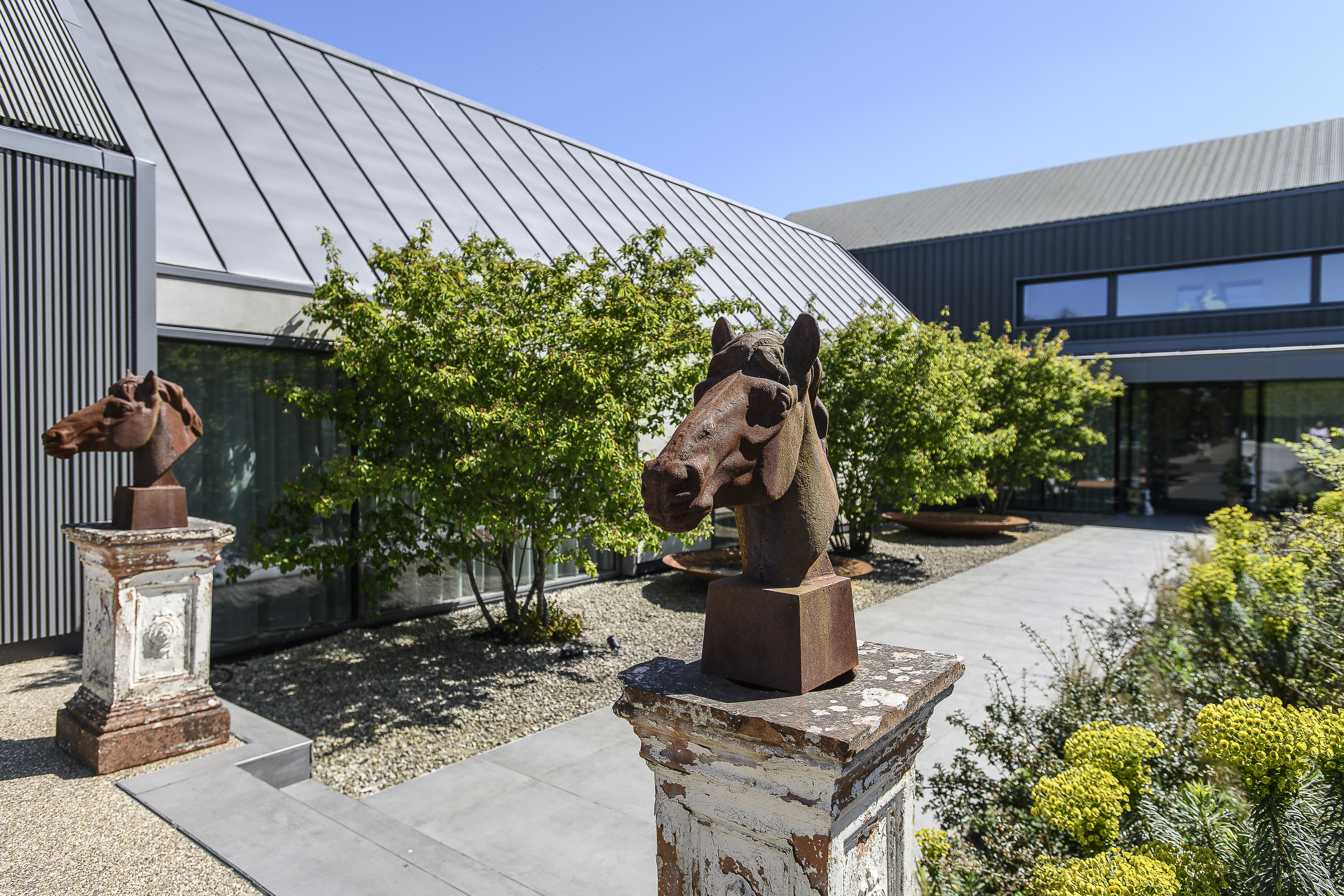
Working with architect Richard Hawkes, who Katie had originally seen on Grand Designs and is known for his sensitive and environmentally driven approach, the brief the couple set was clear: to create a home that felt embedded within its surroundings rather than imposed upon them. The resulting building, an entirely passive house, takes its cues from traditional agricultural buildings, with pitched roofs that echo neighbouring forms, its materials and palette deliberately restrained. From afar, it feels as though it has always been part of the landscape; only on closer inspection does its elegant and considered residential status finally reveal itself.
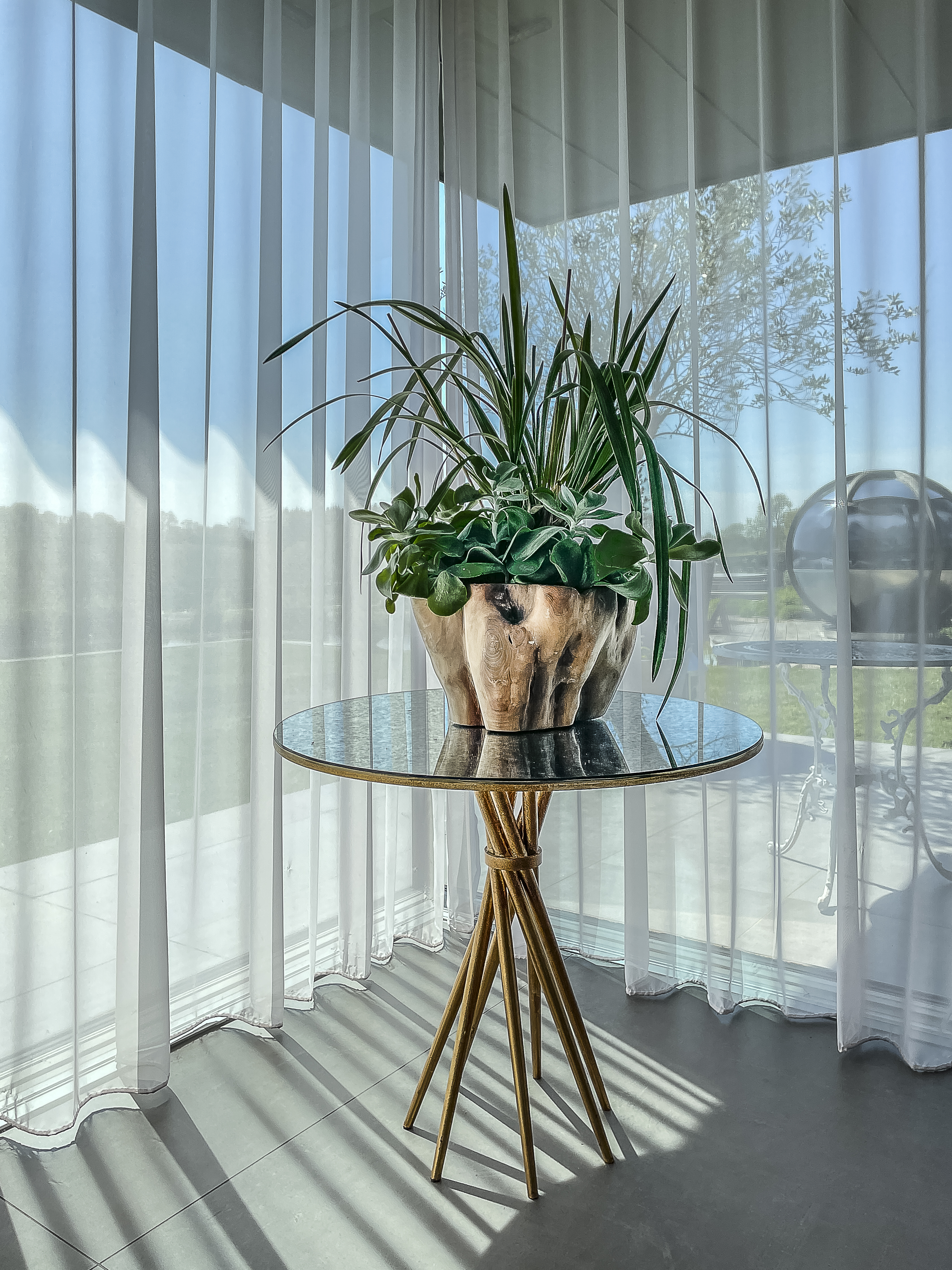
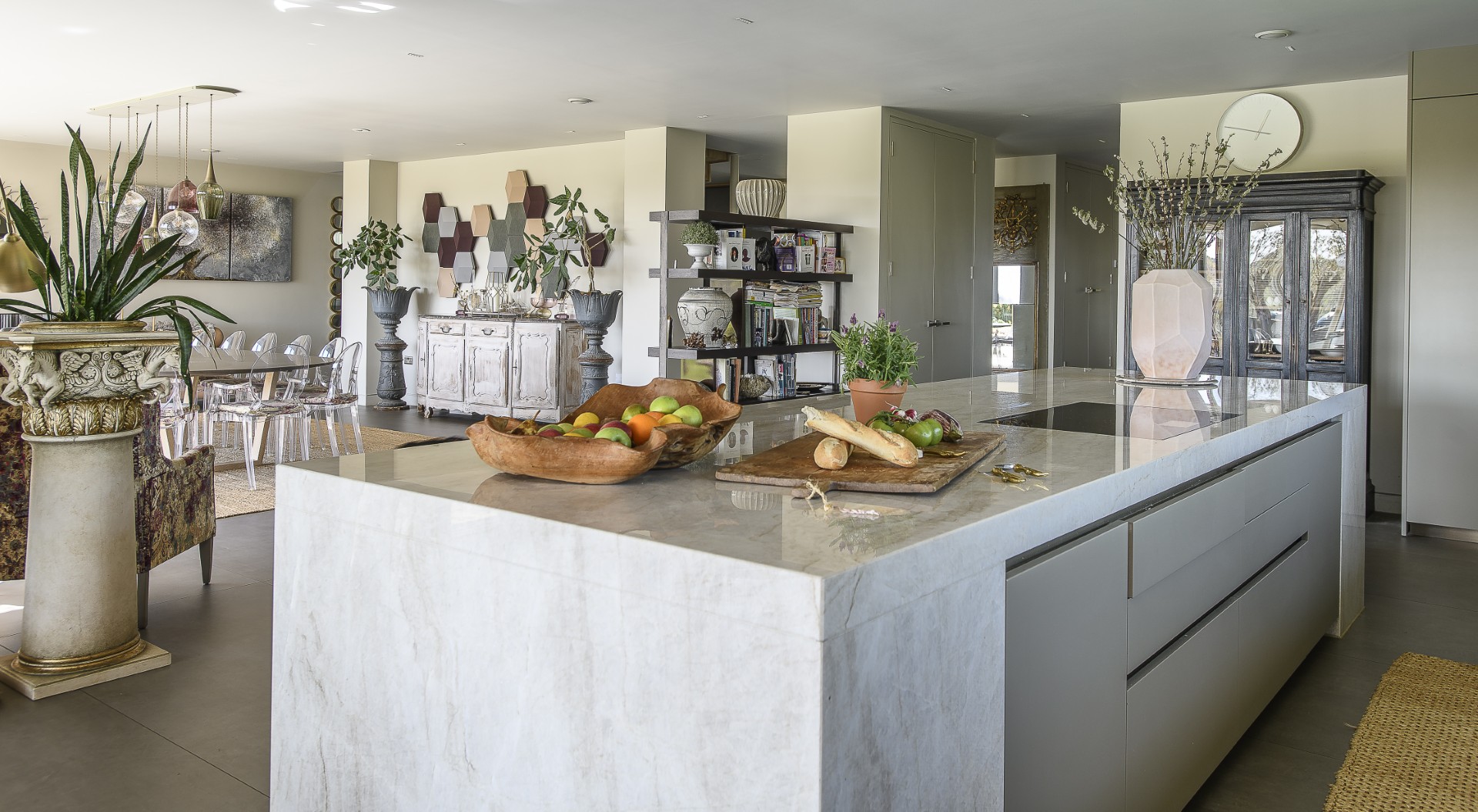
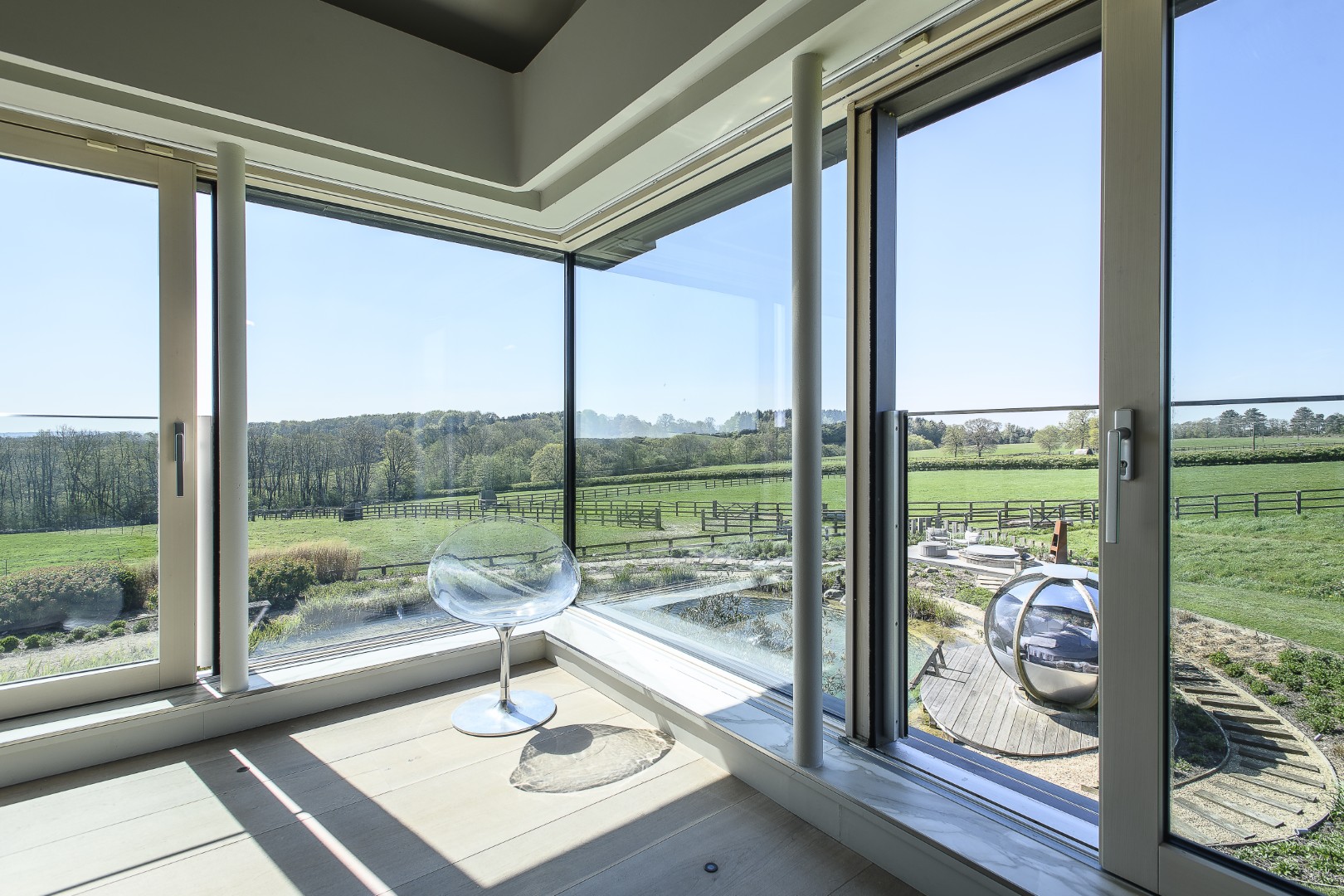
Glass plays a central role in this quiet dialogue between the house and its setting. Entire elevations dissolve into transparency, framing the landscape as a constantly shifting canvas keeping the conversation between the two elements always open. Whether at the Boffi kitchen island, seated at the dining table or sitting in one of the five bedrooms straddled across the two-floor space, the eye is instinctively drawn outwards. Light floods in, but more importantly, the landscape is never visually disconnected. “It was always about the outside,” Katie explains. “Nature is at the heart of what I do with my charity Viewpoint Centre and it was a key priority for the entire design and build process.”
The garden, or more accurately the surrounding scenery, extends this philosophy. A natural swimming pond, created by Gartenart, anchors the space, its softly contoured edges avoiding any sense of formality. Reeds, grasses and marginal planting blur the boundary between designed and wild, while the water itself reflects sky and movement in a way that feels almost tidal. It is not a pool in the conventional sense, but something far more immersive and a place where Katie swims all year round. Surrounding it, the planting has been handled with restraint. Rather than a decorative mix, Katie has opted for repetitions with blocks of euphorbia, salvia, echinacea and grasses that create rhythm without fuss.
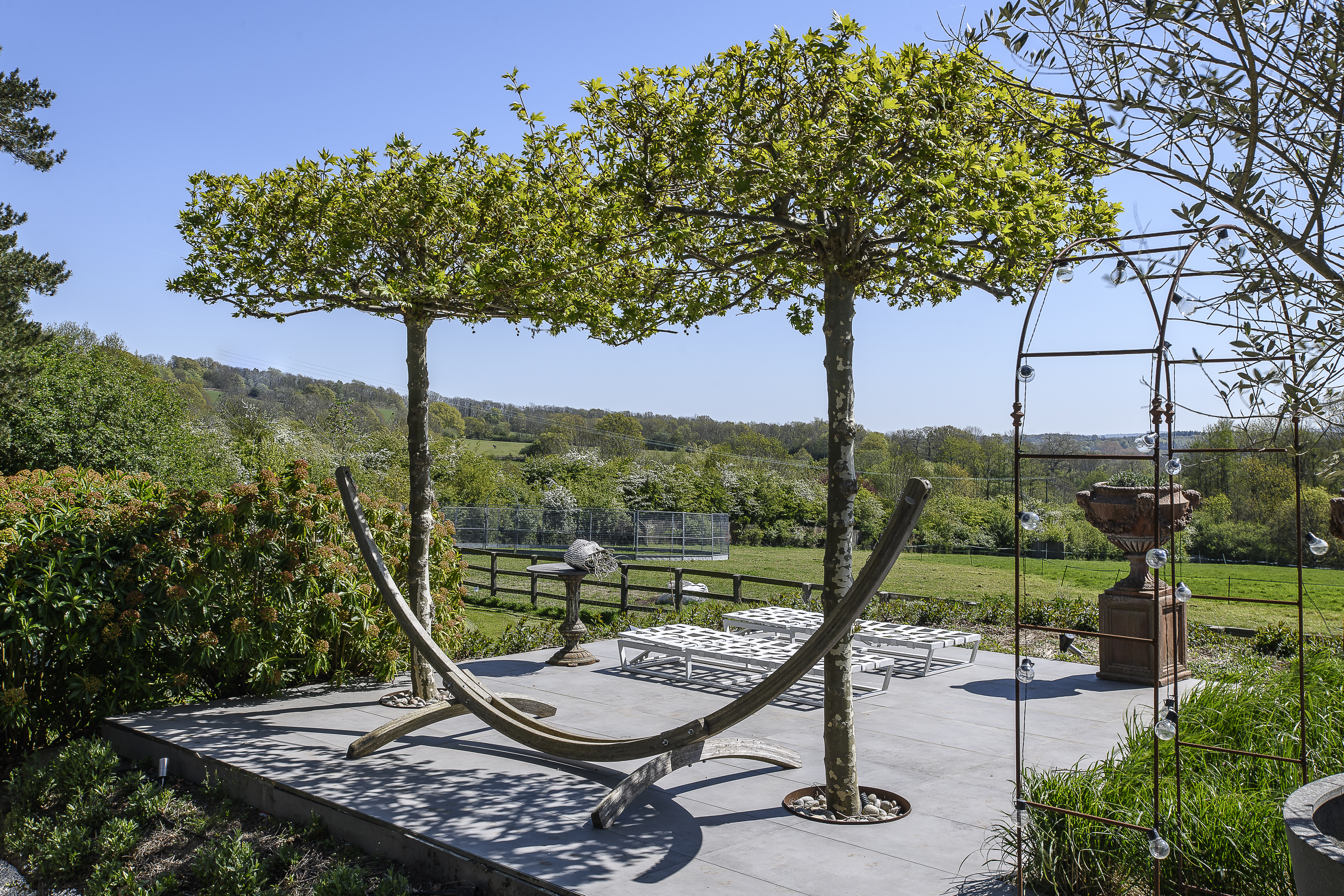
London plane trees provide structure and a canopy of shade across the terraces in the height of summer. Outdoor seating areas are positioned around the house, on the various and multiple terraces and decked areas, following the movement of the sun throughout the day, while a discreet hot tub and a pod-like outdoor structure extend the usability of the space beyond the warmer months and make the area wind resistant.
Beyond this immediate setting lies the paddocks and farmland that form the backdrop to Katie’s work with her charity. Founded in 2017, the organisation supports children and families facing complex emotional challenges, using equine-assisted learning and nature-based interventions. The connection between house and charity is not overt, but it is deeply ingrained.
The same principles that define the architecture, of openness, calm and a deep connection to the natural world and the beings within, underpin the family’s work (Katie runs the charity with her daughter). “Children and young people arrive, usually feeling very disconnected or overwhelmed; here, through interaction with animals and the natural environment, they begin to rebuild trust and confidence. It’s a beautiful thing to see and witness time and time again, where more standard therapy routes have often failed these families and their kids.”
Stepping inside the house, the architecture handwriting set down by Richard Hawkes continues its quiet conversation with the landscape. The palette is soft and deliberately understated, with walls painted in gentle, green-toned neutrals by Mylands and the almost transparent curtain voiles float in a soft lilac. Katie has made a deliberate decision to move away from any stark white, replaced instead with tones that absorb and reflect light more subtly. The effect is calming, almost cocooning, allowing the exterior to remain the dominant visual presence.
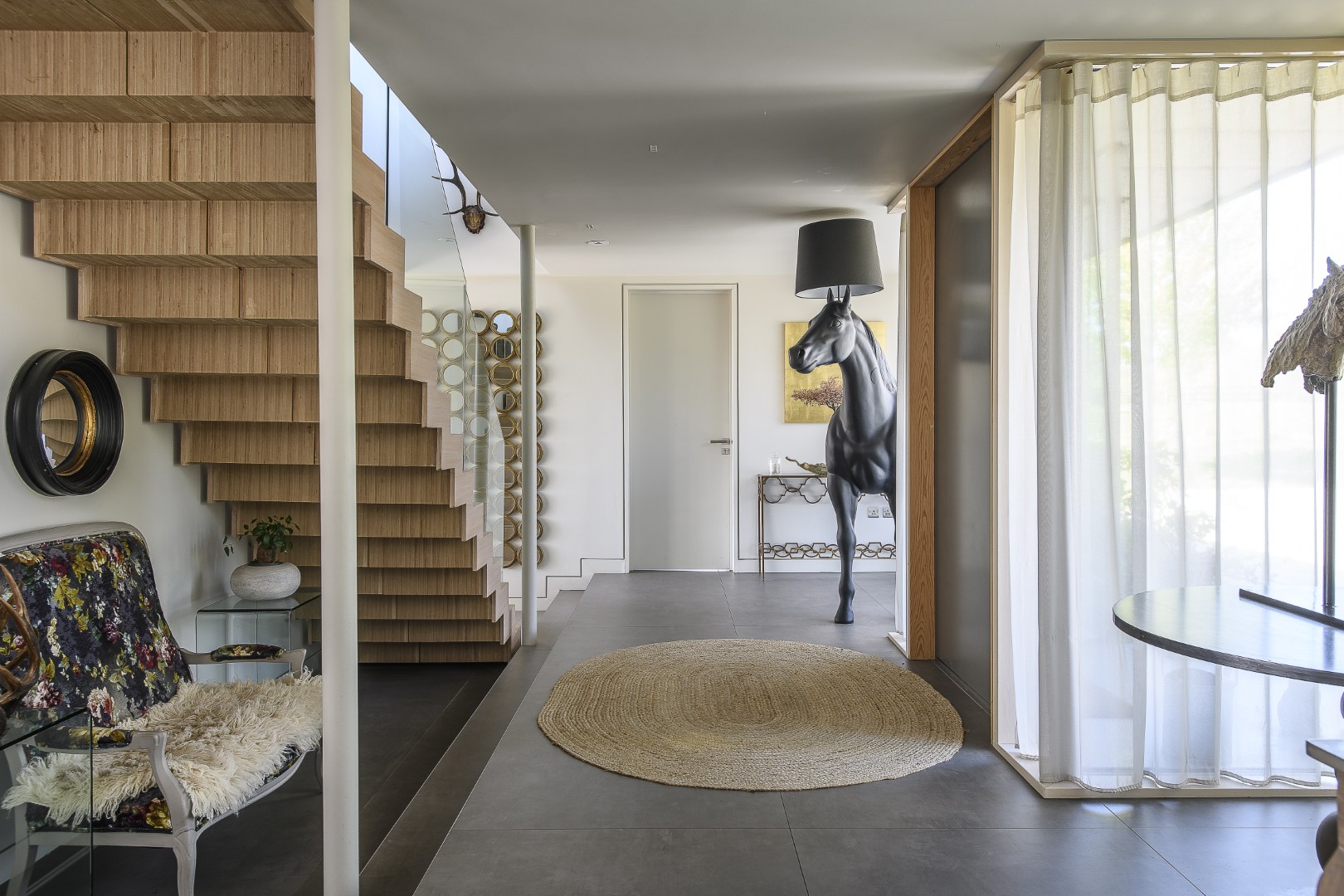
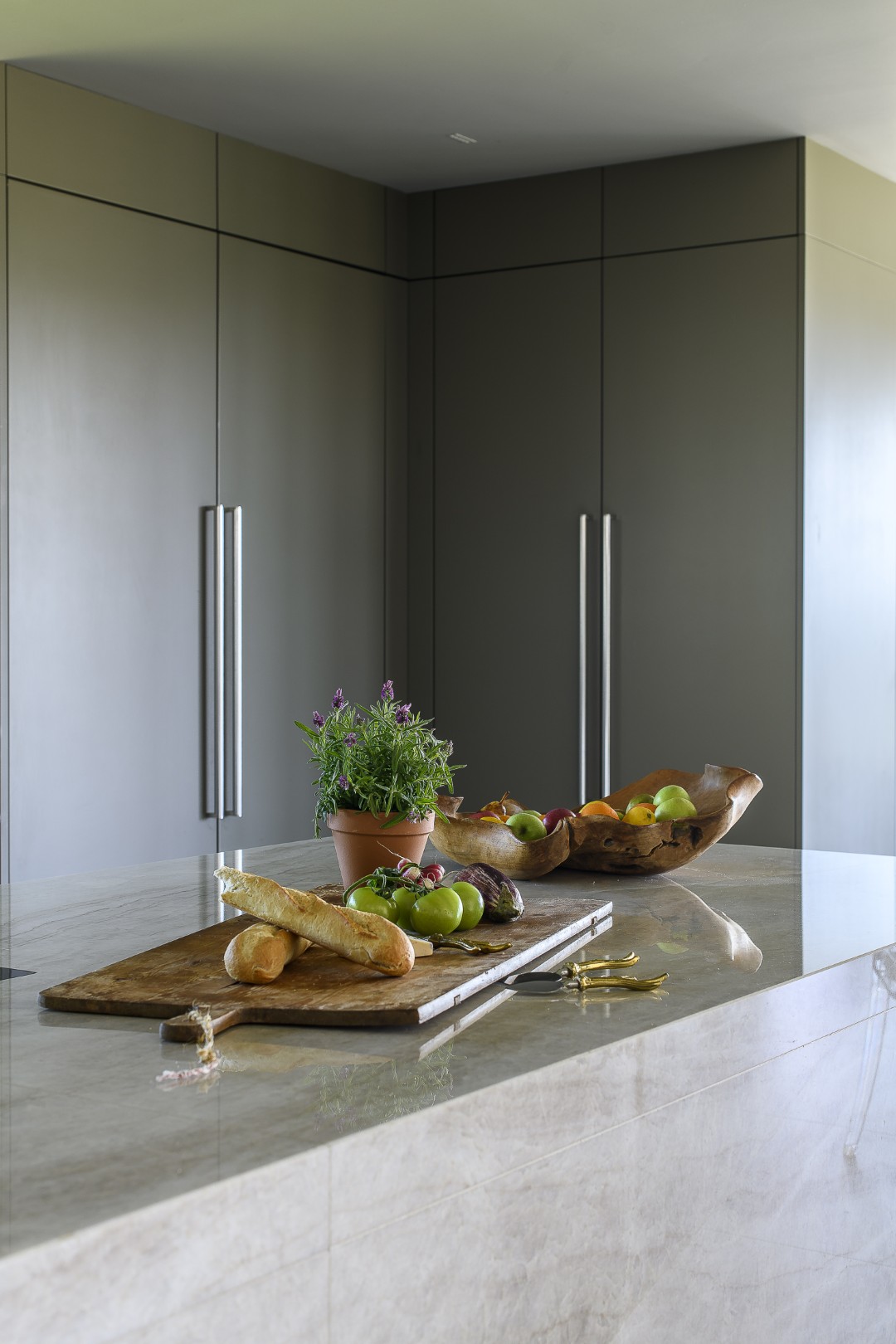
The layout is open and fluid, designed to accommodate both family life and entertaining. From the entrance, a subtle shift in level reveals the main living space, where the kitchen, dining and seating areas flow into one another. The modern kitchen sits confidently within this ground floor, its clean lines softened by layers of personal detail such as ceramics, books, artworks and objects gathered over time and location, as the family are keen travellers. It is both functional and quietly elegant, a space designed to be used rather than simply admired.
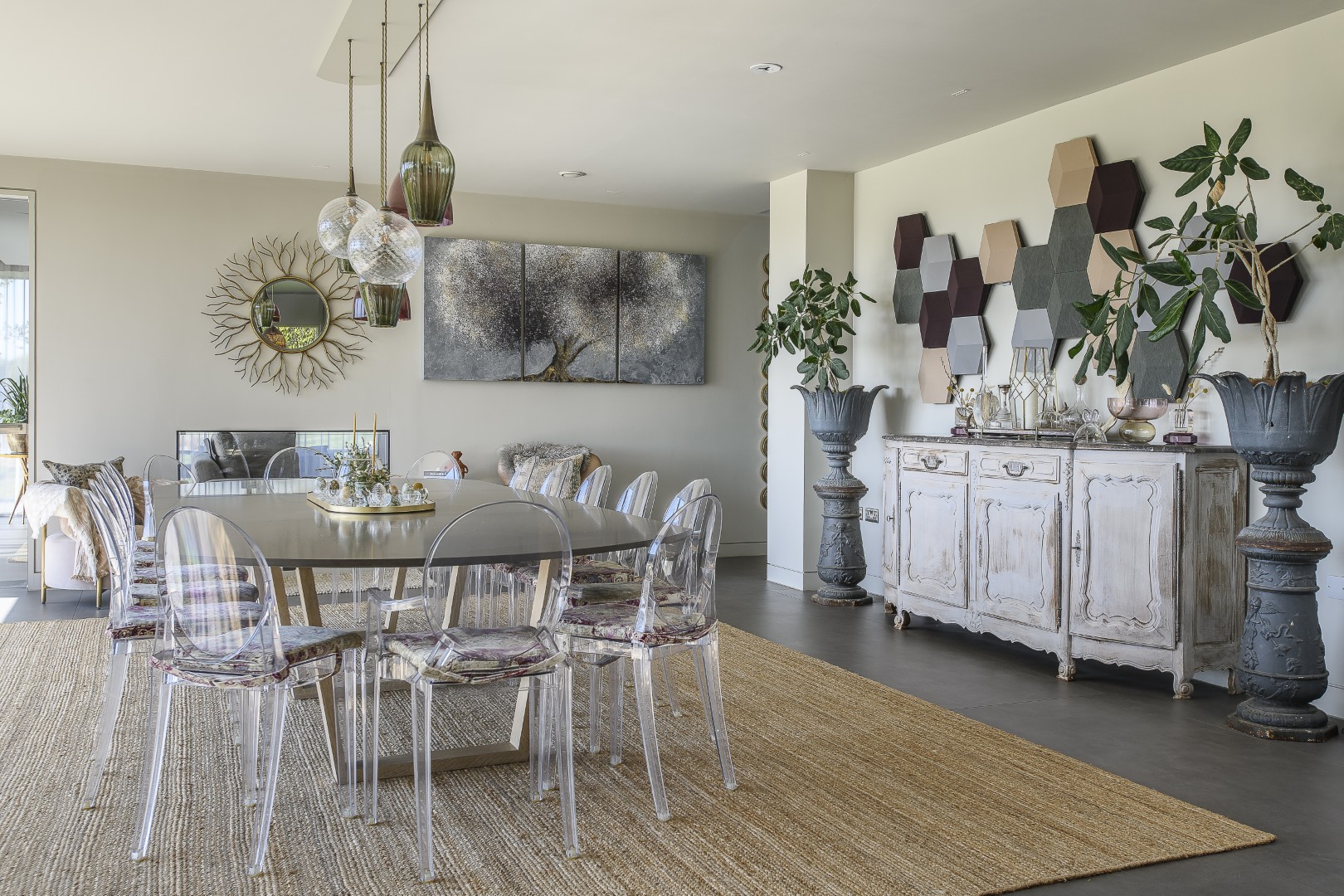
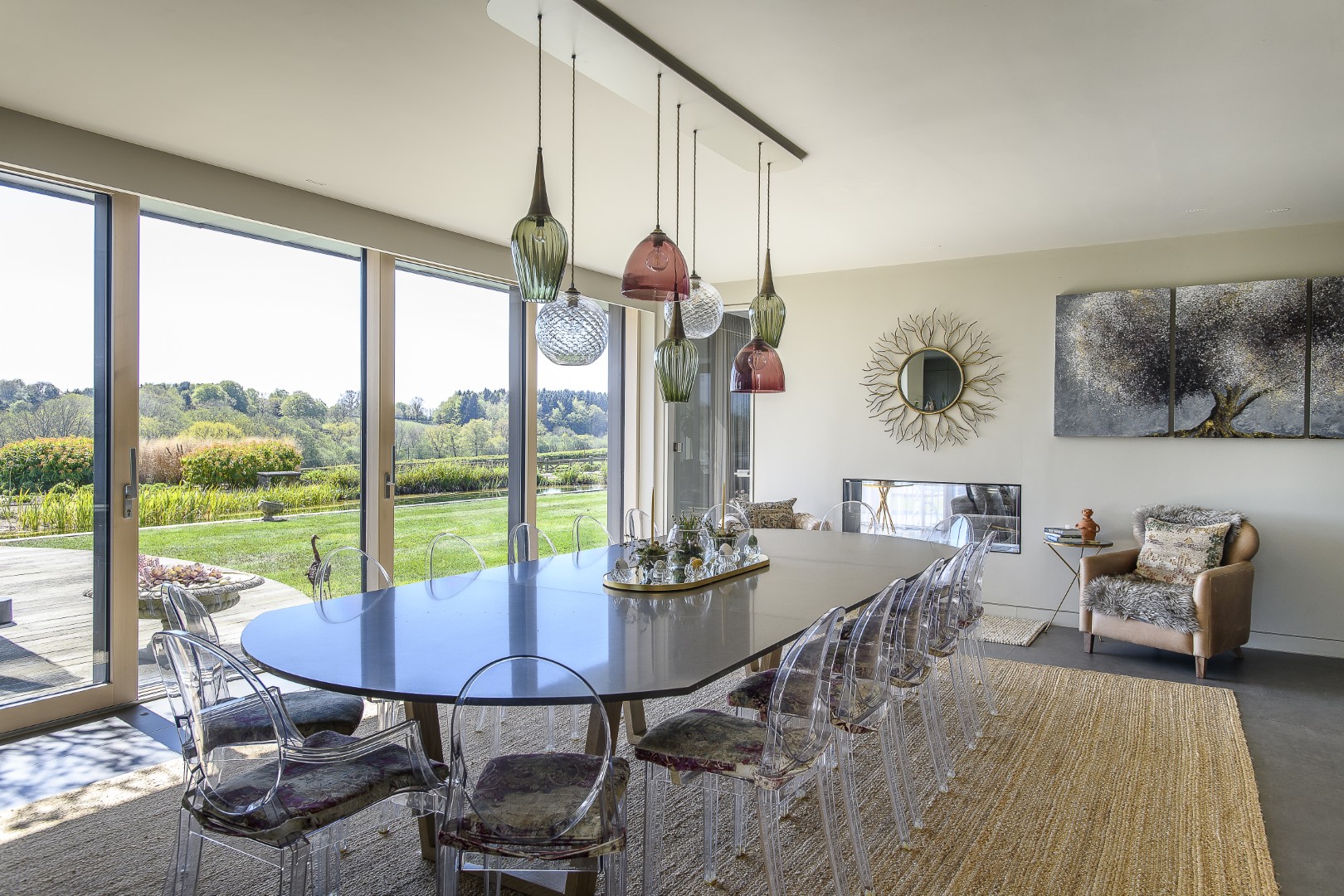
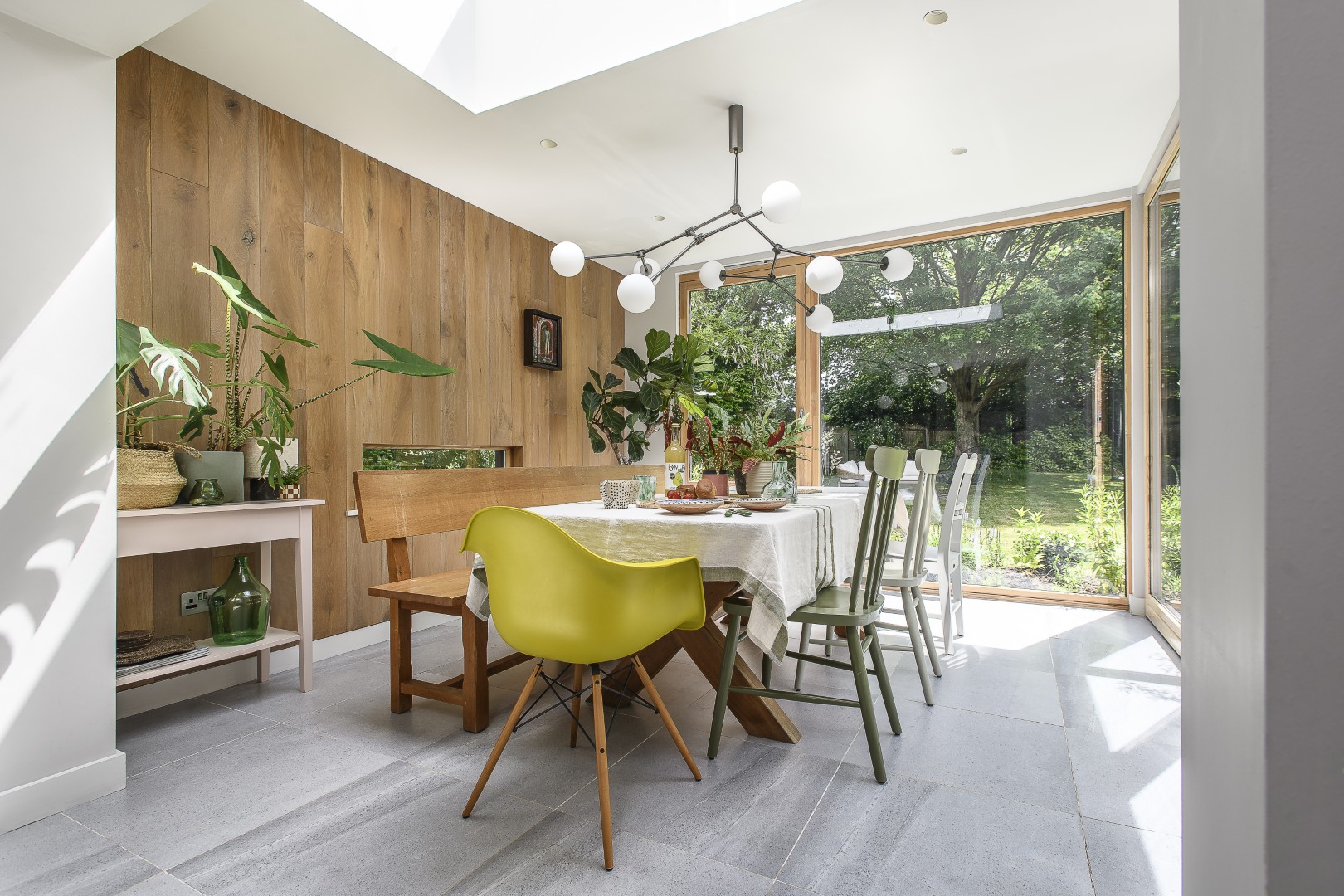
The dining area is anchored by a large table, surrounded by iconic Philippe Starck
Ghost chairs by Kartell that maintain visual lightness, while above, a cluster of glass pendants sourced from Rothschild & Bickers create a colourful focal point. Their varied shapes and tones introduce a sense of playfulness, catching and refracting light.
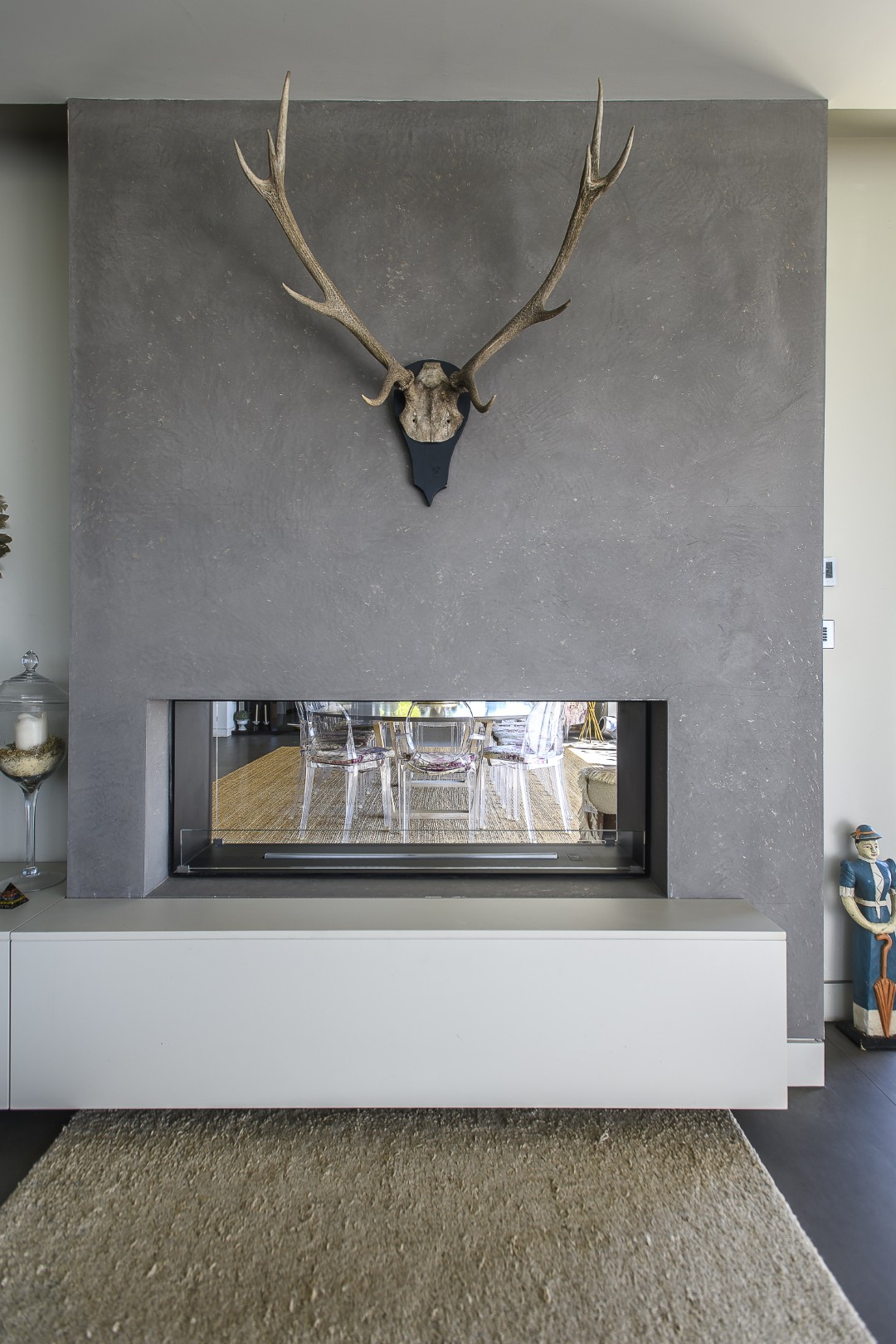
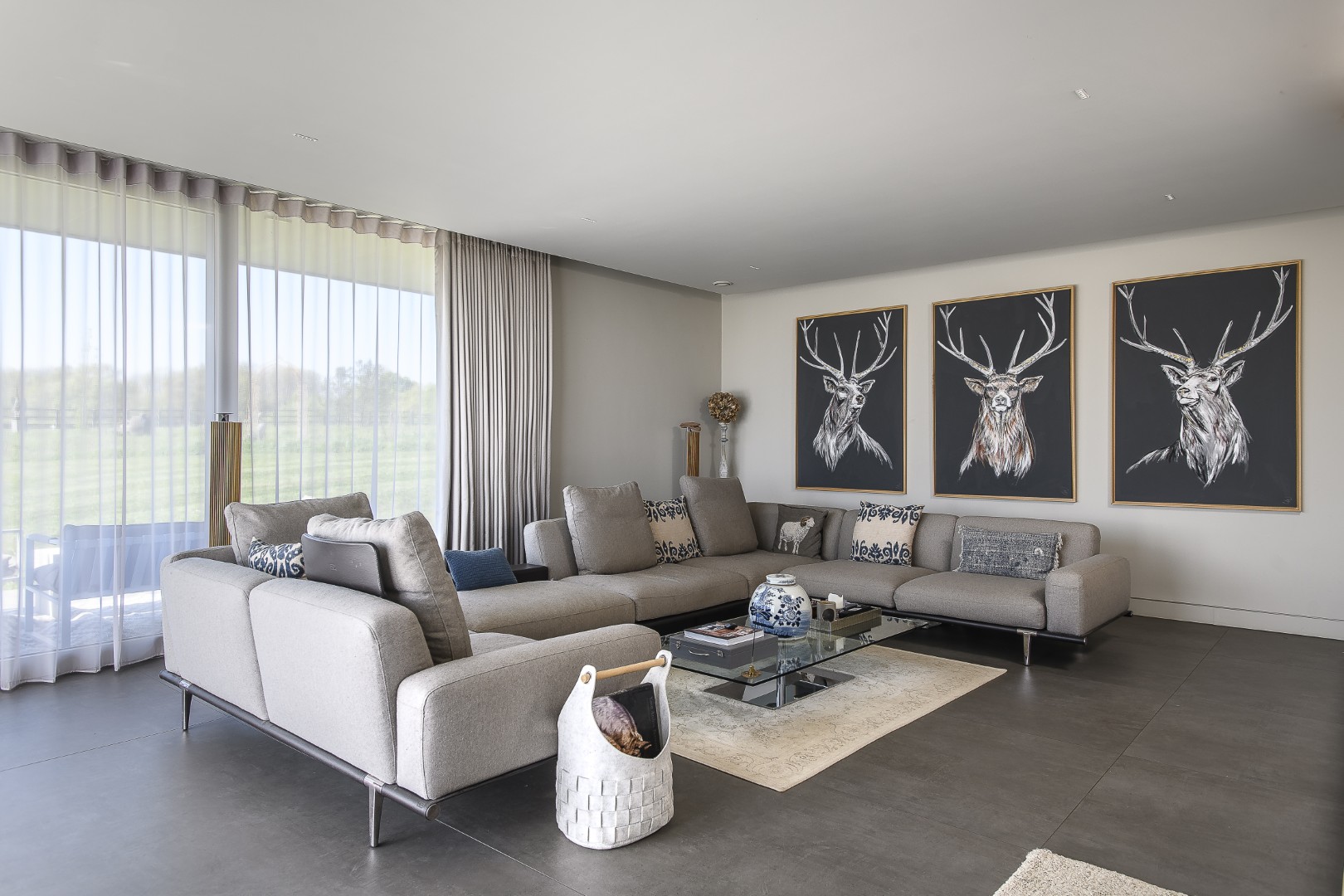
In the adjacent sitting area, a modular Poltrona Frau sofa offers both flexibility and comfort, its adaptable backrests allowing the space to shift. A double-sided bioethanol fireplace provides a sight line between rooms, its flickering flame adding warmth without interrupting the clean architectural lines. The result is a space that feels both contemporary and deeply comfortable.
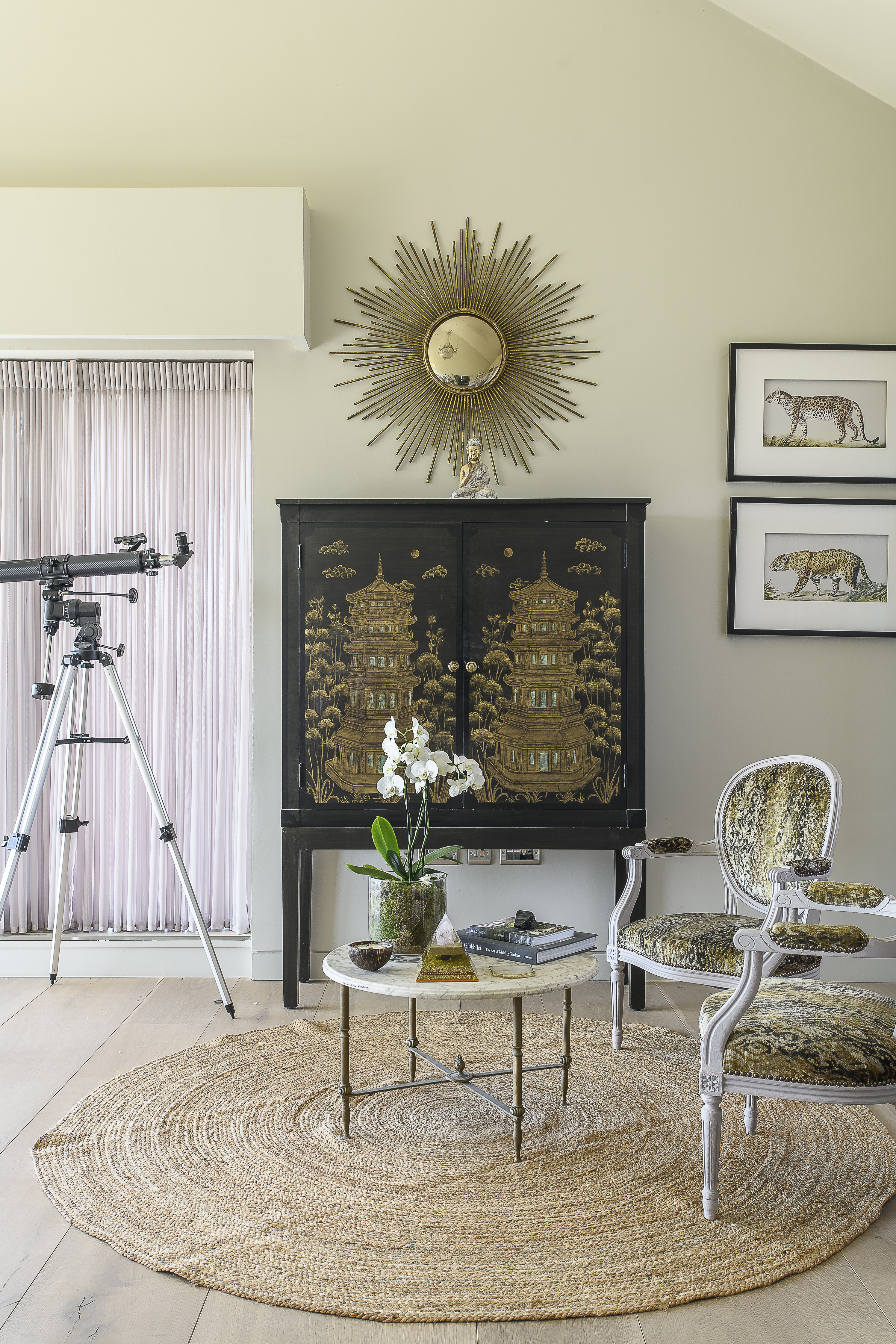
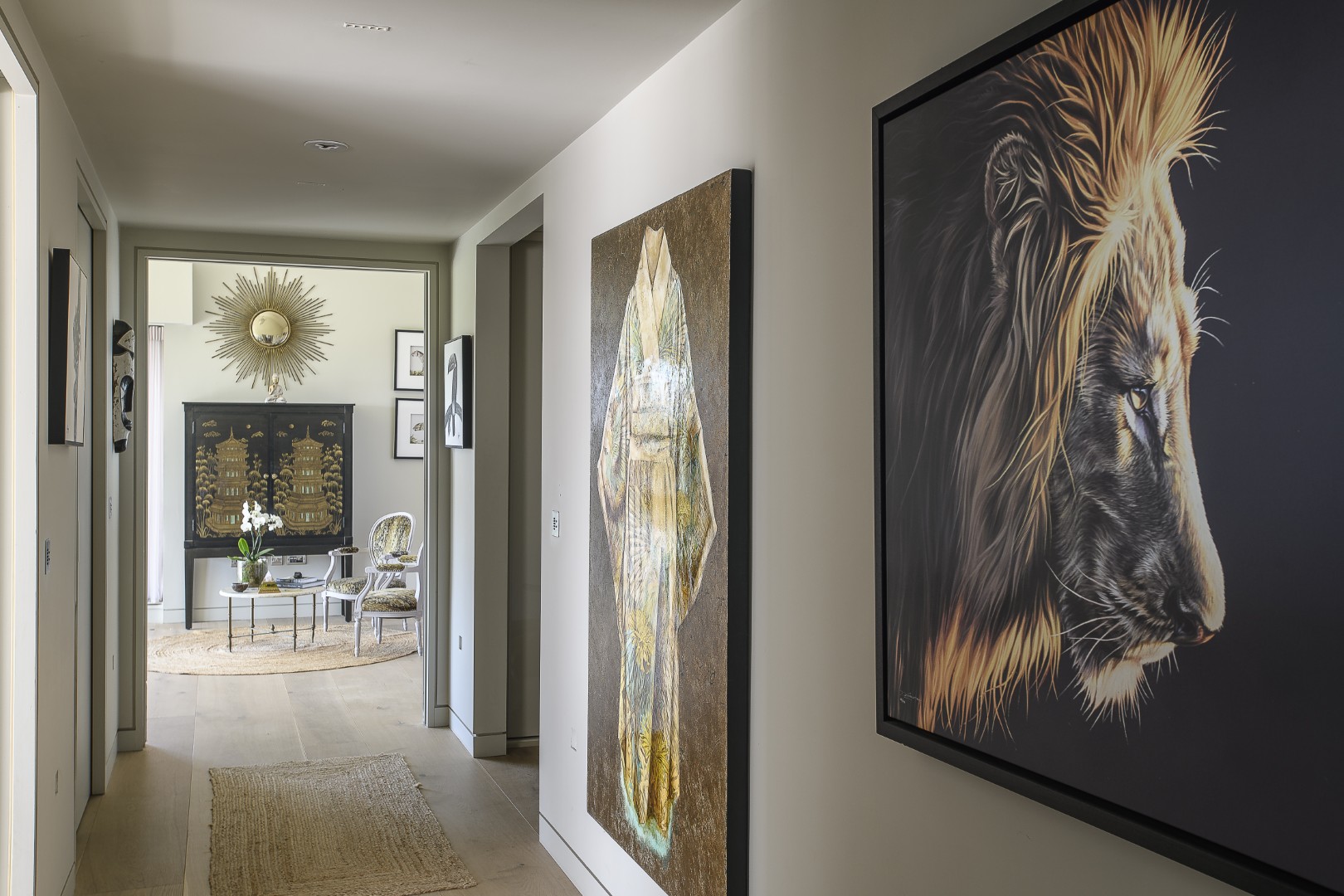
Throughout the house, Katie’s approach to interiors is instinctive rather than prescriptive. There is a clear love of mixing old and new as classic contemporary pieces from the likes of OKA sit alongside antique finds from Ardingly over the years. Katie, as well as being an expert in natural horsemanship, which sits at the heart of her charity’s work, had a previous life as an interior designer (as well as eight years as a Special Constable for Surrey Police). Her time in design has no doubt helped her to both visualise and then create the distinct and stylish zones that flow effortlessly throughout the house.
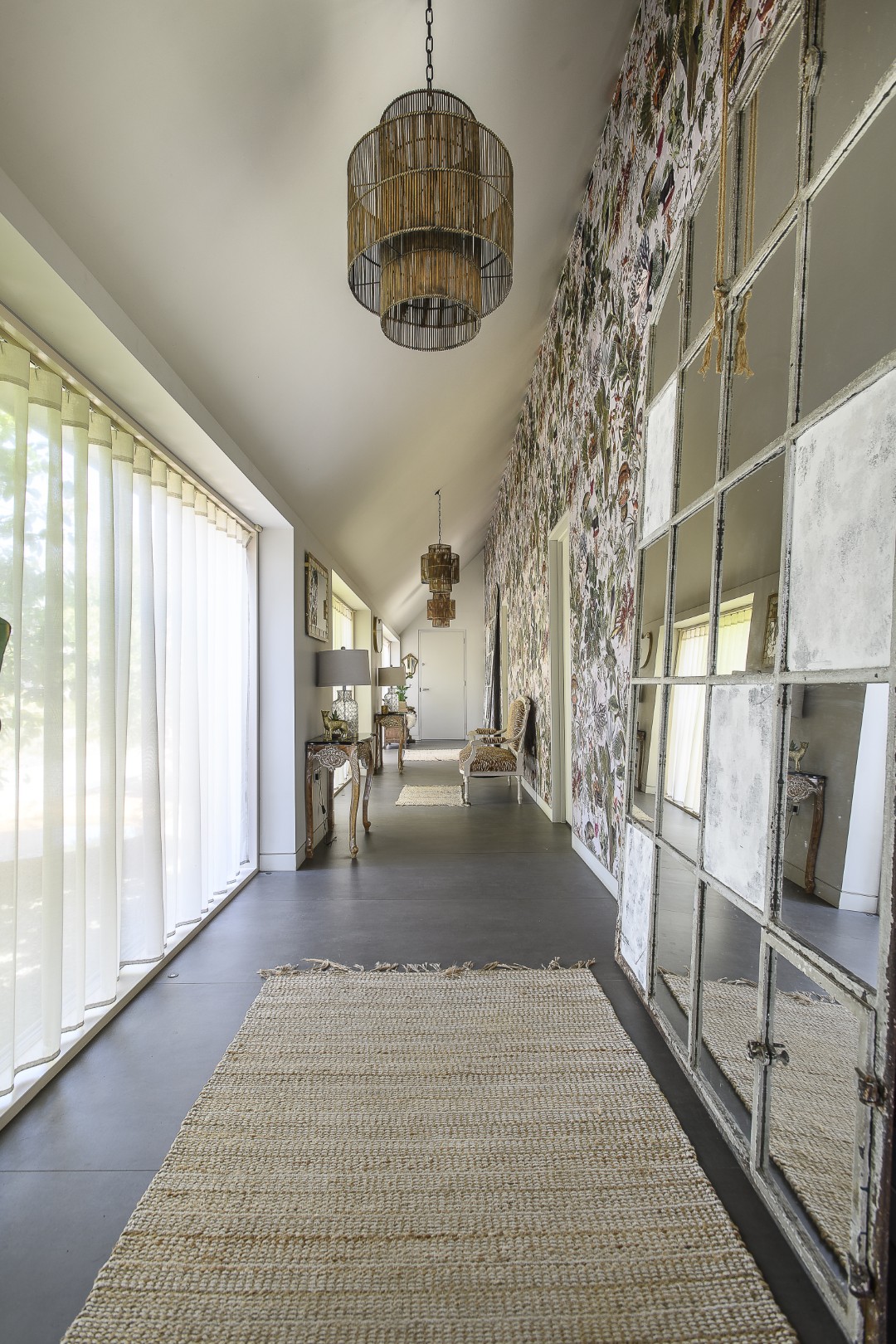
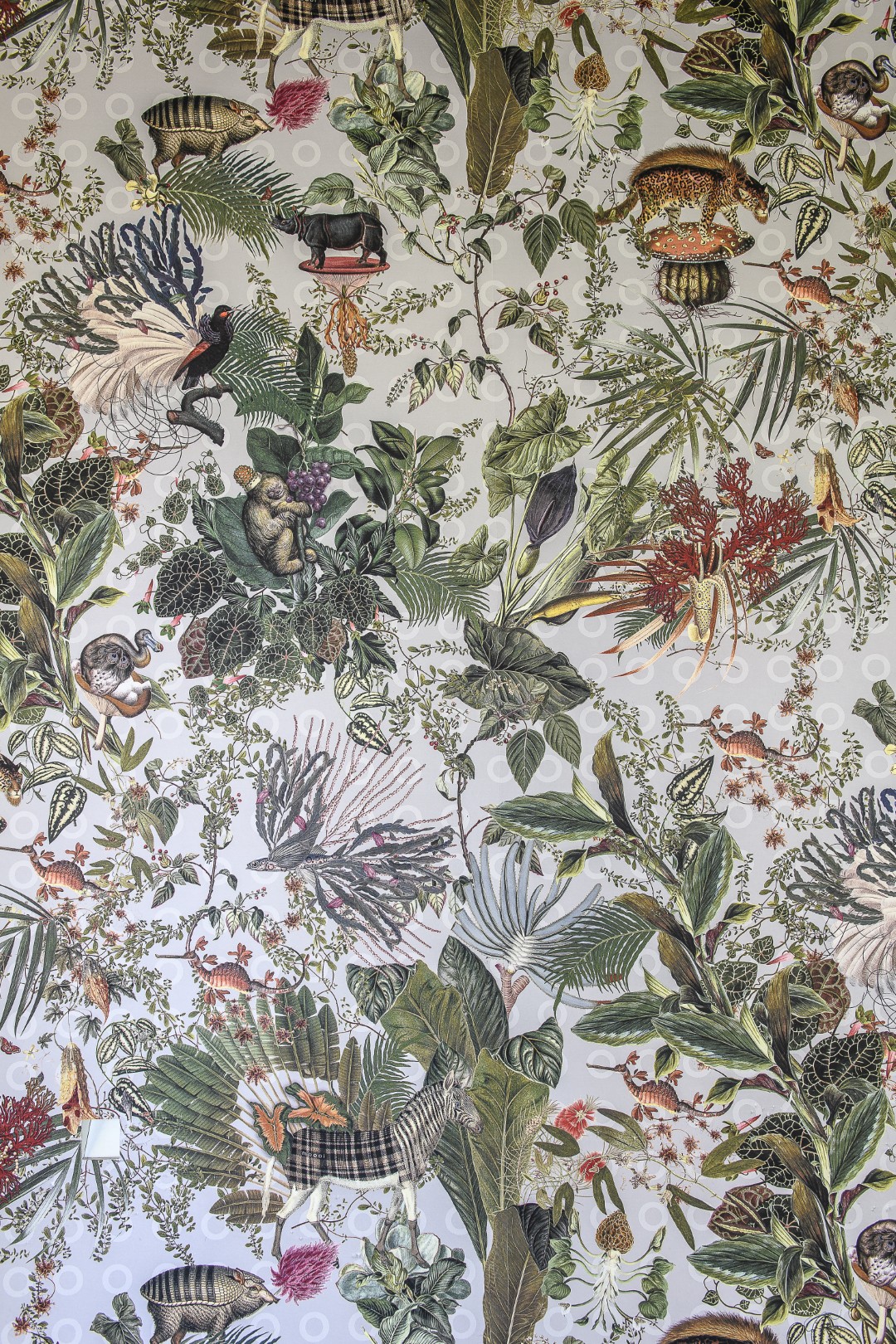
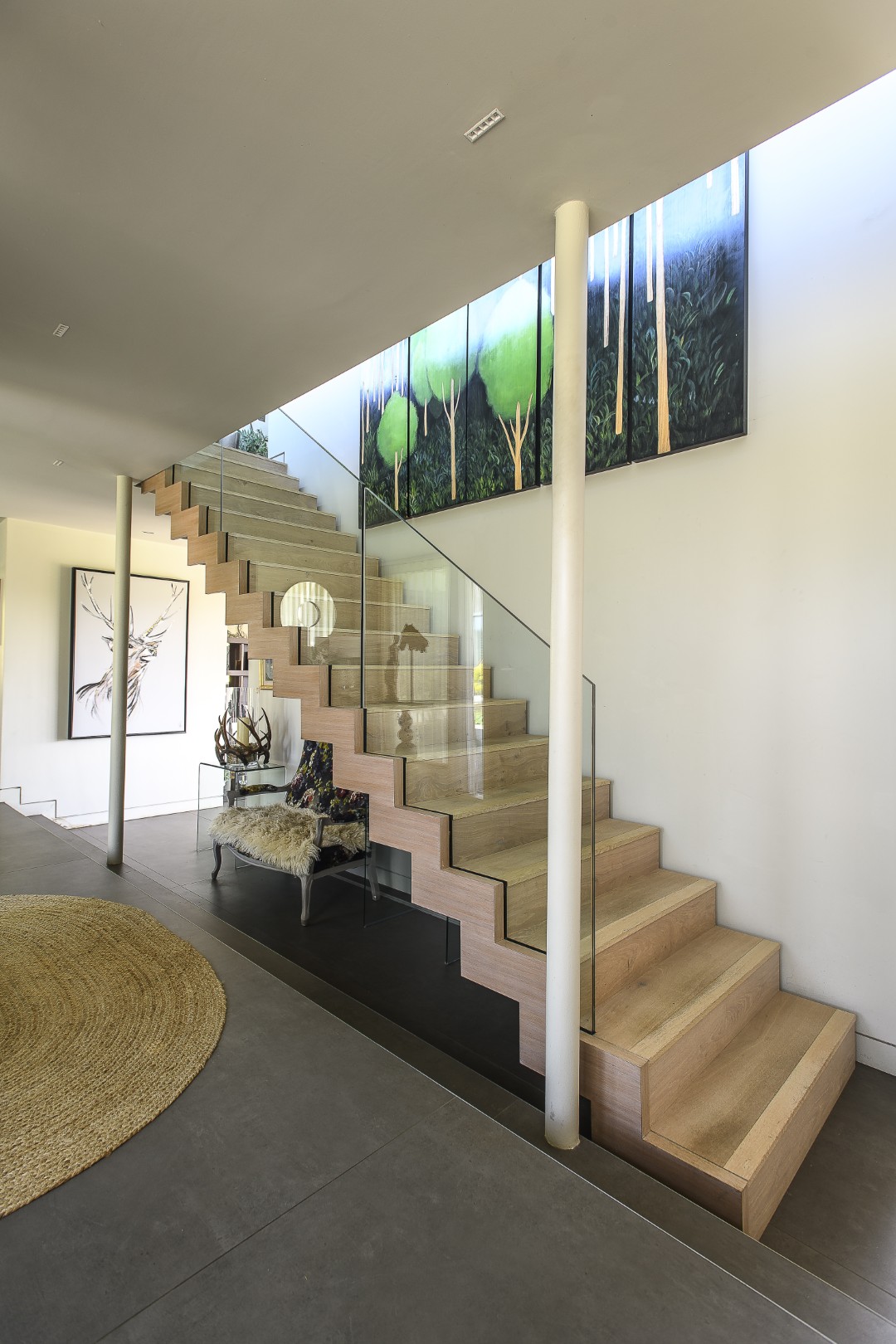
Textures and materials are layered to create depth. It’s a home that feels collected rather than ‘sourced’ and artwork plays a significant role. Many pieces reference animals and nature, a reflection of Katie’s wider world, while others have been commissioned or adapted to suit the space. In one room, a series of stag portraits have been tailored to sit comfortably within the scheme, while elsewhere, bold wallpaper from Moooi including the whimsical “Extinct Animals” design transforms transitional spaces into something more immersive and playful.
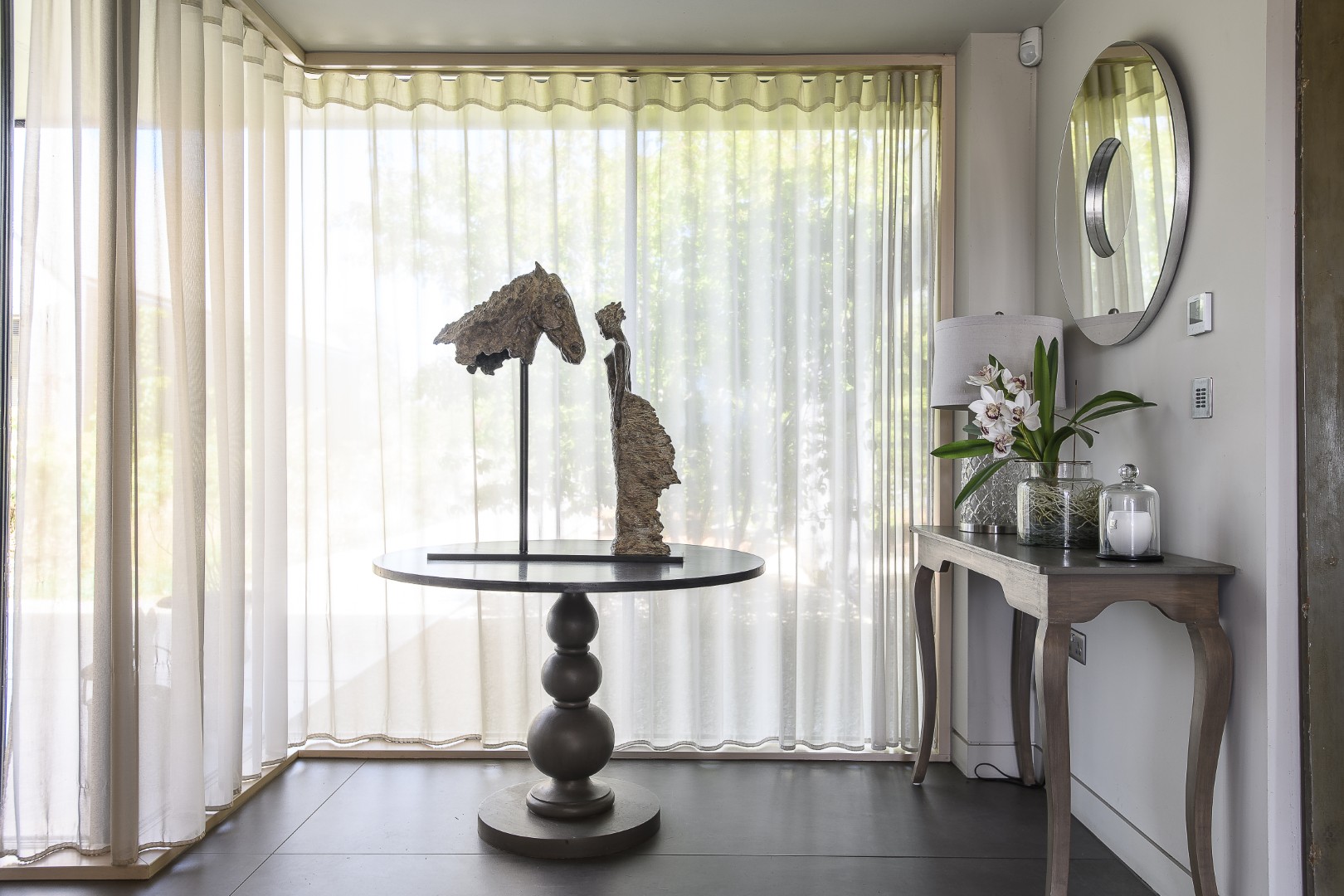
In the entrance hall, a striking large scale horse sculpture, also from Moooi, creates an immediate sense of fun as well as a visual nod to the equestrian life
that underpins so much of what happens here. It is a bold gesture, but one that feels entirely at home within the narrative arc of this house.
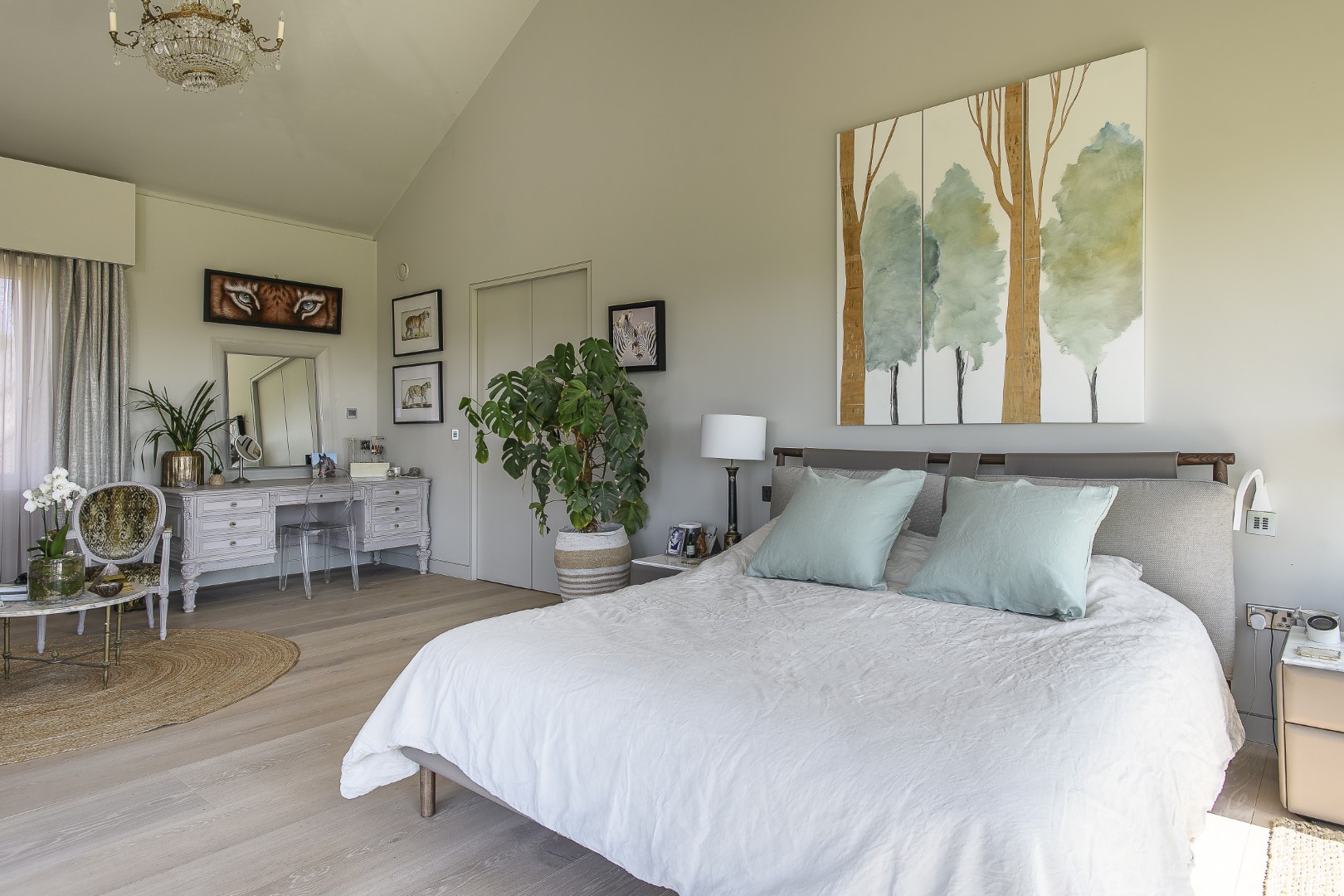
Upstairs, the atmosphere becomes quieter still. Bedrooms are simple and light-filled, with soft textiles and carefully chosen pieces creating spaces that feel restful without being overly styled. Curtains in muted tones filter the daylight, while large windows continue to frame views of the surrounding landscape.
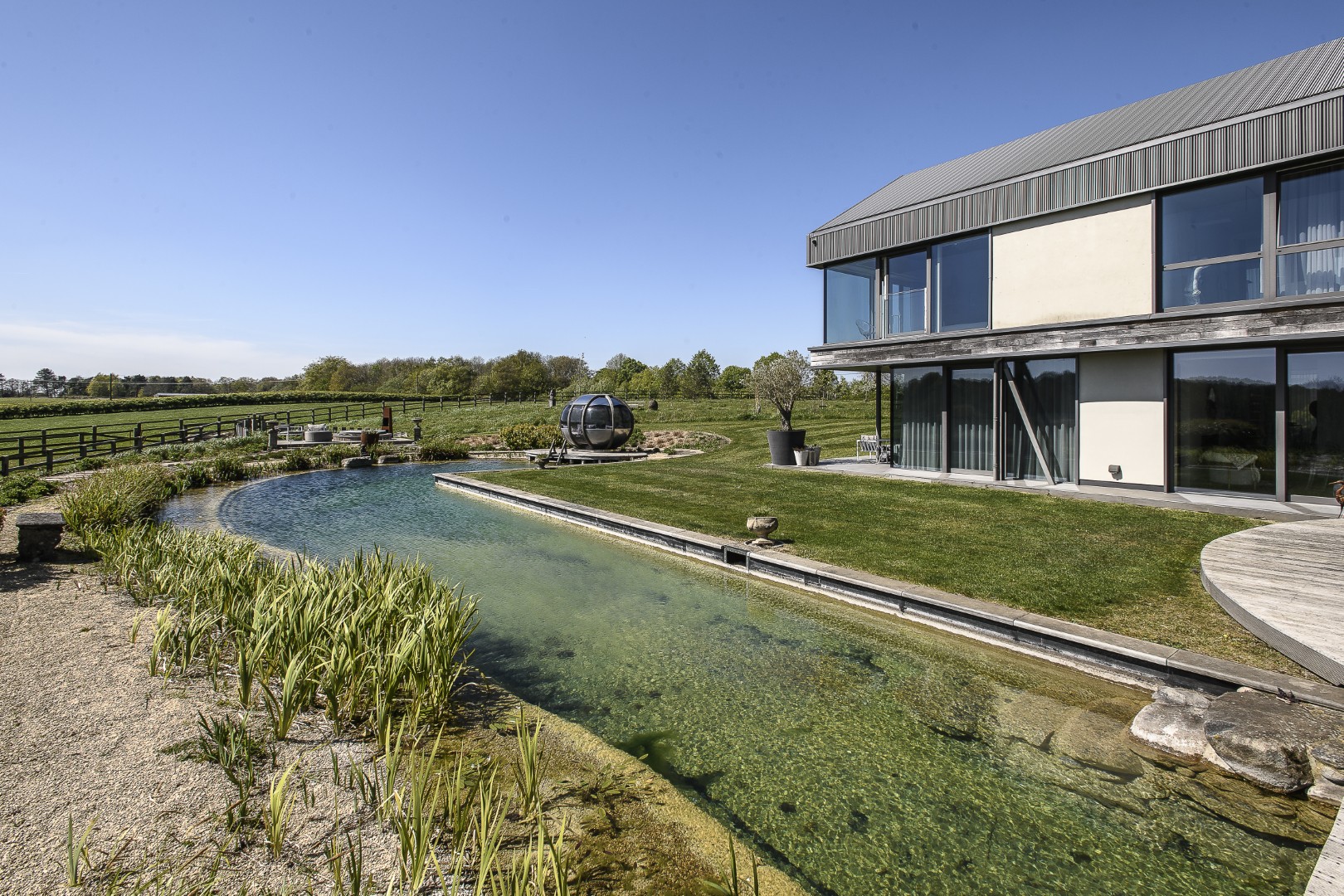
A natural swimming pond, created by Gartenart, anchors the space, its softly contoured edges avoiding any sense of formality. Reeds, grasses and marginal planting blur the boundary between designed and wild…
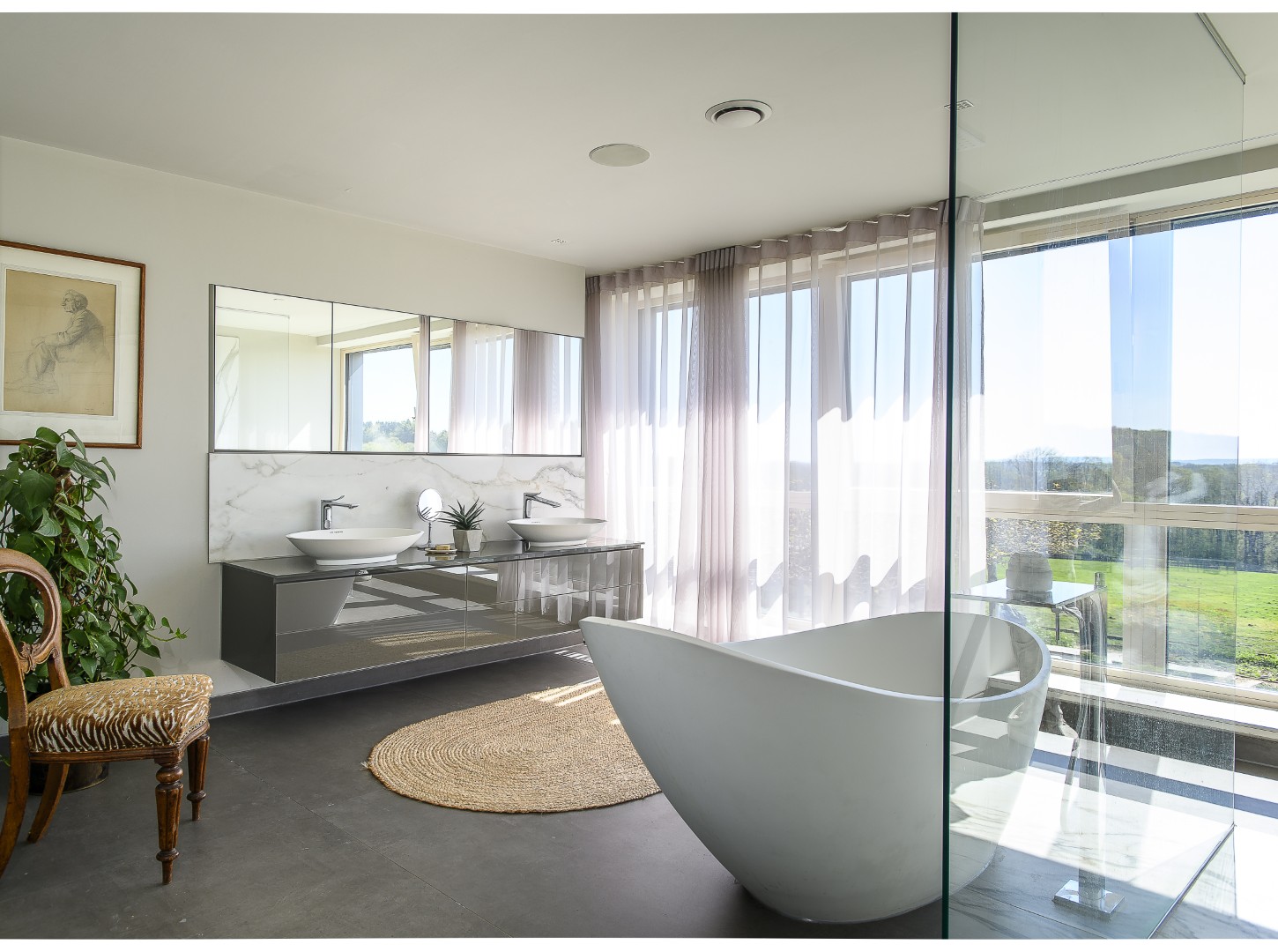
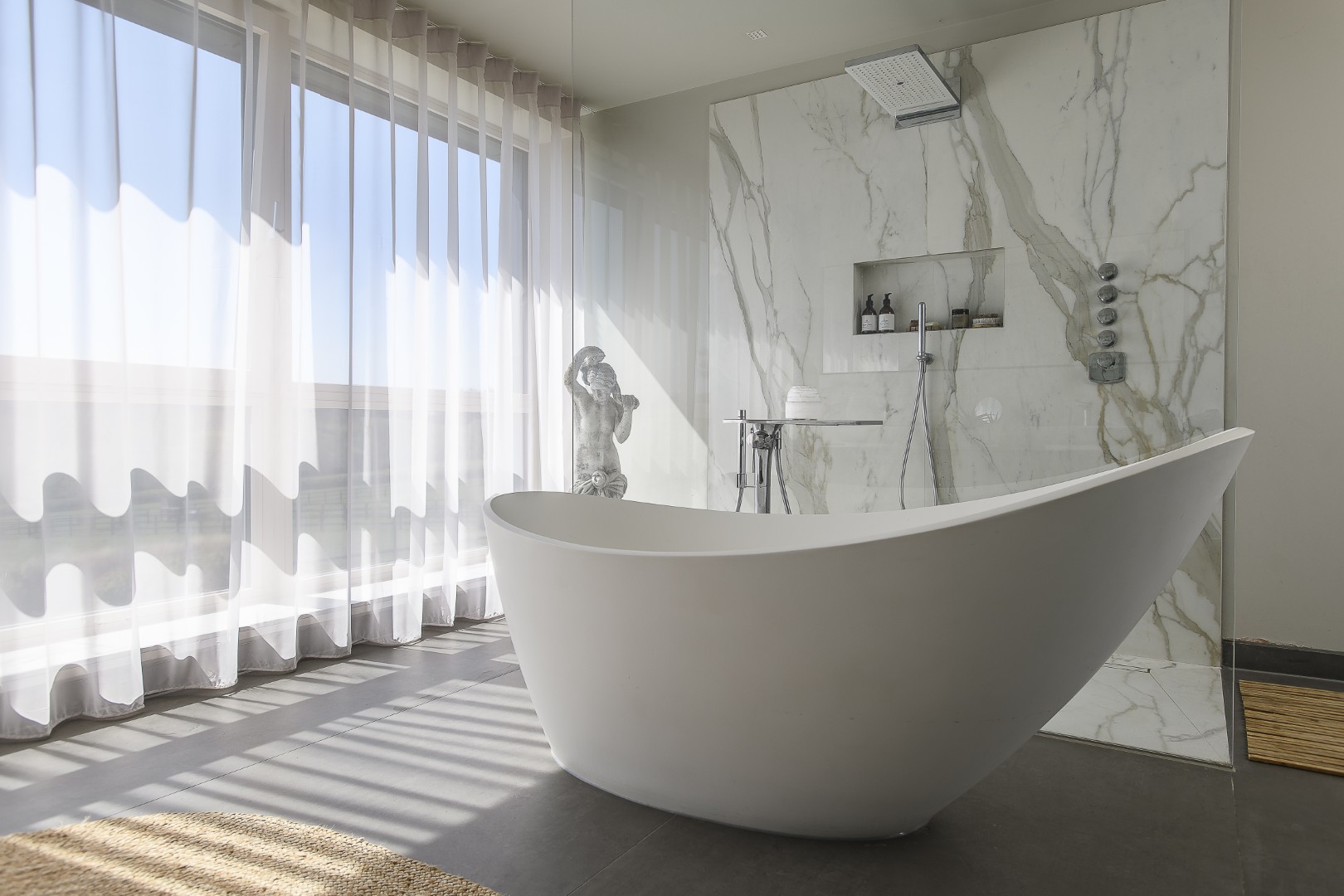
Bathrooms, fitted throughout by CP Hart, introduce a subtle note of understated luxury. Here, practicality has been carefully considered alongside aesthetics with generous storage, well-planned layouts and a mix of contemporary fittings and more traditional elements that create spaces that feel calm but also indulgent. It is a reflection of Katie’s pragmatic approach; beauty is important, but it must also work.
What is perhaps most striking about this house is the way it balances so many elements without ever feeling forced. Architecture, interiors, landscape and purpose are all intertwined, each supporting the other. It is not a house designed as a statement, but one that has evolved through experience, persistence and a clear sense of what matters.
There is, of course, an undeniable beauty to the location, but it is the life that unfolds alongside that gives it meaning. From huge family gatherings around the dining table to the quieter, more profound work of the charity taking place beyond the edges of its garden, this is a home that extends far beyond its physical boundaries.
As Katie reflects, it was never just about building a house. It was about creating an environment, a place that allows people, whether family, friends or those arriving through Viewpoint Centre, to feel something shift – and standing here, with the landscape stretching out in every direction, it is hard to imagine a place better suited to that purpose.
Address Book:
For anyone wishing to donate or find out more about the important work of Viewpoint Centre please visit viewpointcentre.org or viewpointhub.co.uk corporate programmes for businesses who are looking to create transformational training for their staff set within this most magical of locations, whilst also supporting the charity.
You can see more of Richard Hawkes’ projects at hawkesarchitecture.co.uk
Boffi boffi.com/en/
CP Hart cphart.co.uk
Gartenart gartenart.co.uk
Moooi moooi.com/uk
- words: Antonia Deeson
- pictures: David Merewether
- location: Dormansland
You may also like
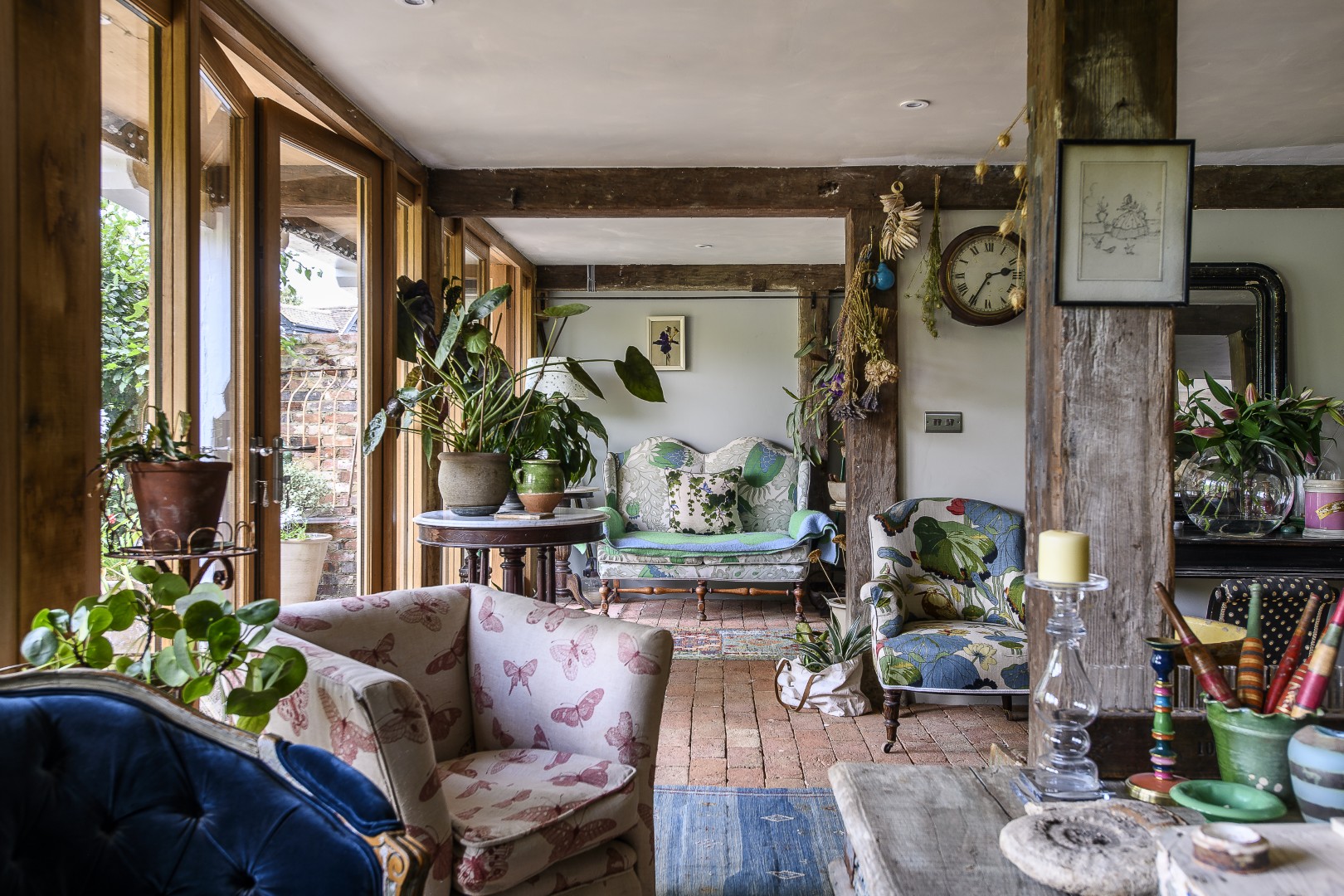
Collected at the Oast
Room by room, year by year, artist Sarah Featherstone and her family have poured their creativity into the renovation of a large oast, transforming it not only into a family home, but a wonderful venue in which to display Sarah’s...
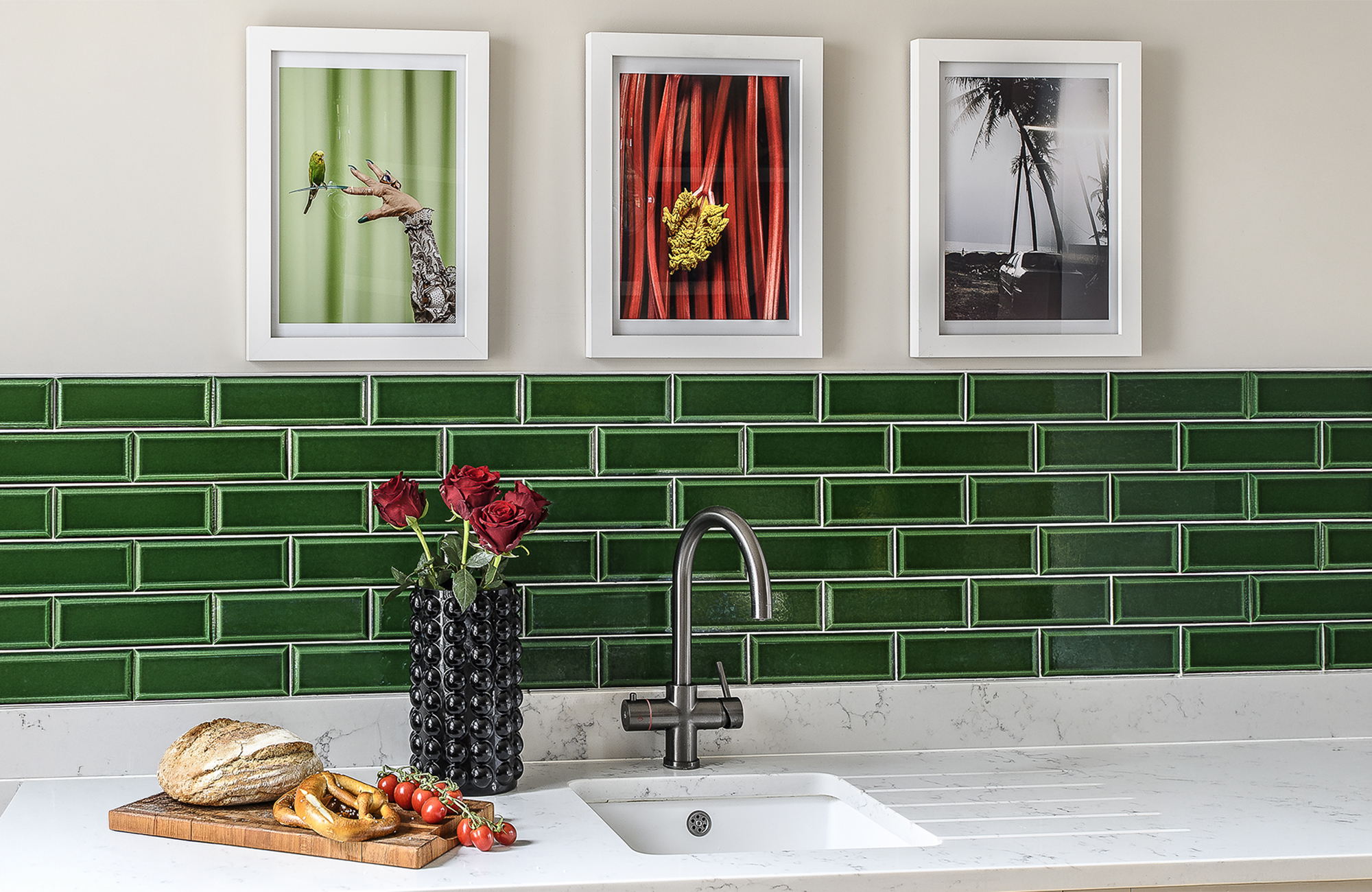
Finally Home
With a refined eye for art and furniture, journalist Patrick McAleenan has spent the last few years curating the interior of his St Leonards home with carefully chosen pieces, prompting his latest venture, South Coast Stories, a PR platform for...
Made to Last
Returning to the UK after a work stint in Dubai, Tracey and her family happened upon a house the likes of which they had never imagined living in before. Five years on, they still relish its clean lines, large windows...